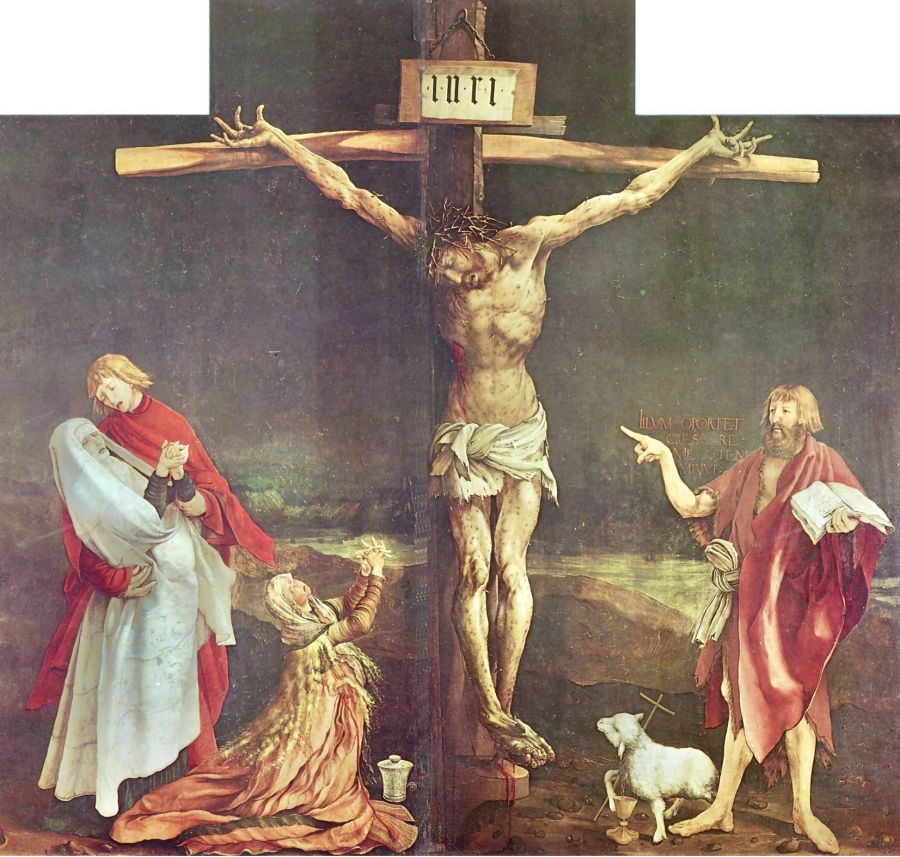
In both the Gospel of John and that of Luke, the liturgy focuses on the figure of the Virgin Mary, immersed in the mystery of salvific suffering that she endures.
Mary had been forewarned of the piercing sword that would strike her and lead her to stand at the foot of the Cross, united with her Son in the Paschal Mystery, for the good of many.
Francis loved the Blessed Virgin with an indescribable love and contemplated her mysteries continually.
So too did Clare, urging her daughters to live out, like Mary, both the hopes and the sufferings.
We read in the Sources what she wrote to her spiritual daughter Ermentrude of Bruges:
«Lift up your eyes to heaven, O most beloved, for it is a call to us, and take up the cross and follow Christ who goes before us. For after many and varied tribulations, it is He who will lead us into his glory.
Love God with all your heart, and Jesus, his Son, crucified for us sinners, and may the memory of Him never fade from your mind.
MEDITATE WITHOUT WEARING YOURSELF OUT ON THE MYSTERY OF THE CROSS AND THE SORROWS OF THE MOTHER STANDING AT THE FOOT OF THE CROSS […]» (FF 2915).
And again, in Clare’s Rule, regarding poverty lived out at every level:
«Never, most beloved sisters, should you desire anything else under heaven, for the love of our Lord Jesus Christ and of his most holy Mother» (FF 2795).
And Francis himself ‘surrounded the Mother of the Lord Jesus with unspeakable love, because she had made the Lord of Majesty our brother and obtained mercy for us.
In her […] after Christ, he placed his trust’ (FF 1165).
The Blessed Virgin was ever in his thoughts, and he ceaselessly contemplated the sorrows and hardships she endured during her earthly pilgrimage.
«Now standing by the cross of Jesus were his mother and his mother’s sister, Mary the wife of Clopas, and Mary of Magdala» (Jn 19:25)
Blessed Virgin Mary of Sorrows (Jn 19:25–27)