
(Mk 16:15-20)
The premises of today's passage are not entirely edifying: Jesus rebukes the Eleven for not believing.
They have resisted stubbornly because they cultivated contrary expectations.
Adherence to the Risen One was uncertain even on the part of those who knew Him personally and lived with Him.
Despite this, God considers only obstinacy to be guilty.
The Message to be proclaimed and personally adhered to is so unusual that at first it may create reluctance and skepticism - as it was even among the apostles, leaders of the nascent Church.
They too were weak and uncertain followers who were made convinced, stronger and more decisive, in the experience of interpersonal communion [described in filigree in the same mandate (vv.17-18)].
Sharing within a vital fraternity produced a growing afflatus.
On the wave of this energy chain, each Seed became consciousness that gradually learnt to respond to its call and not be disturbed by poisons.
This recognition of the divine Presence in his new Face was revealed and poured out on the marginalized and the sick - the minimal and imperfect previously considered in religions to be punished by fate or even cursed by God.
The atmosphere of friendship and understanding that had supplanted social and spiritual antagonism, and the feeling of being welcomed even in precarious conditions, favoured every care, every expression of gratuitousness.
Christ has thus continued to unfold his work in history, making himself alive in the human and divine people who bear witness to Him. His influence and triumph - victorious everywhere over the germs of death.
His sole 'power'.
In every person or group there are decisive events, stages of regeneration and new birth.
Mk attempts to describe the change in Jesus' Presence, which continues to guide the disciples step by step even in the first hesitations following His inglorious death.
The mission seemed not precisely defined [as vice versa in ancient religious ideologies] and superior to the forces at work.
By His inspiration and power, Christ wanted to remain forever present in his disciples, manifesting Himself alive in the signs mentioned in the text.
They are not demonstrative prodigies - although since the end of the 2nd century, apologetic frenzy has wanted to impose itself on the narrative of Faith, and we too have unfortunately inherited it.
The Proclamation is accompanied by the new language of love and by its wonders, which however are not clear evidences, but a ‘glad tidings’:
The Spirit of the living Christ in the Church is bringing about another kingdom.
The statement in v.19 is also theological: the image recalls the customs of Eastern courts.
Here it is useful to express God's inverse judgement of the Son's earthly defeat - and of His own intimates.
The concluding verse finally testifies to the disciples' conviction that they have the Lord beside them, that they are not alone and orphaned.
In this way and in the Spirit of genuine selflessness, the Resurrection has become a fact that spans time, right up to today.
Intimate Mystery and Wonder, our 'breath' and impetus - that the world may be a place conducive to the fullness of life for all.
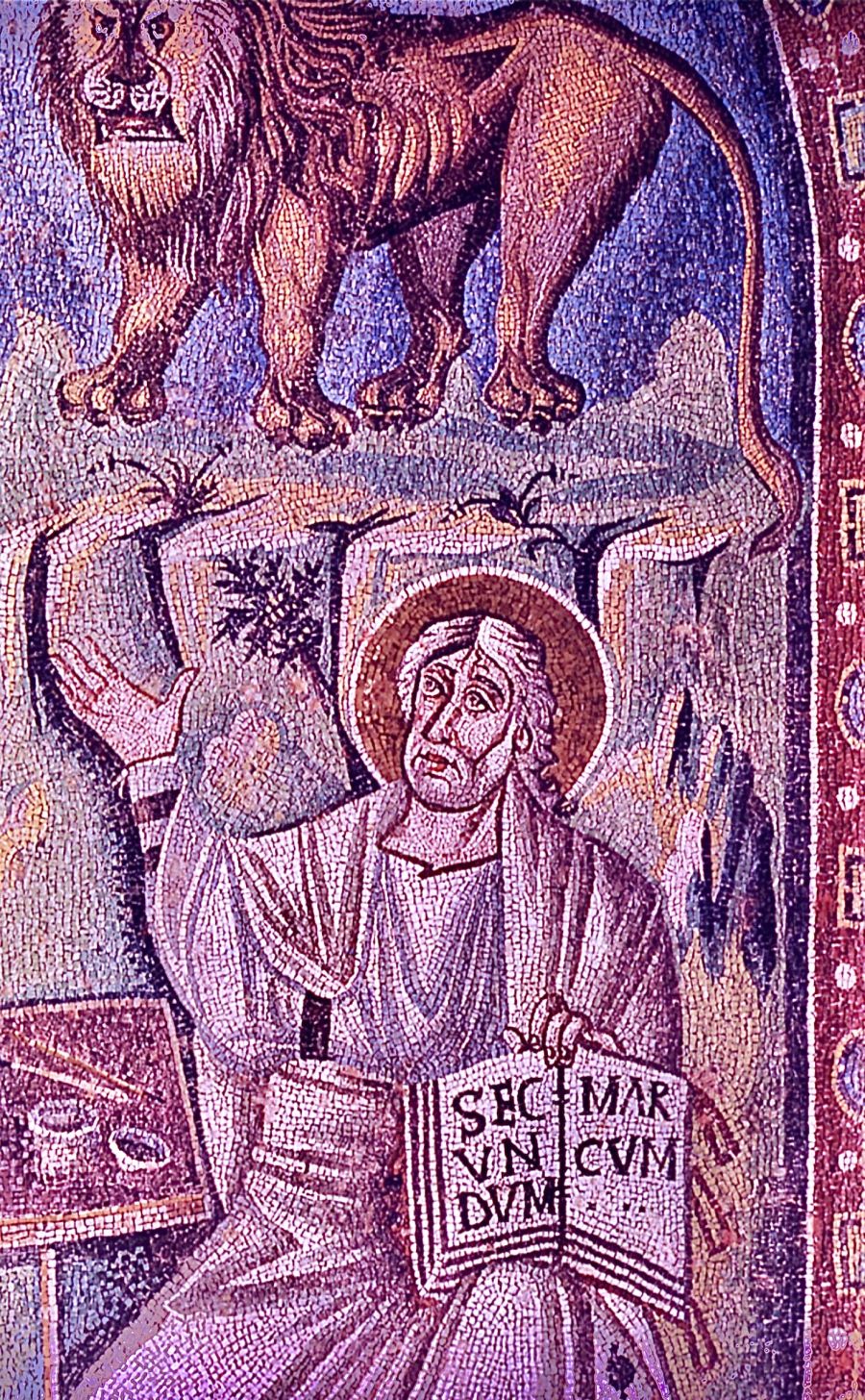
[St Mark the Apostle and Evangelist, April 25]
