
24th Sunday in Ordinary Time (year A) [13 September 2026]
First Reading from the Book of Sirach (27:30–28:7)
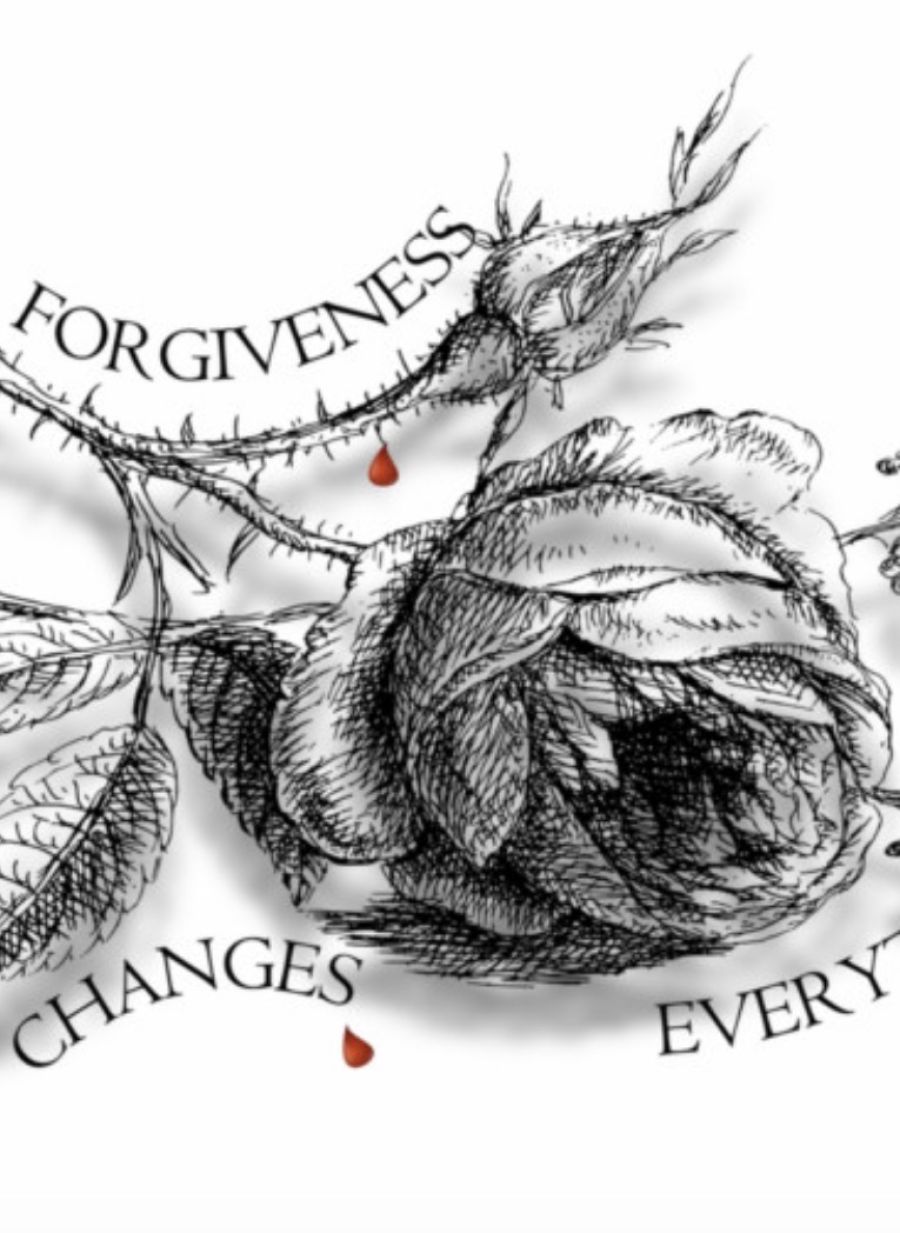
In the teachings of the wise Ben Sira, who lived around 180 BC, shortly before the birth of Jesus, one can sense the gradual discovery of forgiveness in the Old Testament. Indeed, the Bible can be seen as God’s patient endeavour, through the prophets, to root out vengeance from our hearts. Cain was avenged seven times, and after him the spiral of violence had become so widespread that Lamech boasted of taking vengeance seventy times seven. It took a patient effort, through the laws and the preaching of the prophets, to reverse this trend. Ben Sira stands at the end of this chain of vengeance and highlights Israel’s realisation of how to bring it to an end. In today’s text, Ben Sira draws on three useful considerations to preach forgiveness. First of all, we must not forget God’s constant faithfulness towards his people, who have, on the other hand, often been unfaithful to him. Furthermore, if you wish to observe God’s commandments, you cannot harbour a grudge against your neighbour, for the commandment to love your neighbour as yourself implies the ability to forgive. And finally, if we were to reflect on our own death, we would readily renounce all forms of hatred and vengeance. Ben Sira says: ‘This is why the Lord is patient with them and pours out his mercy upon them; he sees and knows that their lot is a painful one, for he abounds in forgiveness. Human mercy concerns one’s neighbour, whilst the Lord’s mercy concerns every living being (Sir 18:11–13). The wise man urges us to move beyond offences. Moreover, in the phrase ‘the man who takes revenge will experience God’s vengeance’, there is a concrete truth that touches us deeply. It is these small steps in the spirit of mercy that prepare us to receive God’s mercy; and indeed, how can we imagine that God would be merciful towards us if we refuse even the smallest gesture of forgiveness towards others? Finally, the last verse: ‘Remember the commandments and do not hate your neighbour’ leads us to reflect on the words of Jesus on the cross: ‘Father, forgive them, for they know not what they do’. It makes us realise that sometimes we do wrong without considering all the consequences, and divine forgiveness even goes so far as to suggest that we do wrong out of ignorance. The Ecumenical Translation of the Bible offers this rendering of the verse (28:7): ‘Remember God’s covenant and look beyond the offence’ – a beautiful definition of forgiveness. Of course, one cannot erase an offence, but one must know how to move beyond it. After a wound, the skin retains a scar, and it is the same for emotional wounds, for nothing can erase slander, a gesture of contempt or infidelity. Words and behaviour bear poisonous fruit, and one cannot simply turn back as if nothing had happened. As Ben Sira says, moving beyond does not mean ignoring the past, but trying to mend a relationship torn apart by an offence, whilst accepting the possibility of a new future. The word ‘forgiveness’ – ‘for’ and ‘gift’ – tells us that forgiveness which goes beyond the offence is possible, and that perfect forgiveness is, ultimately, the work of the Holy Spirit.
Responsorial Psalm (102/103)
Psalm 102/103 contains 22 verses, as many as there are letters in the Hebrew alphabet. For this reason, it is called an alphabetic psalm and belongs to the tradition of psalms of thanksgiving for the Covenant. It is a great hymn of gratitude to God for all his gifts and blessings. Another feature of the psalm is its parallelism: each verse consists of two phrases that echo and complement one another, almost like a dialogue between two choirs. This style of expression is very common in the Bible and served both to aid memorisation and to deepen the meaning of the words. In the first verse, ‘Bless the Lord, O my soul; bless his holy Name, O my whole being’, the parallelism helps us to understand two important things. Firstly, in the Bible, the Name refers to the person himself: to bless the Name of the Lord therefore means to bless God in his entirety. Secondly, the word ‘soul’ does not simply refer to a spiritual part of a person as opposed to the body. In the biblical mindset, a person is seen as a unified being: ‘soul’ therefore means the whole person, one’s entire being. The psalm then emphasises God’s mercy: ‘He does not hold a grudge for ever, nor does he harbour his anger for ever. He does not treat us according to our sins, nor repay us according to our iniquities’. God does not follow the logic of ‘quid pro quo’, nor that of punishment proportionate to the offence. His logic is one of gratuitousness and mercy. The Bible shows how Israel gradually discovered the true face of God: not a God who keeps a record of our sins, but a God who is ‘gracious and merciful, slow to anger and abounding in love’ (Ex 34:6). This is the great biblical revelation: God is completely different from our human notions of justice and judgement. For this reason, even the expression ‘fear of God’ must be understood correctly. It does not mean being afraid of God. When we discover that God is a merciful Father, full of tenderness, fear can be transformed into a filial attitude. The fear of God, in the biblical sense, is therefore a profound respect combined with trust, gratitude and the desire to follow his will. It is like a child who listens to his father when he tells him not to go near the fire: he obeys not because he is afraid of his father, but because he knows that his father loves him and wants to protect him. The Psalm itself expresses this with a beautiful image: ‘As a father has compassion on his children, so the Lord has compassion on those who fear him.’ The spiritual journey therefore consists in transforming fear into trust, to the point of living before God as beloved children. God does not ask us for flawless perfection: when we fall, his mercy allows us to start again. His tenderness ‘passes over’ our sins and lifts us up again. It is the same tenderness that Jesus will show in the parable of the Merciful Father and the Prodigal Son. In summary: Psalm 102/103 invites us to bless God with our whole being and to recognise that his love is far greater than our faults. True ‘fear of God’ is not terror, but trust, respect and filial love. With God, we can always start afresh, because his mercy never fails.
A reading from the Letter of Saint Paul the Apostle to the Romans (14:7–9)
The central phrase of the text is ‘We belong to the Lord. None of us lives for ourselves, and none of us dies for ourselves’ (Rom 14:7). Saint Paul reminds us that we are not isolated individuals, independent of one another. Across time and space, we are deeply united. God’s plan is for humanity to be so united as to become one in Christ, a unity founded on the death and resurrection of Jesus, who has become ‘Lord of the dead and the living’. The problem is that divisions can arise even amongst Christians. In Paul’s time, the disputes centred mainly on dietary rules: some Christians, coming from a Jewish background, were very strict; others, coming from the pagan world, were more relaxed. Paul urges everyone not to judge one another: ‘Who are you to judge another’s servant?’ (Romans 14:4). The essential thing is not that we all have the same customs in living out our faith. What matters is that we all belong to Christ. Even today, divisions can arise from liturgical issues or from differing social and political views, because those who share the same faith and the same Baptism may make different choices. For Paul, no one should feel entitled to judge another: rather, each person should sincerely seek to serve the Lord according to their own conscience: ‘Whoever eats, eats for the Lord, for they give thanks to God; and whoever does not eat, does so for the Lord and gives thanks to God.’ This means that there is no single way to give thanks to God, and the same faith can be expressed in different ways. The true ‘spiritual sacrifice’ consists in offering one’s whole self to God, with sincerity and love, each person doing so according to what they consider right, in different and even opposing ways; but what matters is the sincere desire to serve God. Paul points out what must remain at the heart of the Christian life: ‘The kingdom of God is not a matter of eating and drinking, but of righteousness, peace and joy in the Holy Spirit’ (Romans 14:17). We must seek what builds up the community, fosters peace and strengthens relationships; and the fundamental rule is mutual love: ‘Hold one another in high esteem’. This is the central message: Baptism makes us all belong to Christ, and for this reason our differences — in religious practices, sensibilities, and social or political choices — must not become a cause for judgement and division. What unites us is far more important than what divides us, and Christian maturity consists in respecting those who live their faith differently from us, refraining from judging them, knowing that we are all called to build peace, unity, respect and love, since ‘none of us lives for ourselves’: indeed, we all belong to the Lord.
From the Gospel according to Matthew (18:21–35)
The Gospel presents the parable of the unforgiving servant in three stages. 1. The king forgives the debt: a parable about God’s gratuitous love, which surpasses all our calculations. A servant had incurred an enormous debt to the king, one that was impossible to repay; according to the laws of the time, he and his family should have been imprisoned. The man, however, begged the king for patience and, moved to compassion, the king not only granted him more time but also forgave the debt entirely: ‘You owe me nothing more’. 2. The servant who cannot forgive. The same servant, as soon as he left, met a man who owed him a very small sum compared to what had been forgiven him; yet, instead of showing mercy, he immediately demanded payment and had him thrown into prison. He had received an immense gift, but was incapable of granting others even a small fraction of what he had received. For this reason, the king rebukes him: ‘Shouldn’t you too have shown mercy to your fellow servant, just as I showed mercy to you?’ 3. Forgiving without keeping score. Peter asks Jesus: ‘Lord, how many times must I forgive my brother? Up to seven times?’ Jesus replies: ‘Not seven times, but seventy times seven’, that is, without limit. Forgiveness must not become a matter of keeping score: we must not count how many times we have already forgiven or determine the limits of our obligation to do so. Jesus overturns the logic of the story of Cain and Lamech, where vengeance begets further vengeance and violence multiplies without end. Jesus sets Lamech’s boundless vengeance against boundless forgiveness; and so, in the Bible, God progressively leads humanity out of the spiral of violence: from the law of retaliation (an eye for an eye and a tooth for a tooth), which at least limits vengeance, we arrive at the discovery of forgiveness—a revelation that reaches its full fulfilment in the sacrifice of the Cross. But why does the servant in the parable forfeit the benefit of what he had received? Not because God ceases to give, but because our hearts can become incapable of receiving and passing on what they receive. It is like soil that has become dry and impermeable, where even a heavy downpour cannot penetrate it because it must first be tilled. In the same way, learning to forgive opens our hearts and makes us ready to receive once more what God offers us. A heart closed off by resentment becomes incapable of allowing itself to be transformed. The servant should have been so deeply grateful for the debt that had been forgiven him that he would not have refused his fellow servant’s request. The central point of the parable is that those who recognise what they have received become capable of giving it on in turn. We see this too in the episode of the woman caught in adultery (John 8). The accusers arrive with stones in their hands, ready to stone her; Jesus invites them first to look within themselves, and one by one they leave, starting with the elders, no longer feeling authorised to judge the adulteress because they are aware of their own frailty. The scene thus completes the message of this Sunday’s parable: before condemning another, remember that you too live thanks to God’s patience and goodness. A Christian is not someone who never makes mistakes, but someone who, having experienced the possibility of a fresh start, offers that same opportunity to others. We are truly converted when what we receive from God transforms the way we treat others.
+Giovanni D’Ercole
