1. Christ taught in parables, which were understandable to his listeners. Their content could be easily grasped by the imagination. At the same time, their message opened the hearts of those who heard them to another reality: the Kingdom of Heaven. The divine, supernatural reality. Mankind is called to this reality. It is called to the Kingdom of God, which begins here on earth, but which will find its definitive fulfilment in the eternal City of God, in heaven. The Kingdom of God also constitutes mankind’s eschatological future. Christ is its eyewitness: he sits on the Father’s throne, as the consubstantial and eternal Son.
In the parable of the ten virgins, which we have just heard, Jesus focuses his attention above all on the person invited to the heavenly banquet, called to share in the divine future.
2. The parable of the ten virgins remains as relevant as ever. Certainly, today the traditions associated with the celebration of marriage have taken on different outward forms. Nevertheless, the parable is always relevant. It can be said that what is recounted in it also happens in our own day. It happens here in Naples; it happens in the city and in each of its neighbourhoods; it happens in every parish, in every family, in every person.
What wedding are we talking about? Who is the bridegroom whom we are called to go and meet? The parable allows us to draw closer to the mystery of God, expressed through the image of a wedding. It is the wedding of Christ: He is the Bridegroom. He is the Bridegroom first and foremost as the Incarnate Word: the Son of God married humanity, our human nature, by becoming man in the womb of the Virgin Mary through the power of the Holy Spirit.
By virtue of this first wedding, Christ, the God-Man, marries all people: for he became Man for everyone, to redeem and save all. Christ is the Lamb of God who takes away the sins of the world. His Bride is the Church, which he established so that she might cooperate with him in the work of salvation. It is within her that the children of divine adoption are born and mature, called to share in the life of God in the likeness of the eternal and only-begotten Son.
6. Dearest brothers and sisters, today’s liturgy reminds us that our whole life is a watchful preparation for the encounter with the Bridegroom. ‘Watch and be ready’!
Here we must delve into the innermost being of every person. The Saviour shows us the way. What does this Gospel call to ‘watch’ consist of? What does the readiness of the wise virgins, of whom the parable speaks, consist of, if not precisely in what the Psalm proclaims? ‘O God, you are my God; at dawn I seek you; my soul thirsts for you; my flesh longs for you, like a parched and dry land without water’ (Ps 62:2).
Sensitivity to God; the awareness that he is present in the world, in this city, in each one of us. ‘For in him we live and move and have our being’ (Acts 17:28). We came forth from him when we were born. And our life is a path that can lead nowhere else but to him.
Are we aware that this is the path of our lives? Have we perhaps strayed onto rugged terrain? Or are we perhaps now beginning to stray from this main road? Are we, perhaps, like those virgins in the parable who dozed off and fell asleep? They continue to sleep and do not sense the coming of the bridegroom. Is there not a risk that not even the powerful shock of his death and resurrection will be able to rouse them?
Yes. Let us certainly admire the works of human genius, but let our eyes be wide open to recognise the works of divine Wisdom. Let our ears be wide open to hear the voice of the Bridegroom. Let us not allow our lamps to be extinguished, dimmed by a deluge of information leading to nothingness. Such information does not open up divine perspectives for us; on the contrary, it prevents us from perceiving the voice of the Bridegroom and stops us from hearing the Church crying out: ‘Go out to meet him!’
7. We cannot remain in ignorance. Nor can we remain in ignorance regarding those who die (cf. 1 Thess 4:13) . . . regarding those who have died in your families, in your parishes, in your town. November is the month in which we remember the dead! We cannot remain in ignorance. Hopeless grief is not enough.
Humanity today seems to underestimate the significance of death. When the meaning of death is devalued, when the meaning of human life is also devalued from the very first moment of conception, man falls into a dangerous slumber. He tries to doze off so as not to face the responsibilities arising from the greatness of his vocation and the dignity bestowed upon him by God. He tries not to hear the voice of the Bridegroom! November is the month of the dead who live in God.
‘For we believe that Jesus died and rose again; so too, through Jesus, God will bring with him those who have died’ (1 Thess 4:14). Be watchful! Remember that we live immersed in the Communion of Saints. Let us therefore remain ready – like the wise virgins of the parable – to enter with Christ into the wedding feast of the Kingdom of God.
The voice of the Church repeats: ‘Behold, the Bridegroom! Go out to meet him!’ Watch, therefore, and be ready. Amen!
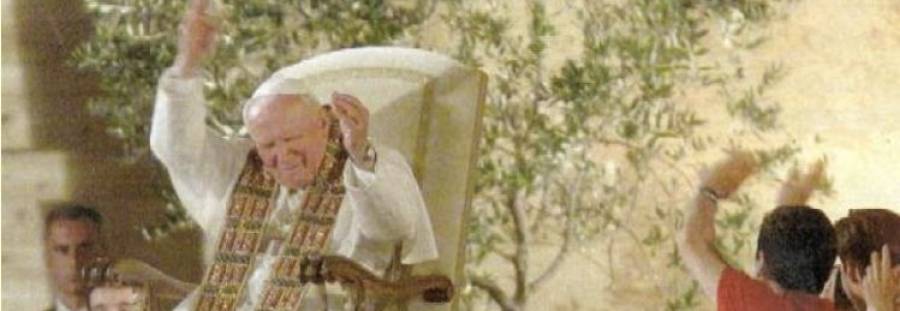
[Pope John Paul II, homily, Naples, 11 November 1990]
Oct 31, 2026
Written by
don Giuseppe Nespeca
-
font size
decrease font size
 increase font size
Christ opened people’s hearts to another reality: how to draw near to the Mystery of God

don Giuseppe Nespeca
Giuseppe Nespeca è architetto e sacerdote. Cultore della Sacra scrittura è autore della raccolta "Due Fuochi due Vie - Religione e Fede, Vangeli e Tao"; coautore del libro "Dialogo e Solstizio".
Email This email address is being protected from spambots. You need JavaScript enabled to view it.