Second Lent Sunday (year A) [Mt 17:1-9]
Matthew 17:3 And behold, Moses and Elijah appeared to them, conversing with him.
Matthew 17:4 Then Peter spoke up and said to Jesus, 'Lord, it is good for us to be here; if you wish, I will make three tents here, one for you, one for Moses and one for Elijah.'
Matthew 17:5 While he was still speaking, a bright cloud overshadowed them, and behold, a voice from the cloud said, 'This is my beloved Son, with whom I am well pleased; listen to him.'
Matthew 17:6 When the disciples heard this, they fell on their faces and were very much afraid.
Matthew 17:7 But Jesus came and touched them, saying, 'Get up and do not be afraid.
Matthew 17:8 When they looked up, they saw no one but Jesus alone.
Matthew 17:9 As they were coming down the mountain, Jesus commanded them, "Tell no one about this vision until the Son of Man has been raised from the dead."
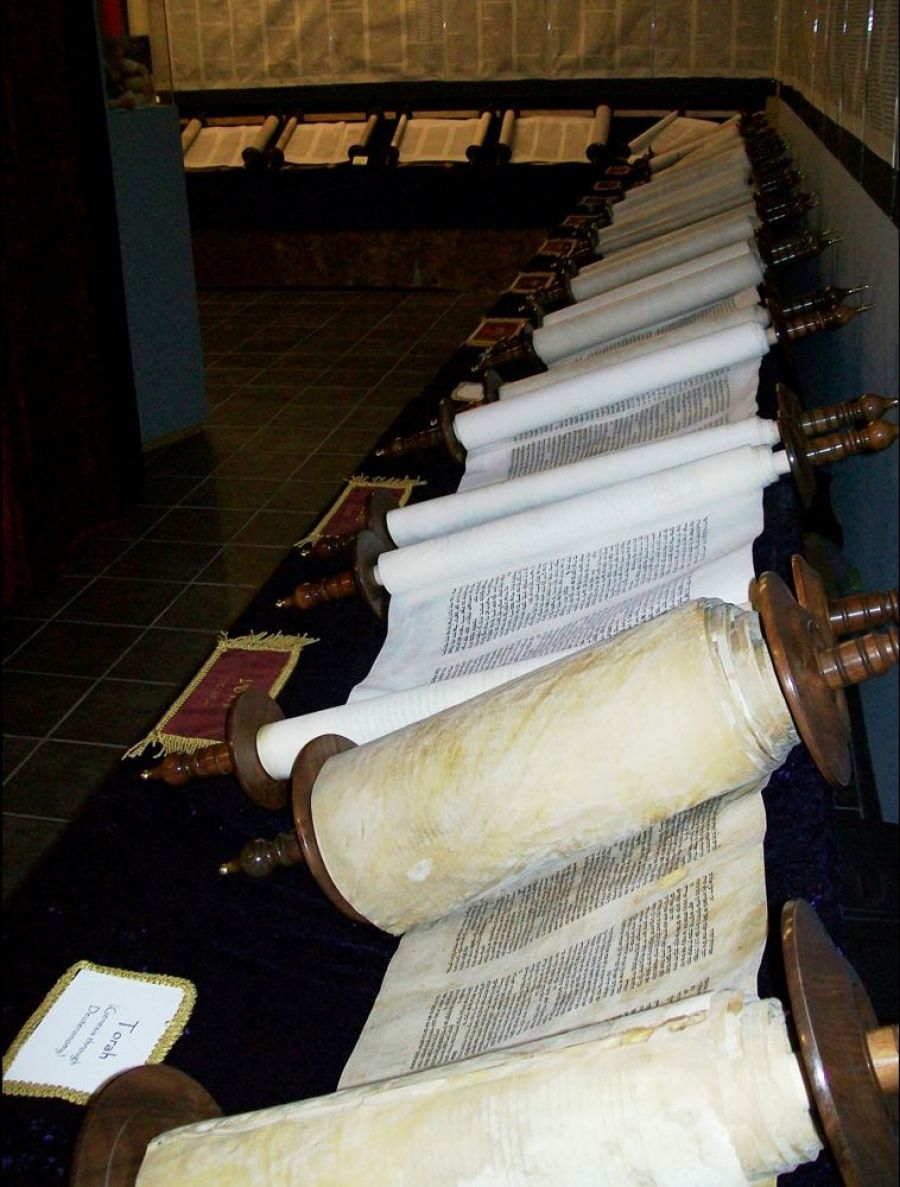
Next to Jesus, transfigured and shining with the same light as God, two Old Testament figures of great importance suddenly and unexpectedly appear: Moses and Elijah. The first is the one God chose to free his people from oppression in Egypt and lead them to the land promised to the Patriarchs. Moses is the one who spoke with God face to face, revealing the familiarity that existed between the two. Moses is the one who received the Torah directly from God and revealed it to the people. He was an intercessor, the intermediary of the covenant between God and Israel. Elijah, on the other hand, was the one who opposed the betrayals of the people and their rulers and, defying the wrath of Queen Jezebel and the claims of the priests of Baal, sought to assert God's lordship among the people, putting his own life at risk.
The presence of these characters is also due to the fact that Jesus said in chapter 5 of the Gospel: "Do not think that I have come to abolish the law and the prophets", that is, Jesus did not come to destroy the promises of the Old Testament, contained in the law and the prophets, but to bring them to fulfilment, to completeness. With their presence, Moses and Elijah bear witness to Jesus and show that He is the end to which both the law and the prophets were ordained. These are also the two figures who spoke with God in the Old Testament. Just as Moses and Elijah spoke with God, now they speak with Jesus and him alone. It is not said that Jesus speaks with them, but that they speak with Jesus; it is they who converge on Jesus and not vice versa. There is, therefore, no dialogue. Elijah and Moses, the whole revelation given by God to the fathers, speak with Jesus.
The scene is charged with symbolism and meaning. Matthew included it to convey the new significance of the figure of Jesus in relation to the symbolic figures of the Old Testament. Jesus is not an addition to Moses and Elijah, he is not an extension of them, but their point of convergence. In a certain sense, they define the meaning of his mission and his being: like Moses, Jesus was sent to Israel and to all humanity to free it from the slavery of sin and lead it back to the Father. At the same time, he also acts as a mediator between God and men, a sort of pontiff, connecting humanity to God in a secure and definitive covenant between God and men that will never fail. Similar to Elijah, the prophet who spent his life and put it at risk to reaffirm the worship of God among his people, Jesus also came to restore the Father's will among men, to reveal its demands and to urge them to return to God. Moses and Elijah, therefore, were paradigmatic, typical figures who foreshadowed in themselves the essential traits of the figure of Jesus, in whom they converge and find their fulfilment.
Verse 4 denounces an error of perspective into which Judeo-Christianity will fall: considering Jesus a great figure, a prominent prophet, an important messiah, but one who did not differ from his Old Testament predecessors, represented by Moses and Elijah, but rather was linked to them. Peter, in fact, has Jesus, Moses and Elijah before him and, without any distinction, proposes three tents for them, one for each of them, all three on an equal footing. It is as if Peter, and with him Jewish Christianity, still could not grasp the novelty contained in the mystery of Jesus, whom he places on the same level as Moses and Elijah and associates with them.
With verse 5, we reach the heart of the story, which aims to emphasise Jesus' divine sonship and, therefore, his own divinity. The revelation reaches its climax here, as God himself is now involved in the matter, his presence evoked by two theophanic elements: the cloud and the voice. The first closely recalls the 'shekinah', the glorious presence of Yahweh, while the second is linked to the first and indicates the revelation of God.
The brightness of the cloud contrasts with the verb epeskíasen, 'overshadowed', 'darkened'. It is astonishing how a cloud glowing with divine light can darken and overshadow. In reality, this play on words speaks of revelation and new understanding. What this cloud obscures, in fact, are Jesus, Moses and Elijah, whom Peter had placed on an equal footing, without noting their substantial difference. It is this error, which redefines Jesus along the lines of the Old Testament, bringing him back into it, that is, so to speak, overshadowed, hidden; while within the divine light, the true mystery underlying the person of Jesus is revealed.
The Church has nothing more to take from Moses or Elijah, except those parts that are compatible with the message of Jesus. The evangelist does not say that the Old Testament should be discarded, but that Jesus becomes the norm for interpreting the Old Testament. This is a warning that is more relevant than ever, because there have always been groups that are tempted to emphasise certain norms of the Old Testament and integrate them into the Christian community.
The passage ends (v. 9) with the disciples returning to normal daily life: they come down from the mountain, and it is during this return that Jesus orders them to remain silent about the vision. He forbids them to speak of it before the resurrection, because only then will they understand what the transfiguration is: it is a foretaste of the resurrection. In the meantime, they will allow the mystery they have intuited to mature within them.
It is therefore necessary to wait for the appointed time for Jesus to be understood in his entirety, and this time will only come after Jesus has been glorified ('risen from the dead'). Only then will the meaning of his being, his divinity and his messiahship become clear. Only then will the Scriptures be understood and acquire new meaning; only then, in the Risen One, will the Law and the Prophets find their fulfilment. The mystery must now be shrouded in the silence of an imperfect understanding, which can be intuited but not yet fully grasped. While waiting for the mystery to be fulfilled, silence is necessary so that the mystery is not trivialised or rejected.
Argentino Quintavalle, author of the books
- Apocalypse – exegetical commentary
- The Apostle Paul and the Judaizers – Law or Gospel?
Jesus Christ, True God and True Man in the Trinitarian Mystery
The Prophetic Discourse of Jesus (Matthew 24-25)
All Generations Will Call Me Blessed
Catholics and Protestants Compared – In Defence of the Faith
The Church and Israel According to St Paul – Romans 9-11
(Available on Amazon)