Dialogo e Solstizio


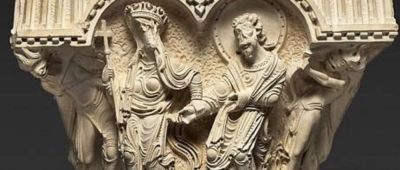
Lk 9:18-22 (18-25) Judging question. In the dilemma, the solution (Lk 9:18-22) The people of God no longer find themselves in the enclosure of a womb that protects and guarantees…
24
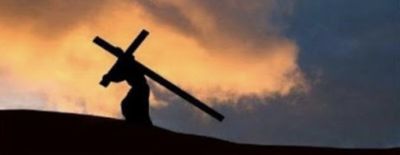
Who is Jesus: a question that judges (Lk 9:7-9) Jesus, who is he? No answer can be given except in the light of his story and his condemnation: nothing to…
31
Sep 14, 2026
How can the Temple be rebuilt?
Written by don Giuseppe Nespeca Published in Rivoluzione della Tenerezza
The Lord wants new people, who Listen (Lk 8:19-21) In the life of one who is challenged by the relationship of Faith, in order to become consanguineous with the Father…
56
Sep 13, 2026
Conversion, forbidden things, the Physician of opposites
Written by don Giuseppe Nespeca Published in Preghiera critica
But can he participate in the ritual? Sitting and with his eye on the ledgers, only then rich - indeed, 'lord' (Mt 9:9-13) "Jesus does not exclude anyone from his…
61
Sep 12, 2026
Carrying the weight of the day?
Written by don Giuseppe Nespeca Published in il Mistero
It's never too late (unique Coin and smart working: Love) (Mt 20:1-16) In the atrium of the temple in Jerusalem, the portal creeper was a symbol of the gifts that…
68
Sep 11, 2026
A new God, without planning: perhaps a deluded one?
Written by don Giuseppe Nespeca Published in Rivoluzione della Tenerezza
The difference between common religiosity and personal Faith (Lk 8:4-15) The stony soil and scorching climate of Palestine did not make life easy for farmers. The scarcity of rain and…
56
Sep 10, 2026
Women, Action of the Risen One
Written by don Giuseppe Nespeca Published in Croce e Vuoto
(Lk 8:1-3) The rabbis did not accept women in their schools, because they were considered not up to the task. But Jesus does not come to teach laws or philosophies,…
70
Sep 9, 2026
Women: The Action of the Risen One
Written by don Giuseppe Nespeca Published in Preghiera critica
(Lk 7:36-8:3) Intruder Love, in the respectable House of Simon And the Feet of Jesus, kissed by the unexpected and censured guest (Lk 7,36-50) "Simon, a Pharisee and rich "notable"…
77
One 'character', or the Son of Man (Lk 7:31-35) The Gospels break through, advance and liberate, making us realise the enormous difference between any belief and Faith. They emancipate us…
77
Sep 7, 2026
Tradition and Alternative Kingdom: Religion and Faith as Allies
Written by don Giuseppe Nespeca Published in Rivoluzione della Tenerezza
Mary in the Church, who gives birth to sons (Jn 19:25-27) The brief passage of the Gospel in verses 25-27 is perhaps the artistic climax of the Passion narrative. In…
80
Sep 6, 2026
Lifting the Cross goes far beyond resilience
Written by don Giuseppe Nespeca Published in Croce e Vuoto
To go up and to go down, to go further or to go backwards (Jn 3:13-17) Nothing doing, despite two millennia of Christian symbols, formulas and rituals, especially in Italy…
80
Sep 5, 2026
Forgiveness in the boundless leap of Faith
Written by don Giuseppe Nespeca Published in il Mistero
(Mt 18:21-35) Throughout the ancient Middle East, disproportionate retaliation (one for one, not cruel) was sacred law. Forgiveness was a humiliating and absurd attitude, an incomprehensible principle for anyone who…
85

Sep 4, 2026
House on the Rock, and Freedom
Written by don Giuseppe Nespeca Published in Preghiera critica
The strength of the inner world, even in its depths (Lk 6:43-49) Pope Francis said: "God often chooses unimaginable ways to give himself to us, perhaps those of our limitations,…
85

Sep 3, 2026
For a transparent Coexistence
Written by don Giuseppe Nespeca Published in Croce e Vuoto
Jesus and the mania for ruling Lk 6:39-42 (39-45) "How much our human family needs to learn to live together in harmony and peace without all being equal!" (Pope Francis…
98
Sep 2, 2026
Other Cheek and Forgiveness
Written by don Giuseppe Nespeca Published in Rivoluzione della Tenerezza
The 'win-or-lose' alternative is false: you have to get out of it. Do you want to get ahead of me? Have a seat (Lk 6:27-38) Not opposing the wicked allows…
67
Sep 1, 2026
Beatitudes and inversion, antidote to one-sidedness
Written by don Giuseppe Nespeca Published in il Mistero
Faith and religion. Turnover in the Church (Lk 6:20-26) In Mt the Beatitudes outline a programme for fraternities of Jewish origin. In Lk the sermon seems more radical in character…
91
Aug 30, 2026
Discernment becomes acute
Written by don Giuseppe Nespeca Published in Preghiera critica
Different solicitations: the Humanising Action, and the dry action of the misanthropes (Lk 6:6-11) Commenting on the Tao Tê Ching (XLVII), Master Ho-shang Kung writes: "The saint knows the great…
98
Aug 29, 2026
Fraternal Correction and Prayer in common, everywhere
Written by don Giuseppe Nespeca Published in Croce e Vuoto
Amongst the Reconciled: a change of course and of fate in the Kingdom (Mt 18:15–20) «The verb the evangelist uses for “they will be in harmony” is synphōnēsōsin: there is…
93
Aug 28, 2026
Conflicts of conscience: Law or hunger
Written by don Giuseppe Nespeca Published in il Mistero
Incarnation, or the spiritual form empty of humanity (Lk 6:1-5) On the path to conversion, conflicts of conscience are not parentheses or accidents of the way, but crucial nodes. The…
102
Aug 27, 2026
Fasting: New wineskins and vocational Freedom
Written by don Giuseppe Nespeca Published in Rivoluzione della Tenerezza
(Lk 5:33-39) The old customs cannot always be combined with the Newness brought by the Lord; indeed, it is not infrequently necessary to know how to separate things. Lk confronts…
138
«Fishing», bringing to life. Attraction and attention (weekdays) (Lk 5:1-11) The episode of the Calling of the disciples in Lk indicates the attraction of the Word of Jesus - acting…
144
Aug 25, 2026
Coming out of the place of worship: the Power of the Word
Written by don Giuseppe Nespeca Published in Croce e Vuoto
(Female Creativity) (Lk 4:38-44) "The essential thing is to listen to what is rising from within. Our actions are often nothing more than imitation, hypothetical duty or misrepresentation of what…
101
Aug 24, 2026
Jesus in synagogue: the Liberation
Written by don Giuseppe Nespeca Published in il Mistero
Freed from automatic mentality (Lk 4:31-37) In the third Gospel, the first signs of the Lord are the quiet escape from the threats of death [waved by his people!] and…
101
Aug 23, 2026
In the Synagogue and from the precipice
Written by don Giuseppe Nespeca Published in Rivoluzione della Tenerezza
Lk 4:16-30 (16-37) Jesus' transgressions and ours (reinforcing the plot) (Lk 4:14-22) "The Spirit of the Lord is upon me, therefore he has anointed me to proclaim the Good News…
86
Aug 22, 2026
The Cross and the Son of Man: Messiah and anti-messiah compared
Written by don Giuseppe Nespeca Published in Preghiera critica
(Mt 16:13–27) Who I Am, the Keys, the Faith, the Name (Mt 16:13-23) More than halfway through his public life, Jesus has not yet offered any formulas, but poses a…
112
Aug 21, 2026
Struggle for Liberation from the corrupt, and court life
Written by don Giuseppe Nespeca Published in Croce e Vuoto
(Mk 6:17-29) The question "Jesus, Who is He?" grows throughout the Gospel of Mark, up to the centurion's answer under the Cross (Mk 15:39). The balance of people's opinions (Mt…
93
Distraction in the waiting room, or a crisis with an evolutionary sense (Mt 25:1-13) The theme is not one of moral vigilance, but timely: sooner or later all those baptised…
122
Aug 19, 2026
Incarnation. Security lies in insecurity
Written by don Giuseppe Nespeca Published in Rivoluzione della Tenerezza
Coming, Prayer and turning point, amid the roar of the waves. (Mt 24:37-51) What kind of Coming is it? And why do we want the Lord to be present in…
89
Duality or integral practice: branches and Roots (Mt 23:23–32) On how to remain on the Path that fosters growth, and to fulfil one’s natural calling, the Tao Te Ching states…
125
Aug 16, 2026
Scepticism, Faith, character
Written by don Giuseppe Nespeca Published in Preghiera critica
From the ancient dream to the incarnate relationship (Jn 1:45-51) Today's liturgy presents the first encounter with the Lord of Nathanael, whom some traditions identify as the apostle Bartholomew. The…
122
We too, to reach a more conscious confession of Jesus Christ must follow, like Peter, a path made of attentive, caring listening (Pope John Paul II)
Anche noi per giungere a una più consapevole confessione di Gesù Cristo dobbiamo percorrere, come Pietro, un cammino fatto di ascolto attento, premuroso (Papa Giovanni Paolo II)
It is a word that must be witnessed to and proclaimed explicitly, because without a consistent witness it proves to be less comprehensible and credible [Pope Benedict]
E’ una Parola che deve essere testimoniata e proclamata esplicitamente, perché senza una testimonianza coerente essa risulta meno comprensibile e credibile [Papa Benedetto]
The “reading and meditation of the word of God root us more deeply in Christ and guide our ministry as servants of reconciliation, justice and peace” (second Synod for Africa, Propositio 46)
La lettura e la meditazione della Parola di Dio ci radicano più profondamente in Cristo e orientano il nostro ministero di servitori della riconciliazione, della giustizia e della pace (Secondo Sinodo per l’Africa, Propositio 46)
The Gospel of Matthew written in Hebrew or Aramaic is no longer extant, but in the Greek Gospel that we possess we still continue to hear, in a certain way, the persuasive voice of the publican Matthew, who, having become an Apostle, continues to proclaim God's saving mercy to us. And let us listen to St Matthew's message, meditating upon it ever anew also to learn to stand up and follow Jesus with determination (Pope Benedict)
Non abbiamo più il Vangelo scritto da Matteo in ebraico o in aramaico, ma nel Vangelo greco che abbiamo continuiamo a udire ancora, in qualche modo, la voce persuasiva del pubblicano Matteo che, diventato Apostolo, séguita ad annunciarci la salvatrice misericordia di Dio e ascoltiamo questo messaggio di san Matteo, meditiamolo sempre di nuovo per imparare anche noi ad alzarci e a seguire Gesù con decisione (Papa Benedetto)
That denarius clearly represents eternal life, a gift that God reserves for all. Indeed those who are considered the "last", if they accept, become the "first", whereas the "first" can risk becoming the "last" [Pope Benedict]
Quel denaro rappresenta la vita eterna, dono che Dio riserva a tutti. Anzi, proprio quelli che sono considerati "ultimi", se lo accettano, diventano "primi", mentre i "primi" possono rischiare di finire "ultimi" [Papa Benedetto]
The sower is Jesus. With this image, we can see that he presents himself as one who does not impose himself, but rather offers himself. He does not attract us by conquering us, but by donating himself: he casts seeds. With patience and generosity, he spreads his Word, which is not a cage or a trap, but a seed which can bear fruit (Pope Francis)
Il seminatore è Gesù. Notiamo che, con questa immagine, Egli si presenta come uno che non si impone, ma si propone; non ci attira conquistandoci, ma donandosi: butta il seme. Egli sparge con pazienza e generosità la sua Parola, che non è una gabbia o una trappola, ma un seme che può portare frutto (Papa Francesco)
The Church desires to give thanks to the Most Holy Trinity for the "mystery of woman" and for every woman - for that which constitutes the eternal measure of her feminine dignity, for the "great works of God", which throughout human history have been accomplished in and through her (Mulieris Dignitatem n.31)
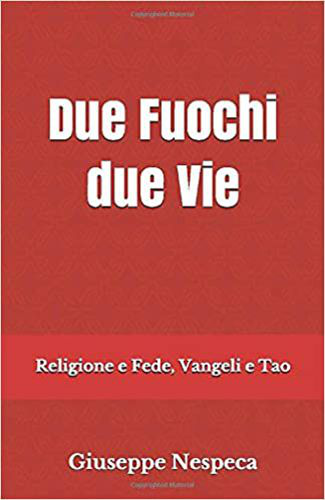


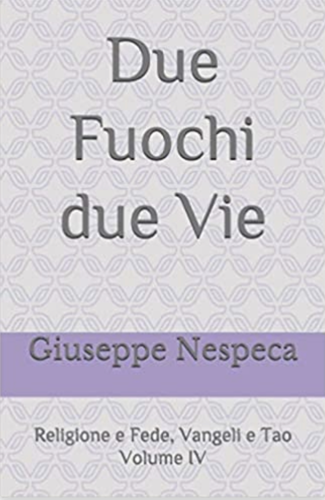
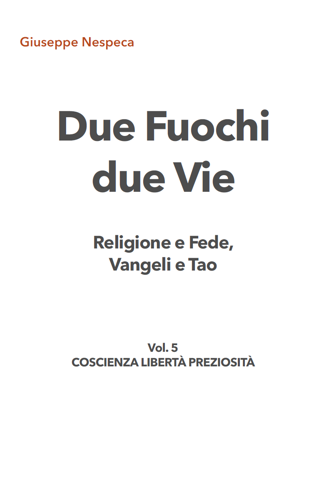



duevie.art
don Giuseppe Nespeca
Tel. 333-1329741
Disclaimer
Questo blog non rappresenta una testata giornalistica in quanto viene aggiornato senza alcuna periodicità. Non può pertanto considerarsi un prodotto editoriale ai sensi della legge N°62 del 07/03/2001.
Le immagini sono tratte da internet, ma se il loro uso violasse diritti d'autore, lo si comunichi all'autore del blog che provvederà alla loro pronta rimozione.
L'autore dichiara di non essere responsabile dei commenti lasciati nei post. Eventuali commenti dei lettori, lesivi dell'immagine o dell'onorabilità di persone terze, il cui contenuto fosse ritenuto non idoneo alla pubblicazione verranno insindacabilmente rimossi.