22nd Sunday in Ordinary Time (year C) [31 August 2025]
May God bless us and may the Virgin Mary protect us. For many, the holiday season is coming to an end and we are preparing to resume our normal rhythm of life. The Word of God comes to us with appropriate advice.
*First Reading from the Book of Sirach (3:17-18, 20, 28-29 NV 3:19-21, 30, 31)
This text becomes clearer if we begin reading it from the end: 'The wise heart meditates on parables, and an attentive ear is what the wise man desires' (v. 29). When the Bible speaks of wisdom, it means the art of living happily. Being a 'wise man' is the ideal of everyone in Israel: such a small people, born as a 'people' only at the time of the exodus from Egypt, has the privilege, thanks to Revelation, of knowing that 'all wisdom comes from the Lord' (Sir 1:1), in the sense that only God knows the mysteries of life and the secret of happiness. It is therefore to the Lord that we must ask for wisdom because, in his sovereign freedom, he chose Israel to be the repository of his wisdom. Yeshua Ben Sira (Jesus son of Sira), the author of the book, makes wisdom itself speak as if it were a person (cf. Sir 24:8); Israel seeks wisdom every day (cf. Sir 51:14) and, according to Psalm 1, finds its happiness in it: ' Blessed is the man who meditates on the law of the Lord day and night (1:2). 'Day and night' means always. Those who seek will find, Jesus will later say: but one must seek, that is, recognise that one does not possess everything and is always in need of something. Ben Sira had opened a school of theology (beth midrash) in Jerusalem around 180 BC and, to promote it, he said: "Come to me, you who are uneducated, and dwell in my school" (Sir 51:23). A true son of Israel knows that wisdom comes from God, allows himself to be taught by Him, meditates on the maxims of wisdom, and his ideal is an ear that listens. Israel has treasured this lesson so much that it recites the "Shema' Israel, Hear, O Israel" (Deut 6:4) several times a day. An "open ear" means listening to advice, instructions, commandments; the proud, on the other hand, believe they know everything and close their ears, but they forget that if the house has its shutters closed, the sun cannot enter. We read in verse 28: "There is no remedy for the miserable condition of the proud, for the plant of evil is rooted in them." In other words, the proud are incurably sick because, being full of themselves, they close their hearts. The parable of the Pharisee and the tax collector (Lk 18) is interesting in this regard: the tax collector limited himself to being true because the humble have their feet on the ground and therefore recognise themselves as poor and rely only on God. The Pharisee, self-sufficient in everything, returned home as he had come, while the tax collector was transformed. Isaiah describes the joy of these humble people: ' The humble will rejoice more and more in the Lord, and the poor will exult because of the Holy One of Israel" (Isaiah 29:19), and Jesus will exclaim: "I praise you, Father... because you have hidden these things from the wise and intelligent and revealed them to the little ones" (Matthew 11:25 // Luke 10:21). God can accomplish great things with the humble, making them servants of his plan, as with Moses, his great and tireless servant, whose secret, as we read in the book of Numbers, was that he was a very humble man, more than anyone else on earth" (12:3), and Jesus, the Servant of God, says of himself: "I am gentle and humble in heart" (Mt 11:29), while Paul writes: "If I must boast, I will boast of my weakness... The Lord has told me... for my power is made perfect in weakness." (2 Cor 11:30; 12:9). Ultimately, humility is more than a virtue: it is a vital minimum and a prerequisite.
*Responsorial Psalm (67/68)
"The Lord is his name" (v. 5), this very short phrase sets the tone for the whole: "Lord" is the tetragrammaton (YHWH) revealed to Moses, which expresses God's permanent presence among his people: "Ehyeh-Asher-Ehyeh" (I am who I am). And since He surrounds us at all times with His care, each of the verses can be read on several levels, and the richness and complexity of this psalm lies in being able to sing it in every age and feel involved. "The righteous rejoice, they exult before God and sing for joy. Sing to God, praise His name. Lord is His name" (vv. 4-5). David also dances before the Ark, but here we are talking about the joy of the people freed from Egypt: Moses' song after the crossing of the sea; Miriam, sister of Aaron (and Moses), took up the tambourine and all the women went out after her, dancing and playing the tambourine. Later, during the Exodus, there were many reasons to sing and dance. This emerges in the following verses: 'He brings out the prisoners with joy' (7). 'You have poured out abundant rain, O God, you have strengthened your weary inheritance, and your people have dwelt in it, in that which, in your goodness, you have made secure for the poor, O God' (10-11). Here, different levels of interpretation overlap, but every allusion to liberation always refers to the exodus from Egypt, the return from Babylonian exile, and other liberations, that is, every time that individuals or entire peoples advance towards greater justice and freedom and, finally, the definitive liberation that we still await. "He brings out the prisoners with joy": for us Christians, this is a reminder of Christ's Resurrection, thinking of our own. "You have poured out abundant rain": this reference to the Exodus offers several interpretations: the manna in the desert (cf. Ex 16:4, 13-15) and most likely also the beneficial rain on which all life depends, because without "abundant rain" the promised land does not flow with "milk and honey". In the past, there have been memorable droughts (and therefore famines): the seven years of famine that led Jacob's sons and their father to go down to Egypt to Joseph; the drought in the time of Elijah (1 Kings 17-18) with the harsh confrontation between Elijah and Queen Jezebel, worshipper of Baal, the god of fertility, storms and rain; the famine under Emperor Claudius when the Christian communities of the Mediterranean basin, regions not affected, were invited to provide financial assistance to the victims, and St Paul called on the community of Corinth for their slowness in giving their contribution (cf. 2 Cor 8-9). Finally, we too have reason to give thanks for the new manna, our daily bread: Jesus Christ, the living bread that came down from heaven (Jn 6:48-51).
*Second Reading from the Letter to the Hebrews (12:18-19, 22-24a)
Addressed to Christians of Jewish origin, the Letter to the Hebrews aims to place the New Covenant in its proper perspective in relation to the Old Covenant. With the earthly life, passion, death and resurrection of Christ, the entire past is considered by Christians as a necessary stage in the history of salvation, but now superseded, though not annulled, so that between the First and the New Covenant there is both continuity and radical novelty. In favour of continuity are elements familiar to Israel: Sinai, fire, darkness, gloom, hurricane, trumpets, Zion, Jerusalem, names written in the heavens, judge and justice, covenant with language that evokes the entire spiritual experience of the people of the Covenant and certainly familiar to listeners at that time. (cf. Ex 19:16-19; 20:18, 21; Dt 4:11). Israel feeds on these stories as titles of glory of the people of the Covenant. However, the Letter to the Hebrews seems to downplay this memorable experience because that Covenant has now been completely renewed. Moses approached God, but the people remained at a distance; in the New Covenant, the baptised are introduced into a true intimacy with God, and the author describes this new spiritual experience as entering a new world of beauty and celebration (cf. vv. 22-24). The "fear of God" in the Old Testament was fear in the face of manifestations of power, so much so that the people came to ask not to hear God's voice anymore, but later, little by little, their relationship with God was transformed and fear became filial trust. Those who knew Jesus discovered in him the true face of the Father: "The Spirit himself testifies to our spirit that we are children of God" (Rom 8:15-16). Jesus, therefore, fully fulfils the role of mediator of the New Covenant and allows all the baptised to approach God and become "firstborn" (in the sense of "consecrated"). Thus, the ancient promise to Moses on Sinai: "If you will listen to my voice and keep my covenant, you shall be my special possession among all peoples... you shall be to me a kingdom of priests and a holy nation" (Ex 19:4) is finally fulfilled in Christ, and for this reason we too "let us then approach the throne of grace with confidence" (Heb 4:16).
*From the Gospel according to Luke (14:1a, 7–14)
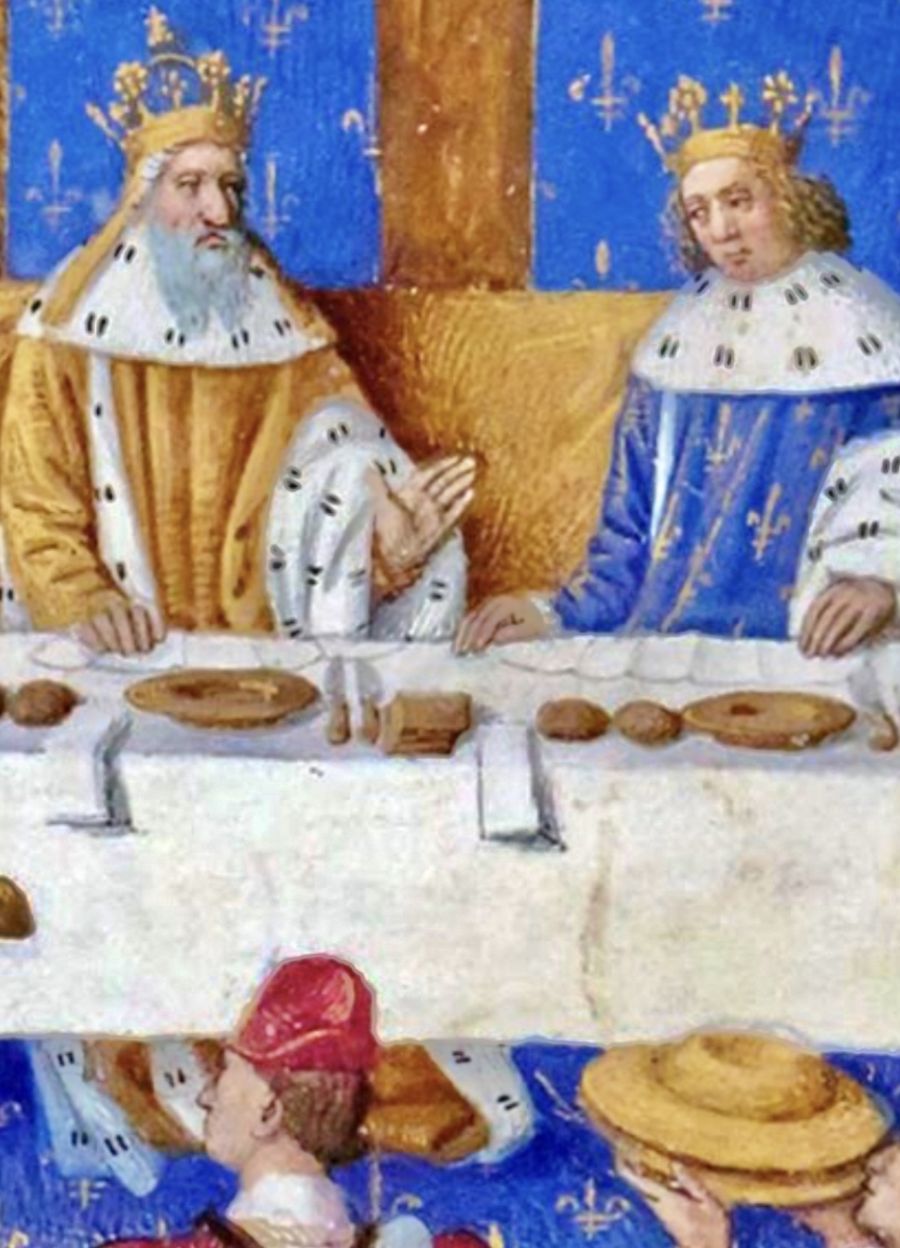
In Luke's Gospel, there are often scenes of meals: at the home of Simon the Pharisee (7:36); at Martha and Mary's house (10:38); again at the home of a Pharisee (11:37); at Zacchaeus' house (19); the Passover meal (22). The importance that Jesus attached to meals even led his detractors to say, "Here is a glutton and a drunkard" (Lk 7:34). Three of these meals take place in the homes of Pharisees and become occasions for disagreement. During the first, at Simon's house (Lk 7:36), a woman of ill repute threw herself at Jesus' feet and, contrary to all expectations, he took her as an example. The second (Lk 11:37) was also the occasion for a serious misunderstanding, this time because Jesus did not wash his hands before sitting down at the table: the discussion degenerates and Jesus takes advantage of it to launch into a severe diatribe, so much so that the episode ends with the scribes and Pharisees beginning to rage against him, setting traps for him to catch him in the act (cf. Lk 11:53). Today, the third meal in the house of a Pharisee takes place on the Sabbath, a day of rest ('Shabbat' in Hebrew means to cease all activity) and celebration: a memorial of the creation of the world, the liberation of the people from Egypt and the anticipation of the great feast of the Day when God will renew the entire creation. The Sabbath included a solemn meal, often an occasion to invite fellow believers, even though the ritual prohibitions of the Law were so numerous that, for some, observance of the prescriptions had obscured the essential: fraternal charity. On that Sabbath, Jesus had healed a man suffering from dropsy (a scene that does not appear in our liturgical reading: cf. Lk 14:2-6), and lively discussions ensued because Jesus was accused of breaking the Sabbath. Here I pause and ask a question: are the relations between Jesus and the Pharisees always a clash? In truth, they are a mixture of sympathy and severity: sympathy because their religious movement, born around 135 BC out of a desire for conversion, was esteemed, and the name 'Pharisee', which means 'separated', expressed the rejection of any political compromise or laxity in religious practice, two problems that were very present at the time. At the time of Christ, their fervent faith and courage in respecting tradition were appreciated, not in a pejorative sense, but as a treasure received from their fathers and transmitted in the form of precepts concerning the smallest details of daily life. These rules, written down after 70 AD, resemble those of Jesus himself and were therefore so respectable that Jesus did not refuse to speak with them, as demonstrated by these meals and the meeting with Nicodemus (cf. Jn 3). Under Herod the Great (39-4 BC), six thousand of them, in order to remain faithful to the Law, refused to swear allegiance to Rome and Herod and were punished with heavy fines. However, their strict observance sometimes led to excessive self-confidence and contempt for others, and Jesus reacted to this because it created certain ambiguities and deviations, well symbolised in the parable of the speck and the log (Mt 7:3-5; Lk 6:41-42). In today's text, Jesus invites us not to occupy the first places, not to recall a norm of good manners and philanthropy, but, in the manner of the prophets, he seeks to open their eyes before it is too late, because excessive self-satisfaction can lead to blindness. And so, precisely because they are people of value and faithful practitioners of the Jewish religion, Jesus unmasks the risk of their contempt for others by reminding them that to enter the Kingdom, they must become like children (cf. Lk 9:46-48; Mt 18:4), welcoming and respecting them without expecting anything in return and, indeed, opening one's heart to the poor, the crippled, the lame and the blind (v. 13). This is a lesson for the Pharisees of yesterday and today, bearing in mind what St James writes: never mix personal favouritism with faith in Christ (cf. Jas 2:1).
+ Giovanni D'Ercole