Lk 16:19-31
Luke 16:19 There was a rich man who was clothed in purple and fine linen and who feasted sumptuously every day.
Luke 16:20 At his gate lay a beggar named Lazarus, covered with sores,
Luke 16:21 and longed to fill his belly with the scraps that fell from the rich man's table. Even the dogs came and licked his sores.
Luke 16:22 One day the poor man died and was carried by the angels to Abraham's bosom. The rich man also died and was buried.
Luke 16:23 In hell, among the torments, he looked up and saw Abraham and Lazarus far away beside him.
Luke 16:24 So he cried out, 'Father Abraham, have mercy on me, and send Lazarus to dip the tip of his finger in water and cool my tongue, for I am in agony in this flame.
Luke 16:25 But Abraham replied, 'Son, remember that you received your good things during your lifetime, and Lazarus likewise received his bad things; but now he is comforted and you are in torment.
Luke 16:26 And besides all this, between us and you there is a great gulf fixed, so that those who wish to pass from here to you cannot, nor can they cross over from there to us.
Luke 16:27 He replied, 'Then I beg you, father, send him to my father's house,
Luke 16:28 for I have five brothers. Let him warn them, so that they will not also come to this place of torment.
Luke 16:29 But Abraham replied, 'They have Moses and the Prophets; let them listen to them.
Luke 16:30 But he said, 'No, father Abraham, but if someone from the dead goes to them, they will repent.
Luke 16:31 Abraham replied, 'If they do not listen to Moses and the Prophets, they will not be persuaded even if someone rises from the dead.
"There was a rich man." This man, unlike the poor man, is not defined by his name, which deprives him of his personal identity, but is presented from the outset as a person shrouded in anonymity and destined for oblivion, which is the worst condemnation for a man and characterises the realm of the dead. On the other hand, this man is defined only by his state of life: rich, dressed in purple and fine linen, feasting every day. A state of life made up of ephemeral things, on which he has based his life and to which he is devoting himself and beyond which he does not go, suffering the fate of their inevitable perishability. In fact, all that is said about him is that he is buried, unlike Lazarus, who is lifted up by the angels. He is, therefore, a man who lives in an immanentistic way without any future prospects, wasting his time on frivolities.
Juxtaposed with this character, who lived in luxury and softness, Luke presents another who is diametrically opposed. The rich man is now contrasted with the poor man; the purple and fine linen clothes that cover the rich man's body are contrasted with the sores that cover the poor man's; the rich man's lavish banquet is contrasted with the poor man's desire to feed himself with some leftovers from this banquet, while dogs lick his sore body with their tongues. But unlike the rich man, shrouded in anonymity and destined for oblivion in hell, this poor man has a name that identifies him and gives him substance, since in ancient times a name expressed the essence of the person who bore it: Lazarus.
Verse 22 is characterised by two contrasting movements, ascending for Lazarus and descending for the rich man, and at the same time acts as a watershed between two worlds that do not communicate with each other. In this context, death constitutes the obligatory passage from 'here' to 'there'. But while death unites the two characters, the manner in which the passage takes place is different: Lazarus 'was carried by the angels into Abraham's bosom', while the rich man was only buried. In reality, there was no real transition for the latter, but simply a burial; he is associated, pending his complete assimilation, with the land for which he had spent his life. The fate of Lazarus was very different, as he was accompanied to Abraham's bosom by angels. This was a sort of apotheosis emphasised by two elements: the angels as ferrymen and Abraham's bosom. The former closely resemble Charon from Greek mythology, the ferryman of the souls of the dead, who accompanied them to their final resting place, crossing the river Styx, which marked the boundary between the two worlds... but that is another matter.
The second element concerns Lazarus' destination, 'in Abraham's bosom', the patriarch who was the repository of the promise, filled with divine blessing for his faith and obedience, father of a people as numerous as the stars in the sky and the sand on the seashore. Abraham's bosom, therefore, becomes the image of a safe place, permeated by God himself, who in Abraham began the history of salvation. Lazarus, then, ferried by the angels, will become part of this salvific world, which is not described to us, but is left only to be intuited. After all, it was not Luke's intention to describe the afterlife, but simply to construct, through images, a context for reflection on the destinies of the future life, which are played out here on earth.
Verses 23-26 open with a topographical note, which serves as a frame within which the scene of the dialogue between Abraham and the rich man is set: Luke uses the word 'Hadē' rather than 'hell', which was the realm of the dead for the Greco-Hellenistic world to which Luke was writing and which would have had difficulty understanding the corresponding Hebrew term 'Sheol'. It was an underground world, located in an unspecified place unreachable by man, where souls live in a larval state, their consistency that of a shadow, enveloped in oblivion and the darkness of the shadows, which takes away all hope and where it is no longer possible to praise God.
Hadē, therefore, like its Hebrew counterpart Sheol, should not be understood as a place of eternal damnation, but only as a sort of warehouse, a repository where souls are collected and crammed together awaiting the final judgement. Already in intertestamental Jewish literature, although the place is the same for everyone, there is a division between good and bad, between the righteous and the unrighteous, a sort of anticipation of what the final judgement will be. This is attested to in verse 26: 'A great chasm has been fixed between us and you, so that those who want to pass from here to you cannot, nor can they cross over to us from there'. This abyss, rather than a physical demarcation, defines a sort of insurmountable barrier that separates the righteous from the unrighteous and, in some way, represents the divine judgement that already weighs on these shadows.
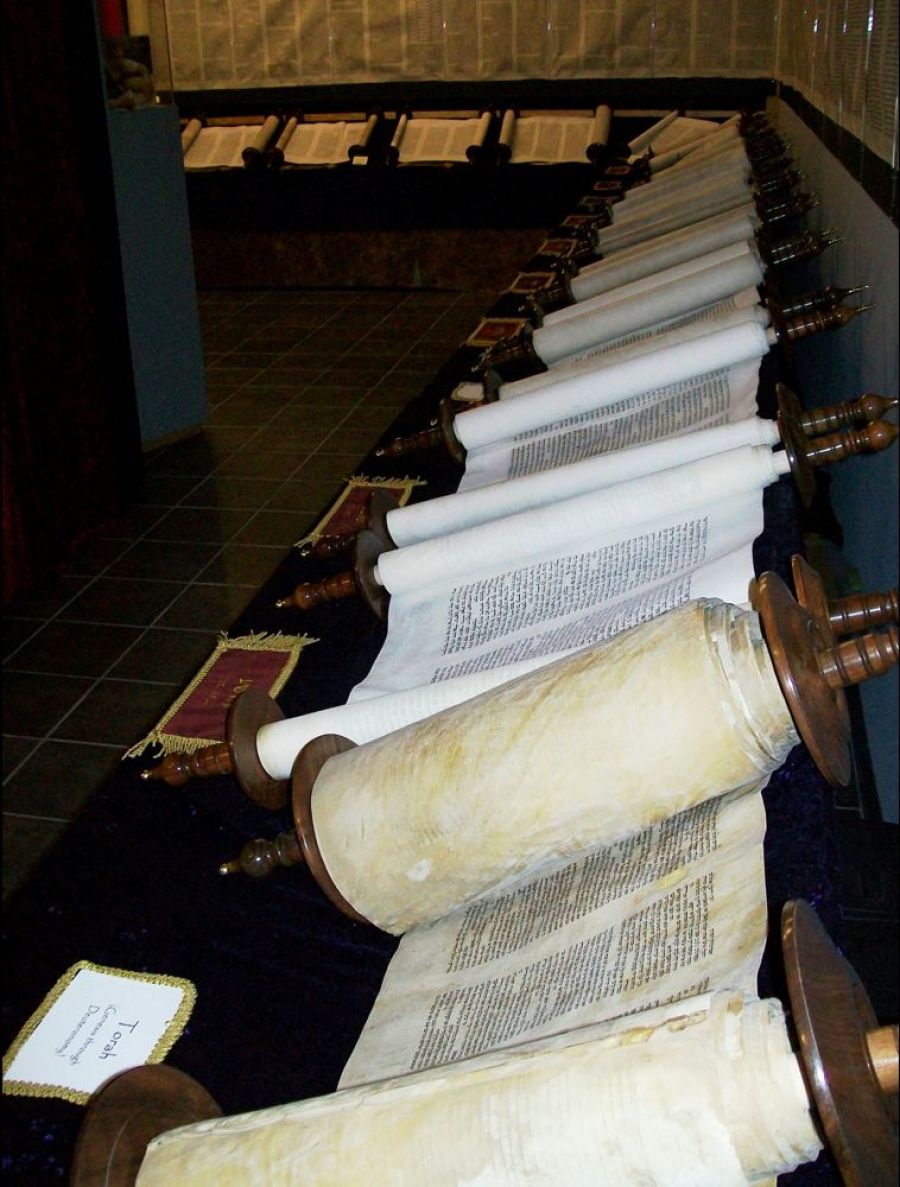
The last part of the passage, which concludes the story, is the most interesting from a catechetical point of view, as it presents a faith based not on sensationalist miracles, but on the Scriptures, the solid rock on which to build the house of one's life: "If they do not listen to Moses and the Prophets, they will not be persuaded even if someone rises from the dead." Abraham draws attention to the Scriptures as a sure guide for one's life. In other words, those whose hearts are engulfed in earthly riches cannot perceive the will of God contained in the Scriptures. Not even the appearance of a dead person could lead them to repentance and conversion.
Argentino Quintavalle, author of the books
- Apocalypse – exegetical commentary
- The Apostle Paul and the Judaizers – Law or Gospel?
Jesus Christ, True God and True Man in the Trinitarian Mystery
The Prophetic Discourse of Jesus (Matthew 24-25)
All generations will call me blessed
Catholics and Protestants in comparison – In defence of the faith
The Church and Israel according to St Paul – Romans 9-11
(Available on Amazon)