Feb 14, 2026 Written by 

Desert, solitude, adoration

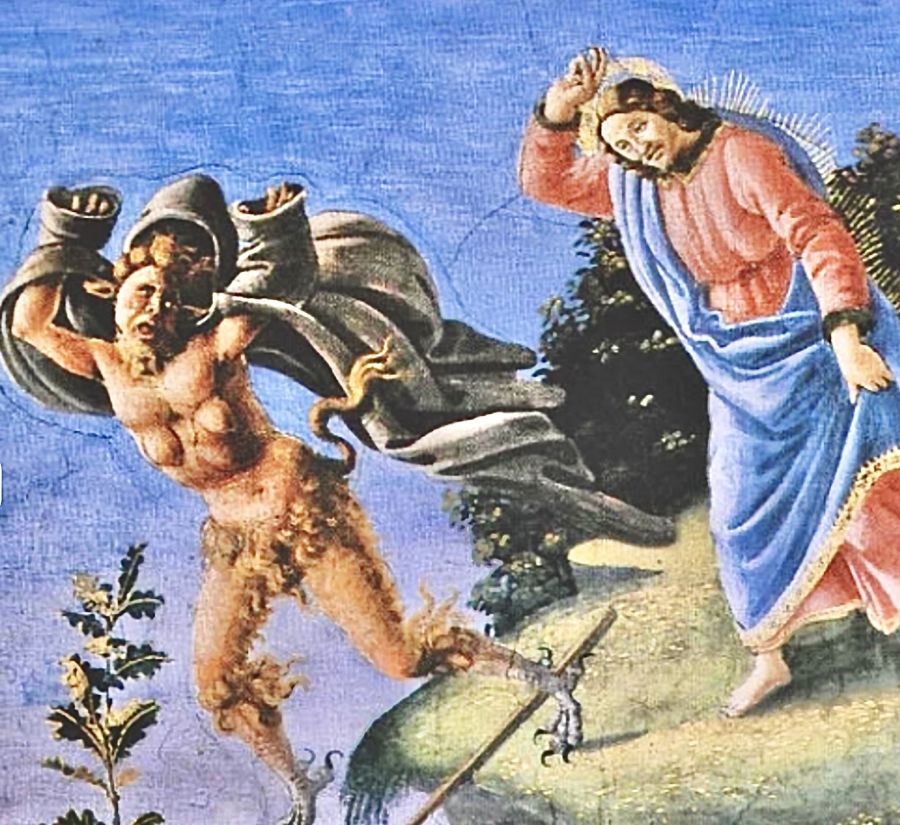
The enemy suggests to the Son of God a different way from the Father, but Jesus shrugs off that stench.


Francis' life had undergone a radical change when the Physician Jesus had spoken to him.

The Poor Man had realised that he was loved and that, by following Him, he would be healed from self-worship to render it to God alone.

The Crucifix at San Damiano and the leper he had met had changed him inwardly.

The Minim of Assisi devoted himself to frequent fasts and nights in prayer, for periods of forty days (in consonance with the forty days Jesus spent in the desert).

He did this often - apart from the period before Easter.

At those times he would suspend his apostolic commitments, retiring to hermitages: simple and austere places, far from the cities.

There, as his biographer Celano recalls, he would build his nest in the clefts of the rock*.

The Sources chronicle his Lenten periods, where he was often put to the test.

"Two years before he rendered his spirit to God, after many and various labours, divine Providence drew him aside and led him to a lofty mountain, called the mountain of La Verna.

Here he had begun, according to his custom, to fast during Lent in honour of St Michael the Archangel, when he began to feel flooded with extraordinary sweetness in contemplation, inflamed by a more lively flame of celestial desires, filled with richer divine gifts [...] intent on seeking God's will, to which he yearned with the greatest ardour to conform himself in everything" (FF1223).

La Verna was par excellence "the desert" of Francis, where, as happened to Jesus in arid places, he was subjected to oppressive temptations.

While the Saint was in prayer, there "came a great multitude of ferocious demons [...] and they began strongly to fight and vex him" (FF 1901).

But he began to shout aloud:

"«O damned spirits, you can do nothing except as much as the hand of God permits you [...] And I am prepared to cheerfully endure every punishment and every adversity that you, my God, want to send me for my sins».

Then the demons, confused and overcome by his constancy and patience, departed" (FF 1901).

He fed more than on material bread on that of the Holy Word and taught his brothers to adore God alone, wherever they were, trusting in divine care and solicitude.

In fact, his sons, faithful to Francis' exhortation, when they passed near a church, would stop and prone, with body and spirit, adore the Almighty, saying: «We adore you, O Christ, in all your churches» (FF 401).

The power of the Holy Spirit placed them in the right attitude of need, before power or success, just as Christ had instructed them, without allowing themselves to be caged by such seductions.


«It is written: The Lord thy God shalt thou worship, and him only shalt thou worship».

«And the Spirit drove him into the wilderness, and he was in the wilderness tempted by the satan, and was with the beasts»


*Famous is the hermitage of the Carceri, near Assisi; in reality Francis created twenty in central Italy.


[1st Sunday in Lent]

677 Last modified on Saturday, 14 February 2026 06:55
Teresa Girolami

Teresa Girolami è laureata in Materie letterarie e Teologia. Ha pubblicato vari testi, fra cui: "Pellegrinaggio del cuore" (Ed. Piemme); "I Fiammiferi di Maria - La Madre di Dio in prosa e poesia"; "Tenerezza Scalza - Natura di donna"; co-autrice di "Dialogo e Solstizio".

Email This email address is being protected from spambots. You need JavaScript enabled to view it.
First, the world of the Bible presents us with a new image of God. In surrounding cultures, the image of God and of the gods ultimately remained unclear and contradictory (Deus Caritas est n.9)
Vi è anzitutto la nuova immagine di Dio. Nelle culture che circondano il mondo della Bibbia, l'immagine di dio e degli dei rimane, alla fin fine, poco chiara e in sé contraddittoria (Deus Caritas est n.9)
God loves the world and will love it to the end. The Heart of the Son of God pierced on the Cross and opened is a profound and definitive witness to God’s love. Saint Bonaventure writes: “It was a divine decree that permitted one of the soldiers to open his sacred wide with a lance… The blood and water which poured out at that moment was the price of our salvation” (John Paul II)
Il mondo è amato da Dio e sarà amato fino alla fine. Il Cuore del Figlio di Dio trafitto sulla croce e aperto, testimonia in modo profondo e definitivo l’amore di Dio. Scriverà San Bonaventura: “Per divina disposizione è stato permesso che un soldato trafiggesse e aprisse quel sacro costato. Ne uscì sangue ed acqua, prezzo della nostra salvezza” (Giovanni Paolo II)
Thus, paradoxically, from a sign of condemnation, death and failure, the Cross becomes a sign of redemption, life and victory, through faith, the fruits of salvation can be gathered (Pope Benedict)
Così la Croce, paradossalmente, da segno di condanna, di morte, di fallimento, diventa segno di redenzione, di vita, di vittoria, in cui, con sguardo di fede, si possono scorgere i frutti della salvezza (Papa Benedetto)
[Nicodemus] felt the fascination of this Rabbi, so different from the others, but could not manage to rid himself of the conditioning of his environment that was hostile to Jesus, and stood irresolute on the threshold of faith (Pope Benedict)
[Nicodemo] avverte il fascino di questo Rabbì così diverso dagli altri, ma non riesce a sottrarsi ai condizionamenti dell’ambiente contrario a Gesù e resta titubante sulla soglia della fede (Papa Benedetto)
Those wounds that, in the beginning were an obstacle for Thomas’s faith, being a sign of Jesus’ apparent failure, those same wounds have become in his encounter with the Risen One, signs of a victorious love. These wounds that Christ has received for love of us help us to understand who God is and to repeat: “My Lord and my God!” Only a God who loves us to the extent of taking upon himself our wounds and our pain, especially innocent suffering, is worthy of faith (Pope Benedict)
Quelle piaghe, che per Tommaso erano dapprima un ostacolo alla fede, perché segni dell’apparente fallimento di Gesù; quelle stesse piaghe sono diventate, nell’incontro con il Risorto, prove di un amore vittorioso. Queste piaghe che Cristo ha contratto per amore nostro ci aiutano a capire chi è Dio e a ripetere anche noi: “Mio Signore e mio Dio”. Solo un Dio che ci ama fino a prendere su di sé le nostre ferite e il nostro dolore, soprattutto quello innocente, è degno di fede (Papa Benedetto)
We see that the disciples are still closed in their thinking […] How does Jesus answer? He answers by broadening their horizons […] and he confers upon them the task of bearing witness to him all over the world, transcending the cultural and religious confines within which they were accustomed to think and live (Pope Benedict)
Vediamo che i discepoli sono ancora chiusi nella loro visione […] E come risponde Gesù? Risponde aprendo i loro orizzonti […] e conferisce loro l’incarico di testimoniarlo in tutto il mondo oltrepassando i confini culturali e religiosi entro cui erano abituati a pensare e a vivere (Papa Benedetto)

Due Fuochi due Vie - Vol. 1 Due Fuochi due Vie - Vol. 2 Due Fuochi due Vie - Vol. 3 Due Fuochi due Vie - Vol. 4 Due Fuochi due Vie - Vol. 5 Dialogo e Solstizio I fiammiferi di Maria

duevie.art

don Giuseppe Nespeca

Tel. 333-1329741


Disclaimer

Questo blog non rappresenta una testata giornalistica in quanto viene aggiornato senza alcuna periodicità. Non può pertanto considerarsi un prodotto editoriale ai sensi della legge N°62 del 07/03/2001.
Le immagini sono tratte da internet, ma se il loro uso violasse diritti d'autore, lo si comunichi all'autore del blog che provvederà alla loro pronta rimozione.
L'autore dichiara di non essere responsabile dei commenti lasciati nei post. Eventuali commenti dei lettori, lesivi dell'immagine o dell'onorabilità di persone terze, il cui contenuto fosse ritenuto non idoneo alla pubblicazione verranno insindacabilmente rimossi.







