


Teresa Girolami
Teresa Girolami è laureata in Materie letterarie e Teologia. Ha pubblicato vari testi, fra cui: "Pellegrinaggio del cuore" (Ed. Piemme); "I Fiammiferi di Maria - La Madre di Dio in prosa e poesia"; "Tenerezza Scalza - Natura di donna"; co-autrice di "Dialogo e Solstizio".
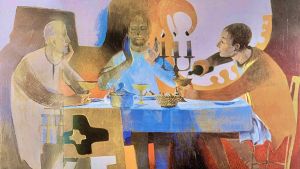
At the Banquet
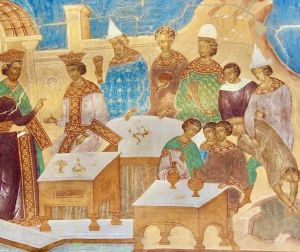
Jesus compares the kingdom of heaven to a wedding banquet.
The guests do not care to attend the king's banquet, and the servants are sent to gather those they find in the streets, but in their wedding garments.
«For many are called, but few chosen» (Mt 22:14).
Let us now look at the Poor Man of Assisi: how he lives all this, according to the account of the Sources.
Enamoured of Our Lady Poverty, Francis insistently invited the Same to take food with the friars [cf. Sacrum Commercium Beati Francisci cum Domina Paupertate]:
"Then they led her to the place where the table was prepared. As she arrived she looked around and, seeing nothing but three or four loaves of barley bread and bran placed on the grass, was seized with great admiration" (FF 2020).
He then "commanded them all to be together and spoke words of life to them, saying:
«Be blessed, my sons, by the Lord God who created the heavens and the earth, for you have welcomed me into your home with such fullness of charity, that today, being with you, it seemed to me that I was in the paradise of the Lord [...].
Here is what I have sought so much, now I contemplate it [...] because on earth I have united myself with men who are for me the faithful image of Him who is my spouse in heaven.
May the Lord bless your courage and praise the work of your hands»" (FF 2024).
Called and elected in the company of Our Lady Poverty, to follow in the footsteps of the Son of God.
Clare herself, in her Spiritual Testament, a true Franciscan pearl, addresses her present and future daughters, inviting them to guard the priceless treasure of election. We read in it:
«Among the other benefits that we have received and every day receive from our Donor, the Father of Mercies, for which we are greatly obliged to render to Him glorious living deeds of grace, great is that of our vocation. And the greater and more perfect it is, the more we are obliged to him. Therefore the Apostle admonishes: 'Know your vocation well'» (FF 2823).
And again:
«The Son of God became our Way; and this by word and example our blessed father Francis, a true lover and imitator of Him, showed and taught us» (FF 2824).
At this point Clare recalls when the Saint, under divine inspiration, prophesied about them.
"Having climbed over the wall of the said church [...] he addressed some poor people who were standing nearby:
«Come and help me in this work of the monastery of St Damian, for soon women will come to inhabit it, and by the fame of the holiness of their lives glory will be given to our heavenly Father throughout his holy Church».
We can, therefore, admire in this fact the great goodness of God towards us: He has deigned, in His superabundant mercy and charity, to inspire such words to His Saint concerning our vocation and election» (FF 2827-2828).
[Thursday of the 20th wk in O.T. (Mt 22:1-14)]
Unwavering Faith and fragments of Bread, of the mixed-race Woman and of Ciccu
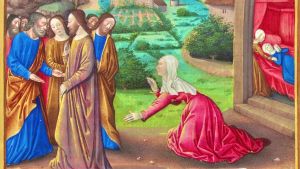
Longing to be concerned only with God: on the Mount and on the sea
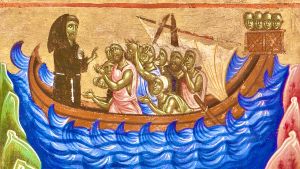
Loaves and Fishes of Francis. Feeding the multitudes: simple and foolish to the very end
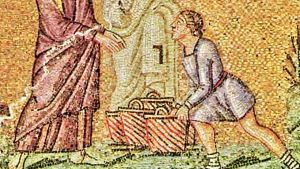
Treasure and Pearl of Francis and Clare. In the field of Our Lady of Poverty
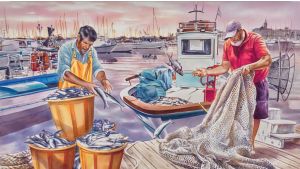
Francis and Clare (amidst the weeds): born and raised in a humble religion
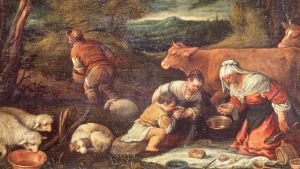
The Sower of the Word, and the Beautiful Soil. «River of Paradise» and Clare
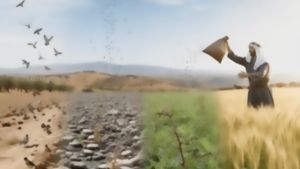
Francis and Clare. The Humble, not the learned: great hearts, modest dwellings

The Welcomings of Francis and Clare. Actively Taking Up the Cross
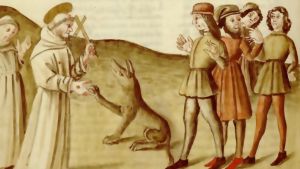
Emmaus. Seeing and Believing with Francis and Clare. On a Pilgrimage
The fool in the Bible, the one who does not want to learn from the experience of visible things, that nothing lasts for ever but that all things pass away, youth and physical strength, amenities and important roles. Making one's life depend on such an ephemeral reality is therefore foolishness (Pope Benedict)
L’uomo stolto nella Bibbia è colui che non vuole rendersi conto, dall’esperienza delle cose visibili, che nulla dura per sempre, ma tutto passa: la giovinezza come la forza fisica, le comodità come i ruoli di potere. Far dipendere la propria vita da realtà così passeggere è, dunque, stoltezza (Papa Benedetto)
As sometimes happens in the Gospel, faced with the trap set by his enemies, Jesus, with his response, rises above the contingent controversy and goes far beyond the particular and mutually divergent positions (Pope John Paul II)
Come talora accade nel Vangelo, di fronte al tranello mossogli dai suoi nemici, Gesù, con la sua risposta, s’innalza al di sopra della polemica contingente e va ben oltre le posizioni particolari e tra loro divergenti (Papa Giovanni Paolo II)
And blasphemy, the sin against the Holy Spirit, is the one unforgivable sin — as Jesus said — because it comes from closing the heart to God’s mercy which acts in Jesus (Pope Francis)
E la bestemmia, il peccato contro lo Spirito Santo, è l’unico peccato imperdonabile – così dice Gesù –, perché parte da una chiusura del cuore alla misericordia di Dio che agisce in Gesù (Papa Francesco)
The great thinker Romano Guardini wrote that the Lord “is always close, being at the root of our being. Yet we must experience our relationship with God between the poles of distance and closeness. By closeness we are strengthened, by distance we are put to the test” (Pope Benedict)
Il grande pensatore Romano Guardini scrive che il Signore “è sempre vicino, essendo alla radice del nostro essere. Tuttavia, dobbiamo sperimentare il nostro rapporto con Dio tra i poli della lontananza e della vicinanza. Dalla vicinanza siamo fortificati, dalla lontananza messi alla prova” (Papa Benedetto)
The present-day mentality, more perhaps than that of people in the past, seems opposed to a God of mercy, and in fact tends to exclude from life and to remove from the human heart the very idea of mercy (Pope John Paul II)
La mentalità contemporanea, forse più di quella dell'uomo del passato, sembra opporsi al Dio di misericordia e tende altresì ad emarginare dalla vita e a distogliere dal cuore umano l'idea stessa della misericordia (Papa Giovanni Paolo II)
«Religion of appearance» or «road of humility»? (Pope Francis)
«Religione dell’apparire» o «strada dell’umiltà»? (Papa Francesco)
In the crucified Jesus a kind of transformation and concentration of the signs occurs: he himself is the “sign of God”, especially in the mystery of his Death and Resurrection (Pope John Paul II)
In Gesù crocifisso avviene come una trasformazione e concentrazione dei segni: è Lui stesso il "segno di Dio", soprattutto nel mistero della sua morte e resurrezione (Papa Giovanni Paolo II)
However, the king was not discouraged and sent his servants out to seek other guests to fill his banquet hall. Thus the aspect of the refusal of those initially invited caused the invitation to be extended to all [Pope Benedict]
Il re però non si scoraggia e invia i suoi servi a cercare altri commensali per riempire la sala del suo banchetto. Così il rifiuto dei primi ha come effetto l’estensione dell’invito a tutti [Papa Benedetto]








duevie.art
don Giuseppe Nespeca
Tel. 333-1329741
Disclaimer
Questo blog non rappresenta una testata giornalistica in quanto viene aggiornato senza alcuna periodicità. Non può pertanto considerarsi un prodotto editoriale ai sensi della legge N°62 del 07/03/2001.
Le immagini sono tratte da internet, ma se il loro uso violasse diritti d'autore, lo si comunichi all'autore del blog che provvederà alla loro pronta rimozione.
L'autore dichiara di non essere responsabile dei commenti lasciati nei post. Eventuali commenti dei lettori, lesivi dell'immagine o dell'onorabilità di persone terze, il cui contenuto fosse ritenuto non idoneo alla pubblicazione verranno insindacabilmente rimossi.