Nov 7, 2025 Written by 

Prayer source of mercy

The Gospel parable which we have just heard (cf. Lk 18:1-8) contains an important teaching: we “ought always to pray and not lose heart” (v. 1). This means, then, pray constantly, not just when I feel like it. No, Jesus says that we ought “always to pray and not lose heart”. And he offers the example of the widow and the judge.

The judge is a powerful person, called to issue judgment on the basis of the Law of Moses. That is why the biblical tradition recommended that judges be people who fear God, who are worthy of faith, impartial and incorruptible (cf. Ex 18:21). However, this judge “neither feared God nor regarded man” (Lk 18:2). As a judge, he was unfair, unscrupulous, who did not take the Law into account but did whatever he wanted, according to his own interests. It was to him that a widow turned for justice. Widows, along with orphans and foreigners, were the most vulnerable groups of society. The rights afforded them by the Law could be easily disregarded because, being isolated and defenceless, they could hardly be assertive. A poor widow, there, alone, with no one to defend her, might be ignored, might even be denied justice. Just as the orphan, just as the foreigner, the migrant: in that time this was a very serious problem. Faced with the judge’s indifference, the widow has recourse to her only weapon: to bother him incessantly with her request for justice. And because of her insistence, she achieves her end. At a certain point, the judge grants her request, not because he is moved by mercy or because his conscience has been working on him; he simply admits: “because this widow bothers me, I will vindicate her, or she will wear me out by her continual coming” (v. 5).

From this parable Jesus draws two conclusions: if the widow could manage to bend the dishonest judge with her incessant requests, how much more will God, who is the good and just Father, “vindicate his elect, who cry to him day and night”; moreover, will not “delay long over them”, but will act “speedily” (vv. 7-8).

That is why Jesus urges us to pray and “not to lose heart”. We all go through times of tiredness and discouragement, especially when our prayers seem ineffective. But Jesus assures us: unlike the dishonest judge, God promptly answers his children, even though this doesn’t mean he will necessarily do it when and how we would like. Prayer does not work like a magic wand! It helps us keep faith in God, and to entrust ourselves to him even when we do not understand his will. In this, Jesus himself — who prayed constantly! — is our model. The Letter to the Hebrews reminds us that “In the days of his flesh, Jesus offered up prayers and supplications, with loud cries and tears, to him [God] who was able to save him from death, and he was heard for his godly fear” (5:7). At first glance this statement seems far-fetched, because Jesus died on the Cross. Yet, the Letter to the Hebrews makes no mistake: God has indeed saved Jesus from death by giving him complete victory over it, but the path to that [victory] is through death itself! The supplication that God has answered referred to Jesus’ prayer in Gethsemane. Assailed by looming anguish, Jesus prays to the Father to deliver him of this bitter cup of the Passion, but his prayer is pervaded by trust in the Father and he entrusts himself entirely to his will: “not as I will,” Jesus says, “but as thou wilt” (Mt 26:39). The object of prayer is of secondary importance; what matters above all is his relationship with the Father. This is what prayer does: it transforms the desire and models it according to the will of God, whatever that may be, because the one who prays aspires first of all to union with God, who is merciful Love.

The parable ends with a question: “when the Son of man comes, will he find faith on earth?” (v. 8). And with this question we are all warned: we must not cease to pray, even if left unanswered. It is prayer that conserves the faith, with out it faith falters! Let us ask the Lord for a faith that is incessant prayer, persevering, like that of the widow in the parable, a faith that nourishes our desire for his coming. And in prayer let us experience that compassion of God, who like a Father comes to encounter his children, full of merciful love.

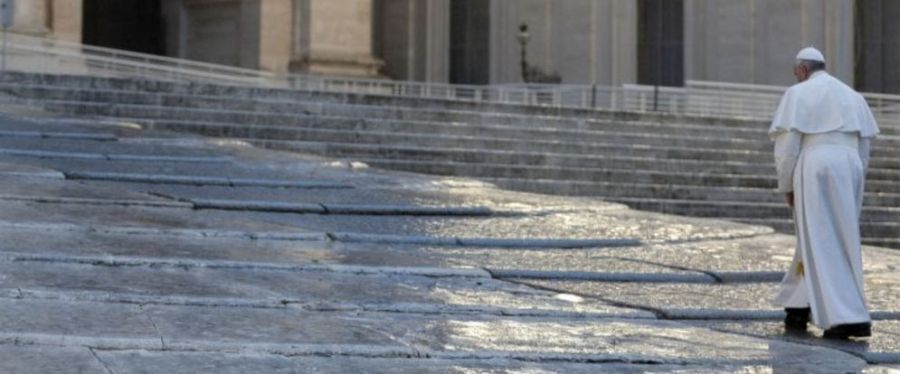
[Pope Francis, General Audience 25 May 2016]

89 Last modified on Friday, 07 November 2025 02:37
don Giuseppe Nespeca

Giuseppe Nespeca è architetto e sacerdote. Cultore della Sacra scrittura è autore della raccolta "Due Fuochi due Vie - Religione e Fede, Vangeli e Tao"; coautore del libro "Dialogo e Solstizio".

Email This email address is being protected from spambots. You need JavaScript enabled to view it.
In these words we find the core of biblical truth about St. Joseph; they refer to that moment in his life to which the Fathers of the Church make special reference (Redemtoris Custos n.2)
In queste parole è racchiuso il nucleo centrale della verità biblica su san Giuseppe, il momento della sua esistenza a cui in particolare si riferiscono i padri della Chiesa (Redemtoris Custos n.2)
The ancient priest stagnates, and evaluates based on categories of possibilities; reluctant to the Spirit who moves situations
Il sacerdote antico ristagna, e valuta basando su categorie di possibilità; riluttante allo Spirito che smuove le situazioni
«Even through Joseph’s fears, God’s will, his history and his plan were at work. Joseph, then, teaches us that faith in God includes believing that he can work even through our fears, our frailties and our weaknesses. He also teaches us that amid the tempests of life, we must never be afraid to let the Lord steer our course. At times, we want to be in complete control, yet God always sees the bigger picture» (Patris Corde, n.2)
«Anche attraverso l’angustia di Giuseppe passa la volontà di Dio, la sua storia, il suo progetto. Giuseppe ci insegna così che avere fede in Dio comprende pure il credere che Egli può operare anche attraverso le nostre paure, le nostre fragilità, la nostra debolezza. E ci insegna che, in mezzo alle tempeste della vita, non dobbiamo temere di lasciare a Dio il timone della nostra barca. A volte noi vorremmo controllare tutto, ma Lui ha sempre uno sguardo più grande» (Patris Corde, n.2)
Man is the surname of God: the Lord in fact takes his name from each of us - whether we are saints or sinners - to make him our surname (Pope Francis). God's fidelity to the Promise is realized not only through men, but with them (Pope Benedict).
L’uomo è il cognome di Dio: il Signore infatti prende il nome da ognuno di noi — sia che siamo santi, sia che siamo peccatori — per farlo diventare il proprio cognome (Papa Francesco). La fedeltà di Dio alla Promessa si attua non soltanto mediante gli uomini, ma con loro (Papa Benedetto)
In the communities of Galilee and Syria the pagans quickly became a majority - elevated to the rank of sons. They did not submit to nerve-wracking processes, but spontaneously were recognizing the Lord
Nelle comunità di Galilea e Siria i pagani diventavano rapidamente maggioranza - elevati al rango di figli. Essi non si sottoponevano a trafile snervanti, ma spontaneamente riconoscevano il Signore
And thus we must see Christ again and ask Christ: “Is it you?” The Lord, in his own silent way, answers: “You see what I did, I did not start a bloody revolution, I did not change the world with force; but lit many I, which in the meantime form a pathway of light through the millenniums” (Pope Benedict)
E così dobbiamo di nuovo vedere Cristo e chiedere a Cristo: “Sei tu?”. Il Signore, nel modo silenzioso che gli è proprio, risponde: “Vedete cosa ho fatto io. Non ho fatto una rivoluzione cruenta, non ho cambiato con forza il mondo, ma ho acceso tante luci che formano, nel frattempo, una grande strada di luce nei millenni” (Papa Benedetto)
Experts in the Holy Scriptures believed that Elijah's return should anticipate and prepare for the advent of the Kingdom of God. Since the Lord was present, the first disciples wondered what the value of that teaching was. Among the people coming from Judaism the question arose about the value of ancient doctrines…

Due Fuochi due Vie - Vol. 1 Due Fuochi due Vie - Vol. 2 Due Fuochi due Vie - Vol. 3 Due Fuochi due Vie - Vol. 4 Due Fuochi due Vie - Vol. 5 Dialogo e Solstizio I fiammiferi di Maria

duevie.art

don Giuseppe Nespeca

Tel. 333-1329741


Disclaimer

Questo blog non rappresenta una testata giornalistica in quanto viene aggiornato senza alcuna periodicità. Non può pertanto considerarsi un prodotto editoriale ai sensi della legge N°62 del 07/03/2001.
Le immagini sono tratte da internet, ma se il loro uso violasse diritti d'autore, lo si comunichi all'autore del blog che provvederà alla loro pronta rimozione.
L'autore dichiara di non essere responsabile dei commenti lasciati nei post. Eventuali commenti dei lettori, lesivi dell'immagine o dell'onorabilità di persone terze, il cui contenuto fosse ritenuto non idoneo alla pubblicazione verranno insindacabilmente rimossi.