Nov 15, 2026 Written by 

Quantity or Fullness

Gospel passage is composed of two parts: one that describes how not to be followers of Christ; the other offers an example of a Christian. 

Let’s start with the first: what not to do. In the first part, Jesus accuses the scribes, the teachers of the law, of having three defects in their lifestyle: pride, greed and hypocrisy. They like “to have salutations in the market places and the best seats in the synagogues and the places of honor at feasts” (Mk 12:38-39). But beneath such solemn appearances they are hiding falsehood and injustice.

While flaunting themselves in public, they use their authority — as Jesus says — to devour “the houses of widows” (cf. v. 40); those who, along with orphans and foreigners, were considered to be the people most vulnerable and least protected. Lastly, Jesus says that the scribes, “for a pretence make long prayers” (v. 40). Even today we risk taking on these attitudes. For example, when prayer is separate from justice so that God cannot be worshiped, and causing harm to the poor. Or when one claims to love God, but instead offers him only grandiosity for one’s own advantage.

The second part of the Gospel follows this line of thinking. The scene is set in the temple of Jerusalem, precisely in the place where people are tossing coins as offerings. There are many rich people putting in large sums, and there is a poor woman, a widow, who contributes only two bits, two small coins. Jesus observes the woman carefully and calls the disciples’ attention to the sharp contrast of the scene.

The wealthy contributed with great ostentation what for them was superfluous, while the widow, Jesus says, “put in everything she had, her whole living” (v. 44). For this reason, Jesus says, she gave the most of all. Because of her extreme poverty, she could have offered a single coin to the temple and kept the other for herself. But she did not want to give just half to God; she divested herself of everything. In her poverty she understood that in having God, she had everything; she felt completely loved by him and in turn loved him completely. What a beautiful example this little old woman offers us! 

Today Jesus also tells us that the benchmark is not quantity but fullness. There is a difference between quantity and fullness. You can have a lot of money and still be empty. There is no fullness in your heart. This week, think about the difference there is between quantity and fullness. It is not a matter of the wallet, but of the heart. There is a difference between the wallet and the heart.... There are diseases of the heart, which reduce the heart to the wallet.... This is not good! To love God “with all your heart” means to trust in him, in his providence, and to serve him in the poorest brothers and sisters without expecting anything in return.

Allow me to tell you a story, which happened in my previous diocese. A mother and her three children were at the table, the father was at work. They were eating Milan-style cutlets.... There was a knock at the door and one of the children — they were young, 5, 6 and the oldest was 7 — comes and says: “Mom, there is a beggar asking for something to eat”. And the mom, a good Christian, asks them: “What shall we do?” — “Let’s give him something, mom…” – “Ok”. She takes her fork and knife and cuts the cutlets in half. “Ah no, mom, no! Not like this! Take something from the fridge” — “No! Let’s make three sandwiches with this!”. The children learned that true charity is given, not with what is left over, but with what we need. That afternoon I am sure that the children were a bit hungry.... But this is how it’s done!

Faced with the needs of our neighbours, we are called — like these children and the halved cutlets — to deprive ourselves of essential things, not only the superfluous; we are called to give the time that is necessary, not only what is extra; we are called to give immediately and unconditionally some of our talent, not after using it for our own purposes or for our own group.

Let us ask the Lord to admit us to the school of this poor widow, whom Jesus places in the cathedra and presents as a teacher of the living Gospel even to the astonishment of the disciples. Through the intercession of Mary, the poor woman who gave her entire life to God for us, let us ask for a heart that is poor, but rich in glad and freely given generosity.

[Pope Francis, Angelus 8 November 2015]

17 Last modified on Sunday, 15 November 2026 03:52
don Giuseppe Nespeca

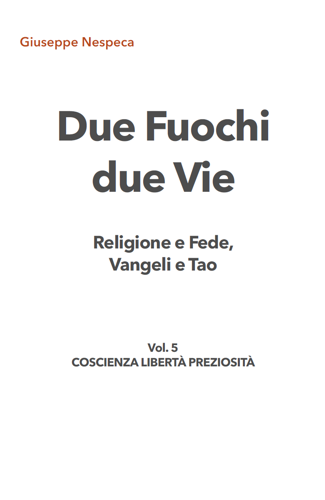
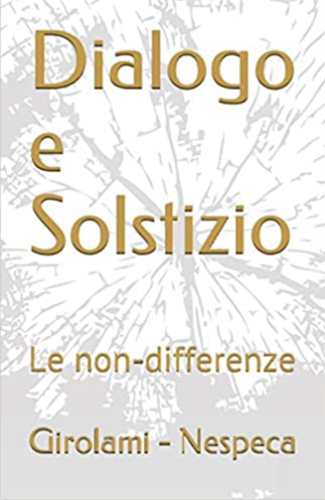
Giuseppe Nespeca è architetto e sacerdote. Cultore della Sacra scrittura è autore della raccolta "Due Fuochi due Vie - Religione e Fede, Vangeli e Tao"; coautore del libro "Dialogo e Solstizio".

Email This email address is being protected from spambots. You need JavaScript enabled to view it.
The Church, which is ceaselessly born from the Eucharist, from Jesus' gift of self, is the continuation of this gift, this superabundance which is expressed in poverty, in the all that is offered in the fragment (Pope Benedict)
La Chiesa, che incessantemente nasce dall’Eucaristia, dall’autodonazione di Gesù, è la continuazione di questo dono, di questa sovrabbondanza che si esprime nella povertà, del tutto che si offre nel frammento (Papa Benedetto)
How we treat them will be taken as the way we treat Jesus himself. We do not see here a simple literary device, or a simple metaphor [Pope Benedict]
Il comportamento che noi abbiamo nei loro confronti sarà dunque considerato come il comportamento che abbiamo nei confronti di Gesù stesso. Non vediamo in questo una semplice formula letteraria, una semplice immagine! [Papa Benedetto]
The Sadducees, addressing Jesus for a purely theoretical "case", at the same time attack the Pharisees' primitive conception of life after the resurrection of the bodies; they in fact insinuate that faith in the resurrection of the bodies leads to admitting polyandry, contrary to the law of God (Pope John Paul II)
I Sadducei, rivolgendosi a Gesù per un "caso" puramente teorico, attaccano al tempo stesso la primitiva concezione dei Farisei sulla vita dopo la risurrezione dei corpi; insinuano infatti che la fede nella risurrezione dei corpi conduce ad ammettere la poliandria, contrastante con la legge di Dio (Papa Giovanni Paolo II)
Today, as yesterday, the Church needs you and turns to you. The Church tells you with our voice: don’t let such a fruitful alliance break! Do not refuse to put your talents at the service of divine truth! Do not close your spirit to the breath of the Holy Spirit! (Pope Paul VI)
Oggi come ieri la Chiesa ha bisogno di voi e si rivolge a voi. Essa vi dice con la nostra voce: non lasciate che si rompa un’alleanza tanto feconda! Non rifiutate di mettere il vostro talento al servizio della verità divina! Non chiudete il vostro spirito al soffio dello Spirito Santo! (Papa Paolo VI)
Sometimes we try to correct or convert a sinner by scolding him, by pointing out his mistakes and wrongful behaviour. Jesus’ attitude toward Zacchaeus shows us another way: that of showing those who err their value, the value that God continues to see in spite of everything (Pope Francis)
A volte noi cerchiamo di correggere o convertire un peccatore rimproverandolo, rinfacciandogli i suoi sbagli e il suo comportamento ingiusto. L’atteggiamento di Gesù con Zaccheo ci indica un’altra strada: quella di mostrare a chi sbaglia il suo valore, quel valore che Dio continua a vedere malgrado tutto (Papa Francesco)
Deus dilexit mundum! God observes the depths of the human heart, which, even under the surface of sin and disorder, still possesses a wonderful richness of love; Jesus with his gaze draws it out, makes it overflow from the oppressed soul. To Jesus, therefore, nothing escapes of what is in men, of their total reality, in which good and evil are (Pope Paul VI)
Deus dilexit mundum! Iddio osserva le profondità del cuore umano, che, anche sotto la superficie del peccato e del disordine, possiede ancora una ricchezza meravigliosa di amore; Gesù col suo sguardo la trae fuori, la fa straripare dall’anima oppressa. A Gesù, dunque, nulla sfugge di quanto è negli uomini, della loro totale realtà, in cui sono il bene e il male (Papa Paolo VI)

Due Fuochi due Vie - Vol. 1 Due Fuochi due Vie - Vol. 2 Due Fuochi due Vie - Vol. 3 Due Fuochi due Vie - Vol. 4 Due Fuochi due Vie - Vol. 5 Dialogo e Solstizio I fiammiferi di Maria

duevie.art

don Giuseppe Nespeca

Tel. 333-1329741


Disclaimer

Questo blog non rappresenta una testata giornalistica in quanto viene aggiornato senza alcuna periodicità. Non può pertanto considerarsi un prodotto editoriale ai sensi della legge N°62 del 07/03/2001.
Le immagini sono tratte da internet, ma se il loro uso violasse diritti d'autore, lo si comunichi all'autore del blog che provvederà alla loro pronta rimozione.
L'autore dichiara di non essere responsabile dei commenti lasciati nei post. Eventuali commenti dei lettori, lesivi dell'immagine o dell'onorabilità di persone terze, il cui contenuto fosse ritenuto non idoneo alla pubblicazione verranno insindacabilmente rimossi.