Apr 18, 2026 Written by 

The Shepherd and the Gate

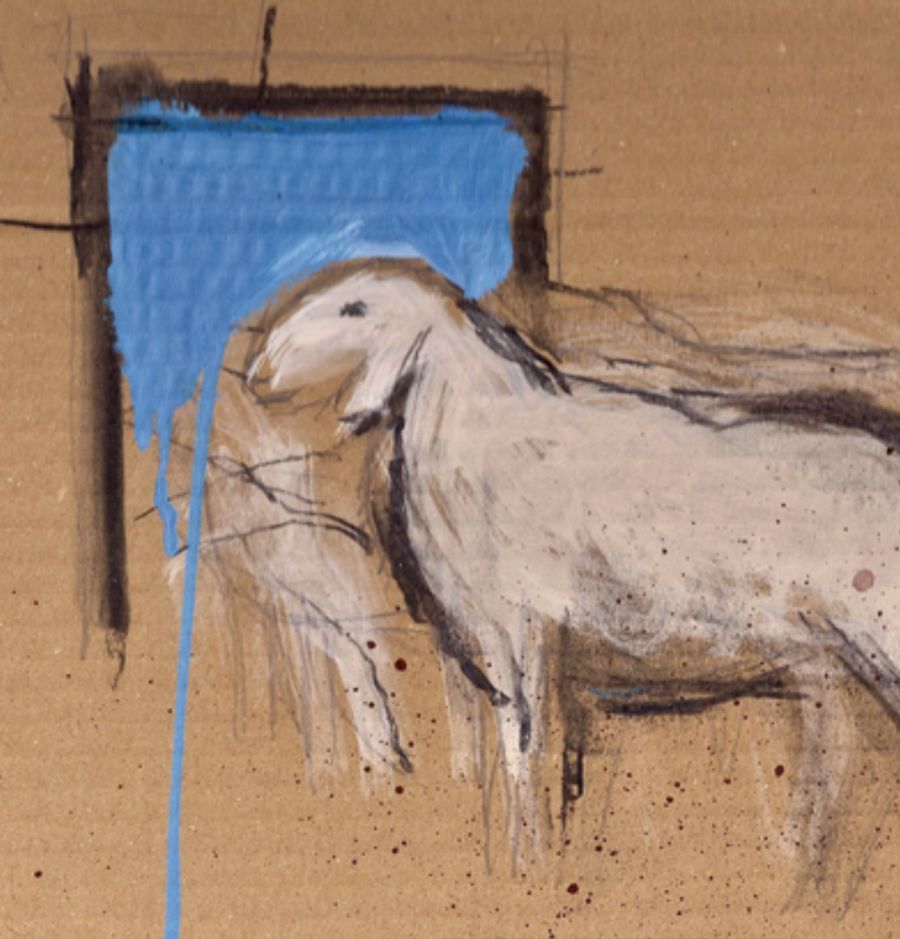
In chapter ten of the Gospel of John, Jesus describes himself as the Gate for the sheep; those who enter through it find salvation. He alone is the true Shepherd who cares for them and protects them from danger.


One day, as Francis neared the end of his calling, a friar asked him who would lead the Order after him.

The passage, taken from the Second Life of Celano, reads as follows:

«Father, you will pass from this life, and the family that has followed you will be left abandoned in this valley of tears. Name one, if you know of anyone in the Order, who satisfies your spirit and upon whom the burden of the office of Minister General may be laid with peace of mind».

Francis, accompanying each word with a sigh, replied:

«I know of no one capable of being the leader of such a diverse army and the shepherd of such a numerous flock. But I wish to describe to you, and, as they say, to sketch out the figure, in whom it may be clearly seen what the father of this family must be like».

«He must be,’ he continued, ‘a man of the most austere life, of great discretion and commendable reputation […] he must apply himself zealously to prayer and know how to devote certain hours to his own soul and others to the flock entrusted to him […] After prayer, then, he should make himself available to the religious, willing to be pestered by everyone, ready to respond and to provide for all with affability […] Even if he stands out for his learning, nevertheless, even more so in his conduct, he should be the portrait of virtuous simplicity and cultivate virtue […]».

And he continued:

«Let him console the afflicted, being the last refuge for the afflicted, lest it come to pass that, finding no salutary remedies with him, the sick feel overwhelmed by the disease of despair. Let him humble himself, to bend the haughty to meekness, and let him relinquish part of his right, to win a soul for Christ. When dealing with those who have deserted the Order, like lost sheep, let him not close the depths of his mercy to them, knowing full well that the temptations are most violent, which can drive one to such an act […] It is his task above all to probe the secret of consciences to extract the truth from the most hidden recesses, but let him not lend an ear to those who spread gossip […]» (FF 771-772).

All this points to the importance of being a ‘Door’ for Francis amongst his friars, whom he loved with firmness and tenderness; with discretion and understanding, for the love of Christ.


«I am the gate: whoever enters through me will be saved; they will come in and go out and find pasture»  (Jn 10:9)


4th Sunday in Easter A  (Jn 10:1-10)

82 Last modified on Saturday, 18 April 2026 04:02
Teresa Girolami

Teresa Girolami è laureata in Materie letterarie e Teologia. Ha pubblicato vari testi, fra cui: "Pellegrinaggio del cuore" (Ed. Piemme); "I Fiammiferi di Maria - La Madre di Dio in prosa e poesia"; "Tenerezza Scalza - Natura di donna"; co-autrice di "Dialogo e Solstizio".

Email This email address is being protected from spambots. You need JavaScript enabled to view it.
Jesus, Good Shepherd and door of the sheep, is a leader whose authority is expressed in service, a leader who, in order to command, gives his life and does not ask others to sacrifice theirs. One can trust in a leader like this (Pope Francis)
Gesù, pastore buono e porta delle pecore, è un capo la cui autorità si esprime nel servizio, un capo che per comandare dona la vita e non chiede ad altri di sacrificarla. Di un capo così ci si può fidare (Papa Francesco)
To be Christians means to be missionaries, to be apostles (cfr. Decree Apostolicam Actuositatem, n.2). It is not enough to discover Christ - you must bring Him to others! [John Paul II]
Essere cristiani significa essere missionari-apostoli (cfr. «Apostolicam Actuositatem», 2). Non basta scoprire Cristo - bisogna portarlo agli altri! [Giovanni Paolo II]
What is meant by “eat the flesh and drink the blood” of Jesus? Is it just an image, a figure of speech, a symbol, or does it indicate something real? (Pope Francis)
Che significa “mangiare la carne e bere il sangue” di Gesù?, è solo un’immagine, un modo di dire, un simbolo, o indica qualcosa di reale? (Papa Francesco)
What does bread of life mean? We need bread to live. Those who are hungry do not ask for refined and expensive food, they ask for bread. Those who are unemployed do not ask for enormous wages, but the “bread” of employment. Jesus reveals himself as bread, that is, the essential, what is necessary for everyday life; without Him it does not work (Pope Francis)
Che cosa significa pane della vita? Per vivere c’è bisogno di pane. Chi ha fame non chiede cibi raffinati e costosi, chiede pane. Chi è senza lavoro non chiede stipendi enormi, ma il “pane” di un impiego. Gesù si rivela come il pane, cioè l’essenziale, il necessario per la vita di ogni giorno, senza di Lui la cosa non funziona (Papa Francesco)
In addition to physical hunger man carries within him another hunger — all of us have this hunger — a more important hunger, which cannot be satisfied with ordinary food. It is a hunger for life, a hunger for eternity which He alone can satisfy, as he is «the bread of life» (Pope Francis)
Oltre alla fame fisica l’uomo porta in sé un’altra fame – tutti noi abbiamo questa fame – una fame più importante, che non può essere saziata con un cibo ordinario. Si tratta di fame di vita, di fame di eternità che Lui solo può appagare, in quanto è «il pane della vita» (Papa Francesco)
The Eucharist draws us into Jesus' act of self-oblation. More than just statically receiving the incarnate Logos, we enter into the very dynamic of his self-giving [Pope Benedict]
L'Eucaristia ci attira nell'atto oblativo di Gesù. Noi non riceviamo soltanto in modo statico il Logos incarnato, ma veniamo coinvolti nella dinamica della sua donazione [Papa Benedetto]
Jesus, the true bread of life that satisfies our hunger for meaning and for truth, cannot be “earned” with human work; he comes to us only as a gift of God’s love, as a work of God (Pope Benedict)
Gesù, vero pane di vita che sazia la nostra fame di senso, di verità, non si può «guadagnare» con il lavoro umano; viene a noi soltanto come dono dell’amore di Dio, come opera di Dio (Papa Benedetto)
The locality of Emmaus has not been identified with certainty. There are various hypotheses and this one is not without an evocativeness of its own for it allows us to think that Emmaus actually represents every place: the road that leads there is the road every Christian, every person, takes. The Risen Jesus makes himself our travelling companion as we go on our way, to rekindle the warmth of faith and hope in our hearts and to break the bread of eternal life (Pope Benedict)

Due Fuochi due Vie - Vol. 1 Due Fuochi due Vie - Vol. 2 Due Fuochi due Vie - Vol. 3 Due Fuochi due Vie - Vol. 4 Due Fuochi due Vie - Vol. 5 Dialogo e Solstizio I fiammiferi di Maria

duevie.art

don Giuseppe Nespeca

Tel. 333-1329741


Disclaimer

Questo blog non rappresenta una testata giornalistica in quanto viene aggiornato senza alcuna periodicità. Non può pertanto considerarsi un prodotto editoriale ai sensi della legge N°62 del 07/03/2001.
Le immagini sono tratte da internet, ma se il loro uso violasse diritti d'autore, lo si comunichi all'autore del blog che provvederà alla loro pronta rimozione.
L'autore dichiara di non essere responsabile dei commenti lasciati nei post. Eventuali commenti dei lettori, lesivi dell'immagine o dell'onorabilità di persone terze, il cui contenuto fosse ritenuto non idoneo alla pubblicazione verranno insindacabilmente rimossi.







