


Teresa Girolami
Teresa Girolami è laureata in Materie letterarie e Teologia. Ha pubblicato vari testi, fra cui: "Pellegrinaggio del cuore" (Ed. Piemme); "I Fiammiferi di Maria - La Madre di Dio in prosa e poesia"; "Tenerezza Scalza - Natura di donna"; co-autrice di "Dialogo e Solstizio".
Serve the brethren, and stay in hermitages.
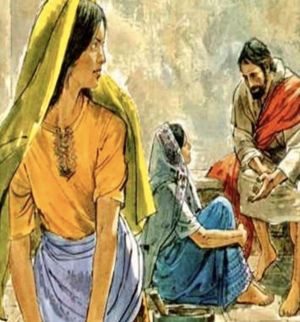
Francis of Assisi, the Knower and the Least of God, always had clear in his conscience the importance and necessity of the contemplative life, tempered by work that keeps idleness at bay and conforms to Christ. He demanded this for himself and for his brothers. He went so far as to say that serving his brothers was worth more than any stay in the hermitages, where he himself loved to go when he could.
We read in his writings:
«And I worked with my own hands, and I want to work; and I firmly want all the other brothers to work as befits honesty. Those who do not know, let them learn, not out of greed to receive the reward of work, but to set an example and keep idleness at bay» (FF 119).
Furthermore: «We are convinced that [...] those who live differently in hermitages have been reproached a great deal. Many, in fact, transform the place of contemplation into idleness and the hermit's way of life, instituted to allow souls perfection, reduces it to a place of pleasure [...] Certainly this reproach is not for everyone. We know that there are saints [...] who follow excellent laws in the hermitage» (FF 765).
Even among the friars there was discussion about whether to live in contemplation or action, in fact in the Major Legend it is written:
"While, firm in their holy purpose, they faced the Spoletana valley, they began to discuss whether they should spend their lives among the people or dwell in solitary places.
But Francis, the servant of Christ, not trusting in his own experience or that of his own, entrusted himself to prayer, in order to insistently seek what the disposition of the divine will was on this point.
He was thus enlightened with an answer from Heaven and understood that he had been sent by the Lord for this purpose: to win souls for Christ [...] And so he chose to live for all, rather than for himself alone, spurred on by the example of the One who deigned to die, He alone, for all men" (FF 1066).
But love for prayer and listening to the Word always accompanied his actions and those of his brothers.
"The tireless dedication to prayer [...] had brought the man of God to such clarity of spirit that [...] he scrutinised the depths of the Scriptures with a clear and acute intellect.
He read the sacred books and kept tenaciously imprinted in his memory what he had once assimilated: for he continually ruminated with affectionate devotion what he had listened to with an attentive mind" (FF1187).
The Poverello and Clare of Assisi had well understood that at the basis of their lives was the choice of the good part that no one would ever take away from them.
Listening to the Word and the relationship with Jesus were the driving motives behind every gesture, which took its flavour from being with God and with faith.
Clare, in fact, in a letter to her spiritual daughter, Agnes of Bohemia, writes:
«The love of Him makes one happy, contemplation restores, kindness fills. The gentleness of him pervades the whole soul, the memory shines sweetly in the memory» (FF 2901 - letter four).
Saints Martha, Mary and Lazarus (ref. Lk 10:38-42)
Treasure and Pearl of Francis and Clare. In the field of Our Lady of Poverty
Born and bred in a poor religion
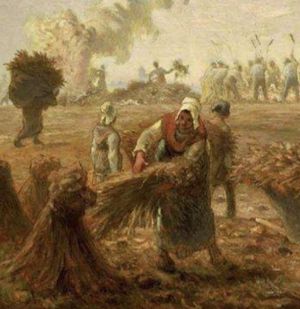
Francis, the Little One of God, often instructed his brethren not to be servants of the weeds sown in the world by the evil one, not to follow his perverse and anti-Gospel logic. He recommended that they live the Word sown by Christ.
We find, in fact, in his writings:
«All those who [...] walk after evil concupiscence [...] and do not observe those things which they have promised to the Lord and serve [...] the cares of the world and the preoccupations of this life: these are prisoners of the devil, whose children they are and do the works; they are blind, for they do not see the true light, our Lord Jesus Christ. They do not have spiritual Wisdom, for they do not possess the Son of God, who is the true wisdom of the Father» (FF 178/4).
Also, as he explained to the Supreme Pontiff to whom he went for approval of the Rule, the children of God have nothing to fear:
«There is no need to fear that the children and heirs of the Eternal King should die of hunger; for they, in the likeness of Christ, were born of a poor mother, by virtue of the Holy Spirit, and were begotten, by virtue of the spirit of poverty, into a poor religion.
For if the King of Heaven promises to his imitators the Eternal Kingdom, how much more will he provide for them those things which he bestows without distinction on the good and the bad» (FF 1064).
«The good field is the world; the good seed, these are the children of the Kingdom. Whereas the tares are the sons of the wicked» (Mt 13:38)
Tuesday of the 17th wk. in O.T. (Mt 13,36-43)
Francis and Clare (amidst the weeds): born and raised in a humble religion
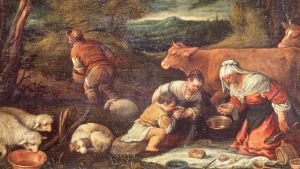
The Sower of the Word, and the Beautiful Soil. «River of Paradise» and Clare
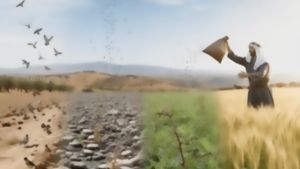
Francis and Clare. The Humble, not the learned: great hearts, modest dwellings
The Welcomings of Francis and Clare. Actively Taking Up the Cross
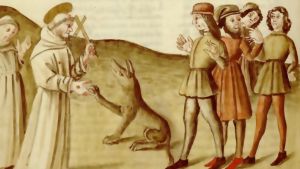
Francis and Clare: Littleness, and in the background. Personal Universality
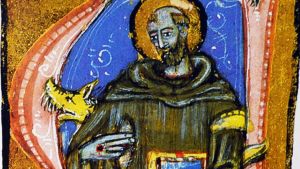
Free of charge, quite simply: Francis and Clare’s ‘the Kingdom Nearby’
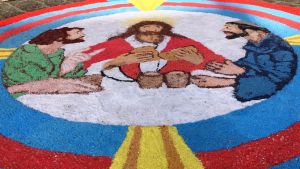
Franciscan Corpus Christi
And «each of us can say: "for love to me"» (Pope Francis)
E «ognuno di noi può dire: “per amore a me”» (Papa Francesco)
We too, to reach a more conscious confession of Jesus Christ must follow, like Peter, a path made of attentive, caring listening (Pope John Paul II)
Anche noi per giungere a una più consapevole confessione di Gesù Cristo dobbiamo percorrere, come Pietro, un cammino fatto di ascolto attento, premuroso (Papa Giovanni Paolo II)
It is a word that must be witnessed to and proclaimed explicitly, because without a consistent witness it proves to be less comprehensible and credible [Pope Benedict]
E’ una Parola che deve essere testimoniata e proclamata esplicitamente, perché senza una testimonianza coerente essa risulta meno comprensibile e credibile [Papa Benedetto]
The “reading and meditation of the word of God root us more deeply in Christ and guide our ministry as servants of reconciliation, justice and peace” (second Synod for Africa, Propositio 46)
La lettura e la meditazione della Parola di Dio ci radicano più profondamente in Cristo e orientano il nostro ministero di servitori della riconciliazione, della giustizia e della pace (Secondo Sinodo per l’Africa, Propositio 46)
The Gospel of Matthew written in Hebrew or Aramaic is no longer extant, but in the Greek Gospel that we possess we still continue to hear, in a certain way, the persuasive voice of the publican Matthew, who, having become an Apostle, continues to proclaim God's saving mercy to us. And let us listen to St Matthew's message, meditating upon it ever anew also to learn to stand up and follow Jesus with determination (Pope Benedict)
Non abbiamo più il Vangelo scritto da Matteo in ebraico o in aramaico, ma nel Vangelo greco che abbiamo continuiamo a udire ancora, in qualche modo, la voce persuasiva del pubblicano Matteo che, diventato Apostolo, séguita ad annunciarci la salvatrice misericordia di Dio e ascoltiamo questo messaggio di san Matteo, meditiamolo sempre di nuovo per imparare anche noi ad alzarci e a seguire Gesù con decisione (Papa Benedetto)
That denarius clearly represents eternal life, a gift that God reserves for all. Indeed those who are considered the "last", if they accept, become the "first", whereas the "first" can risk becoming the "last" [Pope Benedict]
Quel denaro rappresenta la vita eterna, dono che Dio riserva a tutti. Anzi, proprio quelli che sono considerati "ultimi", se lo accettano, diventano "primi", mentre i "primi" possono rischiare di finire "ultimi" [Papa Benedetto]
The sower is Jesus. With this image, we can see that he presents himself as one who does not impose himself, but rather offers himself. He does not attract us by conquering us, but by donating himself: he casts seeds. With patience and generosity, he spreads his Word, which is not a cage or a trap, but a seed which can bear fruit (Pope Francis)
Il seminatore è Gesù. Notiamo che, con questa immagine, Egli si presenta come uno che non si impone, ma si propone; non ci attira conquistandoci, ma donandosi: butta il seme. Egli sparge con pazienza e generosità la sua Parola, che non è una gabbia o una trappola, ma un seme che può portare frutto (Papa Francesco)
At first they say “yes” to God’s will, but their piety becomes routine and God no longer matters to them [Pope Benedict]
Essi, prima, dicono “sì” alla volontà di Dio. Ma la loro religiosità diventa routine, e Dio non li inquieta più [Papa Benedetto]








duevie.art
don Giuseppe Nespeca
Tel. 333-1329741
Disclaimer
Questo blog non rappresenta una testata giornalistica in quanto viene aggiornato senza alcuna periodicità. Non può pertanto considerarsi un prodotto editoriale ai sensi della legge N°62 del 07/03/2001.
Le immagini sono tratte da internet, ma se il loro uso violasse diritti d'autore, lo si comunichi all'autore del blog che provvederà alla loro pronta rimozione.
L'autore dichiara di non essere responsabile dei commenti lasciati nei post. Eventuali commenti dei lettori, lesivi dell'immagine o dell'onorabilità di persone terze, il cui contenuto fosse ritenuto non idoneo alla pubblicazione verranno insindacabilmente rimossi.