


don Giuseppe Nespeca
Giuseppe Nespeca è architetto e sacerdote. Cultore della Sacra scrittura è autore della raccolta "Due Fuochi due Vie - Religione e Fede, Vangeli e Tao"; coautore del libro "Dialogo e Solstizio".
The Assumption of the Blessed Virgin Mary
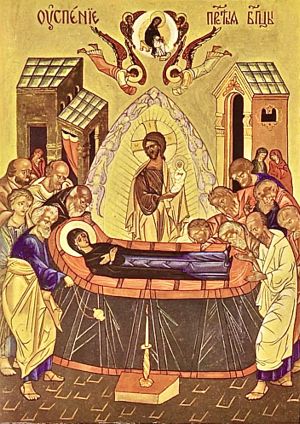
[15 August 2026]
First Reading from the Book of Revelation (11:19a; 12:1–6a, 10a)
For the early persecuted community, the entire Book of Revelation is a message of victory, rich in imagery: the Ark of the Covenant, three figures, the woman, the dragon and the infant.
1. The Ark of the Covenant recalls the gilded wooden chest that accompanied the people during the Exodus to Sinai, a constant reminder to Israel of the Covenant with God. That ark had been lost during the Babylonian exile; it was said that Jeremiah had hidden it on Mount Nebo (2 Maccabees 2:8), and it was believed that it would reappear at the coming of the Messiah. Now John sees it reappear: (Rev 11:19) and for him this is the sign that the end of time has come and that God’s Covenant with humanity has been definitively fulfilled.
2. The woman, Israel and the Messiah born of the Chosen People. “Then there appeared, still in heaven, ‘a woman clothed with the sun…’” (Rev 12:1–2). In the Old Testament, the relationship between God and Israel is often described in terms of a wedding. Hosea speaks of God’s betrothal to his people. Isaiah develops the theme of the wedding to the point of presenting the coming of the Messiah as a birth; Jeremiah, Ezekiel, and Second and Third Isaiah use the vocabulary of betrothal and marriage (Jer 2:2); (Isa 62:5). The Song of Songs, a dialogue of love in seven poems that never identifies the two lovers, is seen by the Jews as a dialogue between God and his people; for this reason, they read it on the Sabbath of Easter week, the great feast of God’s Covenant with Israel. Unfortunately, Israel was often an unfaithful bride (idolatrous: jealousy, adultery, but also reconciliation and forgiveness, for God remains faithful). Thus, the woman of Revelation represents the chosen people who give birth to the Messiah. A painful labour for Christ’s disciples facing persecution, to whom John says: ‘You are giving birth to the new humanity.’
3. The dragon: the forces of evil. The dragon lying in wait ‘before the woman to devour her newborn child’ (Rev 12:4) symbolises the battle waged by the forces of evil against God’s plan. For persecuted Christians, the word ‘dragon’ is not too strong, for it conveys the violence they face: the dragon is ‘enormous… as red as fire, with seven heads and ten horns, and on his heads seven diadems’. The heads and horns signify intelligence and strength; the diadem denotes imperial power with its very real capacity to cause harm. And indeed, he manages to drag down ‘a third of the stars of heaven and cast them to the earth’. However, it is only a third of the stars: therefore, merely a semblance of victory, and the rest of the passage will show that the power of evil is temporary.
4. The child is the Risen Messiah. ‘She gave birth to a son, destined to rule all the nations with an iron sceptre’ (Rev 12:5). John identifies the Messiah and alludes to Psalm 2: ‘You are my Son; today I have begotten you… You shall break them with a rod of iron’ (2:7–9). ‘Shepherd’ was also a classical term used to refer to the Messiah. This is followed by the image of the child being taken up ‘to God and his throne’: a symbol of Christ’s Resurrection. This was perfectly clear to the early Christians, who were accustomed to speaking of Him as the ‘Firstborn’, now seated at the right hand of God. Yet His people remain in the world—a difficult world, but one in which they are assured of God’s protection: this is the significance of the desert, another reference to the Exodus, in which God never ceased to care for His people. Believers may take heart: if the dragon has failed in heaven, he cannot succeed on earth. The conclusion is the victory that began with the Resurrection. To the early Christians who were giving birth to a new humanity amidst the pain of persecution, the Book of Revelation proclaims victory: ‘Now have come the salvation and the power and the kingdom of our God, and the authority of his Christ’ (Rev 12:10). Ever since the Messiah rose from the dead, victory has begun.
Responsorial Psalm (44/45)
This psalm allows us to witness the wedding ceremony of the King of Jerusalem to a young foreign princess (v. 10) to seal the covenant between two peoples. Marriages have always marked alliances between states, but for Israel the Covenant is exclusive to the one God; therefore, any foreign girl who became queen had to embrace the king’s religion. Specifically, in this psalm, the princess from Tyre must renounce her idolatrous practices to be worthy of her new people and her king: ‘Listen, my daughter; look, and give ear: forget your own people and your father’s house’ (v. 11). Solomon married pagan foreign women; Ahab married Queen Jezebel, leading to the great confrontation between the prophet Elijah and the many priests and prophets of Baal. For those who can read between the lines, this advice to the princess of Tyre is in fact addressed to Israel. The royal bridegroom described in the psalm is none other than God himself, and this ‘daughter of a king, led in all her splendour to her bridegroom’ is the people of Israel admitted into the intimacy of their God. Through the relationship between God and his people, an allusion is then made to the marriage between God and all humanity.
Second Reading from the Letter of Saint Paul the Apostle to the Corinthians (15:20–27)
Here, three figures are set side by side: Mary, Jesus of Nazareth and Adam. Mary, the model of faith, is proclaimed blessed because she believed in the word of God. In her life she experienced the sorrow foretold by Simeon, yet she never ceased to trust in God. Jesus follows the same path in total trust in the Father, and everything about him is summed up in these words: ‘Father, I have come to do your will’. His resurrection demonstrates that trust in God leads to true life, which passes through suffering and death. St Paul contrasts Adam and Christ: two opposing attitudes. Adam is the man who distrusts God and wishes to decide for himself; Christ, on the other hand, represents the man who entrusts himself completely to God. According to Paul, everyone behaves like Adam when they refuse to trust in God, and for this reason all die in Adam. Whereas those who follow Christ’s example enter into true life, founded on love and communion with God. The Assumption is God’s plan for faithful humanity: Mary experienced ageing and, having left her earthly life behind, entered fully into the life of God. The Eastern tradition speaks of her Dormition as her passing into a new form of existence with God: human beings are therefore not destined to remain forever in their earthly condition but are called to a transformation. Jesus, put to death by human hatred, was raised from the dead by God and, as the first of the risen, opens the way to eternal life for all humanity. Mary and Jesus show that the path to true life is not Adam’s self-sufficiency, but trust in God
From the Gospel according to Luke (1:39–56)
The episode of the Visitation highlights the role of Mary, the new Ark of the Covenant and model of faith. When Elizabeth says, ‘How is it that the mother of my Lord should come to me?’, the evangelist deliberately alludes to David’s transfer of the Ark of the Covenant to Jerusalem. There are numerous similarities: both the Ark and Mary journey through the hills of Judea; the Ark brings blessing to the house of Obed-Edom, whilst Mary brings joy to the house of Zechariah and Elizabeth; both remain for three months in the house that welcomes them; David dances before the Ark, whilst John the Baptist leaps for joy in his mother’s womb at the sight of Mary.
For Luke, none of this is coincidental. Mary is the new presence of God. The Ark was the sign of God’s presence amongst his people. By presenting Mary as the new Ark, Luke wishes to affirm that God is present in a unique way in the child she carries in her womb. Thus the mystery of the Incarnation is fulfilled. Mary becomes the living dwelling place of the divine presence. Elizabeth proclaims: ‘Blessed is she who has believed’; and Mary’s true greatness lies not merely in being the mother of Jesus, but in having trusted in God’s plan even without fully understanding it. In response to Elizabeth, Mary sings the Magnificat, and she does not invent new words, for it is composed of expressions drawn from the Psalms and other biblical prayers. Two lessons emerge from this. Humility: Mary does not place herself at the centre, but places herself within the tradition of faith of her people; a spirit of community: her prayer concerns not only her personal circumstances, but God’s work on behalf of the whole people. This is why Mary is presented as the new Ark of the Covenant, carrying within her God made man, whilst the Magnificat shows that every authentic vocation is not a personal privilege, but a call to serve others and the whole people of God.
+Giovanni D’Ercole
Crumbs for little dogs, who become lambs
19th Sunday in O.T.
19th Sunday in Ordinary Time (year A) [9 August 2026]
First Reading from the First Book of Kings (19:9a, 11–13a)
In the 9th century BC, in the Kingdom of Israel, Queen Jezebel, wife of King Ahab, introduced the worship of the god Baal in Samaria. Faced with the spread of idolatry, the prophet Elijah stands up with great zeal to defend the faith of his people. Convinced that God’s superiority must be demonstrated through signs of power, Elijah foretells a long drought and subsequently organises a contest on Mount Carmel between the priests of Baal and the God of Israel. Two altars are prepared, and it is decided that the true God will be the one who answers by sending fire from heaven. The priests of Baal pray in vain; when Elijah, however, calls upon the Lord, divine fire consumes the sacrifice. The people acknowledge the victory of the God of Israel. Nevertheless, Elijah, driven by his fervour, has the priests of Baal put to death – an act which God had not asked him to perform. When Jezebel learns of what has happened, she swears to take revenge and to kill Elijah. The prophet flees into the desert and, exhausted, comes to long for death. On his journey to Mount Horeb, he undergoes a profound inner crisis which becomes the starting point of his conversion. Elijah gradually realises that he had imagined God as a deity of strength and power, not unlike the very deities he had been fighting against. On Mount Horeb, where Moses too had once encountered God, the Lord reveals himself to him in an unexpected way. It is not in the storm, nor in the earthquake, nor in the fire, but in the ‘still small voice’ The Hebrew text uses the expression: קוֹל דְּמָמָה דַקָּה
Qôl demāmāh daqqāh. Literally, this means: qôl = voice, sound; demāmāh = silence, deep stillness, calm; daqqāh = subtle, delicate, faint. A very faithful translation might be: ‘a voice of subtle silence’, or ‘the sound of a delicate silence’.
Elijah thus discovers that true divine power is not expressed through violence, clamour or coercion, but through gentleness, patience, mercy and discretion. The account represents a fundamental stage in biblical revelation: God teaches his prophet to move from a form of religiosity based on force to a faith founded on trust and gentleness. Elijah’s great discovery is that God does not conquer through fear, but through love.
Responsorial Psalm (84/85) Psalm 84/85 was composed almost 50 years after the return of the people of Israel from the Babylonian exile (538 BC). When the exiles returned to their land full of enthusiasm and hope, they believed that a new life was beginning, that God had wiped the slate clean and that everything could start afresh. However, reality proved more difficult than expected. Breaches of the Covenant resurfaced; conversion was not automatic; and the returnees—often born in exile or having left as young people—encountered obstacles, misunderstandings and resistance, even in the reconstruction of the Temple. For this reason, the psalmist expresses conflicting feelings. On the one hand, he gives thanks to God for bringing his people back to the Promised Land and for forgiving their sins; on the other, seeing that the difficulties persist, he wonders whether divine wrath is not still present and pleads: ‘Show us your love, Lord, and grant us your salvation’. The central theme of the psalm is the dual meaning of the verb ‘to return’: the people have already physically returned to their land, but they must still make the most important return of all – that of the heart to God. True conversion is a gift from God, but it also requires human commitment, a willingness to listen to and follow his word. This is why the psalmist declares: ‘I will listen to what the Lord says’, recognising that peace springs from trusting obedience to God. The final part of the psalm is a magnificent hymn of hope. The poet looks forward to the day when God’s plan will be fully realised: ‘Love and truth shall meet; justice and peace shall kiss’. This is not a naïve dream, but the certainty that God is guiding history towards a future of reconciliation, brotherhood and peace amongst humankind.
Second Reading from the Letter of Saint Paul the Apostle to the Romans (9:1–5)
In chapters 9–11 of the Letter to the Romans, Saint Paul addresses an issue particularly close to his heart: if many Jews have not recognised Jesus Christ as the Messiah, does this perhaps mean that God has rejected his people? Paul is well aware of this problem because he himself, before his conversion on the road to Damascus, had been a strict Jew and even a persecutor of Christians. After his encounter with Christ, he realised that the Christian faith does not contradict the faith of Israel, but rather fulfils it. However, the majority of the Jewish people do not accept this conviction and, indeed, often oppose Paul’s preaching. This gives rise to his question: if Israel does not recognise the Messiah, is it perhaps excluded from the Covenant? And if God were to revoke his promises to Israel, how could Christians trust in his faithfulness? To answer this, Paul traces the entire course of sacred history. He recalls that Israel has received unique gifts: adoption as God’s children, the glory of his presence, the covenants, the Law, worship, the promises, the patriarchs and even the privilege that the Messiah should be born of his people. The whole of biblical history bears witness to God’s irrevocable commitment to Israel. Paul’s conclusion is clear: God has not abandoned the Jewish people. His promises are definitive, because God is faithful to himself. The Covenant has not been annulled. For Paul, the rejection of Jesus by many Jews remains a mystery, but it does not call into question the election of Israel. This final certainty is expressed in a decisive statement: ‘God remains faithful, for he cannot deny himself’ (2 Tim 2:13). The central message of the text is therefore that God’s faithfulness is stronger than human unfaithfulness.
From the Gospel according to Matthew (14:22–33)
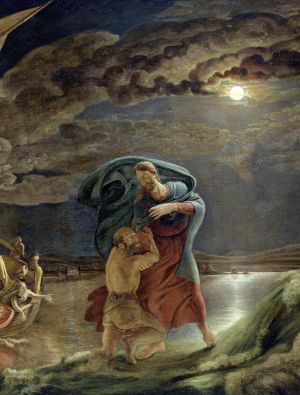
This Gospel episode takes place immediately after the feeding of the five thousand. After feeding the crowd, Jesus Christ instructs the disciples to leave and goes up the mountain alone to pray. On the one hand, his mission cannot stop at the success of the moment; on the other, Jesus wishes to avoid the risk of triumphalism and spectacle, a temptation he had already faced in the desert. Prayer enables him to remain in deep communion with the Father and to discern the path to follow. Meanwhile, the disciples’ boat is being tossed about by the waves of the Sea of Tiberias. During the night, they see a figure walking on the water and, terrified, think it is a ghost. But Jesus reassures them with words that run through the entire Gospel: ‘Take heart! It is I; do not be afraid.’ At that point, Peter, trusting in the Master’s voice, asks to be allowed to go to him by walking on the water. Jesus simply replies: ‘Come.’ Peter then accomplishes the impossible and walks on the water, but when he takes his eyes off Jesus and focuses on the force of the wind, he is overcome by fear and begins to sink. In this action, Peter represents every disciple: generous and sincere in his enthusiasm, yet fragile when put to the test. His fall does not stem from a lack of love, but from doubt and fear. Nevertheless, he makes the right choice: he cries out, ‘Lord, save me!’ Jesus reaches out his hand, seizes him and brings him to safety, asking him, ‘You of little faith, why did you doubt?’ The story teaches us that faith consists in keeping our gaze fixed on Christ even when difficulties seem to overwhelm us. Our frailties, doubts and even our failures are not the final word: what matters is that we continue to call upon his help. When Jesus steps into the boat, the wind dies down and the disciples come to understand more deeply who he is. They fall down before him and proclaim: ‘Truly, you are the Son of God.’ The central message of the passage is that the life of faith alternates between moments of strength and moments of weakness, as happened to Peter. But whenever a person is in danger of sinking, they can entrust themselves to Christ, and God’s hand is always ready to sustain them.
+Giovanni D’Ercole
Little Servants, Angels and Tiny ones: Vocation and flowering
Face to the Person, Father in relationship
Mt 18:1-5.10.(12-14)
The Gospel passage dictates the line of the entire ecclesial discourse of Mt (18:1-35).
The key term in vv.1-5 is «paidìon» - diminutive of «pàis» - which stands for the shop boy, the little one between 9 and 11 years of age, who also at home had to provide immediately, after every command received.
Jesus crushes the ambitions of greatness of his craving disciples, who would like to seize him and put him on a leash.
The model of the Kingdom is not the commander, but the servant; the one who does not act with a common mindset, out of a spirit of self-interest or promotion.
It is not a sin to desire to give meaning to one's life, but there is a reversal: 'greater' is the 'lesser' - he who does not covet pre-eminent places; remains humble in feeling, condition, and position.
The overt importance is a deception: the true “greats” of the church community do not belong to the world of the perfectly installed, who come forward, who know who to lean on, and thus how to impose themselves.
From v.6 the author speaks of «mikròi»: the voiceless. They are those who have no weight.
These “little ones” are «tiny ones» who have heard of the spirit of communion that exists between sisters and brothers of Faith…
They would like to experience the benefit of this new Way without mortifying pretensions, a solicitous way to recovery...
They try to begin, but sometimes they shy away from it, fatigued by improper situations.
Jesus displaces us: the 'outcasts' are the only ones who make us shout for joy, and they are worth more than the whole flock of habituals (vv.12-14).
The Recall also applies to us: it is precisely in the isolated, lost and seemingly most insignificant people that the flowering of large spontaneous content is particularly lively..
In them lurks the Sap that regenerates the world, and the Newness of God is revealed [who also wants to guide us today in our vocational and social exodus].
In short: fixed ideas condition life and do not allow the inner organism - psychic and spiritual - to feed on transparent (unprejudiced) truths and sincere feelings, which would like to give us breath.
Freeing oneself from the usual ways of going about things, dissolving prejudices and schematic beliefs, would allow one to break the chains that hold back the faculties, opening up other views.
In fact, the solution to the complications that suffocate the soul and the experience of the fullness of being we seek is not external, but inherent in our own question.
In biblical language, the figure of the Angel (v.10) expresses God Himself in dialogue with the personal soul; His Presence in us, in situation - and here our paradoxical fruitfulness.
The Angel is our own eminent and total Self, who knows how to retrieve opposites, who grasps secrets, suggests, guides; he knows our unique versatility, and in this way knows where to go.
Thus, authentic life is shrouded in Mystery, even in the step-by-step.
Our existence is not all in the circle of visible achievements, apparent affirmations, and material, trivial things, more or less at hand.
Life if complete introduces into the Calling by Name that leads to fulfilment and blossoming, opens us to the Relationship that counts.
To internalize and live the message:
Why do you think Jesus speaks of Angels in heaven, and Joy in reference to the one sheep?
[Tuesday 19th wk. in O.T. August 11, 2026]
Servants and Little ones, of great Vocation and flourishing
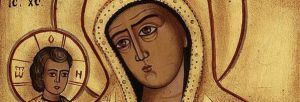
Face to Person, Father in relationship
(Mt 18:1-5.10.12-14)
The Gospel passage dictates the line of the entire ecclesial discourse of Mt (18:1-35). The key term of vv.1-5 is paidìon - diminutive of pàis - which stands for the shop boy, the little boy of about 9-11 years of age, who even in the home had to snap after every order received.
Jesus crushes the ambitions of greatness of his covetous apostles, who want to seize him for themselves. Yes, they always tail him, but they do not follow him - on the contrary, they would like to seize him and put him on a leash.
The model of the Kingdom is not the commander, but the servant; the one who does not act with a current mentality, out of a spirit of self-interest or promotion.
It is not a sin to desire to give meaning to one's life, but there is a reversal: greater is the lesser - he who does not covet pre-eminent places, remains humble in feeling, condition and position.
Even in spiritual life, he who wants to get there immediately or does good (not out of gratuitousness but only) to secure future positions, scatters his Pearl. The overt importance is a deception: the true 'greats' of the church community do not belong to the world of the 'best', the perfectly installed in society - the quick-witted who come forward and know how to impose themselves.
From v.6 the author speaks of mikròi: the voiceless. They are those who carry no weight, perhaps those who cannot even get accepted into some exclusive 'spiritual' pressure group or clique.
These 'little ones' are those who sooner or later - despite prior exclusion - find their way to the community of the faithful in Christ. They have heard of the spirit of collaboration, synergy and communion that exists between sisters and brothers of Faith. They would like to experience the benefit of this new way of coexistence without humiliating, recovery-oriented demands...
They try to start, but sometimes they shy away from it. Fatigued by the rigmarole, unable to have a personal relationship with the Lord (because in front of them and on every occasion they find themselves with the usual hedge of managers to whom they should pay duties and submit), often irritated by the empty vanity of those who not infrequently turn out to be unscrupulous and very dangerous people.
Jesus does not go easy on them: the excluded are the only ones who make them shout for joy, and they are worth much more than the whole flock of those included (vv.12-14).
The reminder also applies to us: it is precisely in the isolated, lost and seemingly most insignificant people that the great spontaneous content flourishes.
In them lurks the sap that regenerates the world, and the Newness of God is revealed (who also wants to guide us today in our vocational and social exodus).
Simplicity and upheaval: Rebirth without mortification
It is not a question of finding excuses to justify laziness in the spiritual search and exodus: small, spontaneous and natural - but rich inside - one becomes, lowering oneself (Mt 18:3-4 Greek text) from one's character.
It is the art of making life dense and complex, multifaceted and vast, then simplifying, without dispersing. Often all it takes is to look differently or to look elsewhere, to find a thousand unexpected and self-regenerating outlets.
In fact, the solution to the complications that suffocate the soul and the experience of the fullness of being we seek, is not external, but inherent in our own question. It not infrequently belongs to pre-understandings rather than reality or the tide that comes, which simply wants to drag us into the territory of growth.
We are obnubilated by thoughts. But there is an innate knowledge that watches over our uniqueness and does not intoxicate the soul. There is a secret time and space that inhabits us: they resonate with the Gospels. There is no need to "catch up" with all time.
If we surrender to such a wise instinct, comforted by the Word, the Core of Being will come forth with its primordial energies - recreating the earth like the mythical Child of the World: a little Jesus - within and without us. Thus the disaster of the Coronavirus is also annihilated, and we are resurrected: each in his own way (which is not 'his' in the sense of arbitrariness).
And when, in particular cases, we are able to welcome the happenings as a Call to come out of our cages so that we perceive the elsewhere, we will find an intimate result that unravels and re-launches the personal way and the possibilities of exchanging new, non-stereotypical gifts - without even experiencing the tiredness and subtle dissatisfactions we know.
Projected totally into external problems, we overload our mind and spirit with expectations induced by the (once) in vogue cultural paradigm to which we are accustomed. Thus existence quickly becomes conformist again, stagnant in the usual means and goals, devoid of new peaks, authentic relationships and unimagined vitality.The diktat of the objective induced by the roles we imagined we had acquired exhausts us, and the instituted idea of perfection sterilises the humus - it impoverishes us, putting actual needs in brackets; thus making ways of being prevail, consolidated roles already expressed, drying up relationships (making environments murky again).
Fixed ideas condition life and do not allow the inner organism - psychic and spiritual - to feed on transparent (unprejudiced) truths and sincere feelings, which would like to give us breath.
Freeing ourselves from the usual ways of going about things, from apodictic judgments and convictions, would allow us to break the chains that hold back the luminous and rainbow faculties, as well as the ability to correspond to the unrepeatable vocation, opening up other views.
The 'emptiness' advocated by the Tao resembles only in earshot the 'emptiness' of other (decidedly more depersonalising) Eastern wisdom because the teaching of the Way does not lose the sense of uniqueness and exceptionality of the individual seed. On the contrary, it fully respects its propulsive vocation remaining oneself, not only in spite of - but because of - the obligatory abyss we have experienced.
By minimising, on the other hand, the intentions of re-editing the old maquillage - and all non-epochal conditioning (which does not call us, nor would we like to) - we clear the soul of its ballast. We bring out its exceptional specific weight and unrepeatable character, to lighten it and fill it only with what is needed to activate the new paths that await us.
The slowing down and letting go that Lao Tse advocates does not lead to the insignificant flattening of differences, but to dilating the sacred and natural times of wise action, and appreciating its value.
Stages and goals that do not correspond to us will not provide fulfilment, forcing us to amplify our relationships only to cover the problem with ourselves, or even the couple, group, movement, community and work environment.
While we wish to clothe (and not depose) with a sense of permanence the character of before - a cliché that does not correspond to us - we turn in circles, loading ourselves with outsized expectations and useless stress (which makes no room for the love with which we meet ourselves, things, sisters and brothers, the many events).
Natural Wisdom, even bitter events, and the Bible, remind us that the face... every path, name and rhythm is ours alone. So is the synthesis: each one is called to write his or her own unrepeatable glad tidings on behalf of the woman and man of all times (Jn 20:30-31).
Please note: Fraternity is not levelling:
"But there are many other things that Jesus did, which if they were written down one by one, I think that not even the world itself could contain the books that should be written" (Jn 21:25).
That would be Happiness in the new eminent Beauty, from discomfort.
In biblical language, the figure of the Angel (v.10) expresses God Himself in dialogue with the personal soul; His Presence in us, in situation - and here our paradoxical fruitfulness.
The Angel is our own eminent and total Self, who knows how to retrieve opposites, who grasps secrets, suggests, guides; he knows our fruitful versatility, and in this way knows where to go.
In short, authentic life is shrouded in Mystery, even in the step-by-step.
The existence that distinguishes us is not all in the circle of visible achievements, of apparent affirmations, and of material, trivial things, more or less at hand.
Complete Life introduces us into the Calling by Name that leads to fulfilment and blossoming, opens us to the Relationship that is worthwhile.
To internalise and live the message:
Why do you think Jesus speaks of Angels in heaven, and Joy in reference to the one sheep?
Why does Jesus speak of Joy in reference to the one sheep?
Value of imperfect uniqueness
(Mt 18:12-14)
The change of course and destiny of the Kingdom. A God in search of the lost and unequal, to expand our life. Christology of the Pallium, power of caresses, joyful energy (in dissociation).
Says the Tao Tê Ching (x): "Preserve the One by dwelling in the two souls: are you able to keep them apart?"
Even in the spiritual journey, Jesus is careful not to propose a dictated or planned universalism, as if his were an ideal model, "for the purpose of homogenisation" [Fratelli Tutti n.100].
The type of Communion that the Lord proposes to us does not aim at "a one-dimensional uniformity that seeks to eliminate all differences and traditions in a superficial search for unity".
Because "the future is not 'monochromatic', but if we have the courage, it is possible to look at it in the variety and diversity of the contributions that each one can make. How much our human family needs to learn to live together in harmony and peace without us all being equal!" [from an Address to Young People in Tokyo, November 2019].Although the piety and hope of the representatives of official religiosity was founded on a structure of human, ethnic, cultural securities and a vision of the Mystery consolidated by a great tradition, Jesus crumbles all predictability.
In the Son, God is revealed no longer as exclusive property, but as the Power of Love that forgives the marginalised and lost: saving and creating, liberating. And through the disciples, he unfolds his Face that recovers, breaks down the usual barriers, calls out to miserable multitudes.
It seems an impossible utopia to realise in concrete terms (today of the health and global crisis), but it is the sense of the handover to the Church, called to become an incessant prod of the Infinite and ferment of an alternative world, for integral human development:
"Let us dream as one humanity, as wayfarers made of the same human flesh, as children of this same earth that hosts us all, each with the richness of his faith or convictions, each with his own voice, all brothers!" [FT No.8].
Through an absurd question (rhetorically formulated) Jesus wants to awaken the conscience of the 'just': there is a counterpart of us that supposes of itself, very dangerous, because it leads to exclusion, to abandonment.
Instead, inexhaustible Love seeks. And it finds the imperfect and restless.
The swamp of stagnant energy that is generated by accentuating boundaries does not make anyone grow: it locks in the usual positions and leaves everyone to make do or lose themselves. Out of self-interested disinterest - that impoverishes everyone.
This causes the creative virtues to fall into despair.
It plunges those outside the circle of the elect - those who had nothing superior - into despair. Indeed, the evangelists portray them as utterly incapable of beaming with human joy at the progress of others.
Calculating, acting and conforming - the fundamentalist or overly sophisticated and disembodied leaders use religion as a weapon.
Instead, God is at the antipodes of the fake sterilised - or disembodied thinking - and seeking one who wanders shakily, easily becomes disoriented, loses his way.
Sinful yet true, therefore more disposed to genuine Love. This is why the Father is searching for the insufficient.
The person who is so limpid and spontaneous - even if weak - conceals his best side and vocational richness precisely behind the apparently detestable sides. Perhaps that he himself does not appreciate.
This is the principle of Redemption that astounds and makes interesting our often distracted paths, conducted by trial and error - in Faith, however, generating self-esteem, credit, fullness and joy.
The commitment of the purifier and the impetus of the reformer are 'trades' that seemingly oppose each other, but are easy... and typical of those who think that the things to be challenged and changed are always outside themselves.
For example, in mechanisms, in general rules, in the legal framework, in worldviews, in formal (or histrionic) aspects instead of the craft of the concrete particular good; and so on.
They seem to be excuses not to look inside oneself and get involved, not to meet one's deepest states in all aspects and not only in the guidelines. And to recover or cheer up individuals who are concretely lost, sad, in all dark and difficult sides.
But God is at the antipodes of sterilised mannerists or fake idealists, and in search of the insufficient: he who wanders and loses his way. Sinful yet true, therefore more disposed to genuine Love.
The transparent and spontaneous person - even if weak - hides his best part and vocational richness precisely behind the apparently detestable aspects (perhaps which he himself does not appreciate).
So let us ask for solutions to the mysterious, unpredictable interpersonal energies that come into play; from within things.
Without interfering with or opposing ideas of the past or future that we do not see. Rather by possessing its soul, its spontaneous drug.
This is the principle of Salvation that astounds and makes interesting our paths [often distracted, led by trial and error] - ultimately generating self-esteem, credit and joy.
The idea that the Most High is a notary or prince of a forum, and makes a clear distinction between righteous and transgressors, is caricature.
After all, a life of the saved is not one's own making, nor is it exclusive possession or private ownership - which turns into duplicity.
It is not the squeamish attitude, nor the cerebral attitude, that unites one to Him. The Father does not blandish suppliant friendships, nor does He have outside interests.
He rejoices with everyone, and it is need that draws Him to us. So let us not be afraid to let Him find us and bring us back (cf. Lk 15:5) to His house, which is our house.
If there is a loss, there will be a finding, and this is not a loss for anyone - except for the envious enemies of freedom (v.10).For the LORD is not pleased with marginalisation, nor does he intend to extinguish the smoking lamp.
Jesus does not come to point the finger at the bad times, but to make up for them, by leveraging intimate involvement. Invincible force of faithfulness.
This is the style of a Church with a Sacred Heart, lovable, elevated and blessed.
[What attracts one to participate and express oneself is to feel understood, restored to full dignity - not condemned].
Carlo Carretto said: 'It is by feeling loved, not criticised, that man begins his journey of transformation'.
As the encyclical Fratelli Tutti emphasises again:
Jesus - our Engine and Motive - "had an open heart, which made the dramas of others its own" (n.84).
And he adds as an example of our great Tradition:
"People can develop certain attitudes which they present as moral values: fortitude, sobriety, industriousness and other virtues. But in order to properly direct the acts [...] we must also consider to what extent they realise a dynamism of openness and union [...] Otherwise we will only have appearances'.
"St Bonaventure explained that the other virtues, without charity, strictly speaking do not fulfil the commandments as God intends them" (n.91).
In sects or one-sidedly inspired groups, human and spiritual riches are deposited in a secluded place, so they grow old and debased.
In the assemblies of the sons, on the other hand, they are shared: they grow and communicate; by multiplying, they green up, for universal benefit.
To internalise and live the message:
What attracts you to the Church? In comparisons with the top of the class, do you feel judged or adequate?
Do you feel the Love that saves, even if you remain uncertain?
Preference for the Little Ones

68. Christ Jesus always manifested his preferential love for the little ones (cf. Mk 10:13-16). The Gospel itself is deeply permeated by the truth about children. What, indeed, is meant by these words: “unless you turn and become like children, you will never enter the kingdom of heaven” (Mt 18:3)? Does not Jesus make the child a model, even for adults? The child has something which must never be lacking in those who would enter the kingdom of heaven. Heaven is promised to all who are simple, like children, to all who, like them, are filled with a spirit of trusting abandonment, pure and rich in goodness. They alone can find in God a Father and become, through Jesus, children of God. Sons and daughters of our parents, God wants us all to become his adopted children by grace!
[Africae Munus 68]
We are not "masses"
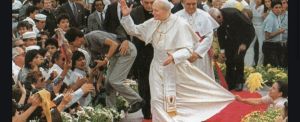
The Old Testament already usually speaks of God as the Shepherd of Israel, the people of the covenant, chosen by him to carry out the plan of salvation. Psalm 22 is a marvellous hymn to the Lord, the Shepherd of our soul:
"The Lord is my shepherd, I shall not want; / he makes me lie down in green pastures, / he leads me beside still waters, / he restores my soul. / He leads me in paths of righteousness... / Even though I walk through the valley of the shadow of death, / I fear no evil; / for thou art with me..." (Ps 22:1-3).
The prophets Isaiah, Jeremiah, and Ezekiel often return to the subject of the people as "the Lord's flock": "Behold your God!... He will feed his flock like a shepherd, he will gather the lambs in his arms..." (Is 40:11). Above all, they announce the Messiah as a Shepherd who will really feed his sheep and not let them go astray any more: "I will set up over them one shepherd, my servant David, and he shall feed them: he shall feed them and be their shepherd..." (Ez 34: 23).
This sweet and moving figure of the shepherd is a familiar one in the Gospel. Even if times have changed owing to industrialization and urbanism, it always keeps its fascination and effectiveness; and we all remember the touching and poetic parable of the Good Shepherd who goes in search of the lost sheep (Lk 15:3-7).
In the early times of the Church, Christian iconography used a great deal and developed this subject of the Good Shepherd, whose image often appears, painted or sculpted, in the catacombs, sarcophagi and baptismal fonts. This iconography, so interesting and reverent, testifies to us that, right from the early times of the Church, Jesus "the Good Shepherd" struck and moved the hearts of believers and non-believers, and was a cause of conversion, spiritual commitment and comfort. Well, Jesus "the Good Shepherd" is still alive and true today in our midst, in the midst of the whole of mankind, and he wants to let each of us hear his voice and feel his love.
1) What does it mean to be the Good Shepherd?
Jesus explains it to us with convincing clearness.
— The shepherd knows his sheep and the sheep know him. How wonderful and consoling it is to know that Jesus knows us one by one; that for him we are not anonymous persons; that our name—that name which is agreed upon by loving parents and friends—is known to him! For Jesus we are not a "mass", a "multitude"! We are individual "persons" with an eternal value, both as creatures and as re-deemed persons! He knows us! He knows me, and loves me and gave himself for me! (Gal 2:20).
[...]
(Pope John Paul II, homily 6 May 1979)
All sons, radically dependent
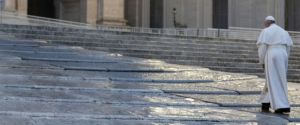
After reviewing the various members of the family — mother, father, children, siblings, grandparents —, I would like to conclude this first group of catecheses on the family by speaking about children. I will do so in two phases: today I will focus on the great gift that children are for humanity — it is true they are a great gift for humanity, but also really excluded because they are not even allowed to be born — and the next time I shall focus on several wounds that unfortunately harm childhood. Who come to mind are the many children I met during my recent journey to Asia: full of life, of enthusiasm, and, on the other hand, I see that in the world, many of them live in unworthy conditions.... In fact, from the way children are treated society can be judged, not only morally but also sociologically, whether it is a liberal society or a society enslaved by international interests.
First of all children remind us that we all, in the first years of life, were completely dependent upon the care and benevolence of others. The Son of God was not spared this stage. It is the mystery that we contemplate every year at Christmas. The Nativity Scene is the icon which communicates this reality in the simplest and most direct way. It is curious: God has no difficulty in making Himself understood by children, and children have no difficulty in understanding God. It is not by chance that in the Gospel there are several very beautiful and powerful words of Jesus regarding the “little ones”. This term, “babes”, refers to all the people who depend on the help of others, and to children in particular. For example, Jesus says: “I thank thee, Father, Lord of heaven and earth, that thou hast hidden these things from the wise and understanding, and revealed them to babes” (Mt 11:25). And again: “See that you do not despise one of these little ones: for I tell you that in heaven their angels always behold the face of my Father who is in heaven” (Mt 18:10).
Thus, children are in and of themselves a treasure for humanity and also for the Church, for they constantly evoke that necessary condition for entering the Kingdom of God: that of not considering ourselves self-sufficient, but in need of help, of love, of forgiveness. We all are in need of help, of love and of forgiveness! Children remind us of another beautiful thing: they remind us that we are always sons and daughters. Even if one becomes an adult, or an elderly person, even if one becomes a parent, if one occupies a position of responsibility, underneath all of this is still the identity of a child. We are all sons and daughters. And this always brings us back to the fact that we did not give ourselves life but that we received it. The great gift of life is the first gift that we received. Sometimes in life we risk forgetting about this, as if we were the masters of our existence, and instead we are fundamentally dependent. In reality, it is a motive of great joy to feel at every stage of life, in every situation, in every social condition, that we are and we remain sons and daughters. This is the main message that children give us, by their very presence: simply by their presence they remind us that each and every one of us is a son or daughter.
But there are so many gifts, so many riches that children bring to humanity. I shall mention only a few.
They bring their way of seeing reality, with a trusting and pure gaze. A child has spontaneous trust in his father and mother; he has spontaneous trust in God, in Jesus, in Our Lady. At the same time, his interior gaze is pure, not yet tainted by malice, by duplicity, by the “incrustations” of life which harden the heart. We know that children are also marked by original sin, that they are selfish, but they preserve purity, and interior simplicity. But children are not diplomats: they say what they feel, say what they see, directly. And so often they put their parents in difficulty, saying in front of other people: “I don’t like this because it is ugly”. But children say what they see, they are not two-faced, they have not yet learned that science of duplicity that we adults have unfortunately learned.
Furthermore, children — in their interior simplicity — bring with them the capacity to receive and give tenderness. Tenderness is having a heart “of flesh” and not “of stone”, as the Bible says (cf. Ezek 36:26). Tenderness is also poetry: it is “feeling” things and events, not treating them as mere objects, only to use them, because they are useful....
Children have the capacity to smile and to cry. Some, when I pick them up to embrace them, smile; others see me dressed in white and think I am a doctor and that I am going to vaccinate them, and they cry... spontaneously! Children are like this: they smile and cry, two things which are often “stifled” in grown-ups, we are no longer capable.... So often our smile becomes a cardboard smile, fixed, a smile that is not natural, even an artificial smile, like a clown. Children smile spontaneously and cry spontaneously. It always depends on the heart, and often our heart is blocked and loses this capacity to smile, to cry. So children can teach us how to smile and cry again. But we must ask ourselves: do I smile spontaneously, frankly, with love or is my smile artificial? Do I still cry or have I lost the capacity to cry? These are two very human questions that children teach us.
For all these reasons Jesus invited his disciples to “become like children”, because “the Kingdom of God belongs to those who are like them” (cf. Mt 18:3; Mk 10:14).
Dear brothers and sisters, children bring life, cheerfulness, hope, also troubles. But such is life. Certainly, they also bring worries and sometimes many problems; but better a society with these worries and these problems, than a sad, grey society because it is without children! When we see that the birth rate of a society is barely one percent, we can say that this society is sad, it is grey because it has no children.
[Pope Francis, General Audience 18 March 2015]
Textbook expectations. Risk of drowning. Danger, growth
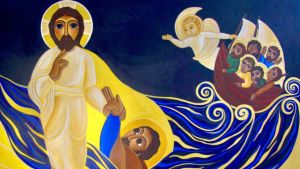
Transfiguration of the Lord
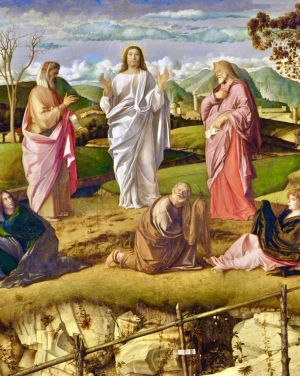
The Transfiguration of the Lord (year A) [6 August 2026]
First Reading from the Book of the Prophet Daniel (7:9–10, 13–14)
The text recounts a vision of the prophet Daniel, written during the persecution of the Jews by Antiochus IV Epiphanes in the 2nd century BC. Its purpose is to encourage and console the suffering people. Daniel first sees God, depicted as an ‘Ancient of Days’ seated on a throne of fire, surrounded by millions of servants. It is an image of justice and victory: God is about to judge the persecutors and bring justice to the faithful. Next, the ‘Son of Man’ appears; he is brought before God on the clouds of heaven and receives power, glory and an eternal kingdom. It resembles a scene of a messianic coronation.
Who is the Son of Man? The explanation given in the text of Daniel itself is surprising: the Son of Man does not initially represent a single person, but the ‘people of the saints of the Most High’, that is, Israel faithful to God, especially that small group which remains faithful during persecution. The message is therefore clear: today you are oppressed, but God will grant you victory and his Kingdom will be eternal. After their deliverance from persecution, many Jews continued to interpret this prophecy as referring to the future. Some began to await not an individual Messiah, but a collective Messiah: the faithful people of Israel, called precisely the ‘Son of Man’. And here is the new insight brought by Jesus. Jesus of Nazareth takes up the title ‘Son of Man’, but gives it a deeper meaning: it does not simply refer to ‘a man’, but to the whole of humanity; Jesus applies it to himself more than eighty times in the Gospels; he unites two aspects that were separate in Daniel: glory and suffering. For Jesus, the Son of Man is not merely the glorious King who receives the Kingdom, but also the one who suffers, is rejected and dies before entering into glory. After the Resurrection, the disciples realise that Jesus is both man and God. He is the head of a new humanity, and all those united to him form one body. Therefore, Daniel’s prophecy is fully fulfilled in Christ and in his people: believers are called to share in his kingship and his glory.
This, then, is the central message: God created humanity to share in his dignity and his Kingdom. Suffering and persecution do not have the final say: the ultimate destiny of the faithful is to share in God’s victory and his eternal kingdom.
Responsorial Psalm (96/97)
A constant struggle against idolatry: this could be the commentary on Psalm 96/97 (‘The Lord reigns’) to highlight a fundamental theme of the Bible: the constant struggle against idolatry and the affirmation that there is only one God.
When the psalm proclaims: ‘The Lord is King; let the earth rejoice’, it affirms that God is the one true sovereign of the universe. The expressions: ‘You reign above all gods; let all gods bow down before him’, do not mean that there are other inferior gods, but that all false deities and idols are nothing in the face of the one God of Israel.
In the Jewish faith, the fundamental principle is: ‘Hear, O Israel: the Lord our God is the one and only Lord.’ Israel always lived in close contact with polytheistic peoples and was often tempted to adopt their cults. For this reason, the prophets denounced the people’s unfaithfulness, comparing it to that of a wife who betrays her husband. However, alongside their rebuke, they always proclaimed God’s forgiveness and mercy. The text recalls that the first chapter of the Book of Genesis was written in contrast to the religious beliefs of Babylon. Whilst Babylonian myths spoke of many gods fighting amongst themselves and of humanity created to be slaves, the Bible affirms that: there is only one God; creation is good; man and woman are created in the image of God; human beings are called to rule over creation and not to be its slaves. Even the sun and the moon are not named, to prevent them from being worshipped as deities: they are simply ‘luminaries’ in the service of life. God, Lord of the universe, and the psalm describes God’s manifestation with majestic imagery: fire, lightning, clouds, earthquakes, mountains melting like wax. These images recall Moses’ theophany on Mount Sinai and serve to demonstrate divine power and majesty. A universal message of joy emerges, and the expression ‘The Lord is King; let the earth rejoice’
means that God’s kingdom concerns not only Israel, but all humanity.
Indeed, the Bible always combines two ideas: the election of Israel and the salvation intended for all peoples. God’s plan is universal and oriented towards joy, justice and peace. Finally, the psalm invites us to believe that God guides history towards a future of peace and happiness for all. Even when the world seems dominated by wars, violence and injustice, the believer is called to maintain hope and to work together so that God’s plan may be realised. The commentary’s final observation is very practical: peace and joy are possible, but we must truly desire them. In other words, it is not enough simply to wait for God to intervene: we must also commit ourselves personally to building a more just and fraternal world.
Second Reading from the Second Letter of Saint Peter the Apostle (1:16–19)
The central theme of this passage could be summarised as follows: ‘Remain steadfast in the faith and beware of false prophets’, which may be regarded as Peter’s spiritual testament. The Second Letter of Peter resembles a farewell address: as he is about to depart, the one who is leaving recalls the fundamental truths that have inspired him and offers guidance for the future to those who have gathered around his testimony. The verses presented here serve as an introduction to the entire letter and summarise its main themes: 1) remain steadfast in your faith in Jesus Christ, the Son of God; 2) beware of false prophets. All this without losing sight of the horizon of faith: the hope of Christ’s return. Above all: remain steadfast in your faith in Jesus, the Son of God. At the time of Jesus’ birth, it would never have occurred to anyone that God could have a Son; the one God was solitary. When John the Baptist heard the voice from heaven designating Jesus as the Son, he certainly interpreted it as ‘Messiah’; for, traditionally, the king of Israel received the title ‘Son of God’ on the day of his coronation, with the words ‘You are my Son; today I have begotten you’ (Ps 2:7). For Jewish believers, to call oneself the Son of God was a lie, a claim to authority, or even blasphemy. It was one of the reasons for Jesus’ condemnation (Mark 14:64). Gradually, much later, as they meditated on the mystery of Christ in the light of the Resurrection, the apostles discovered this unexpected truth: Jesus is truly the Son of God; he is God. The event of the Transfiguration now appears in full light: Christ ‘received honour and glory from God the Father; a voice came to him from the majestic glory: “This is my beloved Son, in whom I am well pleased.”’
Now, throughout the Old Testament, glory is the prerogative of God: for example, ‘Give to the Lord the glory due to his name’ (Ps 28/29:2) . Yet, according to Matthew and Mark, the voice from heaven at the Transfiguration said nothing different from what it said at the Baptism; what changes is precisely the glory that envelops Jesus at the Transfiguration: he is alone on the mountain, surrounded only by the two greatest figures of the Old Testament; at the Baptism he was immersed in the crowd, mingled with the people of sinners. It is the same Jesus whom the disciples have come to know little by little—the Son of Man, certainly, but also the Son of God. Moreover, this faith does not betray their previous faith. For the disciples, this renewed faith is not a betrayal of their past faith: none of them thinks they have changed religion by recognising in Jesus the Messiah so long awaited by his people. On the contrary, by re-reading the Scriptures, they discover that Jesus is precisely the one whom they foretold.
Hence Peter’s words: ‘Thus we have confirmation of the prophetic word’, and his advice to the readers: ‘You would do well to pay close attention to it, as to a lamp shining in a dark place.’ A beautiful image: in the darkness of humanity awaiting its Saviour, the light of the prophets is already shining. From now on, Christians must always remember this Word that foretold Jesus. Another important point: beware of false prophets. If Peter speaks in this way, it is because his fear was not unfounded, and many passages in the New Testament express the same concern. For example,
we read in the Gospel of Matthew: ‘Beware of false prophets, who come to you in sheep’s clothing, but inwardly are ravenous wolves. ‘You will recognise them by their fruits’ (7:15–16). The same issue recurs in John’s letters: ‘Beloved, do not believe every spirit, but test the spirits to see whether they are from God, for many false prophets have gone out into the world’ (1 John 4:1). And Paul also speaks of this: “The Spirit plainly states that in the last days some will fall away from the faith, following deceiving spirits and the teachings of demons” (1 Tim 4:1); “The time will come when people will no longer endure sound teaching, but, having an itch to hear something, they will gather around themselves a multitude of teachers… and turn to myths” (2 Tim 4:3–4). Faced with these false prophets stand the authentic witnesses, those who have known Jesus of Nazareth and who alone have the right to speak. This concern for the authenticity of witness is a constant theme among the first apostles, and in Peter in particular. Hence the conditions for choosing Judas’s replacement (cf. Acts 1:21–22). Hence, too, Peter’s insistence on his presence at the Transfiguration: “We were eyewitnesses of his majesty… We ourselves heard this voice coming from heaven whilst we were with him on the holy mountain”. It is because they were witnesses to the coming of the Son of God amongst men that his apostles can now, with full confidence, await his coming at the end of time ‘until the day dawns and the morning star rises in your hearts’ (2 Peter 1:19).
From the Gospel according to Matthew (17:1–9)
Two essential points emerge from this text: the choice of witnesses and the Mount of the Transfiguration: Jesus took Peter, James and his brother John with him: once again we are faced with the mystery of God’s choices. Shortly before, at Caesarea, Jesus had said to Peter: ‘You are Peter, and on this rock I will build my Church; and the gates of hell shall not prevail against it’ (Mt 16:18). But Peter, entrusted with this crucial mission, is not alone with Jesus: he is accompanied by the two brothers, James and John, the sons of Zebedee. ‘And he led them aside to a high mountain’: on a high mountain, Moses had received the revelation of the God of the Covenant and had been given the tablets of the Law—that law which was to gradually teach the people of the Covenant to live in the love of God and of their brothers and sisters. On that same mountain, Elijah had received the revelation of the God of tenderness in the gentle breeze… Moses and Elijah, the two pillars of the Old Testament. On the high mountain of the Transfiguration, Peter, James and John—the pillars of the Church—receive the revelation of the God of tenderness incarnate in Jesus: ‘This is my beloved Son, in whom I am well pleased.’ And this revelation is given to strengthen their faith before the storm of the Passion. Peter would later write: ‘We did not follow cleverly devised myths when we made known to you the power and coming of our Lord Jesus Christ, but we were eyewitnesses of his majesty’ (2 Peter 1:16–18). ‘Let us make three tents’: this remark by Peter suggests that the episode of the Transfiguration took place during the Feast of Tabernacles, or at least within the atmosphere of the feast celebrated in remembrance of the journey through the desert during the Exodus and of the Covenant made with God. During the feast, many psalms celebrated the messianic promises and implored God to hasten his coming. On the Mount of the Transfiguration, the three apostles suddenly find themselves faced with this revelation of the mystery of Jesus: it is hardly surprising that they are seized by the fear that grips every person in the presence of the holy God. Nor is it surprising that Jesus lifts their spirits and reassures them: the Old Testament had already revealed to the people of the Covenant that the Most Holy God is the God who is very close to humankind, and that there is no cause for fear. But this revelation of the mystery of the Messiah, in all its aspects, is not yet within everyone’s grasp; Jesus commands them not to tell anyone for the time being, until the Son of Man has risen from the dead. By uttering these words, Jesus confirms the revelation the three disciples have just received: he is truly the Messiah whom the prophet Daniel saw in the likeness of a man, coming on the clouds of heaven (cf. Dan 7:13–14). It should be remembered that Daniel himself presents the Son of Man not as a solitary individual, but as a people, whom he calls the people of the saints of the Most High. The fulfilment is even more beautiful than the promise: in Jesus, the God-Man, it is the whole of humanity that will receive this eternal kingship and be eternally transfigured. But Jesus was right to say: ‘Tell no one anything before the Resurrection…’ Only after Jesus’ resurrection will the apostles be able to bear witness to it.
Note: The Greek text begins with ‘Six days later’: this is understood to mean ‘six days after Yom Kippur’, the Day of Atonement. It invites us to imagine a connection with the Feast of Tabernacles, hence Peter’s suggestion: ‘Let us make three tents here.’ Furthermore, why are Moses and Elijah present? The very same two who received the revelation of the Father on Mount Sinai now receive the revelation of the Son here. The mosaic in the Basilica of the Transfiguration at St Catherine’s Monastery in Sinai confirms this interpretation: Moses is depicted barefoot, his sandals untied beside him, as he was before the burning bush (cf. Ex 3).
+Giovanni D’Ercole
For Jesus we are not a "mass", a "multitude"! We are individual "persons" with an eternal value, both as creatures and as re-deemed persons! He knows us! He knows me, and loves me and gave himself for me! (Gal 2:20) [John Paul II]
Non siamo “massa”, “moltitudine”, per Gesù! Siamo “persone” singole con un valore eterno, sia come creature sia come persone redente! lui ci conosce! lui mi conosce, e mi ama e ha dato se stesso per me! (Gal 2,20) [Giovanni Paolo II]
The grain of wheat that "falls to the ground and dies" becomes the promise of bread (Pope John Paul II)
Il chicco di grano che “cade in terra e muore” diventa la promessa del pane (Papa Giovanni Paolo II)
The power of faith can move mountains (cf. Mt 17:20): the Lord can illuminate even the deepest darkness [Pope Benedict]
La forza della fede può spostare le montagne (cfr Mt 17,20): il Signore può illuminare anche la tenebra più profonda [Papa Benedetto]
By willingly accepting death, Jesus carries the cross of all human beings and becomes a source of salvation for the whole of humanity. St Cyril of Jerusalem commented: “The glory of the Cross led those who were blind through ignorance into light, loosed all who were held fast by sin and brought redemption to the whole world of mankind” (Catechesis Illuminandorum XIII, 1: de Christo crucifixo et sepulto: PG 33, 772 B) [Pope Benedict]
Accettando volontariamente la morte, Gesù porta la croce di tutti gli uomini e diventa fonte di salvezza per tutta l’umanità. San Cirillo di Gerusalemme commenta: «La croce vittoriosa ha illuminato chi era accecato dall’ignoranza, ha liberato chi era prigioniero del peccato, ha portato la redenzione all’intera umanità» (Catechesis Illuminandorum XIII,1: de Christo crucifixo et sepulto: PG 33, 772 B) [Papa Benedetto]
In the New Testament, it is Christ who constitutes the full manifestation of God's light [Pope Benedict]
Nel Nuovo Testamento è Cristo a costituire la piena manifestazione della luce di Dio [Papa Benedetto]
Faith opens us to knowing and welcoming the real identity of Jesus, his newness and oneness, his word, as a source of life, in order to live a personal relationship with him. Knowledge of the faith grows, it grows with the desire to find the way and in the end it is a gift of God who does not reveal himself to us as an abstract thing without a face or a name, because faith responds to a Person who wants to enter into a relationship of deep love with us and to involve our whole life (Pope Benedict)
La fede ci apre a conoscere e ad accogliere la reale identità di Gesù, la sua novità e unicità, la sua Parola, come fonte di vita, per vivere una relazione personale con Lui. Il conoscere della fede cresce, cresce con il desiderio di trovare la strada, ed è finalmente un dono di Dio, che si rivela a noi non come una cosa astratta senza volto e senza nome, ma la fede risponde a una Persona, che vuole entrare in un rapporto di amore profondo con noi e coinvolgere tutta la nostra vita (Papa Benedetto)
Jesus Christ clearly indicates that even acts of devotion and penance (such as fasting, almsgiving, prayer), which by their religious purpose are primarily 'interior', can succumb to current 'externalism', and can therefore be falsified [John Paul II]
Gesù Cristo indica chiaramente che anche gli atti di devozione e di penitenza (come digiuno, elemosina, preghiera) che per la loro finalità religiosa sono principalmente “interiori”, possono cedere all’“esteriorismo” corrente, e quindi possono essere falsificati [Giovanni Paolo II]








duevie.art
don Giuseppe Nespeca
Tel. 333-1329741
Disclaimer
Questo blog non rappresenta una testata giornalistica in quanto viene aggiornato senza alcuna periodicità. Non può pertanto considerarsi un prodotto editoriale ai sensi della legge N°62 del 07/03/2001.
Le immagini sono tratte da internet, ma se il loro uso violasse diritti d'autore, lo si comunichi all'autore del blog che provvederà alla loro pronta rimozione.
L'autore dichiara di non essere responsabile dei commenti lasciati nei post. Eventuali commenti dei lettori, lesivi dell'immagine o dell'onorabilità di persone terze, il cui contenuto fosse ritenuto non idoneo alla pubblicazione verranno insindacabilmente rimossi.