Narrow door: not because it is oppressive
(Lk 13:22-30)
The meaning of the first question is: "Is Salvation exclusive?" (v.23). Of course not - and not oppressive either.
But it is not enough to declare oneself 'Friends' [here and there a mannered proclamation, which has become a license of immunity to lead a double life].
Half a century after the crucifixion of Jesus, the first signs of slackness, vexation and confusion are beginning to appear in the communities.
In fact, it is precisely those who are far off, new and rejected by the veterans, who manifest that they are believers who recognise the Lord more than the habitual members of the community (v.25).
Some of them, now inauthentic practitioners of his Table and Word (v.26).
How is it that the indulgent Son of Lk ends up slamming the door in the face of his old devotees?
Because they have become bogus mannerists, theatrics like those of ancient religion, manipulators of the Exodus image of God.
Now incapable [v.24 Greek text] of orienting themselves according to the Father's plan, and despotic, only because clothed in lengthy ritual practices. External styles, fulfilled by custom and to the detriment of the full life - that is, made available to the brothers.
The privileged are already outside the House [vv.25ff].
Their story warns against the illusion of feeling 'chosen', and being on the right path.
In short, we must avoid posing as (Christological) phenomena for routine - cheap - rather than in the service of humanisation.
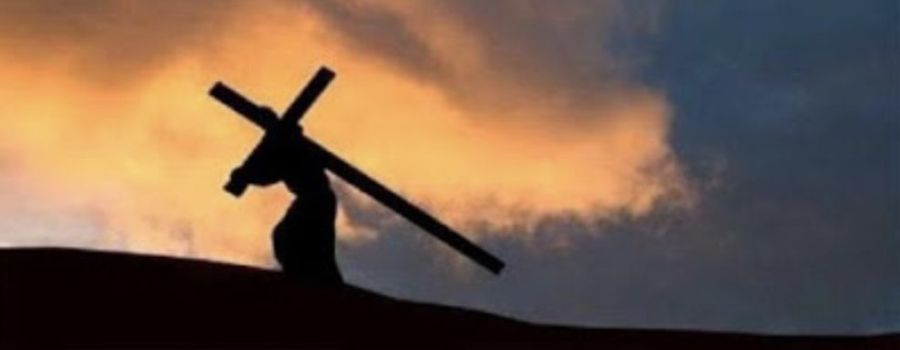
An opportunity to understand whether we are on the steps that really belong to us is the constant review of the relationship with the "inadequate" Person - of Christ (the "Narrow Door": v.24).
According to the Master, one does not become "better" by tracing ostentatious habitual clichés, poorly convinced and fulfilled by tran tran tran.
Is there, then, a critical point in his clemency? Of what kind is his inflexibility? Why is the dividing line in his circle?
Those who do many things for God (v.26) and not for the brethren - or do not even realise they exist - do not actually honour the Father.
Those who do not 'deflate', not only lack the humility to become servants, but also do not cross the gaps of the stone walls (or rubber walls, more diplomatically) into which the Spirit is wedged.
We still wonder, however, surprised, how can the Father neglect precisely His own who have believed in Him so much, and even prefer those who are far away, from who knows where.
Perhaps they loved as He did.
They spontaneously brought about that change of course and destiny that the Church institution [reflection of the Kingdom] has always been called upon to embody.
And how did they find their way through?
They did not have a 'right' relationship with God - probably - but a right relationship with others, yes.
It was in their inner selves that they came to know the Lord. Personally - even those who have not even heard of Him directly.
And by transmigrating, they have fulfilled their Exodus.
Going directly to the goal, they have been interested in the fruit: listening, compassion, generous sharing of goods - instead of the many leaves (of banner, ritual and formula).
With the eyes of the soul, in these people completely devoid of spiritual arrogance, the perception of inner guidance has conquered the thoughts and idols of custom at hand.
They are those who have never considered themselves too great.
Not feeling excellent and not having pretensions is and will be valued far more than the right observance and the exact banner.
Fatuous characteristics, even (!) - which the new Rebbe attributes to the very habitués who seem to have the right stuff.
He calls them "doers of vain things, makers of dead things" [Lk 13:27; the Greek text has a Semitic undertone of the kind: Ps 6:9 Hebrew text].
It refers to the lukewarm ones who go on out of inertia and still participate in outward manifestations with extreme superficiality.
They make a body, but personally they do not set anything in motion.
The Lord does not want to humiliate, but to invite us to rethink the motives and modalities of our following.
Receiving his Bread means accepting to become food for the life of the world.
Accepting his Word is a gesture that denotes an ardent desire to live it, not a habit, nor a way of letting oneself be appreciated and slalom.
Yet Christ is compelled to say: "I do not know "from" where you are" (vv.25-27).
While some, who have not even known the Lord, have mysteriously passed through the 'narrow gate' that is Jesus himself - without realising it.
Without the hypocrisy of considering themselves great Apostles, those who know how to be in the world.
Their secret is that of a convinced experience and fraternal practice that has thinned out the spiritual deception of (theatrical) parentheses in society.
They have not taken part in (sacred) catwalks and then spent their lives pointing fingers, mortifying, making everyone's existence infirm, and especially the infirm.People who have dedicated themselves to the good - therefore not drowned in the stale anguish of local devout and moralistic cultures. Perhaps stuck for fear of contamination.
Souls who have not lived under a cloak of morbid obsession, typical of those who fixate on the behaviour of others [and in an unexpressed way cultivate it within].
True disciples participate in the banquet because they have not fled the world, they have struggled (v. 24) to make themselves capable of love.
They have compromised with the vile limitations of the existential peripheries, their own and their brothers'.
They have dedicated their existence to social inclusion and the acceptance of feelings, to recognising each person's legitimate desire for life.
They have uprooted themselves from the idea that religious affiliation offered a licence of immunity (or even sacralisation) to lukewarmness.
With all their imperfections, they longed for happiness, not the banal cheerfulness that covers the nothingness of choices.
They are already complete persons, who have also bridged our existence, and therefore 'entered' under the light of God.
They have had respect for their infallible Core and the nature of the things of the world, which they call to Communion.
If they have been women and men of prayer, they have listened to the voice of their own essence.
They have been able to welcome any departing state of mind (and intuition) as a guest of regard. They have noticed.
They perceived and expressed, not just thought and stifled.
And as they dug in, they asked themselves: what does this joy or sadness mean to me? Why my calms and anxieties?
In this way they learnt to meet themselves in everything, and to accompany the eccentricities of others, recovering their opposites (v.30).
Angels who remained in tune with the Mystery of God that lurks in the folds of personal history and the history of others, day by day - in the genius of time.
They have grasped God's Secret because they have not overlooked anything as if it were a deception, nor have they silenced their anxieties.
The Lord's teaching transformed their existence: knowledge of God became compassion and empathy.
Thus they did not mistake indifference for peace, opportunism for quietness, and the failure of the "half-breeds" for tranquillity.
They have not been so presumptuous as to consider themselves entitled. They have not called the subordination of the last and the excluded a victory.
"Narrow door": not because it was oppressive.