


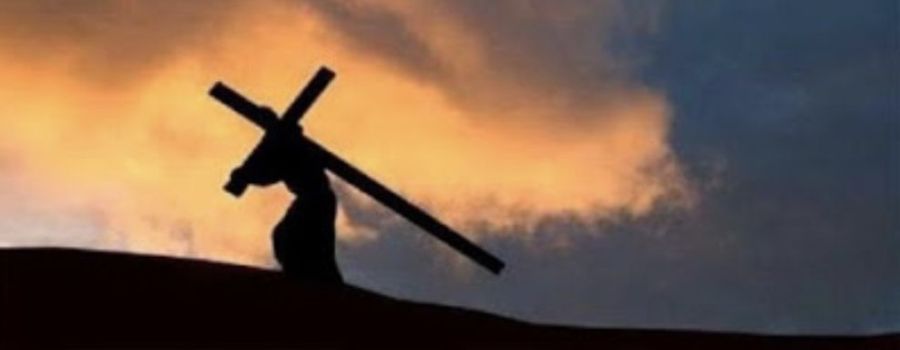
For transparent coexistence
(Mt 7:1-5)
The Sermon on the Mount (Mt 5-7) lists catechesis on salient issues in the life of the communities of Galilee and Syria, composed of Jews converted to Christ.
There were episodes of mutual contempt, fuelled especially by veterans accustomed to scrutinising newcomers who presented themselves at the door of the churches, either because their lifestyle was far from the accepted norm or even for trivial reasons.
But we are not judges, we are family members. And of course, in the final analysis, it is precisely malice that sharpens the eye to the slightest faults in others: generally, specks and external shortcomings.
This while the same shrewdness overlooks our own enormities - the heavy beam that separates us not only from God and everyone else, but even from ourselves, bringing us closer to the selfish and arrogant ego.
A 'theatral' person (v. 5) is someone who thinks highly of themselves and is always looking around to convince themselves that they can excel - without showing any respect for the enigma of life, where burdens can be transformed into progress.
An objective view of ourselves and our personal growth - often arising precisely from deviations from stereotypes or nomenclatures - can make us benevolent. It can convince us of the respect and even deference due to the greater reality that surrounds us and calls us.
Legalism in rigid details leads to neglect of what is essential in mutual love (cf. vv. 3-5).
We know very well how hard it is to question ourselves, or to educate perfectionist religious people to detach themselves from their accidental convictions [or fads], which have become sclerotic habits like totems.
In short, in the 70s of the first century, awareness of a different, peaceful relationship with God – and a new way of living his Law – was challenging believers and affecting their relationships with their brothers and sisters in the community.
After introducing both the new criteria of 'greater justice' and the recovery of the principles of Creation, the evangelist suggests some essential points for the quality of life within the fraternities.
The cultural background of the older members of the church was fiercely legalistic.
This background did not favour freedom in mutual evaluation: coexistence had to be more transparent.
Devout preconceptions seemed an insurmountable obstacle to personalised life and mutual sharing according to the new logic of the Beatitudes [Mt 5:1-12: Self-portrait of Christ as an 'open book' (pierced by a spear)].
The cultural baggage linked to obligations, a sense of duty and hierarchy, an ingrained lifestyle, and beliefs that were difficult to abandon multiplied harsh judgements between generations and between different cultural backgrounds.
To encourage communion, Matthew wants to present a free and peaceful Jesus - not a superman, nor an idol or model: on the contrary, a genuine Person; a non-unilateral Teacher.
He knew how to restore; he wanted to value all the multifaceted, individual sensibilities, to allow the expression of friendship and enrichment in every human reality.
Only his strong 'roots' in his relationship with the Father were to be a sacred example for everyone and an inviolable model for all, always.
This was for the sake of a rich and global transparency, to be proposed also to his disciples.
In this way, adherence to particular beliefs or the repetition of the usual disciplines of perfection did not take shape.
Nor should pious mass observances be favoured, as these are sometimes the first obstacle to dialogue and to the Exodus in its various forms.
Then life itself would providentially guide each person towards a specific witness, which could itself create another opening - relevant to their own character and vocation of the soul.
In Palestine, the Lord did not show himself to be obsessive or one-sided, nor was he reduced to normal and plausible patterns based on cultural codes, evaluative prudence, or moral and religious paradigms.
Trust in the Father and in the life that is given gave the Master Jesus the certainty that he could open himself totally to situations and to everyone, whatever reality he found himself in.
A convivial openness to the most exceptional differences, so as not to block the gateways and the outcome of the Newness, in the Spirit of the Beatitudes.
Unconditional love always applies first and foremost to the disciple, the members of the same community, and one's neighbour.
This is because we have been called to make our existence and that of everyone else exponential, not to dampen it with glamorous versions, preconceived ideas, and relative convictions.
We were created to love the exceptional truth of women and men, not to extinguish uniqueness by passing judgement on trifles.Let us accept Providence, ourselves and others as they are: aware that there is a precious secret, a destiny of newness, a Mystery that surpasses us... behind every event, in each of our own intimate faces [supported by the Father], or in our eccentric brother.
The ways of following that resonate in the depths of our hearts are as varied as the people, events, rhythms commensurate with the soul, and ages.
They embrace the same Proposal - without losing the enduring Mystery or any bond in this multifacetedness.
Only here... the real world, the Person, Nature and Eternity are united.
"When the weaver raises one foot, the other lowers. When the movement ceases and one of the feet stops, the fabric is no longer woven. His hands throw the shuttle from one to the other, but no hand can hope to hold it. Like the weaver's gestures, it is the union of opposites that weaves our life" [African Peul oral tradition].
"We are utterly lost if we lack this particular Individuality, the only thing we can truly call our own and whose loss is also a loss for the whole world. It is precious precisely because it is not universal" [Tagore].
"We must learn to abandon our defences and our need to control, and trust totally in the guidance of the spirit" [Sobonfu Somé].
"True morality does not consist in following the beaten path, but in finding the path that is true for us and following it without fear" [Gandhi].
Beams and specks: a paradoxical situation, where there is sometimes an excess of 'belief' - yet Faith is lacking.








