Feb 25, 2026 Written by 

Poverty alongside unbridled wealth

External solution?

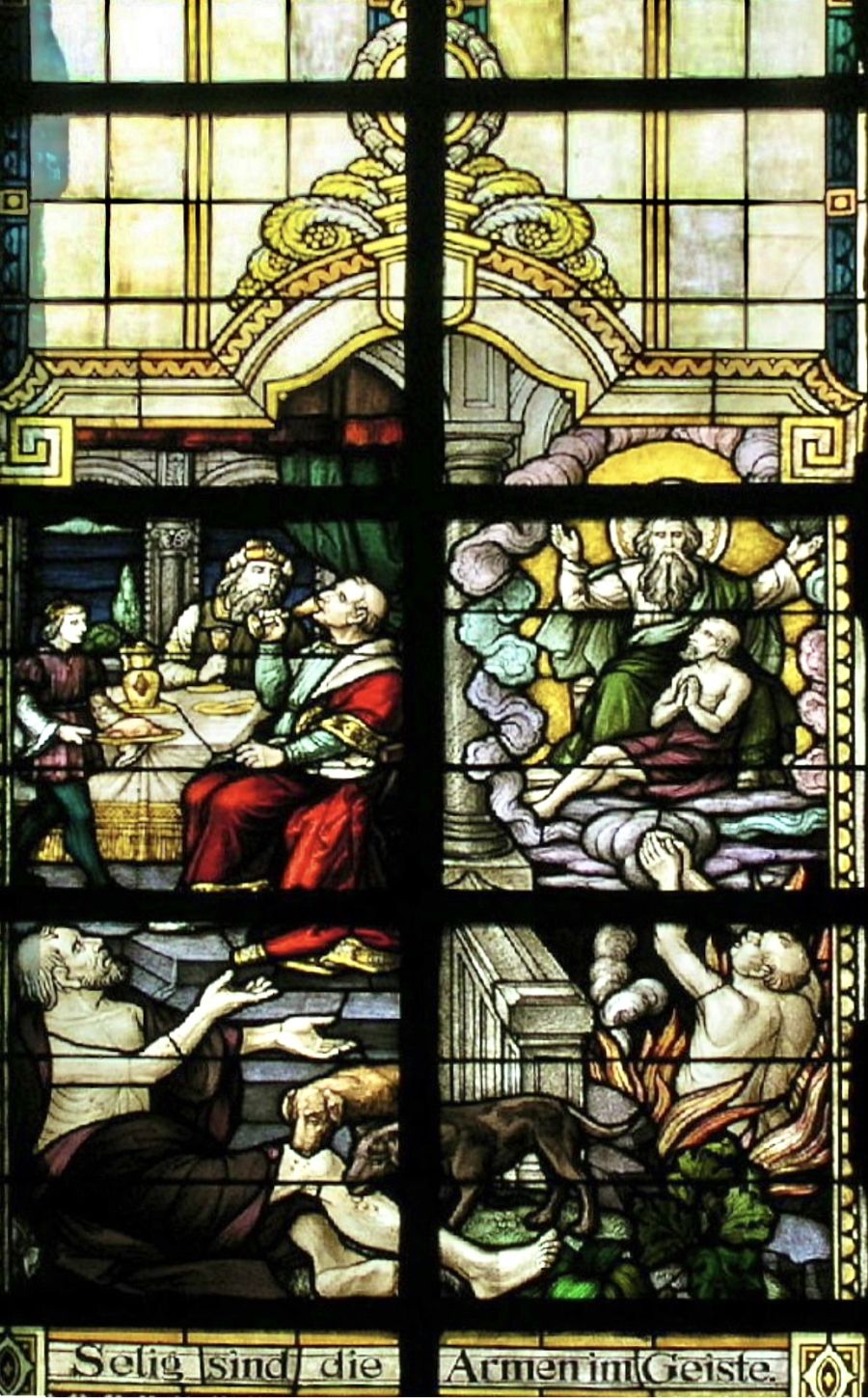
(Lk 16:19-31)


Today's Gospel raises a question of apparent obviousness: is it not perhaps in the natural order of things that in human society there are first and last, learned and ignorant, princes and subjects?

Even Leo XIII, Pope of the social encyclicals, recognized that «in human society it is according to the order established by God that there are princes and subjects, masters and proletarians, rich and poor, learned and ignorant, nobles and plebeians; the obligation of charity of the rich and the landowners is to help the poor and the destitute» [mentality of an omission’ sin: it is enough that they then do "charity"].

The position of the Lord is very very different.

According to Lk the rich man is not the Blessed by God, as the patriarchs of the First Testament were considered.

His sought-after clothing is only a metaphor for the inner emptiness and ephemeral he basks in - what will later be corroded by moths.

His gorging is a sign of an intimate abyss to be bridged - a sort of nervous hunger.

«Eli hezer»: «God helps»; He does not forget, on the contrary He is definitely on the unsteady’ side. Therefore, that form of "enjoying life" is giving up living completely.


The evangelist does not specify that Lazarus was a good and responsible person: just a poor.

Nor does he affirm that the “Dives” was a total criminal: if the indigent stopped outside his door and nowhere else, it means that was remedying something there.

But at that time there was no cutlery and rich men cleaned their fingers with the crumb, then thrown on the ground; the miserable ate of this.

A dog's life, worse than insults. And ignored.

Radical evil, which was not in the individual acts, rather in the depths of being, and in the consequent global carelessness.

Inattention that tends to choose consensus and hierarchies as the ultimate backdrop to existence.

Therefore the question that the passage of Lk reiterates is not trivially moralistic: merits or faults, juridical or religious.

Question arises about humanity itself: diminished, reduced, arid, incapacitated; unable to articulate a deliberate reversal.

Inextricably linked to the already dug abyss.


The Gospel wants to stimulate us to reflect not on the theme of lawful almsgiving, but on warning, and the Communion of resources: on the meaning of unbridled wealth alongside poverty.

Involuntary misery is often considered a situation by now habitual, but this drama affects persons and entire peoples.

And how can we distract from the seduction of material goods?

Overcoming the lures of money and the craving for accumulation which generates social paralysis and devastating humiliation, is a true miracle.

And neither a prodigy nor a vision can do a miracle of conscience (vv.29-31).

Least of all a common religion, if it tended to sacralize and not interfere, to make positions persist; to be complicit in manifacturing poor and rich, gaining on both.


In short, to build the Kingdom and change the divided world, it is only worth letting oneself be educated by the Word of God.

Intimate Seed and Germ, Event-Therapy, Energetic Spirit and Call: which introduces into the active and nuptial awareness of Love.

Logos that places us in the right position. Exception Warning; not external.


Founding Eros that already here and now reverses situations.


[Thursday 2nd wk. in Lent, March 5, 2026]

78 Last modified on Wednesday, 25 February 2026 05:53
don Giuseppe Nespeca

Giuseppe Nespeca è architetto e sacerdote. Cultore della Sacra scrittura è autore della raccolta "Due Fuochi due Vie - Religione e Fede, Vangeli e Tao"; coautore del libro "Dialogo e Solstizio".

‘Lazarus’ means ‘God helps’. Lazarus, who is lying at the gate, is a living reminder to the rich man to remember God, but the rich man does not receive that reminder. Hence, he will be condemned not because of his wealth, but for being incapable of feeling compassion for Lazarus and for not coming to his aid. In the second part of the parable, we again meet Lazarus and the rich man after their death (vv. 22-31). In the hereafter the situation is reversed [Pope Francis]
“Lazzaro” significa “Dio aiuta”. Lazzaro, che giace davanti alla porta, è un richiamo vivente al ricco per ricordarsi di Dio, ma il ricco non accoglie tale richiamo. Sarà condannato pertanto non per le sue ricchezze, ma per essere stato incapace di sentire compassione per Lazzaro e di soccorrerlo. Nella seconda parte della parabola, ritroviamo Lazzaro e il ricco dopo la loro morte (vv. 22-31). Nell’al di là la situazione si è rovesciata [Papa Francesco]
Brothers and sisters, a frequent flaw of those in authority, whether civil or ecclesiastic authority, is that of demanding of others things — even righteous things — that they do not, however, put into practise in the first person. They live a double life. Jesus says: “They bind heavy burdens, hard to bear, and lay them on men’s shoulders; but they themselves will not move them with their finger (v.4). This attitude sets a bad example of authority, which should instead derive its primary strength precisely from setting a good example. Authority arises from a good example, so as to help others to practise what is right and proper, sustaining them in the trials that they meet on the right path. Authority is a help, but if it is wrongly exercised, it becomes oppressive; it does not allow people to grow, and creates a climate of distrust and hostility, and also leads to corruption (Pope Francis)
Fratelli e sorelle, un difetto frequente in quanti hanno un’autorità, sia autorità civile sia ecclesiastica, è quello di esigere dagli altri cose, anche giuste, che però loro non mettono in pratica in prima persona. Fanno la doppia vita. Dice Gesù: «Legano infatti fardelli pesanti e difficili da portare e li pongono sulle spalle della gente, ma essi non vogliono muoverli neppure con un dito» (v.4). Questo atteggiamento è un cattivo esercizio dell’autorità, che invece dovrebbe avere la sua prima forza proprio dal buon esempio. L’autorità nasce dal buon esempio, per aiutare gli altri a praticare ciò che è giusto e doveroso, sostenendoli nelle prove che si incontrano sulla via del bene. L’autorità è un aiuto, ma se viene esercitata male, diventa oppressiva, non lascia crescere le persone e crea un clima di sfiducia e di ostilità, e porta anche alla corruzione (Papa Francesco)
This is the road Jesus points out to all who want to be his disciples: "Judge not... condemn not... forgive, and you will be forgiven; give, and it will be given to you.... Be merciful, even as your Father is merciful" (Lk 6: 36-38). In these words we find very practical instructions for our daily conduct as believers [Pope Benedict]
Questa è la strada che Gesù mostra a quanti vogliono essere suoi discepoli: "Non giudicate... non condannate... perdonate e vi sarà perdonato; date e vi sarà dato... Siate misericordiosi come è misericordioso il Padre vostro" (Lc 6, 36-38). In queste parole troviamo indicazioni assai concrete per il nostro quotidiano comportamento di credenti [Papa Benedetto]
Path of Lent, learning a  little more how to “ascend” with prayer and listen to Jesus and to “descend” with brotherly love, proclaiming Jesus (Pope Francis)

Due Fuochi due Vie - Vol. 1 Due Fuochi due Vie - Vol. 2 Due Fuochi due Vie - Vol. 3 Due Fuochi due Vie - Vol. 4 Due Fuochi due Vie - Vol. 5 Dialogo e Solstizio I fiammiferi di Maria

duevie.art

don Giuseppe Nespeca

Tel. 333-1329741


Disclaimer

Questo blog non rappresenta una testata giornalistica in quanto viene aggiornato senza alcuna periodicità. Non può pertanto considerarsi un prodotto editoriale ai sensi della legge N°62 del 07/03/2001.
Le immagini sono tratte da internet, ma se il loro uso violasse diritti d'autore, lo si comunichi all'autore del blog che provvederà alla loro pronta rimozione.
L'autore dichiara di non essere responsabile dei commenti lasciati nei post. Eventuali commenti dei lettori, lesivi dell'immagine o dell'onorabilità di persone terze, il cui contenuto fosse ritenuto non idoneo alla pubblicazione verranno insindacabilmente rimossi.







