


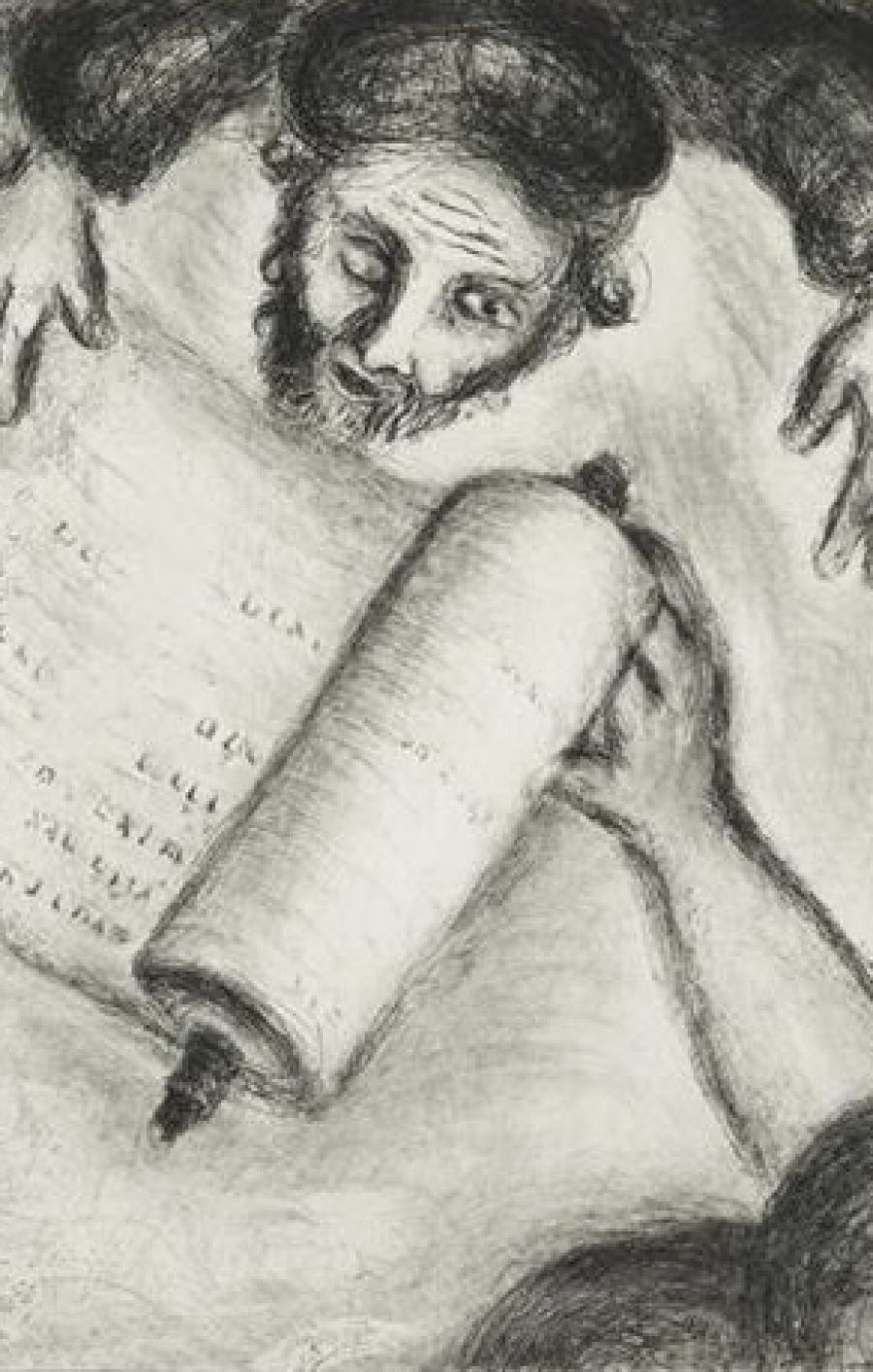
Pure and impure: God's Law or formal blindness
(Mt 15:1-2.10-14)
The invisible Friend in us is the only Guide that should be followed with care and punctiliousness.
The only Master of Spirit who understands the different and does not harass him/her - because He does not use us.
Here comes the 'law or customs' paradox: «Why do you also transgress the Commandment of God in the name of your Tradition?» (v.3).
Sure, habits normalize manners.
Over time, mechanically fulfilled customs lose the sense of the Commandments from which they sprang.
And the vacuous standards then ruin life (vv.4-9), irritate, exacerbate tempers.
The purity laws discriminated against people and filled them with resentment.
Instead, no exclusivism is to be introduced at the Eucharistic Banquet. Nor are we to be part of the Lord's Community on the basis of artificial selections.
The ablution of the hands up to the elbows was customary practice, proclaiming the detachment of the Judaizers from the pagan world: a kind of rite celebrating the separation of the (supposedly) pure from the impure.
The 'breaking of the bread', on the other hand, is accessed without rigmarole or discipline of the arcane, nor prior x-rays.
All are welcome, because it is the encounter with God that makes humanity of all cultural backgrounds alive and healthy.
Christ opens a completely new Way, to bring ordinary people closer to a greater balance, animated by spousal, creative trust.
For Jesus, access to the Father is immediate and gratuitous.
In the area of Faith, it is Life that conquers death.
According to customary religiosity, it is conversely the germ of death that contaminates purity.
In this prison of screwed-up ideas, people lived with the fear of sin and transgressions (even unintentional ones) - just always stucked on to everybody.
In order to free the oppressed masses from the archaic ideology that subjected them to a daily barrage on all aspects of life, Jesus is forced to overthrow the 'in-out' hierarchy (v.11).
Spiritual leaders inculcated the idea that impurity came from without, and was so incisive as to contaminate even holy people [even for a mere rubbing - let alone the masses destined for an ordinary existence of deprivation].
Instead, Jesus makes us feel good: He reverses the virtues on the field. The Lord does so, well aware of the power of Life.
In doing so, He places the debate on 'pure or impure' at another level: of depth, behaviour, and relationship.
Father, Son, Spirit, emancipate us from corporate attitudes and from always being on the defensive; to restore our self-esteem, joy in life, and make us feel adequate, as in a Hearth.
His aim is to let us live intensely, with the perception that it is He in ourselves who is guiding the rudder; wisely, rather than letting us end up badly - as in the same, usual mass grave (v.14).
[Tuesday 18th wk. in O.T. (year A), August 4, 2026]








