Jul 28, 2026 Written by 

Faith: Crumbs and "nose", integral parts. Signs of universal gathering

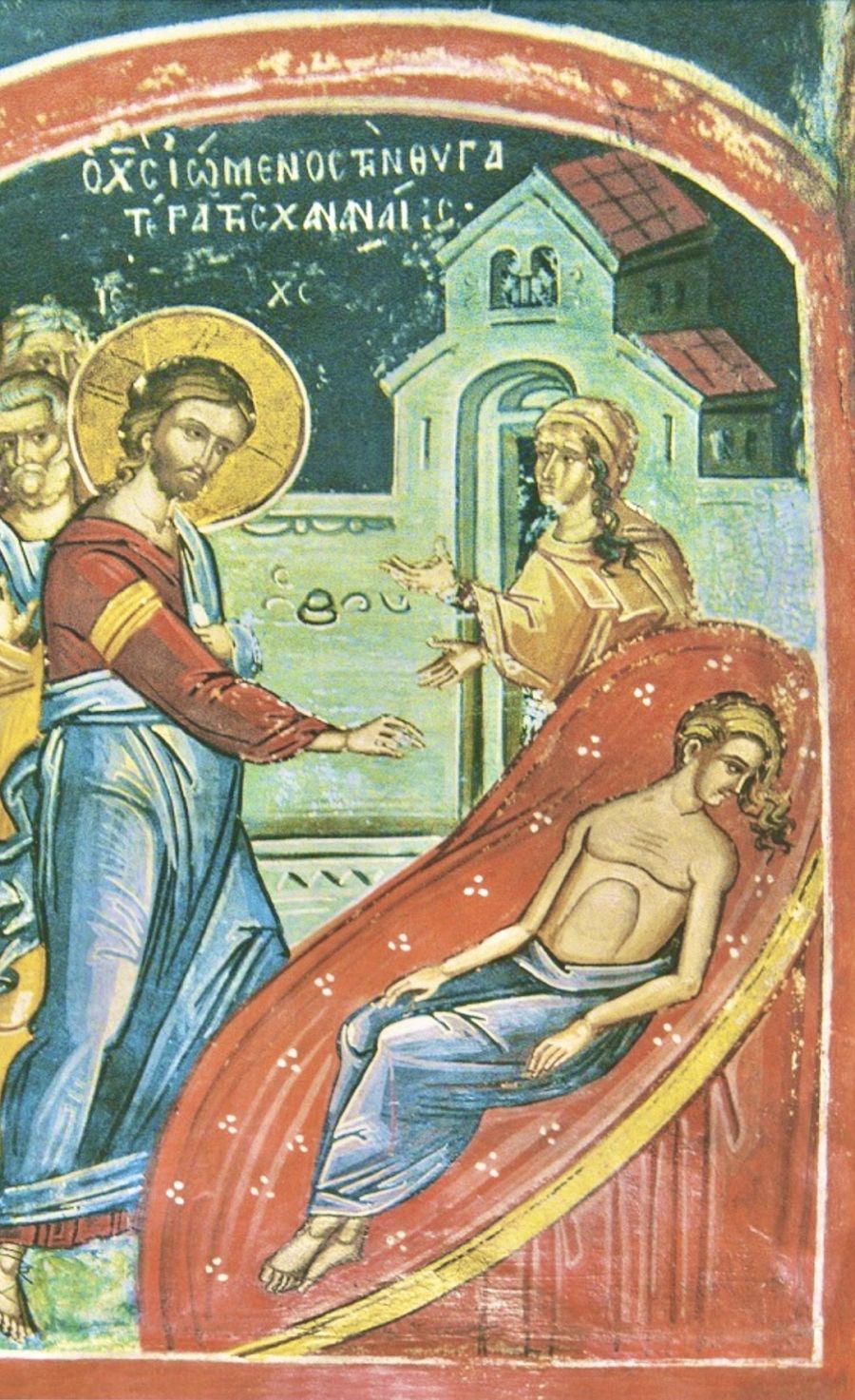
(Mt 15:21-28)


Religious law prevented dealing with foreign people and other ethnicities, borders, or culture.

At the beginning, Jesus [that is: He in the first communities, his Mystical Body] seems not to want to occupy himself with it (v.26).

But after helping the crowds and his own intimates to emancipate themselves from the prison of purity norms (vv.10-20), the young Rabbi himself had emerged from the conformist ways of experiencing God.

He makes an Exodus even from national and race territories that at that time were seizing the vital sap of the souls - thus flying over the "sacred" preconceptions.

To make us grow in Faith, Christ promotes the most varied existence. In this way, outside the standard myopia, He can find astounding adherences.

Faith: New Principle, which does not alienate us from ourselves. And crumbles any illusion of exclusivity.


The singular initiatives of the Son are born on the basis of the all-personal experience of the divine, of a Father who bestows unconditionally.

Provident, and unequal from the stingy God of ancient religions: sovereign all discordant from creatures, alien, predatory, and incomprehensibly addicted to habit.

With an unusual stunt, the young Rabbi tries to open the Judaizing mentality, overcoming borders.

Even the dialogue with a woman not of his people was a "novelty" alien to the mentality of the time’s crowds. Initiative foreign even to the conceptions of the first two generations of believers; marked by a creed still blocked and mixed with idols.

But there was a whole people of strangers [the mestizo «Woman» and her spiritual ‘offspring’] who felt they had no future... and this called into question the many aprioriisms of the time.

In short, even the church of Mt had not fully grasped the meaning of the «bread of the sons» - all available, for it to be “recognized”.


Because of rivalry, ancient peoples used to call foreigners with the contemptuous nickname of «dog»: synonymous with impudence, meanness and ignoble baseness.

The Lord's very harsh phrase (v.26) reflects a comparison coming from poor areas and from family life, where once there were plenty of pets and youth.

There was also a difference between ‘children’ generated by listening to the Word of God and those who adjusted themselves “by scent”. But although no one denied sustenance to the «sons» to give it to the «dogs» around them - the latter had at least the right of crumbs fallen on the ground.

For differents and far - even bad-considered - it is not a problem to resort to Jesus in an instinctive way; indeed, even today they would be satisfied with the shatters.

[Unfortunately, not infrequently strangers and difforms are hungrier of the real Manna from Heaven].


Christian community should not lack the nourishment of the body and the food of wisdom for everyone (Mt 14:20-21).

Faith has no nationality, and it is the only immediate language and relationship valid for communication between God and woman and man.

Christ is a sapiential feeds for a free circulation; not a sign to be hindered and kept closed.

To break the Bread is to participate our existence at root; what we have and are. Metre of what we proclaim, believe and practice.


[Wednesday 18th wk. in O.T.  August 5, 2026]

116 Last modified on Tuesday, 28 July 2026 04:35
don Giuseppe Nespeca

Giuseppe Nespeca è architetto e sacerdote. Cultore della Sacra scrittura è autore della raccolta "Due Fuochi due Vie - Religione e Fede, Vangeli e Tao"; coautore del libro "Dialogo e Solstizio".

Faith opens us to knowing and welcoming the real identity of Jesus, his newness and oneness, his word, as a source of life, in order to live a personal relationship with him. Knowledge of the faith grows, it grows with the desire to find the way and in the end it is a gift of God who does not reveal himself to us as an abstract thing without a face or a name, because faith responds to a Person who wants to enter into a relationship of deep love with us and to involve our whole life (Pope Benedict)
La fede ci apre a conoscere e ad accogliere la reale identità di Gesù, la sua novità e unicità, la sua Parola, come fonte di vita, per vivere una relazione personale con Lui. Il conoscere della fede cresce, cresce con il desiderio di trovare la strada, ed è finalmente un dono di Dio, che si rivela a noi non come una cosa astratta senza volto e senza nome, ma la fede risponde a una Persona, che vuole entrare in un rapporto di amore profondo con noi e coinvolgere tutta la nostra vita (Papa Benedetto)
Jesus Christ clearly indicates that even acts of devotion and penance (such as fasting, almsgiving, prayer), which by their religious purpose are primarily 'interior', can succumb to current 'externalism', and can therefore be falsified [John Paul II]
Gesù Cristo indica chiaramente che anche gli atti di devozione e di penitenza (come digiuno, elemosina, preghiera) che per la loro finalità religiosa sono principalmente “interiori”, possono cedere all’“esteriorismo” corrente, e quindi possono essere falsificati [Giovanni Paolo II]
Today’s Gospel reminds us that faith in the Lord and in his Word does not open a way for us where everything is easy and calm; it does not rescue us from life’s storms. Faith gives us the assurance of a Presence (Pope Francis)
Il Vangelo di oggi ci ricorda che la fede nel Signore e nella sua parola non ci apre un cammino dove tutto è facile e tranquillo; non ci sottrae alle tempeste della vita. La fede ci dà la sicurezza di una Presenza (Papa Francesco)
Dear friends, “in the Eucharist Jesus also makes us witnesses of God’s compassion towards all our brothers and sisters. The Eucharistic mystery thus gives rise to a service of charity towards neighbour” (Post-Synodal Apostolic Exhortation Sacramentum Caritatis, 88) [Pope Benedict]
Cari amici, “nell’Eucaristia Gesù fa di noi testimoni della compassione di Dio per ogni fratello e sorella. Nasce così intorno al Mistero eucaristico il servizio della carità nei confronti del prossimo” (Esort. ap. postsin. Sacramentum caritatis, 88) [Papa Benedetto]
We see this great figure, this force in the Passion, in resistance to the powerful. We wonder: what gave birth to this life, to this interiority so strong, so upright, so consistent, spent so totally for God in preparing the way for Jesus? The answer is simple: it was born from the relationship with God (Pope Benedict)
Noi vediamo questa grande figura, questa forza nella passione, nella resistenza contro i potenti. Domandiamo: da dove nasce questa vita, questa interiorità così forte, così retta, così coerente, spesa in modo così totale per Dio e preparare la strada a Gesù? La risposta è semplice: dal rapporto con Dio (Papa Benedetto)
Christian's are a priestly people for the world. Christians should make the living God visible to the world, they should bear witness to him and lead people towards him (Pope Benedict)
I cristiani sono popolo sacerdotale per il mondo. I cristiani dovrebbero rendere visibile al mondo il Dio vivente, testimoniarLo e condurre a Lui (Papa Benedetto)

Due Fuochi due Vie - Vol. 1 Due Fuochi due Vie - Vol. 2 Due Fuochi due Vie - Vol. 3 Due Fuochi due Vie - Vol. 4 Due Fuochi due Vie - Vol. 5 Dialogo e Solstizio I fiammiferi di Maria

duevie.art

don Giuseppe Nespeca

Tel. 333-1329741


Disclaimer

Questo blog non rappresenta una testata giornalistica in quanto viene aggiornato senza alcuna periodicità. Non può pertanto considerarsi un prodotto editoriale ai sensi della legge N°62 del 07/03/2001.
Le immagini sono tratte da internet, ma se il loro uso violasse diritti d'autore, lo si comunichi all'autore del blog che provvederà alla loro pronta rimozione.
L'autore dichiara di non essere responsabile dei commenti lasciati nei post. Eventuali commenti dei lettori, lesivi dell'immagine o dell'onorabilità di persone terze, il cui contenuto fosse ritenuto non idoneo alla pubblicazione verranno insindacabilmente rimossi.







