Aug 5, 2026 Written by 

Forgiveness in the unlimited leap of Faith

(Mt 18:21-19,1)


Throughout the ancient Middle East, non-disproportionate retaliation one to one [not cruel] was a sacred law.

Forgiveness was a humiliating and absurd attitude, an incomprehensible principle to anyone experiencing any injustice.

Conversely, in the dynamic of Faith, forgiveness becomes a power, which not only makes the air breathable, but activates our personal destiny.

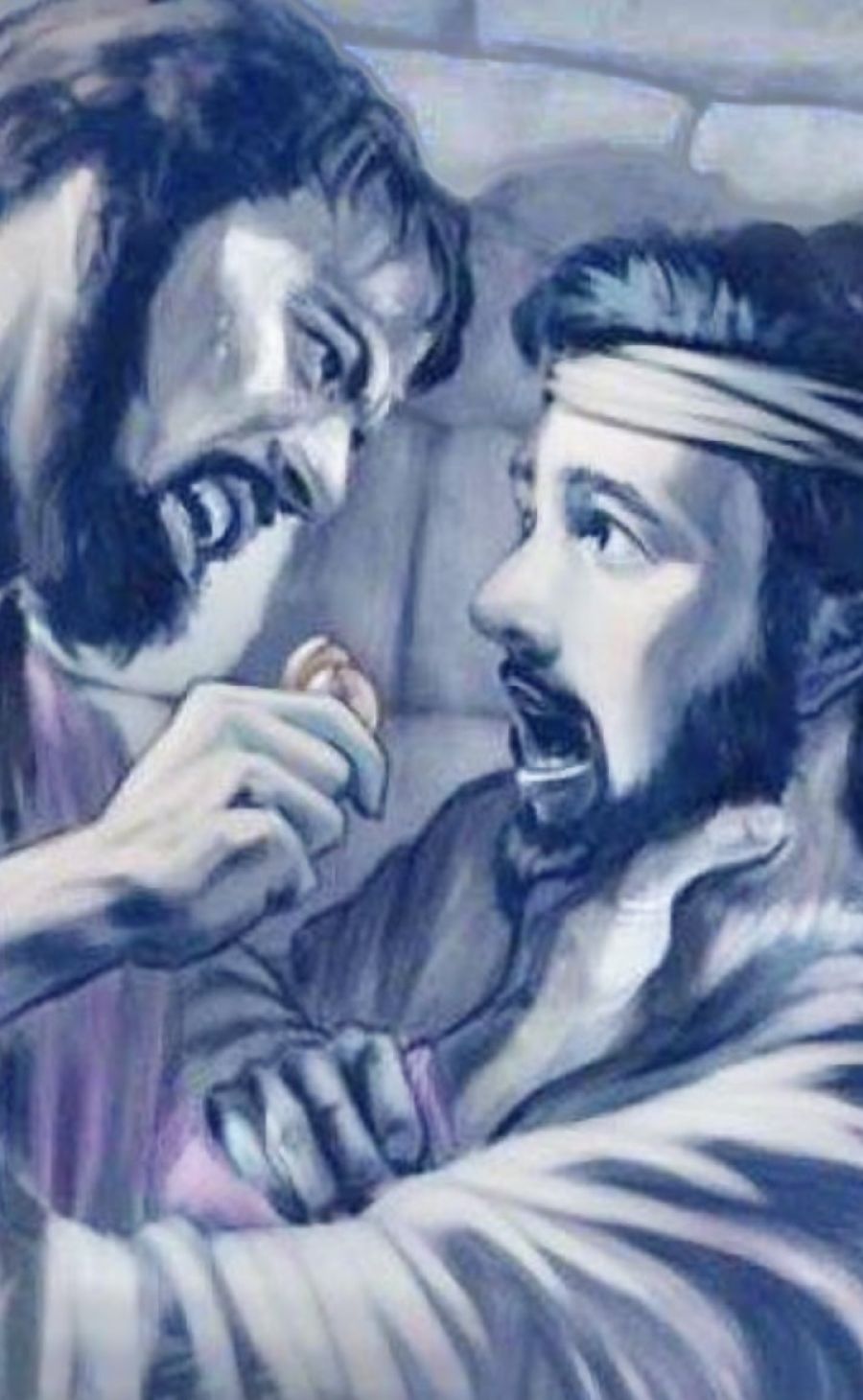
Peter instead wants to know the limits of forgiveness (v.21).

Historically, at the end of the first century the picky, severe, style of the synagogue and of the Empire [«divide et impera»] reappear in believers. 

A question arises: will we have to stop welcoming?

In addition, in the same churches one begins to think that someone has sinned in lese majesty towards those who - now hard and heartless - are used to being revered.

Veterans who make trouble more than others and then dot on the minutiae of others (the weak brothers, considered subjected and destined to the fiscal rigour of moralisms, as well as penances).


While religious discipline exacerbates minute defects, the very experience of the disproportion between the forgiveness received from the Father and what we are able to offer to the brothers, makes us understand the need for tolerance.

Church should be this space of the experience of God who return life, an alternative place of fraternity.


Imperial society was harsh and uncompassionate, with no room for the small and shaky, who unassumingly sought any refuge for their hearts - but no religion gave them an answer.

Synagogues, too, identified material and spiritual blessings. Cloaked with requirements, purity rules and fulfilments, they did not offer the warmth of a welcoming place for the weak.

The issue was that in the early Christian communities themselves, some people insisted on the rigour of norms, customs and hierarchies, demanding coexistence based on the Judaizing model.

Furthermore, as the Letter of James testifies, towards the end of the first century the identical divisions of society, between miserables and wealthy, were already beginning to manifest themselves in the churches of Christ!

Welcoming space of the communities that in the Spirit had been given the task by the Lord to enlighten the world with their seed of life as a ‘shelter for all’ (and of alternative relationships) ran the risk of becoming again a place of conflict, judgement, punishment, condemnation.

«So also my heavenly Father will do to you, if you do not condone each one to his own brother from your heart» (v.35).


Divine forgiveness becomes effective and evident only in the testimony of the Church (v.35) where sisters and brothers - instead of showing themselves to be meticulous, let themselves be guided by a Vision of new heavens and new earth.

For this reason - without any effort, indeed blessing the needs of others as territories of preparatory energies - they live the communion of resources and remit even material debts, a misery.

Otherwise, we would always have to live in the incumbency of an indulgent God perhaps, but at times, and according to the cases retracting the doing of mercy.

It would be a life without surprising developments, all weighted down in a swamp of little pennies.

Instead, it is the active energy of the Faith that does not condemn us to trudge.


The magnanimity that comes out of the automatisms shifts our gaze and brings us an ineffable and growing wave, far ahead of what we can imagine.

Our surrenders are preparing new developments - the ones that count, without limitations.


The "win-or-lose" alternative is false: you have to get out of it.


[Thursday 19th wk. in O.T.  August 13, 2026]

76 Last modified on Wednesday, 05 August 2026 02:10
don Giuseppe Nespeca

Giuseppe Nespeca è architetto e sacerdote. Cultore della Sacra scrittura è autore della raccolta "Due Fuochi due Vie - Religione e Fede, Vangeli e Tao"; coautore del libro "Dialogo e Solstizio".

In the divine attitude justice is pervaded with mercy, whereas the human attitude is limited to justice. Jesus exhorts us to open ourselves with courage to the strength of forgiveness, because in life not everything can be resolved with justice. We know this (Pope Francis)
Nell’atteggiamento divino la giustizia è pervasa dalla misericordia, mentre l’atteggiamento umano si limita alla giustizia. Gesù ci esorta ad aprirci con coraggio alla forza del perdono, perché nella vita non tutto si risolve con la giustizia; lo sappiamo (Papa Francesco)
The Second Vatican Council's Constitution on the Sacred Liturgy refers precisely to this Gospel passage to indicate one of the ways that Christ is present:  "He is present when the Church prays and sings, for he has promised "where two or three are gathered together in my name there am I in the midst of them' (Mt 18: 20)" [Sacrosanctum Concilium, n. 7]
La Costituzione sulla Sacra Liturgia del Concilio Vaticano II si riferisce proprio a questo passo del Vangelo per indicare uno dei modi della presenza di Cristo: "Quando la Chiesa prega e canta i Salmi, è presente Lui che ha promesso: "Dove sono due o tre riuniti nel mio nome, io  sono in mezzo a loro" (Mt 18, 20)" [Sacrosanctum Concilium, 7]
For Jesus we are not a "mass", a "multitude"! We are individual "persons" with an eternal value, both as creatures and as re-deemed persons! He knows us! He knows me, and loves me and gave himself for me! (Gal 2:20) [John Paul II]
Non siamo “massa”, “moltitudine”, per Gesù! Siamo “persone” singole con un valore eterno, sia come creature sia come persone redente! lui ci conosce! lui mi conosce, e mi ama e ha dato se stesso per me! (Gal 2,20) [Giovanni Paolo II]
The grain of wheat that "falls to the ground and dies" becomes the promise of bread (Pope John Paul II)
Il chicco di grano che “cade in terra e muore” diventa la promessa del pane (Papa Giovanni Paolo II)
The power of faith can move mountains (cf. Mt 17:20): the Lord can illuminate even the deepest darkness [Pope Benedict]
La forza della fede può spostare le montagne (cfr Mt 17,20): il Signore può illuminare anche la tenebra più profonda [Papa Benedetto]
By willingly accepting death, Jesus carries the cross of all human beings and becomes a source of salvation for the whole of humanity. St Cyril of Jerusalem commented: “The glory of the Cross led those who were blind through ignorance into light, loosed all who were held fast by sin and brought redemption to the whole world of mankind” (Catechesis Illuminandorum XIII, 1: de Christo crucifixo et sepulto: PG 33, 772 B) [Pope Benedict]
Accettando volontariamente la morte, Gesù porta la croce di tutti gli uomini e diventa fonte di salvezza per tutta l’umanità. San Cirillo di Gerusalemme commenta: «La croce vittoriosa ha illuminato chi era accecato dall’ignoranza, ha liberato chi era prigioniero del peccato, ha portato la redenzione all’intera umanità» (Catechesis Illuminandorum XIII,1: de Christo crucifixo et sepulto: PG 33, 772 B) [Papa Benedetto]
In the New Testament, it is Christ who constitutes the full manifestation of God's light [Pope Benedict]
Nel Nuovo Testamento è Cristo a costituire la piena manifestazione della luce di Dio [Papa Benedetto]
Faith opens us to knowing and welcoming the real identity of Jesus, his newness and oneness, his word, as a source of life, in order to live a personal relationship with him (Pope Benedict)

Due Fuochi due Vie - Vol. 1 Due Fuochi due Vie - Vol. 2 Due Fuochi due Vie - Vol. 3 Due Fuochi due Vie - Vol. 4 Due Fuochi due Vie - Vol. 5 Dialogo e Solstizio I fiammiferi di Maria

duevie.art

don Giuseppe Nespeca

Tel. 333-1329741


Disclaimer

Questo blog non rappresenta una testata giornalistica in quanto viene aggiornato senza alcuna periodicità. Non può pertanto considerarsi un prodotto editoriale ai sensi della legge N°62 del 07/03/2001.
Le immagini sono tratte da internet, ma se il loro uso violasse diritti d'autore, lo si comunichi all'autore del blog che provvederà alla loro pronta rimozione.
L'autore dichiara di non essere responsabile dei commenti lasciati nei post. Eventuali commenti dei lettori, lesivi dell'immagine o dell'onorabilità di persone terze, il cui contenuto fosse ritenuto non idoneo alla pubblicazione verranno insindacabilmente rimossi.







