Aug 15, 2026 Written by 

«Who Am I to you» and the Keys to the open community

(Mt 16:13-20)


Over half of his public life, Jesus has not yet given formulas, but He raises a demanding question - which claims to ask us much more than the usual expressions with a legal structure.

The crowd may have approached Him to eminent characters such as the Baptist [the one who proved to be alien to courtiers] or Elijah [for his activity of denouncing idols] or Jeremiah [the opponent of the blessings’ sale].

But He did not come - like ancient prophets - to improve the situation or to regret and mend devotions, nor to purify the Temple, but to replace it!

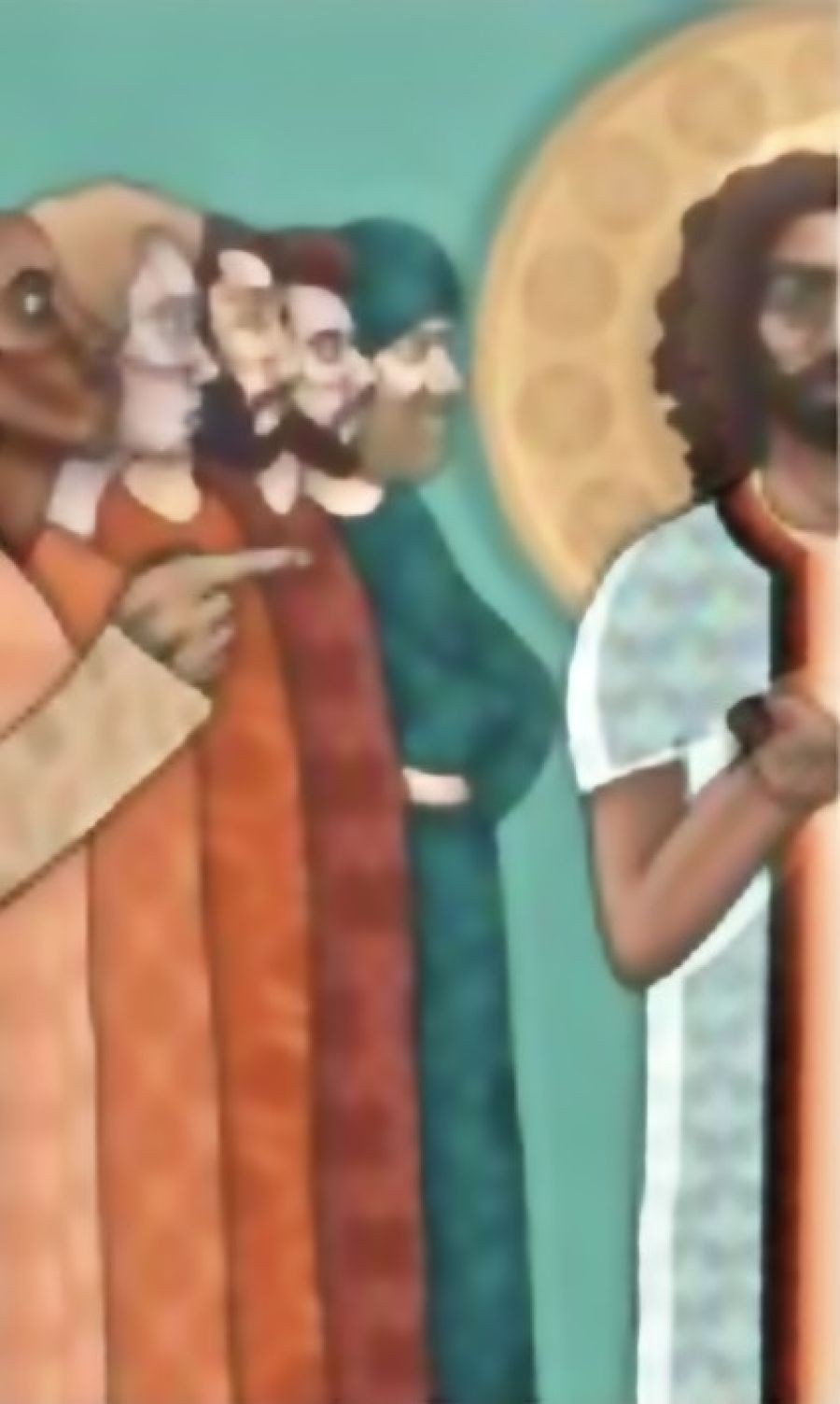
The images of tradition depict Christ in many ways (for atheists a philanthropist), the most widespread of which is still that of an ancient Lord, guarantor of conventional behavior.

Instead - to make us reflect - He takes the disciples to a construction site environment [north of Palestine, Caesarea Philippi was under construction], far from the interested nomenclature of the "holy" City.


Common mentality evaluated the life’ success - and the truth of a religion - on the basis of glory, domination, enrichment, and security in general.

The question that Jesus rises his disciples leaks a novelty that supplants the whole system: the Call is addressed to every single person.

It is a border proposal, like the symbolic geographical place of the capital of the reign of Philip, one of the three heir sons of Herod the Great: in Palestine, the farthest point from the center of conformist religiosity.

The Face of the «Son of man» is recognizable only by placing maximum distance from political and veterans schemes - otherwise we too would not be able to perceive His personal ‘light’.

In the community of Mt, an increasingly large participation of pagans was being experienced, who previously felt excluded and gradually integrated.


For our mentality, the house keys are used to close and tighten the door, to prevent the attackers from entering.

In the Semitic one, they were rather an icon of the door’s opening.


In Perugino’s famous masterpiece on the north wall of the Sistine Chapel, Jesus gives the head of the Church two keys: the golden one of Paradise and the silver of Purgatory.

But the meaning of the passage is not the Afterlife - on the contrary, it is not even institutional. In Hebrew the term ‘key’ is derived from the verb ‘to open’!

The greatest missionary task of community leaders is to keep the Kingdom of Heaven wide open, that is, to ensure a welcoming Church!

Peter must not trace the type of arrogant monarch, image of authority; emperor’ substitute.

Simon must take first responsibility for the acceptance of those who are outside.

It seems strange for any ancient proposal, where God was supposed to be afraid of becoming impure in contact with the world.

The Father is the One who dares the most.

This is the reason why Jesus strictly imposes a total messianic silence (v.20) on the lips and the ancient brain of the Apostles.


Peter and the disciples wanted to return to the usual idea of «the» Messiah [cf. Greek text] expected by everyone.

An all too normal canvas, incapable of regenerating us.


[21st Sunday in O.T. (year A), August 23, 2026]

102 Last modified on Saturday, 15 August 2026 05:32
don Giuseppe Nespeca

Giuseppe Nespeca è architetto e sacerdote. Cultore della Sacra scrittura è autore della raccolta "Due Fuochi due Vie - Religione e Fede, Vangeli e Tao"; coautore del libro "Dialogo e Solstizio".

Faith is more than just empirical or historical facts; it is an ability to grasp the mystery of Christ’s person in all its depth [Pope Benedict]
La fede va al di là dei semplici dati empirici o storici, ed è capace di cogliere il mistero della persona di Cristo nella sua profondità [Papa Benedetto]
More than 600 precepts are mentioned in the Law of Moses. How should the great commandment be distinguished among these? (Pope Francis)
Nella Legge di Mosè sono menzionati oltre seicento precetti. Come distinguere, tra tutti questi, il grande comandamento? (Papa Francesco)
The invitation has three characteristics: freely offered, breadth and universality. Many people were invited, but something surprising happened: none of the intended guests came to take part in the feast, saying they had other things to do; indeed, some were even indifferent, impertinent, even annoyed (Pope Francis)
L’invito ha tre caratteristiche: la gratuità, la larghezza, l’universalità. Gli invitati sono tanti, ma avviene qualcosa di sorprendente: nessuno dei prescelti accetta di prendere parte alla festa, dicono che hanno altro da fare; anzi alcuni mostrano indifferenza, estraneità, perfino fastidio (Papa Francesco)
Those who are considered the "last", if they accept, become the "first", whereas the "first" can risk becoming the "last" (Pope Benedict)
Proprio quelli che sono considerati "ultimi", se lo accettano, diventano "primi", mentre i "primi" possono rischiare di finire "ultimi" (Papa Benedetto)
The dialogue of Jesus with the rich young man, related in the nineteenth chapter of Saint Matthew's Gospel, can serve as a useful guide for listening once more in a lively and direct way to his moral teaching [Veritatis Splendor n.6]
Il dialogo di Gesù con il giovane ricco, riferito nel capitolo 19 del Vangelo di san Matteo, può costituire un'utile traccia per riascoltare in modo vivo e incisivo il suo insegnamento morale [Veritatis Splendor n.6]
St Augustine rightly commented: “Christ showed himself indifferent to her, not in order to refuse her his mercy but rather to inflame her desire for it” (Sermo 77, 1: PL 38, 483) [Pope Benedict]
Sant’Agostino commenta giustamente: “Cristo si mostrava indifferente verso di lei, non per rifiutarle la misericordia, ma per infiammarne il desiderio” (Sermo 77, 1: PL 38, 483) [Papa Benedetto]
In the divine attitude justice is pervaded with mercy, whereas the human attitude is limited to justice. Jesus exhorts us to open ourselves with courage to the strength of forgiveness, because in life not everything can be resolved with justice. We know this (Pope Francis)
Nell’atteggiamento divino la giustizia è pervasa dalla misericordia, mentre l’atteggiamento umano si limita alla giustizia. Gesù ci esorta ad aprirci con coraggio alla forza del perdono, perché nella vita non tutto si risolve con la giustizia; lo sappiamo (Papa Francesco)
The Second Vatican Council's Constitution on the Sacred Liturgy refers precisely to this Gospel passage to indicate one of the ways that Christ is present:  "He is present when the Church prays and sings, for he has promised "where two or three are gathered together in my name there am I in the midst of them' (Mt 18: 20)" [Sacrosanctum Concilium, n. 7]
The Lord Jesus presented himself to the world as a servant, completely stripping himself and lowering himself to give on the Cross the most eloquent lesson of humility and love (Pope Benedict)

Due Fuochi due Vie - Vol. 1 Due Fuochi due Vie - Vol. 2 Due Fuochi due Vie - Vol. 3 Due Fuochi due Vie - Vol. 4 Due Fuochi due Vie - Vol. 5 Dialogo e Solstizio I fiammiferi di Maria

duevie.art

don Giuseppe Nespeca

Tel. 333-1329741


Disclaimer

Questo blog non rappresenta una testata giornalistica in quanto viene aggiornato senza alcuna periodicità. Non può pertanto considerarsi un prodotto editoriale ai sensi della legge N°62 del 07/03/2001.
Le immagini sono tratte da internet, ma se il loro uso violasse diritti d'autore, lo si comunichi all'autore del blog che provvederà alla loro pronta rimozione.
L'autore dichiara di non essere responsabile dei commenti lasciati nei post. Eventuali commenti dei lettori, lesivi dell'immagine o dell'onorabilità di persone terze, il cui contenuto fosse ritenuto non idoneo alla pubblicazione verranno insindacabilmente rimossi.







