Sep 19, 2026 Written by 

The "stars" set aside

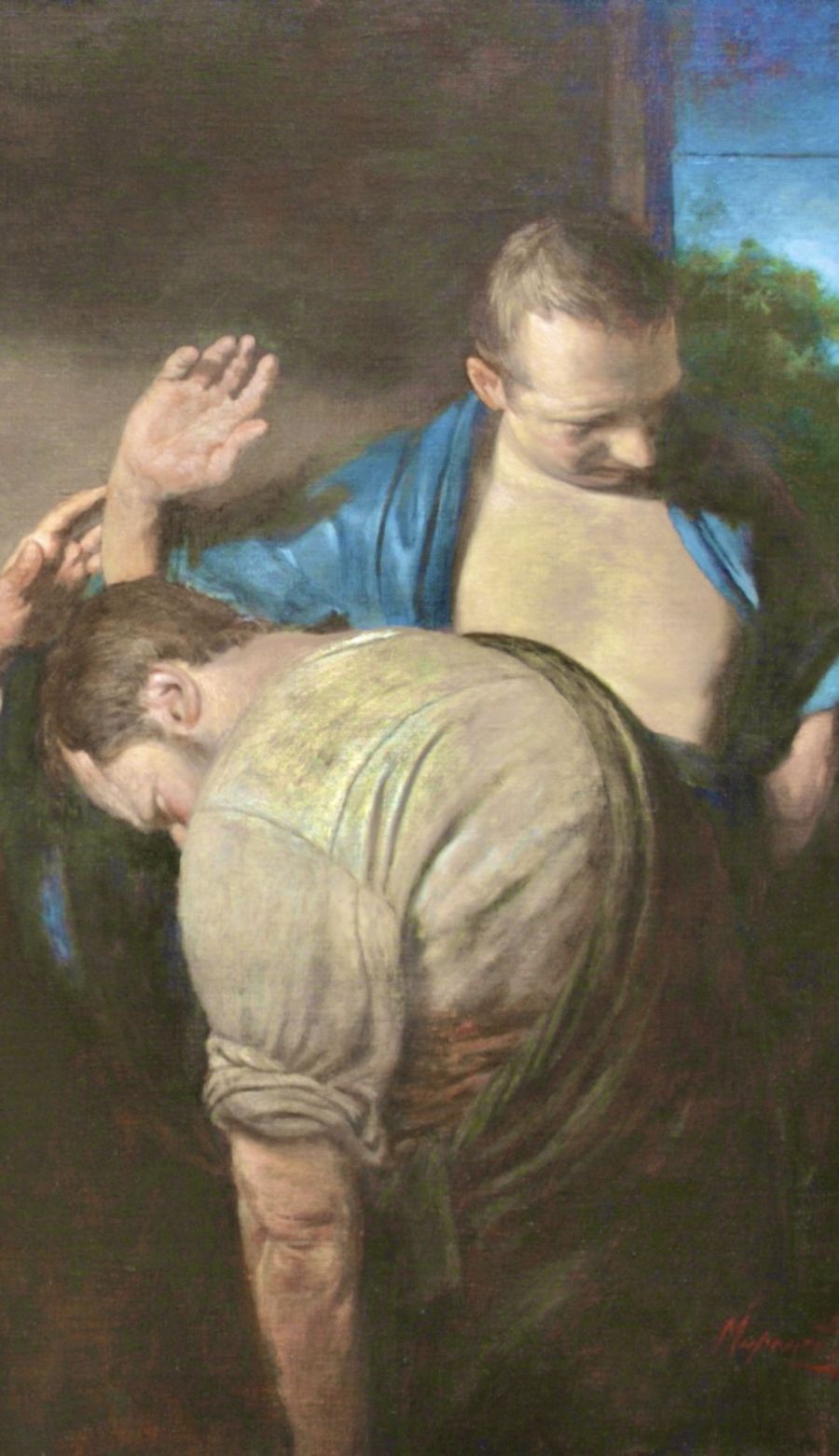
Two sons: «No» and «Me!»

(Mt 21:28-32)


In the rabbis' tales the «Son» was only one: Israel! In the teaching of Christ, however, even a reckless remains a son.

The Master of the Vineyard image of the chosen people, turns to his «prototype» of man with tenderness and maternal bowels: «My little child».

He tries to make him understand: «The unfamiliar land is full of dissensions and grudges, instead the Vineyard is yours; committed therefore to building the world of joy».

But it is basically normal to desist: «I don’t want to» - because we are often attracted not by the Beatitudes, but to worldly criteria.

Working for the life of others, recognizing their dignity and promoting it does not arise immediately and spontaneously to everyone; on the contrary, it seems onerous.

Yet it is the difference that gives us the cue, not the rule or the reproach.

The perception of what appears “foreign” becomes a rare insight into one's own essence, a dilation of the Ego - a growing movement and process that leads to an understanding of the You in the Ego itself.

Trivial instinctive reactions must be understood, because pre-emptive condemnations block growth.

Eccentricity of the brother is the paradoxical starting point for finding himself and one’s own way.

Of course, repulsion can emerge at first; there is no need to be scandalized, nor to accuse. Recovering the deep human dimension is not a piece of cake.

Moreover, we know from experience: the most convinced ‘Yes’ passes through an initial ‘No’.

The inner struggle is to be reckoned with - finally it itself will affect far beyond formal adherence.

In short, the truest ‘Yes’ comes from a request for explanation.


Although the habitual are ready to show the best intentions right away, they become all showcase and no substance; and only empty words.

The Father therefore turned to the promises’ son: «I, Lord!». How to say: «There is Me here; why think of others?».

The exaggeratedly kindred and positive reaction indicates that the customary son... did not understand.

This “son” certainly disagreed with the Father’s design - so deep and demanding - and he thought in his own way how one behaves in the Vineyard. 

Therefore, he beluded himself to be benefitted, instead of Saved.

In short, the choice is between Faith or protocols: «By now, various manifest sinners are surpassing you» (v.31).

[The discrimination of life in the Spirit? The exception that becomes promotion].

Women and men respond «Here I am» to the Appeal because they are intimately persuaded, not by external influence - of labels.

True friends of vital energy are not the conventions.

In such a way, compared to the different ancient beliefs, an intrinsic side of Jesus' Invitation is the adult mind.

It excludes adherent solutions [common or elitist]: they enclose souls in a condition of dependence, with illusory progress.


In the communities of Galilee and Syria the pagans quickly became a majority - elevated to the rank of sons.

They did not submit to nerve-wracking processes, but spontaneously were recognizing the Lord.

“Contrary” Moral: never trust those who rush to say: «Yes sir!».


[26th Sunday in O.T. (year A),  September 27, 2026]

0 Last modified on Saturday, 19 September 2026 04:49
don Giuseppe Nespeca

Giuseppe Nespeca è architetto e sacerdote. Cultore della Sacra scrittura è autore della raccolta "Due Fuochi due Vie - Religione e Fede, Vangeli e Tao"; coautore del libro "Dialogo e Solstizio".

And «each of us can say: "for love to me"» (Pope Francis)
E «ognuno di noi può dire: “per amore a me”» (Papa Francesco)
We too, to reach a more conscious confession of Jesus Christ must follow, like Peter, a path made of attentive, caring listening (Pope John Paul II)
Anche noi per giungere a una più consapevole confessione di Gesù Cristo dobbiamo percorrere, come Pietro, un cammino fatto di ascolto attento, premuroso (Papa Giovanni Paolo II)
It is a word that must be witnessed to and proclaimed explicitly, because without a consistent witness it proves to be less comprehensible and credible [Pope Benedict]
E’ una Parola che deve essere testimoniata e proclamata esplicitamente, perché senza una testimonianza coerente essa risulta meno comprensibile e credibile [Papa Benedetto]
The “reading and meditation of the word of God root us more deeply in Christ and guide our ministry as servants of reconciliation, justice and peace” (second Synod for Africa, Propositio 46)
La lettura e la meditazione della Parola di Dio ci radicano più profondamente in Cristo e orientano il nostro ministero di servitori della riconciliazione, della giustizia e della pace (Secondo Sinodo per l’Africa, Propositio 46)
The Gospel of Matthew written in Hebrew or Aramaic is no longer extant, but in the Greek Gospel that we possess we still continue to hear, in a certain way, the persuasive voice of the publican Matthew, who, having become an Apostle, continues to proclaim God's saving mercy to us. And let us listen to St Matthew's message, meditating upon it ever anew also to learn to stand up and follow Jesus with determination (Pope Benedict)
Non abbiamo più il Vangelo scritto da Matteo in ebraico o in aramaico, ma nel Vangelo greco che abbiamo continuiamo a udire ancora, in qualche modo, la voce persuasiva del pubblicano Matteo che, diventato Apostolo, séguita ad annunciarci la salvatrice misericordia di Dio e ascoltiamo questo messaggio di san Matteo, meditiamolo sempre di nuovo per imparare anche noi ad alzarci e a seguire Gesù con decisione (Papa Benedetto)
That denarius clearly represents eternal life, a gift that God reserves for all. Indeed those who are considered the "last", if they accept, become the "first", whereas the "first" can risk becoming the "last" [Pope Benedict]
Quel denaro rappresenta la vita eterna, dono che Dio riserva a tutti. Anzi, proprio quelli che sono considerati "ultimi", se lo accettano, diventano "primi", mentre i "primi" possono rischiare di finire "ultimi" [Papa Benedetto]
The sower is Jesus. With this image, we can see that he presents himself as one who does not impose himself, but rather offers himself. He does not attract us by conquering us, but by donating himself: he casts seeds. With patience and generosity, he spreads his Word, which is not a cage or a trap, but a seed which can bear fruit (Pope Francis)
Il seminatore è Gesù. Notiamo che, con questa immagine, Egli si presenta come uno che non si impone, ma si propone; non ci attira conquistandoci, ma donandosi: butta il seme. Egli sparge con pazienza e generosità la sua Parola, che non è una gabbia o una trappola, ma un seme che può portare frutto (Papa Francesco)
The Church desires to give thanks to the Most Holy Trinity for the "mystery of woman" and for every woman - for that which constitutes the eternal measure of her feminine dignity, for the "great works of God", which throughout human history have been accomplished in and through her (Mulieris Dignitatem n.31)

Due Fuochi due Vie - Vol. 1 Due Fuochi due Vie - Vol. 2 Due Fuochi due Vie - Vol. 3 Due Fuochi due Vie - Vol. 4 Due Fuochi due Vie - Vol. 5 Dialogo e Solstizio I fiammiferi di Maria

duevie.art

don Giuseppe Nespeca

Tel. 333-1329741


Disclaimer

Questo blog non rappresenta una testata giornalistica in quanto viene aggiornato senza alcuna periodicità. Non può pertanto considerarsi un prodotto editoriale ai sensi della legge N°62 del 07/03/2001.
Le immagini sono tratte da internet, ma se il loro uso violasse diritti d'autore, lo si comunichi all'autore del blog che provvederà alla loro pronta rimozione.
L'autore dichiara di non essere responsabile dei commenti lasciati nei post. Eventuali commenti dei lettori, lesivi dell'immagine o dell'onorabilità di persone terze, il cui contenuto fosse ritenuto non idoneo alla pubblicazione verranno insindacabilmente rimossi.







