Sep 21, 2026 Written by 

Skepticism, Faith, Character

From the ancient dream to the embodied relationship

(Jn 1:47-51)


People are convinced by meeting, seeing and experiencing, not by imposing. However, the Eternal’s plan baffles us.

Witness and sharing lead persons to Christ, but they are not enough - because his plan is not as people imagine or propose, as they await and desires it to be.

To the enthusiastic announcement, Nathanael responds with a preconceived skepticism that represents us: what good can come out of the most insignificant suburbs (v.46)?

Why does not the solution to our expectations come from predictable places [Judaea]?

Personal encounter with Jesus and listening to his Word go beyond every obstacle, up to an explicit and convinced profession of Faith.

And like Nathanael, whoever consecrates his life to the study of the Scriptures finds in them Christ himself (vv.45.48-49).

At first perhaps we too approached the Son of God imagining that he had the attributes of King of a chosen people (v.49).

Then the custom with the Person and the vital experience [«Come and see»: sense of the basic Semitic expression of v.46] showed us a much broader Relationship with Heaven (vv.50-51).

In walking the Way that the unexpected Messiah proposes, we perceive the convergence of God’s movement towards men and our longing for him.

It is the realization (and overcoming) of Jacob’s ancient dream.


Those who pursue preconceptions remain to take the cool under a fig tree (cf.v.48), ie he remains linked to the ancient religion [the rabbis taught the ancient Scriptures sitting under the trees; the fig tree was symbol of Israel].

«Israelite without deceit» (v.47): each one is so when, after sifting, he knows how to get rid of common opinions and teachings; when he realizes that they do not coincide with the Father’s plan.

Salvation history aims at «greater things» (v.50) than those already wanted; normal, expected, invoked, calculated, longed for.

From religiosity we will move on to Faith: the best of God’s Dream in us must come. «Greater things» than clichés.

Jesus is Jacob’s authentic Dream, which heralded to a vast lineage; further unfolded (Gen 28:10-22) and become reality.

But no one would have expected that the Messiah could identify himself with the «Son of Man» (v.51), the One who creates abundance where it is not there, and that before did not seem licit it could expand.

The new bond between God and human beings is in the Brother who becomes ‘next of kin’: which creates an atmosphere of humanization with wide outlines - not at all discriminating.

‘True, successful Son’ is the one who, having reached the maximum of human fullness, comes to reflect the divine condition and radiates it in a widespread way - not selective as expected.

It is the flowering and humanization of the people: the peaceful, true and full development of the divine plan on humanity.

«Son of Man» is therefore not a stowed, cautious, controlled and reserved title, but an opportunity for all those who adhere to the Lord’s proposal, and reinterpret life in a creative personal way.

They go beyond the firm boundaries, making room for the Gift; welcoming from the Grace fullness of being, in its new unrepeatable tracks.


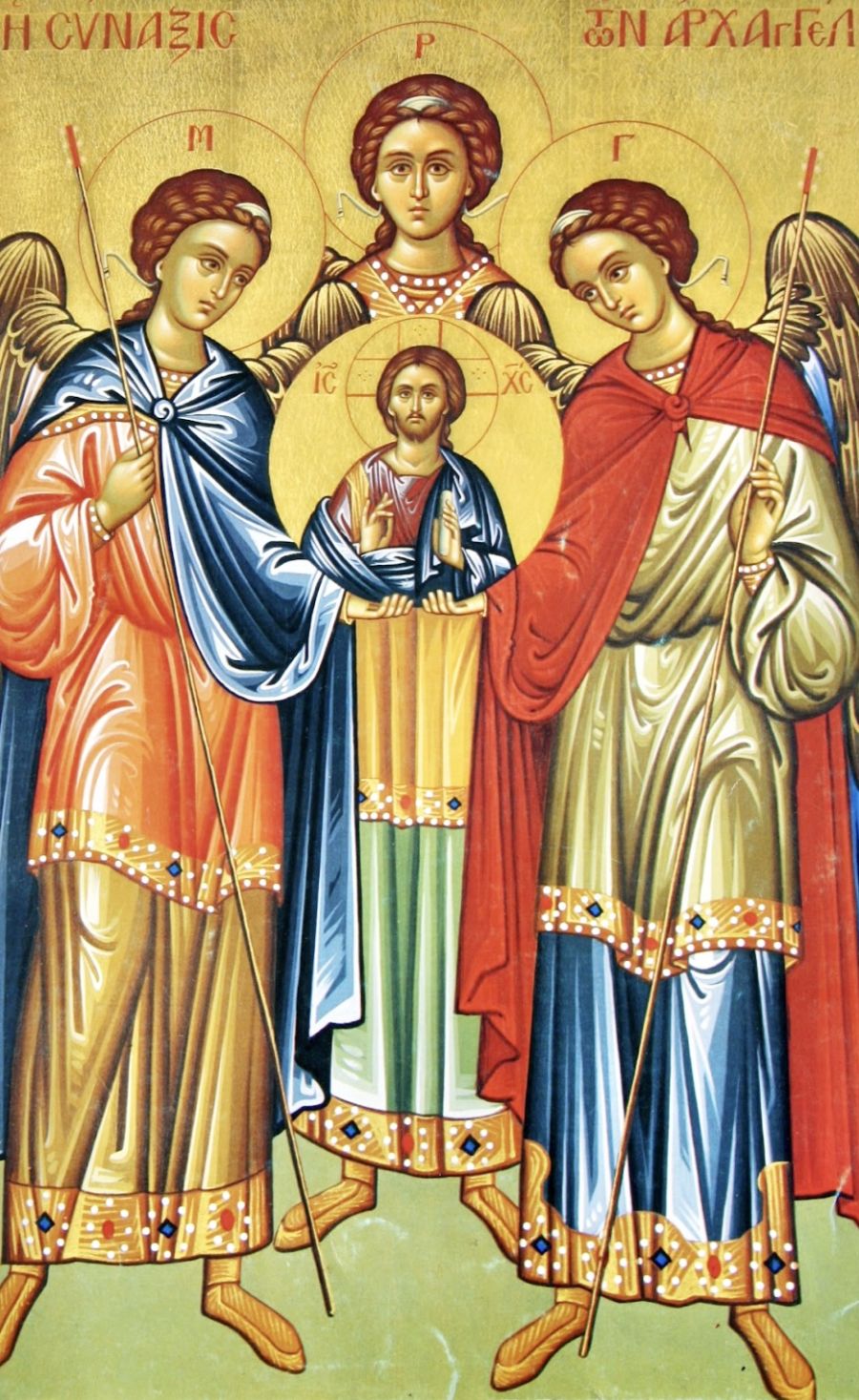
On this Way, every day we perceive the same impulse that brought Nathanael to Jesus: an instinct of incomparable Presence [Michael: Who as God?], a liberation of the shrunken consciousness [Raphael: God has healed - Rescuer], an astonishing unveiling [Gabriel: Strength of God].

In short, on the new adventures to be undertaken, the invisible world has a special relationship with humanity and creation.

In the soul and in things, we are as if guided on the right path (in an incessant, increasing, unexpected way) even through our anxieties, rebellions, crises and doubts.


[Saints Michael, Gabriel and Raphael, Archangels. September 29]

91 Last modified on Monday, 21 September 2026 06:01
don Giuseppe Nespeca

Giuseppe Nespeca è architetto e sacerdote. Cultore della Sacra scrittura è autore della raccolta "Due Fuochi due Vie - Religione e Fede, Vangeli e Tao"; coautore del libro "Dialogo e Solstizio".

The Church with its permanent contradiction: between the ideal and reality, the more annoying contradiction, the more the ideal is affirmed sublime, evangelical, sacred, divine, and the reality is often petty, narrow, defective, sometimes even selfish (Pope Paul VI)
La Chiesa con la sua permanente contraddizione: tra l’ideale e la realtà, tanto più fastidiosa contraddizione, quanto più l’ideale è affermato sublime, evangelico, sacro, divino, e la realtà si presenta spesso meschina, angusta, difettosa, alcune volte perfino egoista (Papa Paolo VI)
At first they say “yes” to God’s will, but their piety becomes routine and God no longer matters to them [Pope Benedict]
Essi, prima, dicono “sì” alla volontà di Dio. Ma la loro religiosità diventa routine, e Dio non li inquieta più [Papa Benedetto]
And «each of us can say: "for love to me"» (Pope Francis)
E «ognuno di noi può dire: “per amore a me”» (Papa Francesco)
We too, to reach a more conscious confession of Jesus Christ must follow, like Peter, a path made of attentive, caring listening (Pope John Paul II)
Anche noi per giungere a una più consapevole confessione di Gesù Cristo dobbiamo percorrere, come Pietro, un cammino fatto di ascolto attento, premuroso (Papa Giovanni Paolo II)
It is a word that must be witnessed to and proclaimed explicitly, because without a consistent witness it proves to be less comprehensible and credible [Pope Benedict]
E’ una Parola che deve essere testimoniata e proclamata esplicitamente, perché senza una testimonianza coerente essa risulta meno comprensibile e credibile [Papa Benedetto]
The “reading and meditation of the word of God root us more deeply in Christ and guide our ministry as servants of reconciliation, justice and peace” (second Synod for Africa, Propositio 46)
La lettura e la meditazione della Parola di Dio ci radicano più profondamente in Cristo e orientano il nostro ministero di servitori della riconciliazione, della giustizia e della pace (Secondo Sinodo per l’Africa, Propositio 46)
The Gospel of Matthew written in Hebrew or Aramaic is no longer extant, but in the Greek Gospel that we possess we still continue to hear, in a certain way, the persuasive voice of the publican Matthew, who, having become an Apostle, continues to proclaim God's saving mercy to us. And let us listen to St Matthew's message, meditating upon it ever anew also to learn to stand up and follow Jesus with determination (Pope Benedict)
Non abbiamo più il Vangelo scritto da Matteo in ebraico o in aramaico, ma nel Vangelo greco che abbiamo continuiamo a udire ancora, in qualche modo, la voce persuasiva del pubblicano Matteo che, diventato Apostolo, séguita ad annunciarci la salvatrice misericordia di Dio e ascoltiamo questo messaggio di san Matteo, meditiamolo sempre di nuovo per imparare anche noi ad alzarci e a seguire Gesù con decisione (Papa Benedetto)
That denarius clearly represents eternal life, a gift that God reserves for all. Indeed those who are considered the "last", if they accept, become the "first", whereas the "first" can risk becoming the "last" [Pope Benedict]
Are they not all spirits charged with a ministry, sent to serve those who are to inherit salvation? (Heb 1:14)
Non sono essi tutti spiriti incaricati di un ministero, inviati per servire coloro che devono ereditare la salvezza? (Eb 1,14)

Due Fuochi due Vie - Vol. 1 Due Fuochi due Vie - Vol. 2 Due Fuochi due Vie - Vol. 3 Due Fuochi due Vie - Vol. 4 Due Fuochi due Vie - Vol. 5 Dialogo e Solstizio I fiammiferi di Maria

duevie.art

don Giuseppe Nespeca

Tel. 333-1329741


Disclaimer

Questo blog non rappresenta una testata giornalistica in quanto viene aggiornato senza alcuna periodicità. Non può pertanto considerarsi un prodotto editoriale ai sensi della legge N°62 del 07/03/2001.
Le immagini sono tratte da internet, ma se il loro uso violasse diritti d'autore, lo si comunichi all'autore del blog che provvederà alla loro pronta rimozione.
L'autore dichiara di non essere responsabile dei commenti lasciati nei post. Eventuali commenti dei lettori, lesivi dell'immagine o dell'onorabilità di persone terze, il cui contenuto fosse ritenuto non idoneo alla pubblicazione verranno insindacabilmente rimossi.







