Oct 11, 2026 Written by 

Happiness and deposits: a matter of life or death

Opening armoured gates

(Lk 12:13-21)


«Some parts of our human family, it appears, can be readily sacrificed for the sake of others considered worthy of a carefree existence» [Fratelli Tutti n.18].


Basil the Great commented: «Here we do not condemn those who rob, but those who do not share his».

Senselessness of hoarding.


God’s Gift is complete, but everyone is in need. Why? To accentuate the «fruitful interchange».

And we are experiencing it: only the desire to be ‘born in reciprocity’ can combat the «impoverishment of all» and the same «cultural sclerosis» [cf. FT 133-138].

Each gesture of generosity conceals the blossoming of an innate life-giving energy, which makes the soul and capital flow outside the tight walls and beyond the edges of one’s storage.

A spur that does not make people fall back on convenience. An impulse that will instead shift our imagination towards entirely different horizons, beliefs and desires.

In short, taking communion is a matter of life and death, because rich and poor live or decline together.

Growth is therefore in giving and receiving.


In the unsurpassed Homily 6, the first of the Cappadocian Fathers emphasized that even those who abound in goods are tormented on what to do, asking themselves: «What will I do?».

«He complains like the poor. Are not these the words of who is oppressed by misery? What am I going to do? [...] What will I do? The answer was simple: I will satiate the hungry, open the barns and call all the poor' [...] Do not raise the prices. Do not wait for the famine to open the barns [...] Do not wait for the people to be reduced to hunger to increase your gold, nor the general misery for your enrichment. Do not trade on human misfortunes [...] Do not exacerbate the wounds inflicted by the scourge of adversity. You turn your eyes to your gold and you turn it away from your brother, you recognize every coin and you know how to distinguish the false one from the true one, but you completely ignore the brother who is in need».


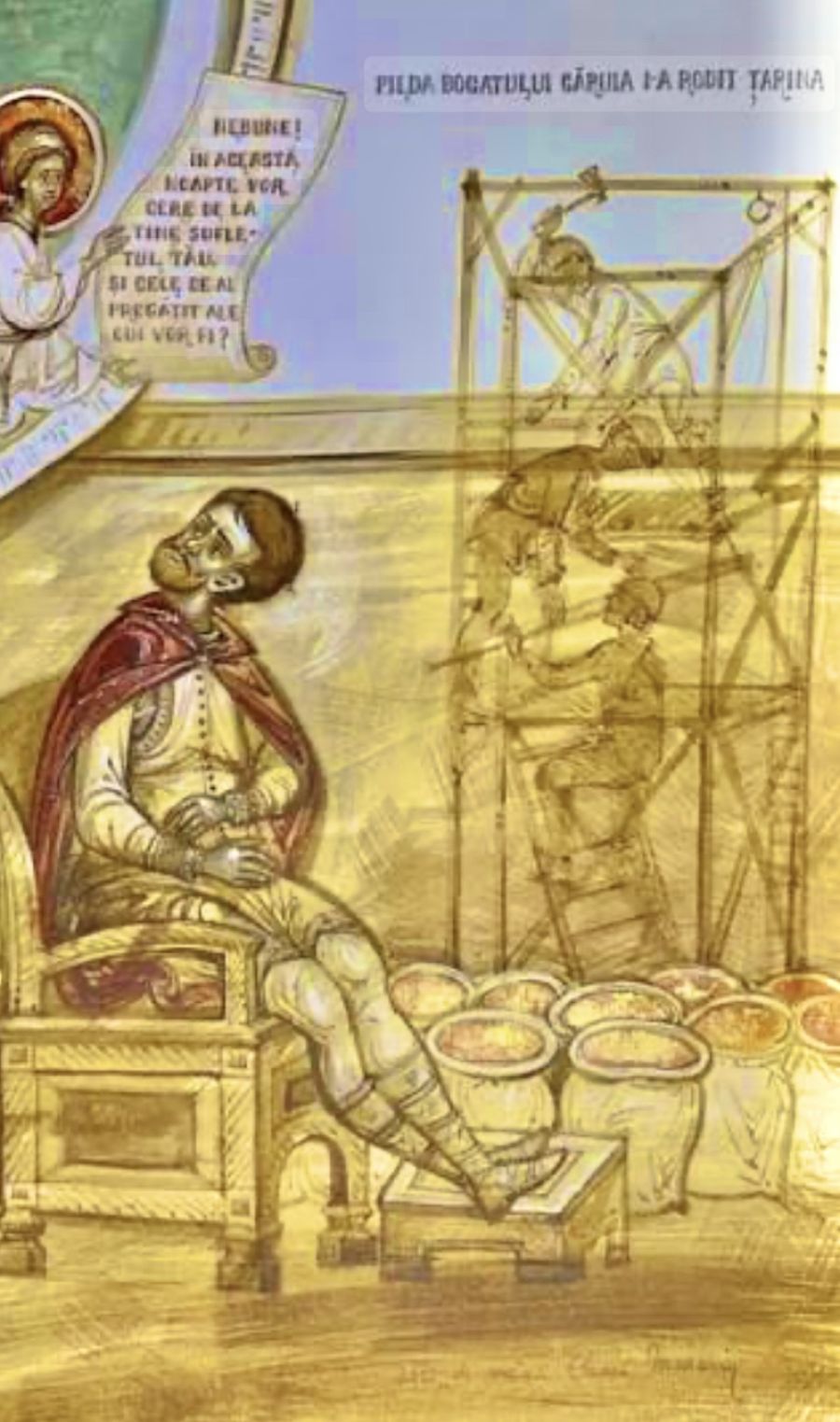
The rich man in the parable seems to have no labourers or relatives, no wife, or children and friends: he had them, but in his reality there are - really - only him and possessions.

«Fool!» - God says to him (v.20).

The solution was very simple: opening the gates, so that the piled food could overflow for the needs of the less fortunate - instead of wasting time scrapping and rebuilding warehouses.

Maybe he died of a heart attack, but he was already dead in his soul.

The entrepreneur who scrutinizes the needs of others for profit, immediately perishes inside and outside; he suffers agitation, insomnia, torment, due to the stress of managing those external mirages.

It is these bizarre dreams that take breath away and become endless nightmares, dissipating our best energies.


On the contrary, it is in a climate of coexistence and conviviality of differences that the best stimuli and advice can be found, including for discovering what suits us best.

It would be enough to overcome greed, vanity and the common mindset, to feel better.

By abandoning the spirit of hoarding, we will move away from the obsession with calculation and immediate [fleeting] interests.

Within this dynamic, we find the experience of enriching relationships, opening ourselves up to the many facets of reality and people, by living through Friendship.

Here, the intensity of our bonds fuels personal motivation, challenges, and the blossoming of love that drives our Vision forward.


Here is the threshold of the new Pearls that vice versa can emerge: to trust in life, in the new roads, in the actions that do not block the development of everyone, nor threaten the sense of Fraternity.

Leaving aside the stockpiling, we can yield to the liberating Exodus.

First step along the Way of our full Happiness: investing the many goods we still have to create Encounter and Relationship.

A matter of life or death (v.20).


[Monday 29th wk. in O.T.  October 19, 2026]

114 Last modified on Sunday, 11 October 2026 05:39
don Giuseppe Nespeca

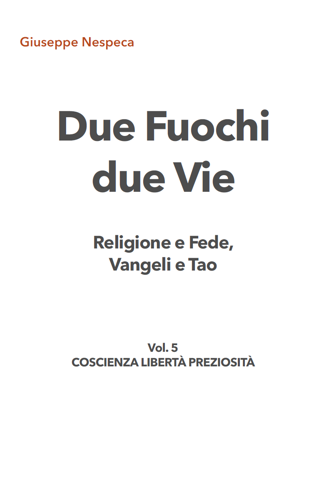
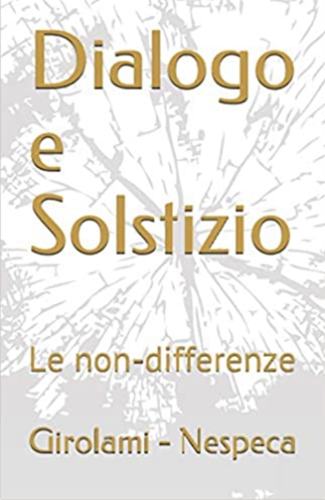
Giuseppe Nespeca è architetto e sacerdote. Cultore della Sacra scrittura è autore della raccolta "Due Fuochi due Vie - Religione e Fede, Vangeli e Tao"; coautore del libro "Dialogo e Solstizio".

The fool in the Bible, the one who does not want to learn from the experience of visible things, that nothing lasts for ever but that all things pass away, youth and physical strength, amenities and important roles. Making one's life depend on such an ephemeral reality is therefore foolishness (Pope Benedict)
L’uomo stolto nella Bibbia è colui che non vuole rendersi conto, dall’esperienza delle cose visibili, che nulla dura per sempre, ma tutto passa: la giovinezza come la forza fisica, le comodità come i ruoli di potere. Far dipendere la propria vita da realtà così passeggere è, dunque, stoltezza (Papa Benedetto)
As sometimes happens in the Gospel, faced with the trap set by his enemies, Jesus, with his response, rises above the contingent controversy and goes far beyond the particular and mutually divergent positions (Pope John Paul II)
Come talora accade nel Vangelo, di fronte al tranello mossogli dai suoi nemici, Gesù, con la sua risposta, s’innalza al di sopra della polemica contingente e va ben oltre le posizioni particolari e tra loro divergenti (Papa Giovanni Paolo II)
And blasphemy, the sin against the Holy Spirit, is the one unforgivable sin — as Jesus said — because it comes from closing the heart to God’s mercy which acts in Jesus (Pope Francis)
E la bestemmia, il peccato contro lo Spirito Santo, è l’unico peccato imperdonabile – così dice Gesù –, perché parte da una chiusura del cuore alla misericordia di Dio che agisce in Gesù (Papa Francesco)
The great thinker Romano Guardini wrote that the Lord “is always close, being at the root of our being. Yet we must experience our relationship with God between the poles of distance and closeness. By closeness we are strengthened, by distance we are put to the test” (Pope Benedict)
Il grande pensatore Romano Guardini scrive che il Signore “è sempre vicino, essendo alla radice del nostro essere. Tuttavia, dobbiamo sperimentare il nostro rapporto con Dio tra i poli della lontananza e della vicinanza. Dalla vicinanza siamo fortificati, dalla lontananza messi alla prova” (Papa Benedetto)
The present-day mentality, more perhaps than that of people in the past, seems opposed to a God of mercy, and in fact tends to exclude from life and to remove from the human heart the very idea of mercy (Pope John Paul II)
La mentalità contemporanea, forse più di quella dell'uomo del passato, sembra opporsi al Dio di misericordia e tende altresì ad emarginare dalla vita e a distogliere dal cuore umano l'idea stessa della misericordia (Papa Giovanni Paolo II)
«Religion of appearance» or «road of humility»? (Pope Francis)
«Religione dell’apparire» o «strada dell’umiltà»? (Papa Francesco)
In the crucified Jesus a kind of transformation and concentration of the signs occurs: he himself is the “sign of God”, especially in the mystery of his Death and Resurrection (Pope John Paul II)
In Gesù crocifisso avviene come una trasformazione e concentrazione dei segni: è Lui stesso il "segno di Dio", soprattutto nel mistero della sua morte e resurrezione (Papa Giovanni Paolo II)
However, the king was not discouraged and sent his servants out to seek other guests to fill his banquet hall. Thus the aspect of the refusal of those initially invited caused the invitation to be extended to all [Pope Benedict]
Il re però non si scoraggia e invia i suoi servi a cercare altri commensali per riempire la sala del suo banchetto. Così il rifiuto dei primi ha come effetto l’estensione dell’invito a tutti [Papa Benedetto]

Due Fuochi due Vie - Vol. 1 Due Fuochi due Vie - Vol. 2 Due Fuochi due Vie - Vol. 3 Due Fuochi due Vie - Vol. 4 Due Fuochi due Vie - Vol. 5 Dialogo e Solstizio I fiammiferi di Maria

duevie.art

don Giuseppe Nespeca

Tel. 333-1329741


Disclaimer

Questo blog non rappresenta una testata giornalistica in quanto viene aggiornato senza alcuna periodicità. Non può pertanto considerarsi un prodotto editoriale ai sensi della legge N°62 del 07/03/2001.
Le immagini sono tratte da internet, ma se il loro uso violasse diritti d'autore, lo si comunichi all'autore del blog che provvederà alla loro pronta rimozione.
L'autore dichiara di non essere responsabile dei commenti lasciati nei post. Eventuali commenti dei lettori, lesivi dell'immagine o dell'onorabilità di persone terze, il cui contenuto fosse ritenuto non idoneo alla pubblicazione verranno insindacabilmente rimossi.