Oct 21, 2026 Written by 

The foxes, the little hen, and the Prophet

End of a "sacred" order

(Lk 13:31-35)


The context in which Jesus lived was threatening: even in the outlying provinces of the Empire, power was absolute and those in authority were accountable to no one for the small-scale running of affairs.

But the building up of the Kingdom of God does not depend on any authorization of rapacious rulers on the territory of the provinces.

Those who want to fulfil their mission cannot satisfy the «foxes» who usurp power.

They are small and harmful situation’s parasites, but quick - even if they are not big roaring fairs as in the roman and senatorial court.

With his cunning attitude, king Herod (astute collaborationist) had managed to secure dominance for several decades, and a life without big jolts.

Each village in Palestine was manned by officials and delators of the sovereign, as well as practitioners and subordinates of the official popular religion [including the Pharisees, which Jesus sends back to the sender: v.32].


Antipas – like a puppet [fox] – always managed to stay afloat in any situation and keep to himself. 

But after having deluded himself of having settled the Baptist and his school with him, here the king is again alarmed by the rise of a greater danger.

The young Rabbi spread deep confidence not in the strong, but in the weak. In this way, he was working deeply in consciences, and seemed to be able to outclass even the Prophets.

If the inspectors had rushed from the centre of power over the territory (v.31), Jesus must have made it really big. Thus demonstrating total freedom from conditioning.

Therefore, the success of his thought could have provoked disorder in the structure of the system.

But God’s messengers do not flee from risk.

They do this not out of duty, but out of fidelity to themselves, and because they are attracted by a Vision that belongs to everyone: they manage to grasp and sense that the pains of childbirth will generate new Births.


In short, Jesus and his close friends live an existence marked by a kind of attraction of the Cross - out of Love that goes to the end, all the way, and does not disdain comparisons.

Jerusalem was the center of the people of God’ sons, "chosen" [only] to unfold the face of the Father.

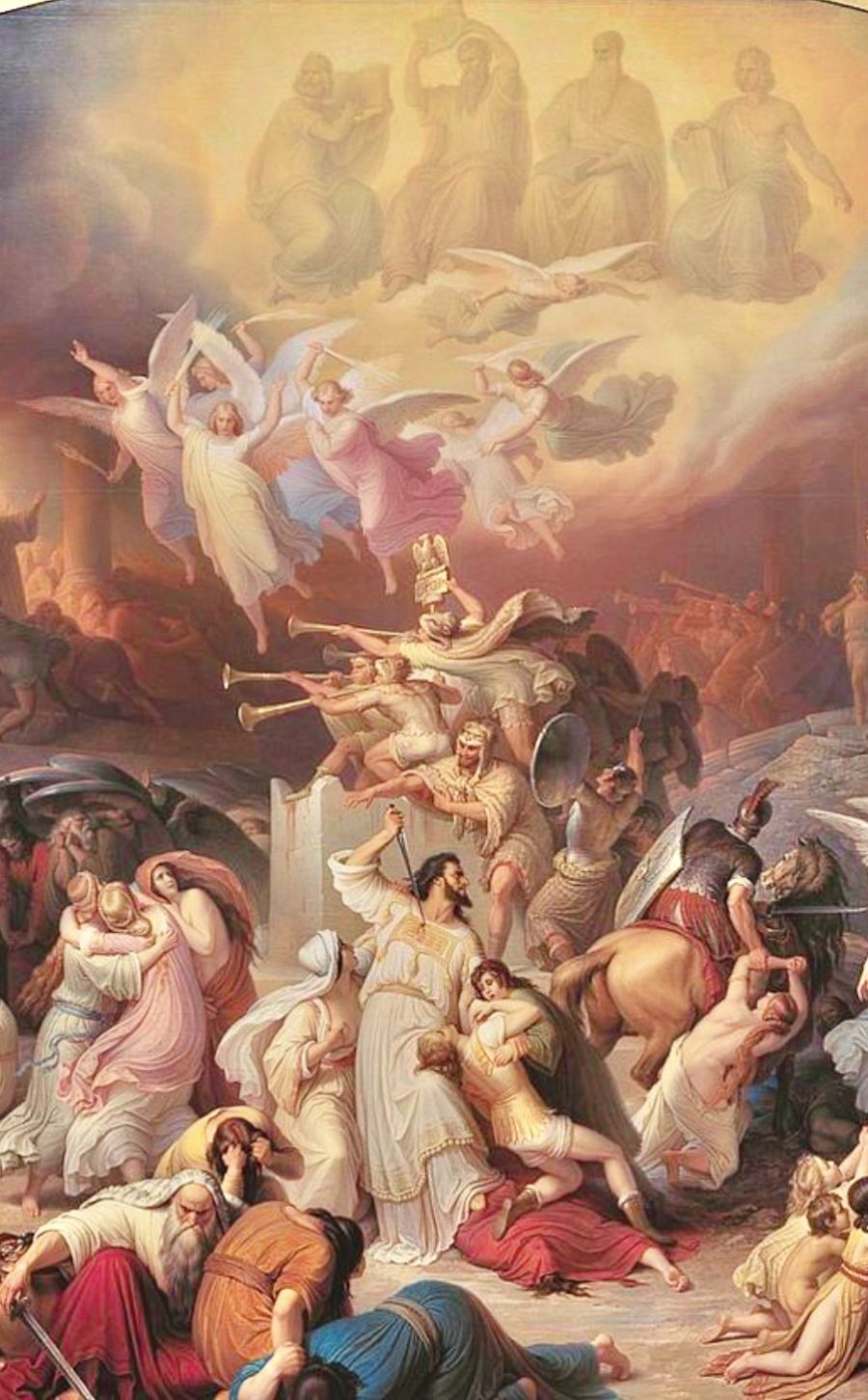
Vocation of the holy city was not to surrender to a fox (v.32) but to become a brooding hen [v.34: properly, «hen»] that does not close but spreads wings for its little ones, gathering all the innocent.

Of course, their feeling for the fate of a homeland that lets itself go to vanities, to the ideology of power and its "advantage", embarking on the path of self-destruction, makes us weep with pain.

However - although defenestrated from his House in the ‘holy city’, as well as from the heart of those who demand only quietism - in Christ the authentic People of friends will propose themselves again (v.35) also on the path of failure.

Not colonizing the features, but in a simple way (not unilateral): inclusive; expanding the horizon and detaching from the tinsel and trappings.

My turning away from Herod’s cunning and the conformist subservience of all «foxes» (v. 32).


[Thursday 30th wk. in O.T.  October 29, 2026]

85 Last modified on Wednesday, 21 October 2026 03:28
don Giuseppe Nespeca

Giuseppe Nespeca è architetto e sacerdote. Cultore della Sacra scrittura è autore della raccolta "Due Fuochi due Vie - Religione e Fede, Vangeli e Tao"; coautore del libro "Dialogo e Solstizio".

We find ourselves, so to speak, roped to Jesus Christ together with him on the ascent towards God's heights (Pope Benedict)
Ci troviamo, per così dire, in una cordata con Gesù Cristo – insieme con Lui nella salita verso le altezze di Dio (Papa Benedetto)
There are also serious, dangerous omissions and we have to recognize with healthy realism that in this way things are not all right, it is not all right when errors are made. However, we must also be certain at the same time that if, here and there, the Church is dying because of the sins of men and women, because of their non-belief, at the same time she is reborn (Pope Benedict)
Ci sono anche cadute gravi, pericolose, e dobbiamo riconoscere con sano realismo che così non va, non va dove si fanno cose sbagliate. Ma anche essere sicuri, allo stesso tempo, che se qua e là la Chiesa muore a causa dei peccati degli uomini, a causa della loro non credenza, nello stesso tempo, nasce di nuovo (Papa Benedetto)
The question makes apparent the concern, present in ancient Jewish tradition, over finding a unifying principle in the various formulations of God's will […] Emphasis is placed on the totality of this dedication to God, listing the three faculties that define man in his deep psychological structures: heart, soul and mind. The word mind, diánoia, contains the rational element (Pope Benedict)
La domanda lascia trasparire la preoccupazione, presente nell’antica tradizione giudaica, di trovare un principio unificatore delle varie formulazioni della volontà di Dio […] L’accento è posto sulla totalità di questa dedizione a Dio, elencando le tre facoltà che definiscono l’uomo nelle sue strutture psicologiche profonde: cuore, anima e mente. Il termine mente, diánoia, contiene l’elemento razionale (Papa Benedetto)
A “year” of grace: the period of Christ’s ministry, the time of the Church before his glorious return, an interval of our life (Pope Francis)
Un “anno” di grazia: il tempo del ministero di Cristo, il tempo della Chiesa prima del suo ritorno glorioso, il tempo della nostra vita (Papa Francesco)
The Church, having before her eyes the picture of the generation to which we belong, shares the uneasiness of so many of the people of our time (Dives in Misericordia n.12)
Avendo davanti agli occhi l'immagine della generazione a cui apparteniamo, la Chiesa condivide l'inquietudine di tanti uomini contemporanei (Dives in Misericordia n.12)
Addressing this state of mind, the Church testifies to her hope, based on the conviction that evil, the mysterium iniquitatis, does not have the final word in human affairs (Pope John Paul II)
Di fronte a questi stati d'animo la Chiesa desidera testimoniare la sua speranza, basata sulla convinzione che il male, il mysterium iniquitatis, non ha l'ultima parola nelle vicende umane (Papa Giovanni Paolo II)
Jesus reminds us today that the expectation of the eternal beatitude does not relieve us of the duty to render the world more just and more liveable (Pope Francis)
Let us look at them together, not only because they are always placed next to each other in the lists of the Twelve (cf. Mt 10: 3, 4; Mk 3: 18; Lk 6: 15; Acts 1: 13), but also because there is very little information about them, apart from the fact that the New Testament Canon preserves one Letter attributed to Jude Thaddaeus [Pope Benedict]

Due Fuochi due Vie - Vol. 1 Due Fuochi due Vie - Vol. 2 Due Fuochi due Vie - Vol. 3 Due Fuochi due Vie - Vol. 4 Due Fuochi due Vie - Vol. 5 Dialogo e Solstizio I fiammiferi di Maria

duevie.art

don Giuseppe Nespeca

Tel. 333-1329741


Disclaimer

Questo blog non rappresenta una testata giornalistica in quanto viene aggiornato senza alcuna periodicità. Non può pertanto considerarsi un prodotto editoriale ai sensi della legge N°62 del 07/03/2001.
Le immagini sono tratte da internet, ma se il loro uso violasse diritti d'autore, lo si comunichi all'autore del blog che provvederà alla loro pronta rimozione.
L'autore dichiara di non essere responsabile dei commenti lasciati nei post. Eventuali commenti dei lettori, lesivi dell'immagine o dell'onorabilità di persone terze, il cui contenuto fosse ritenuto non idoneo alla pubblicazione verranno insindacabilmente rimossi.