


don Giuseppe Nespeca
Giuseppe Nespeca è architetto e sacerdote. Cultore della Sacra scrittura è autore della raccolta "Due Fuochi due Vie - Religione e Fede, Vangeli e Tao"; coautore del libro "Dialogo e Solstizio".
In the Eucharist, or even outside the familiar congregation
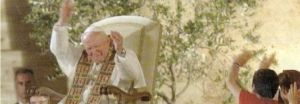
4. «Come and see». You will meet Jesus where men and women are suffering and hoping: in the little villages, scattered across the continents and seemingly on the fringe of history, as Nazareth was when God sent his Angel to Mary; in the huge metropolises, where millions of human beings live often as strangers. In reality, every human being is a «fellow citizen» of Christ.
Jesus is living next to you, in the brothers and sisters with whom you share your daily existence. His visage is that of the poorest, of the marginalized who, not infrequently, are victims of an unjust model of development, in which profit is given first place and the human being is made a means rather than an end. Jesus' dwelling is wherever a human person is suffering because rights are denied, hopes betrayed, anxieties ignored. There, in the midst of humankind, is the dwelling of Christ, who asks you to dry every tear in his name, and to remind whoever feels lonely that no one whose hope is placed in Him is ever alone (cf. Mt 25:31-46).
5. Jesus dwells among those who call on Him without having known Him; among those who, after beginning to know Him, have lost Him through no fault of their own; among those who seek Him in sincerity of heart, while coming from different cultural and religious contexts (cf. Lumen Gentium, 16). As disciples and friends of Jesus, become agents of dialogue and collaboration with those who believe in a God who rules the universe with infinite love; be ambassadors of the Messiah you have found and known in his «dwelling», the Church, so that many more young people of your age may be able to follow in his footsteps; their way lighted by your fraternal charity and by the joy in your eyes that have contemplated Christ.
Jesus dwells among the men and women «honoured with the name of Christian» (cf. Lumen Gentium, 15 ). All are able to meet Him in the Scriptures, in prayer and in service of their neighbours. On the eve of the third millennium, it is becoming every day a more urgent duty to repair the scandal of the division among Christians, strengthening unity through dialogue, prayer in common and witness. It is not a matter of ignoring differences and problems in the detachment of a lukewarm relativism; that would be like covering the wound without healing it, with the risk of interrupting the journey before reaching the goal of full communion. On the contrary, it is a matter of working – under the guidance of the Holy Spirit – with a view to effective reconciliation, trusting in the efficacy of Jesus' prayer on the eve of his passion : «Father, that they may be one even as we are one» (cf. Jn 17:22). The more you cling to Jesus the more capable you will become of being close to one another; and insofar as you make concrete gestures of reconciliation you will enter into the intimacy of his love.
Jesus dwells especially in your parishes, in the communities in which you live, in the associations and ecclesial movements to which you belong, as well as in many contemporary forms of grouping and apostolate at the service of the new evangelization. This rich variety of charisms is a benefit for the whole Church, and an encouragement for every believer to place his or her capacities at the service of the one Lord, fount of salvation for all humankind.
7. Jesus lives among us in the Eucharist, the supreme fulfilment of his real presence, a presence that is contemporary with the history of humankind. Amidst the uncertainties and distractions of daily life, imitate the disciples on their way to Emmaus; like them, say to the Risen One, revealed in the act of breaking the bread: «Stay with us, for it is toward evening and the day is now far spent» (Lk 24:29). Call out to Jesus to remain with you always along the many roads to Emmaus of our time. May He be your strength, your point of reference, your enduring hope. May the Eucharistic Bread, dear young people, never be lacking on the tables of your existence. And may you draw from this Bread the strength to bear witness to the faith!
Around the Eucharistic table the harmonious unity of the Church is realized and made manifest; the mystery of missionary communion, in which all feel that they are children, sisters and brothers, without any exclusion or difference from race, language, age, social situation or culture. Dear young people, make your generous and responsible contribution to the constant building up of the Church as a family, a place of dialogue and mutual acceptance, a space of peace, mercy and pardon.
[Pope John Paul II, Message on the occasion of the 12th World Youth Day, from Castel Gandolfo, 15 August 1996]
Consideration. Correction, mutual service
The Gospel this Sunday, taken from Matthew, Chapter 18, presents the theme of brotherly correction within the community of believers: that is, how I must correct another Christian when he does what is not good. Jesus teaches us that, should my Christian brother commit a sin against me, offend me, I must be charitable toward him and, first of all, speak with him personally, explain to him what he said or did that was wrong. What if the brother doesn’t listen to me? Jesus proposes a progressive intervention: first, return and speak to him with two or three other people, so he may be more aware of his error; if, despite this, he does not accept the admonition, the community must be told; and should he also refuse to listen to the community, he must be made aware of the rift and estrangement that he himself has caused, weakening the communion with his brothers in the faith.
The stages of this plan show the effort that the Lord asks of his community in order to accompany the one who transgresses, so that he or she is not lost. It is important above all to prevent any clamour in the news and gossip in the community — this is the first thing, this must be avoided. “Go and tell him his fault, between you and him alone” (v. 15). The approach is one of sensitivity, prudence, humility, attention towards the one who committed a fault, to avoid wounding or killing the brother with words. Because, you know, words too can kill! When I speak, when I make an unfair criticism, when I “flay” a brother with my tongue, this is killing another person’s reputation! Words kill too. Let us pay attention to this. At the same time, the discretion of speaking to him alone is to avoid needlessly humiliating the sinner. It is discussed between the two, no one is aware of it and then it’s over. This requirement also takes into account the consequent series of interventions calling for the involvement of a few witnesses and then actually of the community. The purpose is to help the person realize what he has done, and that through his fault he has offended not only one, but everyone. But it also helps us to free ourselves from anger or resentment which only causes harm: that bitterness of heart which brings anger and resentment, and which leads us to insult and aggression. It’s terrible to see an insult or taunt issue from the mouth of a Christian. It is ugly. Do you understand? Do not insult! To insult is not Christian. Understood? To insult is not Christian.
Actually, before God we are all sinners and in need of forgiveness. All of us. Indeed, Jesus told us not to judge. Fraternal correction is a mark of the love and communion which must reign in the Christian community; it is, rather, a mutual service that we can and must render to one another. To reprove a brother is a service, and it is possible and effective only if each one recognizes oneself to be a as sinner and in need of the Lord’s forgiveness. The same awareness that enables me to recognize the fault of another, even before that, reminds me that I have likewise made mistakes and I am often wrong.
This is why, at the beginning of Mass, every time, we are called before the Lord to recognize that we are sinners, expressing through words and gestures sincere repentance of the heart. And we say: “Have mercy on me, Lord. I am a sinner! I confess to Almighty God my sins”. And we don’t say: “Lord, have mercy on this man who is beside me, or this woman, who are sinners”. No! “Have mercy on me!”. We are all sinners and in need of the Lord’s forgiveness. It is the Holy Spirit who speaks to our spirit and makes us recognize our faults in light of the Word of Jesus. And Jesus himself invites us all, saints and sinners, to his table, gathering us from the crossroads, from diverse situations of life (cf. Mt 22:9-10). And among the conditions in common among those participating in the Eucharistic celebration, two are fundamental in order to go to Mass correctly: we are all sinners and God grants his mercy to all. These are the two conditions which open wide the doors that we might enter Mass properly. We must always remember this before addressing a brother in brotherly correction.
[Pope Francis, Angelus, 7 September 2014]
Law or hunger: conflicts of conscience
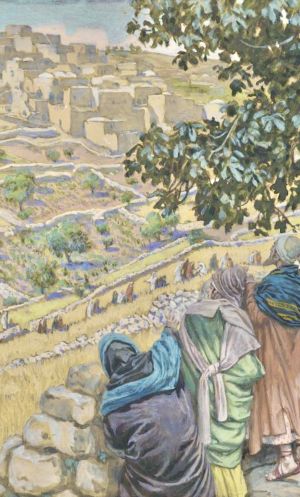
Incarnation, or emptiness of humanity
(Lk 6:1-5)
On the conversion’s journey, conflicts of conscience are not parentheses or accidents of the path, but crucial knots.
The genuineness of believing then generates implicative strenght and new expressive abilities.
According to ordinary religious assessments, the legislation was worth more than hunger... but God’s experience in the life overturns ideas elaborated by experts.
To be honest, observance of the Sabbath had become a central law not because of theological subtleties, very well because in the period of the Exile the weekly rest had allowed believers to gather, share hopes, encourage each other, maintain the identity of the people.
But legalism ended up stifling the spirit of the day of worship, once a sign of a freedom in the service of people’s faith and happiness.
Thus where Jesus arrives, every spiritual module empty of humanity crumbles, and the Incarnation takes hold: the place where God and man seriously rest [other than the saturday!].
In the parallel passage of Mt (12:1-8), Jesus' response is more articulated and complete:
On Jewish Sabbath, priests had many more sacred and preparation engagements, slaughter and reordering of the Sanctuary, than the other days of the week, and the Torah obliged them... it happens to us too.
Again in Mt, the Lord quotes a famous phrase from the prophet Hosea - a man of raw experience, but who well defines the peak of intimacy with God:
an authentic Rite is to realize the hopes of our neighbour and to have the heart in the needs of others.
Christ emphasizes the poverty of every legalistic and hypocritical attachment in the mode of conceiving relations with the Father.
The sign of the Covenant with God, and Encounter [authentic sanctification] is adherence that continues in the plot of the days and in his active Person - not a ridiculous idolatry of observances or cultic parentheses.
Facts and rites celebrate love; and the sincere fulfilment does not follow the pedantic "as we should be", but expresses a Liberation of the person.
The biblical episode that Jesus quotes could perhaps appear not entirely pertinent to the theoretical question: his disciples did not seem to be kings or even priests.
Instead, in the new time that is urgent, yes: ‘sovereigns’ of one’s life by Gift and Call, as well as ‘mediators’ [of divine blessings on humanity] - and also Prophets.
The lovable God establishes with us a dialogue and a friendship that invites, gives impetus, transmits taste for doing.
It is the result of a messianic conscience as «Son of man» (v.5): transmissible to us, his brethren and friends - very united to him by Faith.
For this reason [after the call of the disciples and the first healings, then the vocation of Levi and the controversy about fasting] the Lord presents himself to the Pharisees in the royal stunt double of David, who is about to conquer the "kingdom" even with a small handful of followers.
In the time of the global crisis that affects the future, and still tries to calculate it by directing it a priori, according to selective interests, the challenge is more open than ever.
To internalize and live the message:
How did you perceive that you were reliving Christ in the fluency of the norms?
[Saturday 22th wk. in O.T. September 5, 2026]
Conflicts of conscience: Law or hunger
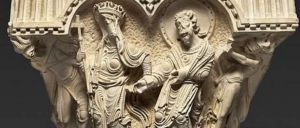
Incarnation, or the spiritual form empty of humanity
(Lk 6:1-5)
On the path to conversion, conflicts of conscience are not parentheses or accidents of the way, but crucial nodes.
The genuineness of belief then generates implicative force and new expressive capacities.
The alternative is between Intimacy and the practice of Faith, or religion that condemns blameless people (Mt 12:7):
According to ordinary religious assessments, regulation was worth more than hunger....
Yes, there is much to dialogue, simply, but little to discuss: God's experience in life overturns the ideas developed by experts.
To be fair, Sabbath observance had become a central law, not because of theological niceties, but because in the period of the Exile, weekly rest had made it possible to come together, to share hopes, to encourage one another, to maintain identity as a people.
But legalism ended up stifling the spirit of the day of worship, once a sign of a freedom at the service of faith and man, both of which could not be enslaved.
So where Jesus arrives, every spiritual module empty of humanity crumbles, and the Incarnation takes hold: the place where God and man rest in earnest (other than the Sabbath!).
The litmus test of the bursting of the new kingdom is the igniting of contrasts with leaders, managers, court intellectuals and executives!
They built their prestige on a patchwork of false teachings, which had nothing to do with the objective of the divine Law.
[Dog doesn't eat dog, so the brawlers of the provisions had never commented on David's transgressive behaviour.
It happens that the masters of steam and the unsavoury fundamentalists of the old or the 'new' do not go against each other...].
In the parallel passage of Mt (12:1-8) Jesus' response is more articulate and complete:
On the Sabbath day, the priests had many more sacred and preparatory duties, slaughtering and tidying up the Sanctuary, than on the other days of the week, and the Torah obliged them... it happens to us too.
Again in Mt, the Lord quotes a famous phrase from the prophet Hosea - a man of raw experience, but one that well defines the pinnacle of intimacy with God: Authentic rite is to notice the needs of one's neighbour and to have one's heart in the needs of others.
The archaic 'sacrifice' [sacrum facere, to make sacred] reflected an idea of cut-off, separation and distance between the perfect world of 'heaven' and the profane life of people.
But after the coming of the "Son of Man" (v.5), the new consecrated will not live secluded, above the lines, far from summary existence.
Rather, they will be the first to welcome and lift up those in need.
Christ emphasises the poverty of any legalistic and hypocritical attachment in the way of conceiving relations with the Father.
A sign of the Covenant with God, and an encounter (authentic sanctification) is the adherence that continues in the pattern of days and in His active Person - not a ridiculous idolatry of observances or cultic parentheses.
Facts and rituals celebrate love; and straightforward adherence does not trace the pedantic 'how we should be', but expresses a Liberation of the person.
The biblical episode that Jesus cites might perhaps have seemed not entirely relevant to the theoretical question: his disciples did not seem to be kings or even priests.
Instead, in the new time that is impending, yes: 'sovereigns' of their own lives by Gift and Calling, as well as 'mediators' [of divine blessings on humanity] - and prophets too.
Authentic ones will no longer play the double game of the old theatrics, susceptible practitioners of the sacred - nor will they condemn the innocent and needy (Mt 12:7).
In Mk 2:27 Jesus relativises the commandment: 'The Sabbath was [instituted, has its meaning] for man, and not man for the Sabbath'.
The lovable God establishes a dialogue and friendship with us that invites, gives impetus, gives gusto.
The Tao Tê Ching (xiii) writes:
"To him who makes merit of himself for the sake of the world, the world can be entrusted. To him who cares for himself for the sake of the world, one can trust the world'.
To the bondage of customs, Christ opposes a looseness that makes the encounter between God and his people more agile, more spontaneous, richer and more personal.
It is the outcome of a messianic consciousness that is precisely that of a "Son of Man" (v.5): greater than the Temple (cf. Mt 12:6) because incarnate.
In this way, transmissible to us, His brothers and friends - united to Him and intimate by faith.
After the call of Levi, the meal with sinners and the controversy over fasting, the Master presents Himself to the Pharisees in the regal guise of David setting out to conquer the alternative "Kingdom", even with a small handful of followers.
A trail of light - even for us - in the face of the current pastoral meltdown.
In the time of the global crisis that seems to mortgage the future (we still try to calculate it by directing it a priori, according to selective interests), the challenge is more open than ever.The contrast on Justice
"It is precisely because of this personal experience of his relationship with Jesus Christ that Paul now places at the heart of his Gospel an irreducible opposition between two alternative paths to justice: one built on the works of the Law, the other founded on the grace of faith in Christ. The alternative between righteousness by the works of the Law and righteousness by faith in Christ thus becomes one of the dominant motifs running through his Epistles: "We, who by birth are Jews and not sinful pagans, yet knowing that man is not justified by the works of the Law, but only by faith in Jesus Christ, have also believed in Christ Jesus, that we might be justified by faith in Christ and not by the works of the Law; for by the works of the Law no one will ever be justified" (Gal 2:15-16). And to the Christians of Rome he reiterates that 'all have sinned and fall short of the glory of God, but are justified freely by his grace through the redemption that is in Christ Jesus (Rom 3:23-24). He adds, "For we hold that man is justified by faith, regardless of the works of the Law" (Ibid 28). Luther at this point translated: 'justified by faith alone'. I will return to this point at the end of the catechesis. First we must clarify what this "Law" is from which we are liberated and what those "works of the Law" are that do not justify. Already in the community of Corinth there was an opinion that would later return systematically in history; the opinion was that it was the moral law and that Christian freedom therefore consisted in liberation from ethics. Thus the word 'πάντα μοι έξεστιν' (everything is permissible for me) circulated in Corinth. It is obvious that this interpretation is wrong: Christian freedom is not libertinism, the liberation of which St Paul speaks is not liberation from doing good.
But what then is the Law from which we are liberated and which does not save? For St Paul, as for all his contemporaries, the word Law meant the Torah in its entirety, that is, the five books of Moses. The Torah implied, in the Pharisaic interpretation, the one studied and made his own by Paul, a complex of behaviours ranging from the ethical core to the ritual and cultic observances that substantially determined the identity of the righteous man. Particularly circumcision, observances about pure food and generally ritual purity, rules about Sabbath observance, etc. Behaviours that also frequently appear in the debates between Jesus and his contemporaries. All these observances expressing a social, cultural and religious identity had become singularly important by the time of the Hellenistic culture, beginning in the 3rd century BC. This culture, which had become the universal culture of the time, and was an apparently rational, polytheistic, apparently tolerant culture, constituted a strong pressure towards cultural uniformity and thus threatened the identity of Israel, which was politically forced into this common identity of the Hellenistic culture, resulting in the loss of its own identity, and thus also the loss of the precious inheritance of the faith of the Fathers, of faith in the one God and the promises of God.
Against this cultural pressure, which threatened not only Israelite identity, but also faith in the one God and His promises, it was necessary to create a wall of distinction, a shield of defence to protect the precious inheritance of faith; this wall consisted precisely of Jewish observances and prescriptions. Paul, who had learnt of these observances precisely in their defensive function of God's gift, of the inheritance of faith in one God, saw this identity threatened by the freedom of Christians: he persecuted them for this reason. At the moment of his encounter with the Risen One he realised that with Christ's resurrection the situation had changed radically. With Christ, the God of Israel, the one true God, became the God of all peoples. The wall - so he says in the Letter to the Ephesians - between Israel and the pagans was no longer necessary: it is Christ who protects us against polytheism and all its deviations; it is Christ who unites us with and in the one God; it is Christ who guarantees our true identity in the diversity of cultures. The wall is no longer necessary; our common identity in the diversity of cultures is Christ, and it is he who makes us righteous. To be just is simply to be with Christ and in Christ. And that is enough. Other observances are no longer necessary. That is why Luther's expression 'sola fide' is true, if faith is not opposed to charity, to love. Faith is to look to Christ, to entrust oneself to Christ, to attach oneself to Christ, to conform oneself to Christ, to his life. And the form, the life of Christ is love; therefore to believe is to conform oneself to Christ and to enter into his love. That is why St Paul in the Epistle to the Galatians, in which he especially developed his doctrine on justification, speaks of faith working through charity (cf. Gal 5:14).
Paul knows that in the twofold love of God and neighbour the whole Law is present and fulfilled. Thus in communion with Christ, in the faith that creates charity, the whole Law is fulfilled. We become righteous by entering into communion with Christ who is love".
[Pope Benedict, General Audience 19 November 2008].
To internalise and live the message:
Have you felt oppression or exclusion in the name of the Law?
Do you feel it was for offending God or for daring to disturb something or question someone and their cultural paradigm?
How did you perceive you were reliving Christ in the looseness of norms?
What conflicts are a source of discussion and ecclesial controversy that you feel create detachment and suffering around you?
Law that shields and Law that does not save

It is precisely because of this personal experience of relationship with Jesus Christ that Paul henceforth places at the centre of his Gospel an irreducible opposition between the two alternative paths to justice: one built on the works of the Law, the other founded on the grace of faith in Christ. The alternative between justice by means of works of the Law and that by faith in Christ thus became one of the dominant themes that run through his Letters: "We ourselves, who are Jews by birth and not Gentile sinners, yet who know that a man is not justified by works of the law but through faith in Jesus Christ, even we have believed in Christ Jesus in order to be justified by faith in Christ, and not by works of the law; because by works of the law no one will be justified" (Gal 2: 15-16). And to the Christians of Rome he reasserts that "all have sinned and fall short of the glory of God, they are now justified by his grace as a gift, through the redemption which is in Christ Jesus" (Rm 3: 23-24). And he adds "we hold that a man is justified by faith apart from works of the law" (ibid., v. 28). At this point Luther translated: "justified by faith alone". I shall return to this point at the end of the Catechesis. First, we must explain what is this "Law" from which we are freed and what are those "works of the Law" that do not justify. The opinion that was to recur systematically in history already existed in the community at Corinth. This opinion consisted in thinking that it was a question of moral law and that the Christian freedom thus consisted in the liberation from ethics. Thus in Corinth the term "πάντα μοι έξεστιν" (I can do what I like) was widespread. It is obvious that this interpretation is wrong: Christian freedom is not libertinism; the liberation of which St Paul spoke is not liberation from good works.
So what does the Law from which we are liberated and which does not save mean? For St Paul, as for all his contemporaries, the word "Law" meant the Torah in its totality, that is, the five books of Moses. The Torah, in the Pharisaic interpretation, that which Paul had studied and made his own, was a complex set of conduct codes that ranged from the ethical nucleus to observances of rites and worship and that essentially determined the identity of the just person. In particular, these included circumcision, observances concerning pure food and ritual purity in general, the rules regarding the observance of the Sabbath, etc. codes of conduct that also appear frequently in the debates between Jesus and his contemporaries. All of these observances that express a social, cultural and religious identity had become uniquely important in the time of Hellenistic culture, starting from the third century B.C. This culture which had become the universal culture of that time and was a seemingly rational culture; a polytheistic culture, seemingly tolerant constituted a strong pressure for cultural uniformity and thus threatened the identity of Israel, which was politically constrained to enter into this common identity of the Hellenistic culture. This resulted in the loss of its own identity, hence also the loss of the precious heritage of the faith of the Fathers, of the faith in the one God and in the promises of God.
Against this cultural pressure, which not only threatened the Israelite identity but also the faith in the one God and in his promises, it was necessary to create a wall of distinction, a shield of defence to protect the precious heritage of the faith; this wall consisted precisely in the Judaic observances and prescriptions. Paul, who had learned these observances in their role of defending God's gift, of the inheritance of faith in one God alone, saw this identity threatened by the freedom of the Christians this is why he persecuted them. At the moment of his encounter with the Risen One he understood that with Christ's Resurrection the situation had changed radically. With Christ, the God of Israel, the one true God, became the God of all peoples. The wall as he says in his Letter to the Ephesians between Israel and the Gentiles, was no longer necessary: it is Christ who protects us from polytheism and all of its deviations; it is Christ who unites us with and in the one God; it is Christ who guarantees our true identity within the diversity of cultures. The wall is no longer necessary; our common identity within the diversity of cultures is Christ, and it is he who makes us just. Being just simply means being with Christ and in Christ. And this suffices. Further observances are no longer necessary. For this reason Luther's phrase: "faith alone" is true, if it is not opposed to faith in charity, in love. Faith is looking at Christ, entrusting oneself to Christ, being united to Christ, conformed to Christ, to his life. And the form, the life of Christ, is love; hence to believe is to conform to Christ and to enter into his love. So it is that in the Letter to the Galatians in which he primarily developed his teaching on justification St Paul speaks of faith that works through love (cf. Gal 5: 14).
Paul knows that in the twofold love of God and neighbour the whole of the Law is present and carried out. Thus in communion with Christ, in a faith that creates charity, the entire Law is fulfilled. We become just by entering into communion with Christ who is Love.
[Pope Benedict, General Audience 19 November 2008]
To follow Christ
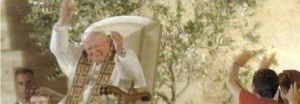
God revealed himself in Christ, in him he offered himself to man as his true destiny, as his eternal dwelling, in time and in eternity.
Destiny is "vocation", that is, a call to bind oneself and to remain united to God, who wanted to bind himself to us so that we might have life in abundance (cf. Jn 10:10).
To follow Christ, one does not have to be a superman, or perform superhuman deeds. The young Christian, certainly, stands out from the crowd, but not by outward appearance, but by the way he thinks and acts. He is different inside, in his heart, and this is reflected on the outside, in his way of behaving, speaking, dealing with others, in every everyday situation.
[Pope John Paul II, Address to Young People, Catania 5 November 1994]
Two Roads: gestures of proximity or hypocrisy. But the letter is cold
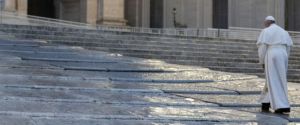
There are "two roads". And it is Jesus himself, with his "gestures of closeness", who gives us the right indication as to which one to take. On the one hand, in fact, there is the road of the "hypocrites", who close their doors because of their attachment to the "letter of the law". On the other, however, there is "the road of charity", which passes "from love to the true justice that is within the law". Pope Francis said this at the Mass celebrated on Friday morning, 31 October, in the chapel of the Casa Santa Marta.
In practice, the Pontiff said, "these people were so attached to the law that they had forgotten justice; so attached to the law that they had forgotten love". But 'not only to the law; they were attached to the words, to the letters of the law'.
Precisely this way "of living, attached to the law, distanced them from love and justice: they cared for the law, they neglected justice; they cared for the law, they neglected love". Yet "they were the models". But "Jesus finds only one word for these people: hypocrites!". One cannot, in fact, go "into all the world looking for proselytes" and then close "the door". For the Lord was dealing with "men of closure, men so attached to the law, to the letter of the law: not to the law", because "the law is love", but "to the letter of the law". They were men "who always closed the doors of hope, of love, of salvation, men who only knew how to close".
Only "in the flesh of Christ", in fact, does the law "have full fulfilment". Because "the flesh of Christ knows how to suffer, he gave his life for us". While "the letter is cold."
[Pope Francis, St. Martha, in L'Osservatore Romano 01/11/2014]
Fasting: Opening

New Wineskins and vocational Freedom
(Lk 5:33-39)
Fasting is a regenerative principle that has a unique healing power, both detoxifying and essential. It activates the energies of humanity and at the same time of diversity.
This silent practice addresses the deep layers, the internal dimension, which becomes the guide and we risk ignoring.
Fasting was a sign of profound religiosity, therefore the disciples of Jesus - who did not fast, on the contrary their life had a festive character - were more or less assimilated to sinners.
Although there were no formal prescriptions, in observant circles it was pious practices that had become customary [linked to precisely marked days].
In Semitic beliefs, fasting was in particular expressive of the embarrassment and affliction of the devout man in the expectation of the Messianic times, which were delaying.
This is why Jesus associates fasting with mourning. It no longer has meaning in life as the unhindered wedding feast that He inaugurates.
Fasting remains as a sign of waiting for fulfillment, but now sadness no longer has any decisive relevance.
In the time of the Church that makes the Risen present, the renunciation of gorging is not a form of penance but of Hope (v.35).
And it serves to keep the hearts of Bridegroom’s friends clear of vanities, with a form of identification with the poor.
In other communities, the Judaizers tried to reduce the pure Faith - foundation and enthusiastic participation - to whatever beliefs and practices [that did not make everyone feel free and adequate].
In fact, a large part of the Jews converted to Christ were inclined to nostalgia that resulted in impediment.
Lk encourages the converts of his fraternities, coming from mixed and unregulated beliefs - to face the opinion of the strictest religious traditions.
Even today the Lord's proposal stands out - because it does not claim to prepare the Kingdom, but rather welcomes and listens to it.
It will be Christ-in-us alone to nourish us towards an uninterrupted and growing way, in the commitment to start afresh in the task of finding ourselves and emancipating the world - in a climate of austerity, balanced.
The Call of the Gospels remains respectful, concrete and strongly prophetic at the same time, because it arouses attention to people, to reality, and our joy - much more than to unsolicited standards of improvement, or other patches (v.36).
By not overwhelming or imposing artificial loads on believers, the life of Faith brings freedom into play [and thus makes it known to us] so that we become aware and assume it in order to be able to invest as Grace, charge and resource of novelty.
The renouncing and mortifying mechanisms, of individualistic perfection, are alien from the start - unless they are designed for the sharing of goods.
Jesus does not come to make a small group of followers seated on the chair of austerity, but to communicate that the relationship with God is a celebration.
Fasting pleasing to the Father lies in the lucid experience of one's own unrepeatable eccentricity and Call, in freeing oneself from the selfishness that holds back, and in bringing relief to one's neighbor.
For this reason the Church has almost completely abolished the precept of external fasting, while it intends to commit more to forms of limitation in favor of the uncertain, humble and needy.
To internalize and live the message:
Do you practice fasting? From what? And for what purpose?
[Friday 22th wk. in O.T. September 4, 2026]
Fasting: New wineskins and vocational Freedom
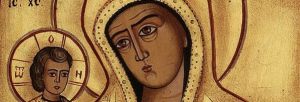
(Lk 5:33-39)
The old customs cannot always be combined with the Newness brought by the Lord; indeed, it is not infrequently necessary to know how to separate things.
Lk confronts the opinion of the few messianics in his communities, who wanted to take the Master's proposal back to the common Jewish roots from which they themselves came.
While appreciating the ancient custom, rich in attractive and even enchanting forms, he rather comforts his church members from paganism.
With his catechesis, the evangelist wants to prevent that in the small fraternities then in their infancy, the return of the seduction emanating from the old religious certainties could prevail over the full manifestation of the power of life inaugurated - in the authentic call of God.
Fasting has travelled through all religious and mystical traditions, because it is intended to bring women and men closer to their own profound essence - to listening to themselves, to the codes of the sacred, to the inner cosmos, to their own vocation, to the sacred pages - in the expectation of transformation.
One entrusts oneself to a different wisdom - less noisy - that can activate processes of metamorphosis, precisely by making a void from the intrusions of homologated thought, from external habits or conformisms that tend to overwhelm the personality.
By detaching, the torments will vanish, replaced by other interests and lucid dreams; aroused by the new breakthrough to our eternal side, and by that reliance on the core of being that is still creating us.
Psycho-physical and supernatural unity is a prodigious organism, which can clear away the fog and enhance its capacities with various forms of suspension and cleansing, even mental cleansing - which will take us where we need to go.
But in the specifics of the children of God, all this is aimed at sharpening the gaze in the sense of knowledge, discovery, surprise of unsuspected singular and missionary capacities and qualities. Those that flow from the discovery of the eminent Self, from one's own founding Relationship - to become uniqueness of exceptional relationship with others, in the Exodus that corresponds to us.
Fasting is a principle of regeneration that has a unique healing power, both detoxifying and essential. It activates the energies of one's humanity and at the same time one's diversity.
This silent practice addresses the deep layers, the inner dimension, which become the guide (and we risk ignoring).
But here, understanding dissimilarities remains indispensable. For us, it is a gesture of openness!
Other kinds of diets or athleticism are not infrequently deviant: their very nonsense brings sadness and even depression.
Fasting remains a sign of waiting for the fulfilment, but now the sadness is meaningless.
In the time of the Church that makes the Risen One present, the renunciation of gorging is not a form of penitence but of hope (v.35).
And it serves to keep the heart of the Bridegroom's friends clear of vanities, with a form of identification with the poor.
But Jesus does not come to make himself a group of followers sitting on the chair of austerity, but to communicate that the relationship with God is a feast!
In short, fasting pleasing to the Father lies in the lucid experience of one's own unique eccentricity and calling, in freeing oneself from the selfishness of grabbing for oneself, and bringing relief to one's neighbour.
It creates life, not diminishes it.
Fasting was a sign of deep religiosity, so Jesus' disciples - who did not fast, indeed their lives had a festive character - were likened more or less to sinners.
Although there were no formal prescriptions, these were pious practices that became customary in observant circles (here seriousness was everything) linked to precisely marked days.
In Semitic beliefs, fasting was in particular expressive of the devout man's embarrassment and affliction in the quivering expectation of the messianic times, which were delayed.
This is why Jesus associates fasting with mourning - which no longer has any meaning in life as the wedding feast without qualms that He inaugurates.
Where precisely there is no need for additions, no need for checks or imprints, marks or distinguishing characteristics.
Nor is the New Covenant a modernisation of moral practices or pious prescriptions that provide an external religious pass.
Everything is in relation to the real presence of the Bridegroom, who does not punish life.
Of course, he who proceeds on the path of emancipation and is not satisfied with a partial Jesus the Bridegroom, already knows in himself what awaits him...
Then (v.35) in the strident confrontation with the religious leaders - clinging to prestige - there is sadness and humiliation to no end. So much for fasting from food.
However, those who have decided to continue on their path of vocational freedom know that they must relive the same events of blatant conflict that pitted the Master against the mentality and authorities of his time; and finally, in such a real encounter with Him, experience the total gift of life (v.35).It will only be the Christ-in-us (even if it is centred and not definitive) that will nourish soul and body in an uninterrupted and growing way.
This with the commitment to start again in the mission of finding ourselves and giving breath to the world.
In an atmosphere of quiet austerity; without artificial brakes.
In the communities of pagan extraction addressed by Luke, there was a strong desire to free the Risen One from fetters (disciplinary fixations, timetables, calendar).
The believers perceived Him to be alive - an accomplice to the new humanising character they were experiencing day by day.
The evangelist wants to orient his assemblies in the Ephesus area [perhaps in the mid-1980s] not to cling to false securities.
They had to take a completely alternative position and not end up like the groups around them, of sectarian extraction.
But even the Judaizers were trying to reduce pure Faith - foundation and enthusiastic participation - to rigid beliefs and any number of practices.
Vicious circles that ended up transmitting old feelings of guilt instead of unusual relational insights.
Indeed, most Jewish converts tended towards nostalgias that were a hindrance and hindrance.
It was precisely such veterans who struggled to embrace the new habitus of freedom, and the full froth of the Gospel, in an enthusiastic manner.
Even today, the Lord's Proposal stands apart from all exclusivist doctrines, full of prescriptions and fulfilments.
His Presence shines through in spirit. And his intimates do not pretend to prepare the Kingdom, but welcome it and listen (with trust in life).
This is what is happening in the time of the pandemic, which is disposing to a less outward, more global fast - considerable but wise.
A fast that can lead humanity to sensitive perception, to a sense of communion, to silence and embrace; to less egocentric and dirigiste impetus. To a deepening - and wholeness.
The Tao Tê Ching (v) writes: "The space between Heaven and Earth, how it resembles a bellows!".
Master Wang Pi comments: 'If the bellows had a will of its own in blowing, it could not implement the intent of the one who makes it blow'.
And Master Ho-shang Kung adds: "Many endeavours harm the spirit".
In short, Christ treasures natural wisdom and does not reduce us to the measure of just any religion: he does not confine believers in "negotiations" through petty procedures of athleticism and individual perfection.
He does not insist on heroic mortifications, extraordinary renunciations, punctilious observance of sterile - one-sided - laws, unless they are designed in order to find each other, to humanise, to share goods.
The Call of the Gospels remains at once balanced, concrete and strongly prophetic.
A call that arouses attention to people, to reality, to our joy - far more than unsolicited (stoic) aseptic polishing standards or other patches (v.36).
By neither overwhelming nor imposing artificial burdens on believers, the life of Faith brings self-determination into play.
Thus it makes it known to us - so that we become aware of it and take it on in order to be able to invest it as Grace, charge (not diminish): a resource of newness.
The ascetical mechanisms of individualist refinement are alien from the outset: the goal is to create family, not to carve out a circle of hard and pure (all external and proud of themselves) who distance themselves from weaker brothers and sisters.
Then, self-satisfied, they become disloyal, usurpers, schemers: a history of flaws, equivocal plots and pastoral delays, behind an impeccable façade of cerebral doctrines, disciplines (in their own way) and resounding commemorations over the body of the 'poor departed'.
This is why the Church has almost completely abolished the precept of outward fasting, while it intends to make a greater commitment to forms of restraint in favour of the sick, marginalised, humble and needy.
The choice wants to remain clear: freedom is priceless.
And there is no love if someone (be it even God) cuts or overpowers the other, imposing artificial yokes, too much the same as always; unbearable, freakish, unhealthy.
So the old containers are no longer to be matched with the new ferment. The practice of patching damages both custom and the Newness of God.
Certainly, old wine and cassocks have a fascinating attraction for the senses and the vintage epidermal imagination...
That is why they continue to appeal [v.39: "The old is excellent!"]. Not a few want to combine him with the Lord (Mk 2:22; Mt 9:17; Lk 5:37-38).
The Master was not per se an opponent of the spirit of the old man, but he fought against its rinds, which in fact prevented the manifestation of an unseen Face of God, of a more genuine idea of a successful man - the germ of an alternative, fraternal society.
Realities well separated from the intimist or self-referential ones typical of official or do-it-yourself cults. All innovations that had to manifest themselves.The taste and aftertaste of old wine cloak devotional rites and seasoned customs with artfulness, affectation and evocative charm, but they plant us there and do not scratch life; they remind us, but they do not memorialise - that is, they do not re-actualise for us.
In the practice of the many provincial cults, in its catechetical endeavours without pastoral nerve, we have noticed for decades a mechanical pre-conciliar regurgitation, which stops at the great icons.
Wonders and memories of Salvation History... that's it. It seemed easier to local leaders to go back to customs and abbreviated catechisms than to face the educational risk (which the Magisterium itself would impose).
The immediate result was deemed palatable and profitable, for the (underneath) fundamentalist and astute sector - willingly supplanting the unknown effervescence of the new wine.
In fact, on the part of those who know 'how to be in the world', one still has to suffer a whole superficiality of retreats and habitual accommodations, which redeem no one and bring no joy, because they do not enter into human affairs.
Settling for the fish menu on Fridays. Genuine superfluity.
But those who stop at the past of mortifications and papier-mâché can never understand the Reformation that the Spirit proposes to edify each soul in the (authentic) fulfilment that holds us better to one another.
Thus the old containers are no longer to be coupled with the new ferment.
The practice of patching can on the one hand damage the customs, because they have their own refined and pronounced taste (pertinent in itself) - on the other hand it distracts and attenuates life in the change, in the Newness of God.
In short, the Lord does not intend for us a practice of mending and enclosing boundaries: rather, He wants to break cages.
To internalise and live the message:
Do you fast? From what? And for what purpose? Does it break the cages? Is it or is it not in order to know each other, find each other, and listen, heal, share, embrace, hold each other better?
What inner conflicts do you experience around religious practices that you feel still bring suffering to people and are not a spousal expression or a reason for emancipation for women and men?
What image of God and believing humanity is subject to preconceptions and prohibitions? How do you demonstrate the primacy of Jesus in every area of life?
To eat the true Food

In the New Testament, Jesus brings to light the profound motive for fasting, condemning the attitude of the Pharisees, who scrupulously observed the prescriptions of the law, but whose hearts were far from God. True fasting, as the divine Master repeats elsewhere, is rather to do the will of the Heavenly Father, who “sees in secret, and will reward you” (Mt 6,18). He Himself sets the example, answering Satan, at the end of the forty days spent in the desert that “man shall not live by bread alone, but by every word that proceeds from the mouth of God” (Mt 4,4). The true fast is thus directed to eating the “true food,” which is to do the Father’s will (cf. Jn 4,34). If, therefore, Adam disobeyed the Lord’s command “of the tree of the knowledge of good and evil you shall not eat,” the believer, through fasting, intends to submit himself humbly to God, trusting in His goodness and mercy.
The practice of fasting is very present in the first Christian community (cf. Acts 13,3; 14,22; 27,21; 2 Cor 6,5). The Church Fathers, too, speak of the force of fasting to bridle sin, especially the lusts of the “old Adam,” and open in the heart of the believer a path to God. Moreover, fasting is a practice that is encountered frequently and recommended by the saints of every age. Saint Peter Chrysologus writes: “Fasting is the soul of prayer, mercy is the lifeblood of fasting. So if you pray, fast; if you fast, show mercy; if you want your petition to be heard, hear the petition of others. If you do not close your ear to others, you open God’s ear to yourself” (Sermo 43: PL 52, 320. 322).
In our own day, fasting seems to have lost something of its spiritual meaning, and has taken on, in a culture characterized by the search for material well-being, a therapeutic value for the care of one’s body. Fasting certainly bring benefits to physical well-being, but for believers, it is, in the first place, a “therapy” to heal all that prevents them from conformity to the will of God. In the Apostolic Constitution Pænitemini of 1966, the Servant of God Paul VI saw the need to present fasting within the call of every Christian to “no longer live for himself, but for Him who loves him and gave himself for him … he will also have to live for his brethren“ (cf. Ch. I). Lent could be a propitious time to present again the norms contained in the Apostolic Constitution, so that the authentic and perennial significance of this long held practice may be rediscovered, and thus assist us to mortify our egoism and open our heart to love of God and neighbor, the first and greatest Commandment of the new Law and compendium of the entire Gospel (cf. Mt 22, 34-40).
The faithful practice of fasting contributes, moreover, to conferring unity to the whole person, body and soul, helping to avoid sin and grow in intimacy with the Lord. Saint Augustine, who knew all too well his own negative impulses, defining them as “twisted and tangled knottiness” (Confessions, II, 10.18), writes: “I will certainly impose privation, but it is so that he will forgive me, to be pleasing in his eyes, that I may enjoy his delightfulness” (Sermo 400, 3, 3: PL 40, 708). Denying material food, which nourishes our body, nurtures an interior disposition to listen to Christ and be fed by His saving word. Through fasting and praying, we allow Him to come and satisfy the deepest hunger that we experience in the depths of our being: the hunger and thirst for God.
At the same time, fasting is an aid to open our eyes to the situation in which so many of our brothers and sisters live. In his First Letter, Saint John admonishes: “If anyone has the world’s goods, and sees his brother in need, yet shuts up his bowels of compassion from him – how does the love of God abide in him?” (3,17). Voluntary fasting enables us to grow in the spirit of the Good Samaritan, who bends low and goes to the help of his suffering brother (cf. Encyclical Deus caritas est, 15). By freely embracing an act of self-denial for the sake of another, we make a statement that our brother or sister in need is not a stranger. It is precisely to keep alive this welcoming and attentive attitude towards our brothers and sisters that I encourage the parishes and every other community to intensify in Lent the custom of private and communal fasts, joined to the reading of the Word of God, prayer and almsgiving. From the beginning, this has been the hallmark of the Christian community, in which special collections were taken up (cf. 2 Cor 8-9; Rm 15, 25-27), the faithful being invited to give to the poor what had been set aside from their fast (Didascalia Ap., V, 20,18). This practice needs to be rediscovered and encouraged again in our day, especially during the liturgical season of Lent.
From what I have said thus far, it seems abundantly clear that fasting represents an important ascetical practice, a spiritual arm to do battle against every possible disordered attachment to ourselves. Freely chosen detachment from the pleasure of food and other material goods helps the disciple of Christ to control the appetites of nature, weakened by original sin, whose negative effects impact the entire human person. Quite opportunely, an ancient hymn of the Lenten liturgy exhorts: “Utamur ergo parcius, / verbis cibis et potibus, / somno, iocis et arctius / perstemus in custodia – Let us use sparingly words, food and drink, sleep and amusements. May we be more alert in the custody of our senses.”
Dear brothers and sisters, it is good to see how the ultimate goal of fasting is to help each one of us, as the Servant of God Pope John Paul II wrote, to make the complete gift of self to God (cf. Encyclical Veritatis splendor, 21).
[Pope Benedict, Message for Lent 2009]
And «each of us can say: "for love to me"» (Pope Francis)
E «ognuno di noi può dire: “per amore a me”» (Papa Francesco)
We too, to reach a more conscious confession of Jesus Christ must follow, like Peter, a path made of attentive, caring listening (Pope John Paul II)
Anche noi per giungere a una più consapevole confessione di Gesù Cristo dobbiamo percorrere, come Pietro, un cammino fatto di ascolto attento, premuroso (Papa Giovanni Paolo II)
It is a word that must be witnessed to and proclaimed explicitly, because without a consistent witness it proves to be less comprehensible and credible [Pope Benedict]
E’ una Parola che deve essere testimoniata e proclamata esplicitamente, perché senza una testimonianza coerente essa risulta meno comprensibile e credibile [Papa Benedetto]
The “reading and meditation of the word of God root us more deeply in Christ and guide our ministry as servants of reconciliation, justice and peace” (second Synod for Africa, Propositio 46)
La lettura e la meditazione della Parola di Dio ci radicano più profondamente in Cristo e orientano il nostro ministero di servitori della riconciliazione, della giustizia e della pace (Secondo Sinodo per l’Africa, Propositio 46)
The Gospel of Matthew written in Hebrew or Aramaic is no longer extant, but in the Greek Gospel that we possess we still continue to hear, in a certain way, the persuasive voice of the publican Matthew, who, having become an Apostle, continues to proclaim God's saving mercy to us. And let us listen to St Matthew's message, meditating upon it ever anew also to learn to stand up and follow Jesus with determination (Pope Benedict)
Non abbiamo più il Vangelo scritto da Matteo in ebraico o in aramaico, ma nel Vangelo greco che abbiamo continuiamo a udire ancora, in qualche modo, la voce persuasiva del pubblicano Matteo che, diventato Apostolo, séguita ad annunciarci la salvatrice misericordia di Dio e ascoltiamo questo messaggio di san Matteo, meditiamolo sempre di nuovo per imparare anche noi ad alzarci e a seguire Gesù con decisione (Papa Benedetto)
That denarius clearly represents eternal life, a gift that God reserves for all. Indeed those who are considered the "last", if they accept, become the "first", whereas the "first" can risk becoming the "last" [Pope Benedict]
Quel denaro rappresenta la vita eterna, dono che Dio riserva a tutti. Anzi, proprio quelli che sono considerati "ultimi", se lo accettano, diventano "primi", mentre i "primi" possono rischiare di finire "ultimi" [Papa Benedetto]
The sower is Jesus. With this image, we can see that he presents himself as one who does not impose himself, but rather offers himself. He does not attract us by conquering us, but by donating himself: he casts seeds. With patience and generosity, he spreads his Word, which is not a cage or a trap, but a seed which can bear fruit (Pope Francis)
Il seminatore è Gesù. Notiamo che, con questa immagine, Egli si presenta come uno che non si impone, ma si propone; non ci attira conquistandoci, ma donandosi: butta il seme. Egli sparge con pazienza e generosità la sua Parola, che non è una gabbia o una trappola, ma un seme che può portare frutto (Papa Francesco)
The Church desires to give thanks to the Most Holy Trinity for the "mystery of woman" and for every woman - for that which constitutes the eternal measure of her feminine dignity, for the "great works of God", which throughout human history have been accomplished in and through her (Mulieris Dignitatem n.31)








duevie.art
don Giuseppe Nespeca
Tel. 333-1329741
Disclaimer
Questo blog non rappresenta una testata giornalistica in quanto viene aggiornato senza alcuna periodicità. Non può pertanto considerarsi un prodotto editoriale ai sensi della legge N°62 del 07/03/2001.
Le immagini sono tratte da internet, ma se il loro uso violasse diritti d'autore, lo si comunichi all'autore del blog che provvederà alla loro pronta rimozione.
L'autore dichiara di non essere responsabile dei commenti lasciati nei post. Eventuali commenti dei lettori, lesivi dell'immagine o dell'onorabilità di persone terze, il cui contenuto fosse ritenuto non idoneo alla pubblicazione verranno insindacabilmente rimossi.