Oct 25, 2025 Written by 

Deceased, not "dead": they Live

Commemoration of All the Faithful Departed


On the occasion of the recent passing of my parents, to the torment of the illness and the loss of both (soon) was added the annoyance of an environment that continued to give me "condolences".

As for good manners, of course, but who has assimilated the language of the Faith does not mourn anyone, nor does he speak of "dead" but of Deceased ones. They live.

Not as survivors of the blows that life holds, but as ‘dilated’, authentic, adorned ones - and finally fully realized.

Women and men… ‘blossomed’ in everything, experiencing a new kind of being in their own essence; a different existence.

As in an atmosphere of pure love, where like Jesus we no longer live for ourselves, but one with the other and one for the other.

With no pressing chronometers, nor abandonments.


The term comes from the Latin verb «defungor» [infinitive «defungi»] which indicates the partial term of a story, not a total fulfillment.

Not a definitive border that would open on the nullifying and cavernous abyss of lost shadows or larvae without momentum, devoid of identity and future - after the transit in time.

The condolences [from the Latin «cum-dolēre»] turned willingly within a purely pagan mentality or linked to an archetypal sense of religiosity.

That kind of conviction led relatives and friends to grieve - a hopeless cry - which Jesus openly rebukes [Jn 11:33 Greek text; some translations are uncertain].

To believe that with death everything ends means to imagine that existence is a progressive decay into the void.

This conviction makes any path of growth, even spiritual, consider absurd. And it postulates the senselessness of getting involved, of committing oneself to the ideal of the lasting Good - for a Beautiful that continues beyond our earthly life and in favor of our neighbour.

“Condolences” therefore indicate in themselves that everything is over.


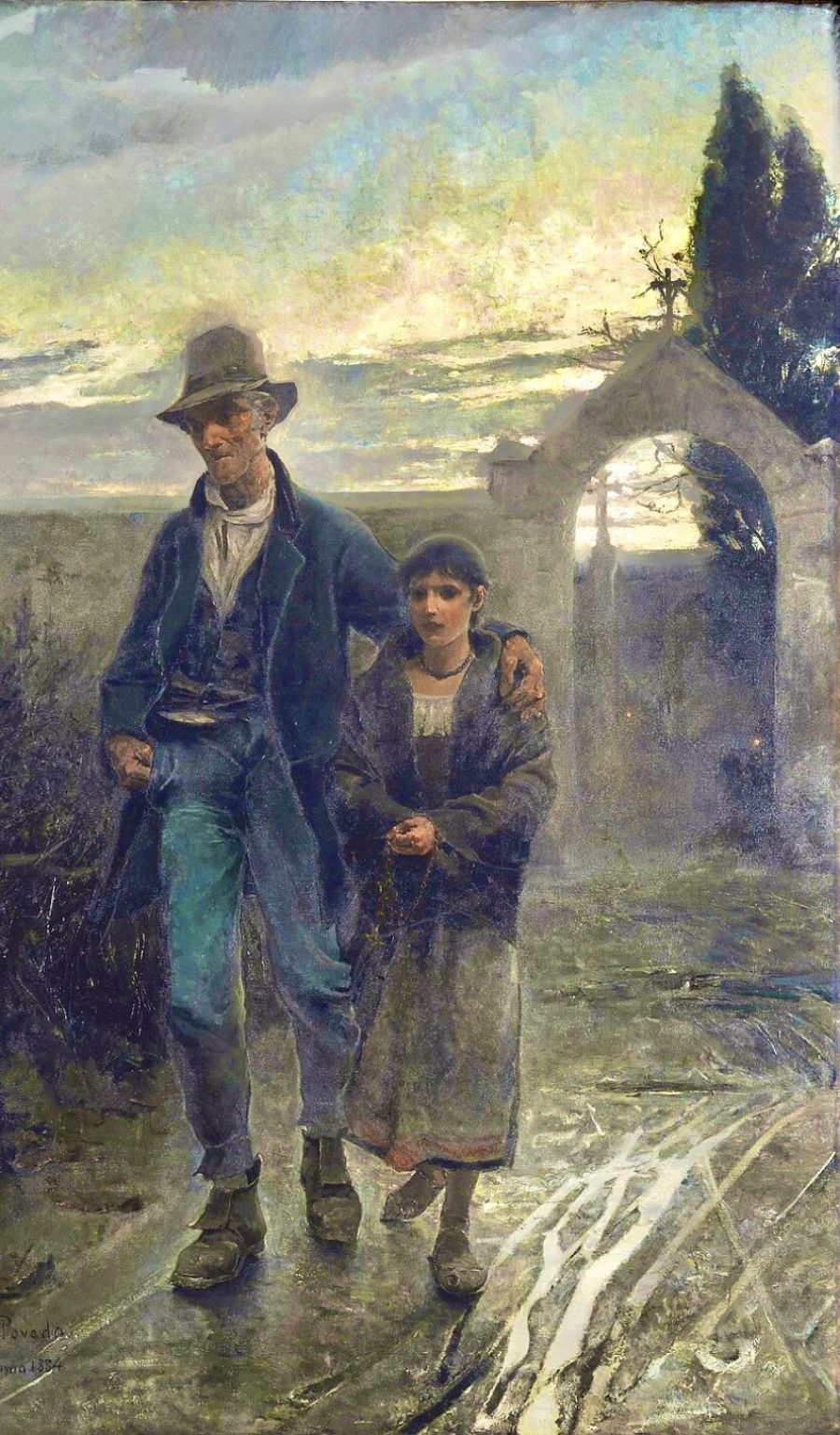
In the epigraph on the portal of a cemetery of a town not too far from me we read an inscription in large letters: «here over the centuries lay affections vanity hopes».

The cold of the end of all beautiful things, and the "ice" of the neoclassical revisited in early twentieth century style... perfectly matched on whitewashed travertine coating.

Instead, Hope attracts us and refreshes the spirit, overcomes outrage, gives meaning to our going.

Already the believers of the first centuries had supplanted the pagan idea of the appointment of our sister death as «dies infaustus», replacing it in its opposite: «dies Natalis».

Day of true Birth, within the same Life now complete, healed.

Life, which precisely proceeds - beyond the temporal or locality parameters. 

Without the fatigue of existing that we experience. Immersed in the vastness of being.

Life without the struggles against oneself, and which continues in the satisfying, blessing Embrace of a Father who does not depersonalize but expands the character existence, the qualities of his sons.

In this blossoming full of light and warmth we are as if we were refounded on the prototype-Project of the authentic Son.

Alliance Trait that we should and perhaps could have been.


Overwhelmed ones with blissful Happiness, for our shadow-part is now included; devoid of judgments and comments.


[Commemoration of All the Faithful Departed,  November 2]

272 Last modified on Sunday, 02 November 2025 12:58
don Giuseppe Nespeca

Giuseppe Nespeca è architetto e sacerdote. Cultore della Sacra scrittura è autore della raccolta "Due Fuochi due Vie - Religione e Fede, Vangeli e Tao"; coautore del libro "Dialogo e Solstizio".

The ancient priest stagnates, and evaluates based on categories of possibilities; reluctant to the Spirit who moves situations
Il sacerdote antico ristagna, e valuta basando su categorie di possibilità; riluttante allo Spirito che smuove le situazioni
«Even through Joseph’s fears, God’s will, his history and his plan were at work. Joseph, then, teaches us that faith in God includes believing that he can work even through our fears, our frailties and our weaknesses. He also teaches us that amid the tempests of life, we must never be afraid to let the Lord steer our course. At times, we want to be in complete control, yet God always sees the bigger picture» (Patris Corde, n.2)
«Anche attraverso l’angustia di Giuseppe passa la volontà di Dio, la sua storia, il suo progetto. Giuseppe ci insegna così che avere fede in Dio comprende pure il credere che Egli può operare anche attraverso le nostre paure, le nostre fragilità, la nostra debolezza. E ci insegna che, in mezzo alle tempeste della vita, non dobbiamo temere di lasciare a Dio il timone della nostra barca. A volte noi vorremmo controllare tutto, ma Lui ha sempre uno sguardo più grande» (Patris Corde, n.2)
Man is the surname of God: the Lord in fact takes his name from each of us - whether we are saints or sinners - to make him our surname (Pope Francis). God's fidelity to the Promise is realized not only through men, but with them (Pope Benedict).
L’uomo è il cognome di Dio: il Signore infatti prende il nome da ognuno di noi — sia che siamo santi, sia che siamo peccatori — per farlo diventare il proprio cognome (Papa Francesco). La fedeltà di Dio alla Promessa si attua non soltanto mediante gli uomini, ma con loro (Papa Benedetto)
In the communities of Galilee and Syria the pagans quickly became a majority - elevated to the rank of sons. They did not submit to nerve-wracking processes, but spontaneously were recognizing the Lord
Nelle comunità di Galilea e Siria i pagani diventavano rapidamente maggioranza - elevati al rango di figli. Essi non si sottoponevano a trafile snervanti, ma spontaneamente riconoscevano il Signore
And thus we must see Christ again and ask Christ: “Is it you?” The Lord, in his own silent way, answers: “You see what I did, I did not start a bloody revolution, I did not change the world with force; but lit many I, which in the meantime form a pathway of light through the millenniums” (Pope Benedict)
E così dobbiamo di nuovo vedere Cristo e chiedere a Cristo: “Sei tu?”. Il Signore, nel modo silenzioso che gli è proprio, risponde: “Vedete cosa ho fatto io. Non ho fatto una rivoluzione cruenta, non ho cambiato con forza il mondo, ma ho acceso tante luci che formano, nel frattempo, una grande strada di luce nei millenni” (Papa Benedetto)
Experts in the Holy Scriptures believed that Elijah's return should anticipate and prepare for the advent of the Kingdom of God. Since the Lord was present, the first disciples wondered what the value of that teaching was. Among the people coming from Judaism the question arose about the value of ancient doctrines…
Gli esperti delle sacre Scritture ritenevano che il ritorno di Elia dovesse anticipare e preparare l’avvento del Regno di Dio. Poiché il Signore era presente, i primi discepoli si chiedevano quale fosse il valore di quell’insegnamento. Tra i provenienti dal giudaismo sorgeva il quesito circa il peso delle dottrine antiche...
Gospels make their way, advance and free, making us understand the enormous difference between any creed and the proposal of Jesus

Due Fuochi due Vie - Vol. 1 Due Fuochi due Vie - Vol. 2 Due Fuochi due Vie - Vol. 3 Due Fuochi due Vie - Vol. 4 Due Fuochi due Vie - Vol. 5 Dialogo e Solstizio I fiammiferi di Maria

duevie.art

don Giuseppe Nespeca

Tel. 333-1329741


Disclaimer

Questo blog non rappresenta una testata giornalistica in quanto viene aggiornato senza alcuna periodicità. Non può pertanto considerarsi un prodotto editoriale ai sensi della legge N°62 del 07/03/2001.
Le immagini sono tratte da internet, ma se il loro uso violasse diritti d'autore, lo si comunichi all'autore del blog che provvederà alla loro pronta rimozione.
L'autore dichiara di non essere responsabile dei commenti lasciati nei post. Eventuali commenti dei lettori, lesivi dell'immagine o dell'onorabilità di persone terze, il cui contenuto fosse ritenuto non idoneo alla pubblicazione verranno insindacabilmente rimossi.







