Dec 15, 2025 Written by 

Magnificat: Religious kinship, and the Snap of Faith

(Lk 1:46-55)


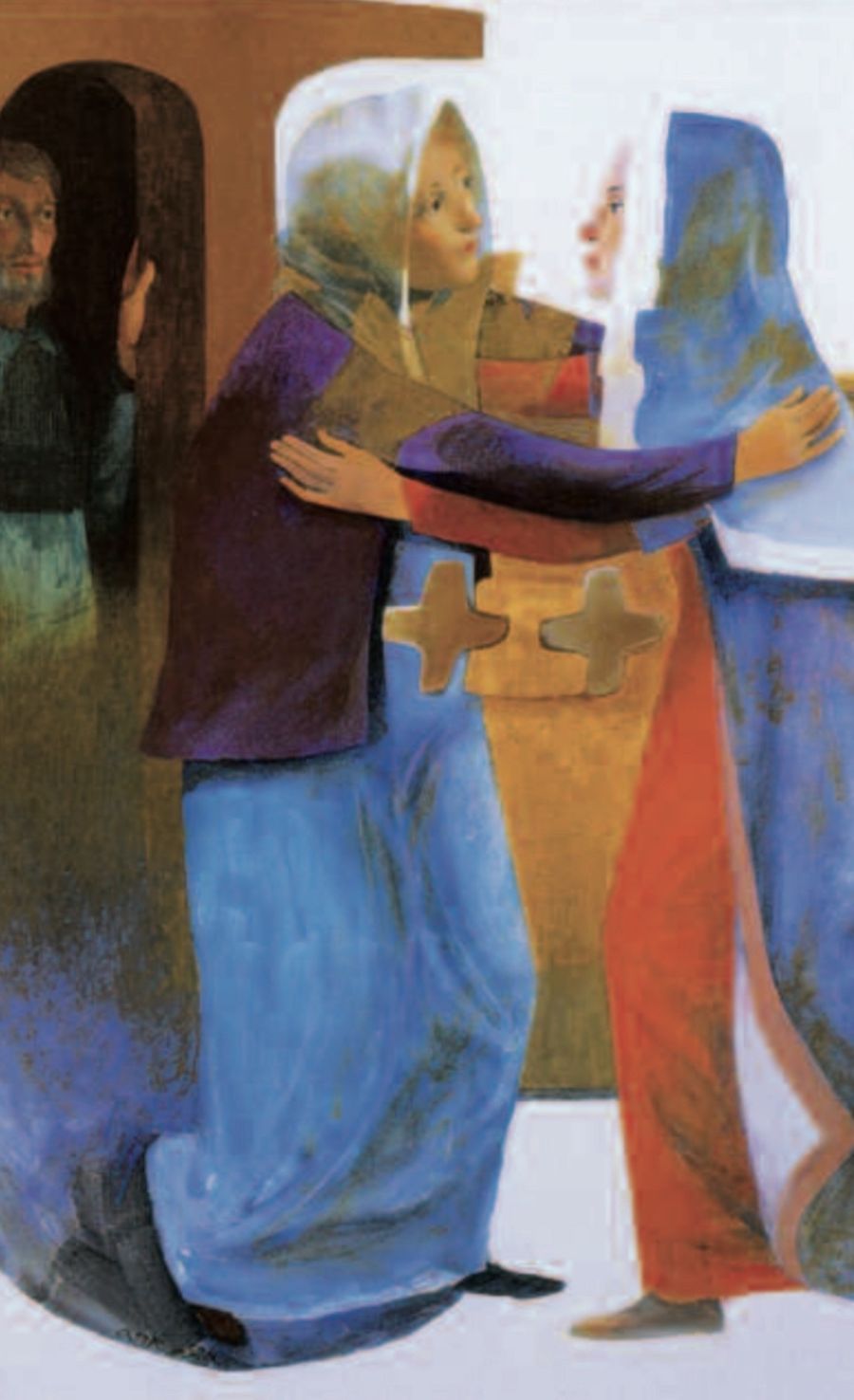
The hymn-song-ensemble of Mary and Elizabeth summarizes and celebrates the history of salvation. It reflects a Judeo-Christian liturgical lauda characteristic of the first communities of 'anawim.

The small and faithful experience the ideal outline of history, of which they paradoxically become the engine.

The two Women give voice to the poor and minority churches, often challenged by the forces of imperial power in dramatic duels.

They depict early assemblies, tiny fraternities; hearths of cohabitation and intimate life.

In them, believing souls experienced a God who does not remain impassive to the cry of the lowly, persecuted.

In a framework of family visitation and (precisely) praise, the whole destination of the new People is reflected.

The difference between the two figures emphasizes the leap of Faith in Mary, compared to the expectations of religious kinship.

In Elizabeth, the First Covenant has already run its full course, and would not go much further.

Human history is barren, but God makes it fruitful with newness and joy, which finally changes the boundaries.

The foreseen ways have come to an end; still blind and submissive to the powers of the earth... They do not make the weak strong.


Faith entirely transmutes the foundations of anti-divine history, because it allows the Spirit to take possession of personal life and fertilize it, making it capable of blessing action.

In Mary's way of believing we grasp within what do not know - because we have a guiding Vision, a sacred image that acts inside, like an innate instinct.

And we already possess what we hope for - because Faith is a stroke of the hand, an action that appropriates, an act-magnet (cf. Heb 11:1).

[Its pinnacle is discovering impossible recovery stupors, starting with the shadowy sides and even that we hate of ourselves - very affair of the discarded].

The Hymn thus expresses the trajectory of the believer's life and the direction of our existence, which recomposes the shaky being in the new harmony of the divine plan.


A classical thesis already from the First Testament: God lifts the wretched from the dust and raises the poor from the rubbish.

He does not address those who are full of themselves, but to whoever  knows how to turn to the depths, and like Mary how to extend them to others.

Within this event of losing oneself in order to find oneself - a logic embodied by both the disciples and the churches - we find the experience of Easter morning.

Lk evangelist of the poor celebrates this reversal of situations in many episodes of people and events at the margins.

The Magnificat also reiterates: the Lord's choices are truly eccentric. Freely He passes for the defeated and the mocked, who find gain in loss and life from death.

Mary in particular becomes an expressive figure of baseness [ταπείνωσις (tapeínōsis, “lowering”), from ταπεινός (tapeinós, “low”); v.48] as the ‘root’ of the transformation of being - into the Unpredictable of God.


He is Faithful.


[Weekday Liturgy, December 22]

159 Last modified on Monday, 22 December 2025 12:01
don Giuseppe Nespeca

Giuseppe Nespeca è architetto e sacerdote. Cultore della Sacra scrittura è autore della raccolta "Due Fuochi due Vie - Religione e Fede, Vangeli e Tao"; coautore del libro "Dialogo e Solstizio".

Stephen's story tells us many things: for example, that charitable social commitment must never be separated from the courageous proclamation of the faith. He was one of the seven made responsible above all for charity. But it was impossible to separate charity and faith. Thus, with charity, he proclaimed the crucified Christ, to the point of accepting even martyrdom. This is the first lesson we can learn from the figure of St Stephen: charity and the proclamation of faith always go hand in hand (Pope Benedict)
La storia di Stefano dice a noi molte cose. Per esempio, ci insegna che non bisogna mai disgiungere l'impegno sociale della carità dall'annuncio coraggioso della fede. Era uno dei sette incaricato soprattutto della carità. Ma non era possibile disgiungere carità e annuncio. Così, con la carità, annuncia Cristo crocifisso, fino al punto di accettare anche il martirio. Questa è la prima lezione che possiamo imparare dalla figura di santo Stefano: carità e annuncio vanno sempre insieme (Papa Benedetto)
“They found”: this word indicates the Search. This is the truth about man. It cannot be falsified. It cannot even be destroyed. It must be left to man because it defines him (John Paul II)
“Trovarono”: questa parola indica la Ricerca. Questa è la verità sull’uomo. Non la si può falsificare. Non la si può nemmeno distruggere. La si deve lasciare all’uomo perché essa lo definisce (Giovanni Paolo II)
Thousands of Christians throughout the world begin the day by singing: “Blessed be the Lord” and end it by proclaiming “the greatness of the Lord, for he has looked with favour on his lowly servant” (Pope Francis)
Migliaia di cristiani in tutto il mondo cominciano la giornata cantando: “Benedetto il Signore” e la concludono “proclamando la sua grandezza perché ha guardato con bontà l’umiltà della sua serva” (Papa Francesco)
The new Creation announced in the suburbs invests the ancient territory, which still hesitates. We too, accepting different horizons than expected, allow the divine soul of the history of salvation to visit us
La nuova Creazione annunciata in periferia investe il territorio antico, che ancora tergiversa. Anche noi, accettando orizzonti differenti dal previsto, consentiamo all’anima divina della storia della salvezza di farci visita
Luke the Evangelist of the Poor celebrates the reversals of the situation: pharisee and tax collector, prodigal son and firstborn, samaritan and priest-levite, Lazarus and rich man, first and last place, Beatitudes and “woe to you”... so in the anthem of the Magnificat
Luca evangelista dei poveri celebra i ribaltamenti di situazione: fariseo e pubblicano, figlio prodigo e primogenito, samaritano e sacerdote-levita, Lazzaro e ricco epulone, primo e ultimo posto, Beatitudini e “guai”... così nell’inno del Magnificat
In these words we find the core of biblical truth about St. Joseph; they refer to that moment in his life to which the Fathers of the Church make special reference (Redemtoris Custos n.2)
In queste parole è racchiuso il nucleo centrale della verità biblica su san Giuseppe, il momento della sua esistenza a cui in particolare si riferiscono i padri della Chiesa (Redemtoris Custos n.2)
The ancient priest stagnates, and evaluates based on categories of possibilities; reluctant to the Spirit who moves situations
Il sacerdote antico ristagna, e valuta basando su categorie di possibilità; riluttante allo Spirito che smuove le situazioni

Due Fuochi due Vie - Vol. 1 Due Fuochi due Vie - Vol. 2 Due Fuochi due Vie - Vol. 3 Due Fuochi due Vie - Vol. 4 Due Fuochi due Vie - Vol. 5 Dialogo e Solstizio I fiammiferi di Maria

duevie.art

don Giuseppe Nespeca

Tel. 333-1329741


Disclaimer

Questo blog non rappresenta una testata giornalistica in quanto viene aggiornato senza alcuna periodicità. Non può pertanto considerarsi un prodotto editoriale ai sensi della legge N°62 del 07/03/2001.
Le immagini sono tratte da internet, ma se il loro uso violasse diritti d'autore, lo si comunichi all'autore del blog che provvederà alla loro pronta rimozione.
L'autore dichiara di non essere responsabile dei commenti lasciati nei post. Eventuali commenti dei lettori, lesivi dell'immagine o dell'onorabilità di persone terze, il cui contenuto fosse ritenuto non idoneo alla pubblicazione verranno insindacabilmente rimossi.







