Feb 14, 2026 Written by 

Lenten Spirituality, and the enemy who looks like a friend

Faith, Temptations: our success

(Mt 4:1-11  Mc 1:12-15  Lc 4:1-13)


Only the man of God is tempted.

In the Bible, temptation is not a kind of danger or seduction for death, but an opportunity for life.

Even more: a relaunch from the usual laces.

When existence runs off without jolts, here is instead the ‘earthquake of flattery’... a trial that puts back in the balance.

Lenten spirituality.

In God's plan, the test of Faith doesn’t come to destroy minds and life, but to disturb the swampy reality of obligations contracted in the quiet of conformist etiquette.

In fact, in the labels we are not ourselves, but a role: here it’s impossible to seriously conform to Christ.

Every danger comes for a healthy jolt, of image too - and to move us.

The exodus stimulates us to take a leap forward; not to bury existence in the anthology of uncritical mechanisms under conditions.

The passage is narrow and it’s also obligatory; hurts. But it spurs so that we can meet again ourselves, our brothers and the world.

Providence presses: it’s educating us to look both every detail and the fundamental option in face.

To get out of dangers, ‘seductions’ or disturbances, we are obliged to look inside and bring out all the resources, even those unknown (or to which we have not granted credit).

The difficulty and the crisis force us to find solutions, give space to the neglected and shaded sides; see well, ask for help; get informed, enter into a qualitative relationship and compare ourselves.

Of necessity, virtue: after attraction and enticement or trial, the renewed point of view, reaffirmed by a new evaluation, questions the soul about the calibre of choices and our own infirmities.

Unsteady situations themselves have something to tell us: they come from the deepest layers of being, which we must encounter - and they take the form of mouldable energies, to invest.

The Calls to revolutionize opinions of oneself and of things - vocations to a ‘new birth’ - are not incitements for the worst, nor spiritual humiliations.

The "crosses" and even the dazzles are a territory of pain that leads to intimate contact with our Source, which re-arouses us from time to time.


The man who is always listening to his own Core and remains faithful to the singular dignity and uniqueness of the Mission, however, must bear the pressures of a kind of evil that only instigates death.

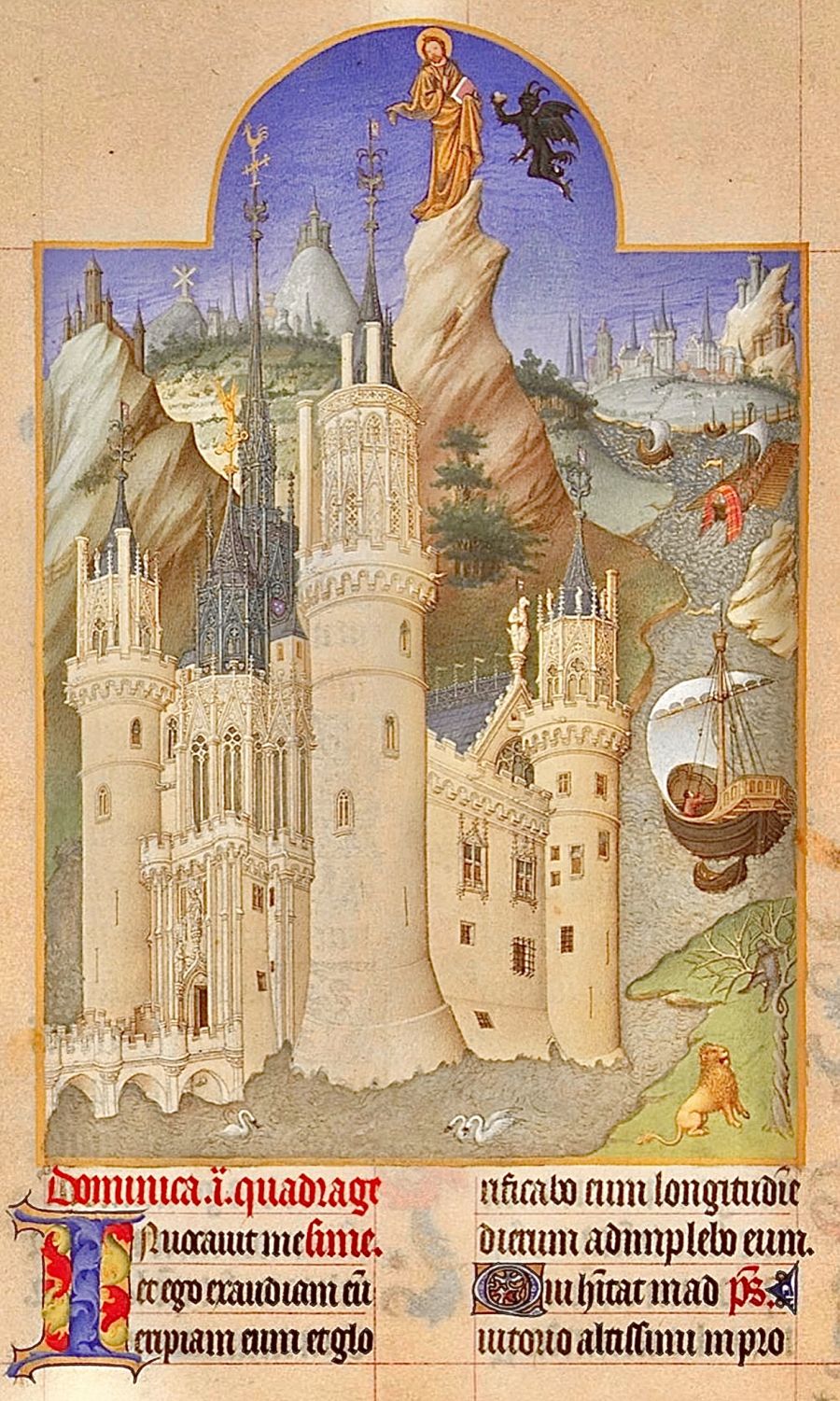
Mt and Lk describe these (‘apparently friendly’, for success) enticements in three symbolic pictures:

the relationship with things [turning stones into bread]; with others [temptation of kingdoms]; with God [Trust in the Father's Action].


In the Holy Scriptures a curious fact emerges: spiritually weak people are never tempted! And the other way around is also true.

It’s the way of living and internalizing the lightning bolt or the time of Temptation that distinguishes Faith from the banality of devotion any.


[1st Sunday in Lent,  February 22, 2026]

616 Last modified on Sunday, 22 February 2026 11:59
don Giuseppe Nespeca

Giuseppe Nespeca è architetto e sacerdote. Cultore della Sacra scrittura è autore della raccolta "Due Fuochi due Vie - Religione e Fede, Vangeli e Tao"; coautore del libro "Dialogo e Solstizio".

First, the world of the Bible presents us with a new image of God. In surrounding cultures, the image of God and of the gods ultimately remained unclear and contradictory (Deus Caritas est n.9)
Vi è anzitutto la nuova immagine di Dio. Nelle culture che circondano il mondo della Bibbia, l'immagine di dio e degli dei rimane, alla fin fine, poco chiara e in sé contraddittoria (Deus Caritas est n.9)
God loves the world and will love it to the end. The Heart of the Son of God pierced on the Cross and opened is a profound and definitive witness to God’s love. Saint Bonaventure writes: “It was a divine decree that permitted one of the soldiers to open his sacred wide with a lance… The blood and water which poured out at that moment was the price of our salvation” (John Paul II)
Il mondo è amato da Dio e sarà amato fino alla fine. Il Cuore del Figlio di Dio trafitto sulla croce e aperto, testimonia in modo profondo e definitivo l’amore di Dio. Scriverà San Bonaventura: “Per divina disposizione è stato permesso che un soldato trafiggesse e aprisse quel sacro costato. Ne uscì sangue ed acqua, prezzo della nostra salvezza” (Giovanni Paolo II)
Thus, paradoxically, from a sign of condemnation, death and failure, the Cross becomes a sign of redemption, life and victory, through faith, the fruits of salvation can be gathered (Pope Benedict)
Così la Croce, paradossalmente, da segno di condanna, di morte, di fallimento, diventa segno di redenzione, di vita, di vittoria, in cui, con sguardo di fede, si possono scorgere i frutti della salvezza (Papa Benedetto)
[Nicodemus] felt the fascination of this Rabbi, so different from the others, but could not manage to rid himself of the conditioning of his environment that was hostile to Jesus, and stood irresolute on the threshold of faith (Pope Benedict)
[Nicodemo] avverte il fascino di questo Rabbì così diverso dagli altri, ma non riesce a sottrarsi ai condizionamenti dell’ambiente contrario a Gesù e resta titubante sulla soglia della fede (Papa Benedetto)
Those wounds that, in the beginning were an obstacle for Thomas’s faith, being a sign of Jesus’ apparent failure, those same wounds have become in his encounter with the Risen One, signs of a victorious love. These wounds that Christ has received for love of us help us to understand who God is and to repeat: “My Lord and my God!” Only a God who loves us to the extent of taking upon himself our wounds and our pain, especially innocent suffering, is worthy of faith (Pope Benedict)
Quelle piaghe, che per Tommaso erano dapprima un ostacolo alla fede, perché segni dell’apparente fallimento di Gesù; quelle stesse piaghe sono diventate, nell’incontro con il Risorto, prove di un amore vittorioso. Queste piaghe che Cristo ha contratto per amore nostro ci aiutano a capire chi è Dio e a ripetere anche noi: “Mio Signore e mio Dio”. Solo un Dio che ci ama fino a prendere su di sé le nostre ferite e il nostro dolore, soprattutto quello innocente, è degno di fede (Papa Benedetto)
We see that the disciples are still closed in their thinking […] How does Jesus answer? He answers by broadening their horizons […] and he confers upon them the task of bearing witness to him all over the world, transcending the cultural and religious confines within which they were accustomed to think and live (Pope Benedict)
Vediamo che i discepoli sono ancora chiusi nella loro visione […] E come risponde Gesù? Risponde aprendo i loro orizzonti […] e conferisce loro l’incarico di testimoniarlo in tutto il mondo oltrepassando i confini culturali e religiosi entro cui erano abituati a pensare e a vivere (Papa Benedetto)

Due Fuochi due Vie - Vol. 1 Due Fuochi due Vie - Vol. 2 Due Fuochi due Vie - Vol. 3 Due Fuochi due Vie - Vol. 4 Due Fuochi due Vie - Vol. 5 Dialogo e Solstizio I fiammiferi di Maria

duevie.art

don Giuseppe Nespeca

Tel. 333-1329741


Disclaimer

Questo blog non rappresenta una testata giornalistica in quanto viene aggiornato senza alcuna periodicità. Non può pertanto considerarsi un prodotto editoriale ai sensi della legge N°62 del 07/03/2001.
Le immagini sono tratte da internet, ma se il loro uso violasse diritti d'autore, lo si comunichi all'autore del blog che provvederà alla loro pronta rimozione.
L'autore dichiara di non essere responsabile dei commenti lasciati nei post. Eventuali commenti dei lettori, lesivi dell'immagine o dell'onorabilità di persone terze, il cui contenuto fosse ritenuto non idoneo alla pubblicazione verranno insindacabilmente rimossi.







