Apr 1, 2026 Written by 

In the midst and wounded, or ghost

(Lk 24:35-48)


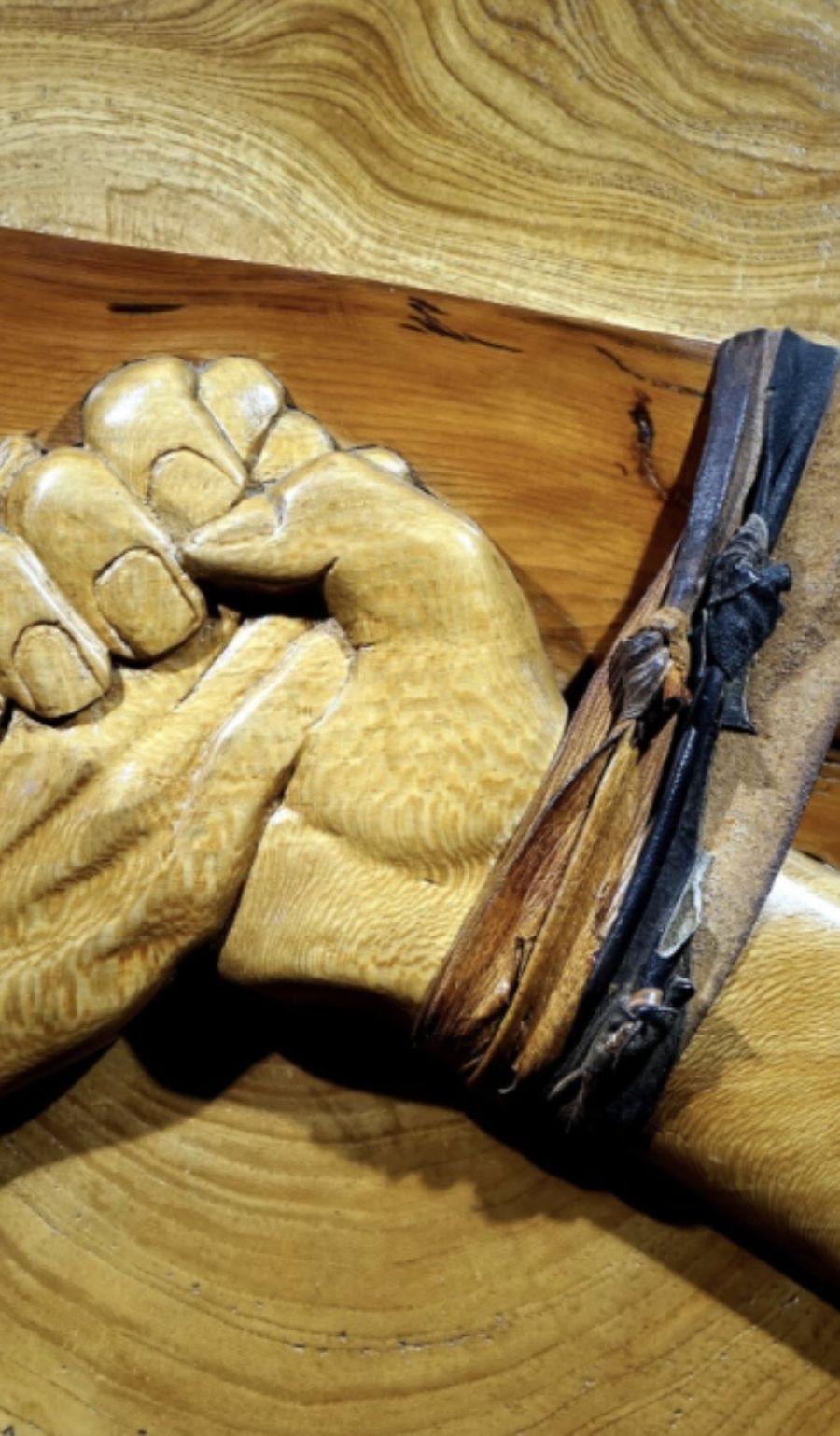
We do not recognize a person by hands and feet (v.39).

The Risen One has a life that escapes the perception of the senses, however the Resurrection does not cancel the ‘person’, but expands it.

The identity and the being that distinguishes it is of another nature, but the heart is that, characterizing. Love to the end: unsparing action [hands] and walk [feet], which non-faith marginalizes, humiliates, kills.

One does not grasp Christ outside the experience of sharing, witnessing, Mission - tip of the text - that extends among all people.

An evangelization starting from direct heralds and enthusiastic auctioneers. Centered ones in the nucleus of the Announcement, which moves everything and gives access (vv.35ff).

And finally, thanks to the intelligence of the Scriptures - which brings us out of commonplaces and vague interpretative automatisms.

All of this, in the specific listening and forgiveness that makes us participate; in the commitment that risks, walks, and talks.


The human plan of the Creator has assumed a pedagogical configuration in the Law; it was taken up, actualized and purified by the prophets, and sung in the psalms (v. 44).

But those who «see and touch» are disciples who involve themselves to the point of making their soul movements, their exoduses to the peripheries, and their passionate gestures, coincide with the own love wounds of the Master: «Palpate me and see» (v.39).

In the early days, believers - here and there - made it through thanks to the help of fraternities in which the Person of the Lord ‘manifested’ himself persuasively, because «in the midst» (v.36).

Not "on top" or "in front", but brother to brother: a testimony of the divine (v.48).

He ‘revealed’ himself as Living, in Conviviality - a key Word, climax of the entire Bible.

Sharing that also found the ways of sensitive, personal intimacy and confidence: «They handed him a portion» (v.42).

For this reason the Proclamation had to start from Jerusalem, the first of the «pagan peoples» [v.47 Greek text] in need of evangelization!

And thereby not making Christ a ghost (v.37).


In the early communities, listening to the personal and communal inner world was especially pronounced, because the direction of travel proposed by the Master seemed to be all backwards [in the opposite of institution].

Despite the chaos of external securities, the crossing fear-to-Freedom came from a tolerant perception - starting from visceral cores of experience.

The very bottlenecks accentuated change and internalization, and wrenched disciples out of the habit of setting up conformist harmonies.

One then relied more willingly on the tracks of the soul, thus meeting one's deep nature; new axis of life, starting from the ‘roots’.

The search for a new compass for one's paths, the loss of predictable references, social discomfort, all this made one in contact with oneself and others, authentically.


That feeling of anxiety, malaise and sores, allowed them to know their Calling... even if the external way they saw themselves and dealt with normal or spiritual existence, could already satisfy [the outside].

Having to move from the habits, no one escaped the most precious revelation anymore: of the primordial and humanizing intimacy deposited in the fraternity of the new crucified Way.

Educated by the paradox of narrowness, the uncertain apostles thus became step by step the seekers of a trace, of a more pertinent course.

Pilgrims of unexpected codes. «Witnesses» (v. 48): mothers and fathers  of a new humanity.


[Thursday between the Easter Octave, April 9, 2026]

267 Last modified on Thursday, 09 April 2026 12:08
don Giuseppe Nespeca

Giuseppe Nespeca è architetto e sacerdote. Cultore della Sacra scrittura è autore della raccolta "Due Fuochi due Vie - Religione e Fede, Vangeli e Tao"; coautore del libro "Dialogo e Solstizio".

This Name clearly expresses that the God of the Bible is not some kind of monad closed in on itself and satisfied with his own self-sufficiency but he is life that wants to communicate itself, openness, relationship [Pope Benedict]
Questo nome esprime dunque chiaramente che il Dio della Bibbia non è una sorta di monade chiusa in se stessa e soddisfatta della propria autosufficienza, ma è vita che vuole comunicarsi, è apertura, relazione [Papa Benedetto]
There, however, in the place that should have been taken up by the encounter between God and man, he found livestock merchants and money-changers who occupied this place of prayer with their commerce […] In the temple's purification, however, it was a matter of more than fighting abuses. A new time in history was foretold (Pope Benedict)
Ma là dove doveva esservi lo spazio dell’incontro tra Dio e l’uomo, Egli trova commercianti di bestiame e cambiavalute che occupano con i loro affari il luogo di preghiera […] Nella purificazione del tempio, però, si tratta di più che della lotta agli abusi. È preconizzata una nuova ora della storia (Papa Benedetto)
«Ask Jesus for the grace to follow him closely», so as not to leave him alone, thus overcoming the temptations of looking at ourselves to «share the cake» of personal interests [Pope Francis]
«Chiedere a Gesù la grazia di seguirlo da vicino», per non lasciarlo solo, superando così le tentazioni di guardare noi stessi per «spartirsi la torta» degli interessi personali [Papa Francesco]
First, in Nazareth, he makes him grow, raises him, educates him, but then follows him: "Your mother is there" (Pope Francis)
Prima, a Nazareth, lo fa crescere, lo alleva, lo educa, ma poi lo segue: “La tua madre è lì” (Papa Francesco)
Unity is not made with glue [...] The great prayer of Jesus is to «resemble» the Father (Pope Francis)
L’Unità non si fa con la colla […] La grande preghiera di Gesù» è quella di «assomigliare» al Padre (Papa Francesco)
Divisions among Christians, while they wound the Church, wound Christ; and divided, we cause a wound to Christ: the Church is indeed the body of which Christ is the Head (Pope Francis)
Le divisioni tra i cristiani, mentre feriscono la Chiesa, feriscono Cristo, e noi divisi provochiamo una ferita a Cristo: la Chiesa infatti è il corpo di cui Cristo è capo (Papa Francesco)
The glorification that Jesus asks for himself as High Priest, is the entry into full obedience to the Father, an obedience that leads to his fullest filial condition [Pope Benedict]
La glorificazione che Gesù chiede per se stesso, quale Sommo Sacerdote, è l'ingresso nella piena obbedienza al Padre, un'obbedienza che lo conduce alla sua più piena condizione filiale [Papa Benedetto]
Will he find a response? Or will what happened to the vine of which God says in Isaiah: "He waited for it to produce grapes but it yielded wild grapes", also happen to us? Is not our Christian life often far more like vinegar than wine? [Pope Benedict]
Troverà una risposta? O accade con noi come con la vigna, di cui Dio dice in Isaia: "Egli aspettò che producesse uva, ma essa fece uva selvatica"? La nostra vita cristiana spesso non è forse molto più aceto che vino? [Papa Benedetto]

Due Fuochi due Vie - Vol. 1 Due Fuochi due Vie - Vol. 2 Due Fuochi due Vie - Vol. 3 Due Fuochi due Vie - Vol. 4 Due Fuochi due Vie - Vol. 5 Dialogo e Solstizio I fiammiferi di Maria

duevie.art

don Giuseppe Nespeca

Tel. 333-1329741


Disclaimer

Questo blog non rappresenta una testata giornalistica in quanto viene aggiornato senza alcuna periodicità. Non può pertanto considerarsi un prodotto editoriale ai sensi della legge N°62 del 07/03/2001.
Le immagini sono tratte da internet, ma se il loro uso violasse diritti d'autore, lo si comunichi all'autore del blog che provvederà alla loro pronta rimozione.
L'autore dichiara di non essere responsabile dei commenti lasciati nei post. Eventuali commenti dei lettori, lesivi dell'immagine o dell'onorabilità di persone terze, il cui contenuto fosse ritenuto non idoneo alla pubblicazione verranno insindacabilmente rimossi.







