Jun 20, 2026 Written by 

Reputation and domestications, or Cross

Reputation and obedience: crossroads of the Truth of Faith

Mt 10:37-42 (34-42)


We ask ourselves: what prevents growth? What conversely makes us intimate with the Father?

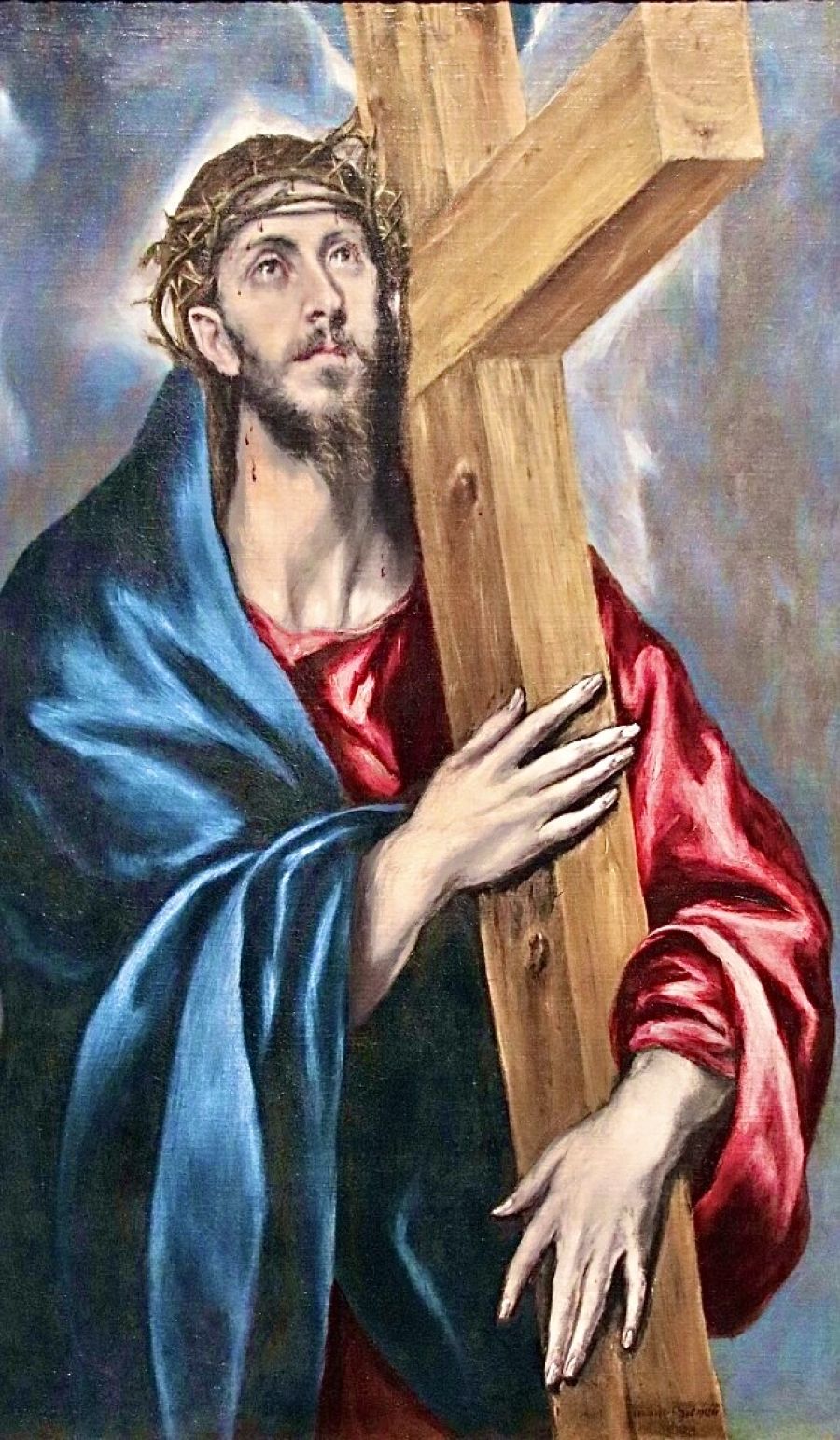
To bear the Cross is to become "obedient" to one's personal Mission. Christ wants new and free people; not celebrities.

The apostle's identification is with the life of Jesus of Nazareth, the public rebel against official authorities, friend of publicans and sinners (Mt 11:19) condemned for lack of conformity.

Only by pushing down and meeting the same rejection, do we encounter God (v.40) in Freedom from all forms of conditioning.

The faithful is not recognized by heroic deeds (vv.41-42), or prestige - but in social choice.

It is an instinctive predilection for the lower class; the one that does not resist the Newness of God.

The missionary is not characterised by extraordinary qualities: he stands out in smallness (v.42).

Those who only appreciate great things do not build the new Kingdom, because underneath they cultivate the old ideology of power, that condemns only by proclamations.


A comparison of the parallel Greek-language texts of Mt 10:38 and Lk 14:27 (Jn 12:26) gives insight into the meaning of «taking up» or «lifting up the cross» for a disciple who relives Christ and communicates Him in human history.

The friend of Jesus stakes his honour. His source of life achieves total self-giving even in terms of public consideration.

After the court sentence, the condemned man was forced to carry the horizontal arm of the gallows on his shoulders.

It was the most harrowing moment, because of utmost loneliness and perceived failure.

The unfortunate and already shamed man had to thus proceed to the place of crucifixion, passing between two wings of the crowd who, out of religious duty, mocked and battered the wretch - deemed cursed by God.

Therefore, to his intimates Jesus does not point to the Cross in the corny sense of a necessary endurance of life's inevitable contrarieties, which then through forced exercise would chisel out souls more capable of coping [today we say: resilient].

Compared to the usual proposals of healthy outer and inner discipline, which are the same for everyone and only useful to keep things as usual, the Master is instead suggesting a much more radical behaviour.

The Lord points to an asceticism totally different from that of the many ancient beliefs, even inverted: the paradoxical opportunity of contemptuous rejection in public opinion.


The Father does not give any 'cross', nor are we obliged to accept it out of obedience or force majeure: the disciple «takes it up» (v.38) in a non-passive manner, regardless of the credit he expects!

In short, the follower of Christ renounces reputation and any outward showcase of consensus.

It is an essential, propulsive, diriment cue of the person of Faith. Commitment to renown is totally incompatible; it does not spread life without limits.

He who is tied to his good reputation, to the roles, to the character to play, to the task, to the level he has acquired, will never resemble the Lord.

So even today, the announcement of the authentic Messiah creates divisions.

The «sword» of his Person (v.34) separates each one's affair from the world of values of the clan to which he belongs, or from the idea of respectability.

And it charges every apostle of the Cross with consequent mockery.

Yet the 'night' that is pressing in can make us live more daringly, prepared for action and dialogue.

So: no bond of domestication - not even with God.


[13th Sunday in O.T.  June 28, 2026]

305 Last modified on Sunday, 28 June 2026 11:59
don Giuseppe Nespeca

Giuseppe Nespeca è architetto e sacerdote. Cultore della Sacra scrittura è autore della raccolta "Due Fuochi due Vie - Religione e Fede, Vangeli e Tao"; coautore del libro "Dialogo e Solstizio".

More than 600 precepts are mentioned in the Law of Moses. How should the great commandment be distinguished among these? (Pope Francis)
Nella Legge di Mosè sono menzionati oltre seicento precetti. Come distinguere, tra tutti questi, il grande comandamento? (Papa Francesco)
The invitation has three characteristics: freely offered, breadth and universality. Many people were invited, but something surprising happened: none of the intended guests came to take part in the feast, saying they had other things to do; indeed, some were even indifferent, impertinent, even annoyed (Pope Francis)
L’invito ha tre caratteristiche: la gratuità, la larghezza, l’universalità. Gli invitati sono tanti, ma avviene qualcosa di sorprendente: nessuno dei prescelti accetta di prendere parte alla festa, dicono che hanno altro da fare; anzi alcuni mostrano indifferenza, estraneità, perfino fastidio (Papa Francesco)
Those who are considered the "last", if they accept, become the "first", whereas the "first" can risk becoming the "last" (Pope Benedict)
Proprio quelli che sono considerati "ultimi", se lo accettano, diventano "primi", mentre i "primi" possono rischiare di finire "ultimi" (Papa Benedetto)
The dialogue of Jesus with the rich young man, related in the nineteenth chapter of Saint Matthew's Gospel, can serve as a useful guide for listening once more in a lively and direct way to his moral teaching [Veritatis Splendor n.6]
Il dialogo di Gesù con il giovane ricco, riferito nel capitolo 19 del Vangelo di san Matteo, può costituire un'utile traccia per riascoltare in modo vivo e incisivo il suo insegnamento morale [Veritatis Splendor n.6]
St Augustine rightly commented: “Christ showed himself indifferent to her, not in order to refuse her his mercy but rather to inflame her desire for it” (Sermo 77, 1: PL 38, 483) [Pope Benedict]
Sant’Agostino commenta giustamente: “Cristo si mostrava indifferente verso di lei, non per rifiutarle la misericordia, ma per infiammarne il desiderio” (Sermo 77, 1: PL 38, 483) [Papa Benedetto]
In the divine attitude justice is pervaded with mercy, whereas the human attitude is limited to justice. Jesus exhorts us to open ourselves with courage to the strength of forgiveness, because in life not everything can be resolved with justice. We know this (Pope Francis)
Nell’atteggiamento divino la giustizia è pervasa dalla misericordia, mentre l’atteggiamento umano si limita alla giustizia. Gesù ci esorta ad aprirci con coraggio alla forza del perdono, perché nella vita non tutto si risolve con la giustizia; lo sappiamo (Papa Francesco)
The Second Vatican Council's Constitution on the Sacred Liturgy refers precisely to this Gospel passage to indicate one of the ways that Christ is present:  "He is present when the Church prays and sings, for he has promised "where two or three are gathered together in my name there am I in the midst of them' (Mt 18: 20)" [Sacrosanctum Concilium, n. 7]
La Costituzione sulla Sacra Liturgia del Concilio Vaticano II si riferisce proprio a questo passo del Vangelo per indicare uno dei modi della presenza di Cristo: "Quando la Chiesa prega e canta i Salmi, è presente Lui che ha promesso: "Dove sono due o tre riuniti nel mio nome, io  sono in mezzo a loro" (Mt 18, 20)" [Sacrosanctum Concilium, 7]
For Jesus we are not a "mass", a "multitude"! We are individual "persons" with an eternal value, both as creatures and as re-deemed persons! He knows us! He knows me, and loves me and gave himself for me! (Gal 2:20) [John Paul II]

Due Fuochi due Vie - Vol. 1 Due Fuochi due Vie - Vol. 2 Due Fuochi due Vie - Vol. 3 Due Fuochi due Vie - Vol. 4 Due Fuochi due Vie - Vol. 5 Dialogo e Solstizio I fiammiferi di Maria

duevie.art

don Giuseppe Nespeca

Tel. 333-1329741


Disclaimer

Questo blog non rappresenta una testata giornalistica in quanto viene aggiornato senza alcuna periodicità. Non può pertanto considerarsi un prodotto editoriale ai sensi della legge N°62 del 07/03/2001.
Le immagini sono tratte da internet, ma se il loro uso violasse diritti d'autore, lo si comunichi all'autore del blog che provvederà alla loro pronta rimozione.
L'autore dichiara di non essere responsabile dei commenti lasciati nei post. Eventuali commenti dei lettori, lesivi dell'immagine o dell'onorabilità di persone terze, il cui contenuto fosse ritenuto non idoneo alla pubblicazione verranno insindacabilmente rimossi.







