Jul 10, 2026 Written by 

A new God, without planning: perhaps a deluded one?

In the difference between common religiosity and Faith

(Mt 13:1-23)


The parables compare the lived reality and the world of the Spirit:

«Others [grains] then fell on the earth the beautiful one and bore fruit, some hundred, some sixty, some thirty» (v.8).

Palestine’ stony terrain and scorching climate did not make it easy for the workers who lived on agriculture.

The lack of rain and the intrusion into the fields of those who wanted to shorten the path, destroyed the plants.

Tiring action and few tangible results.

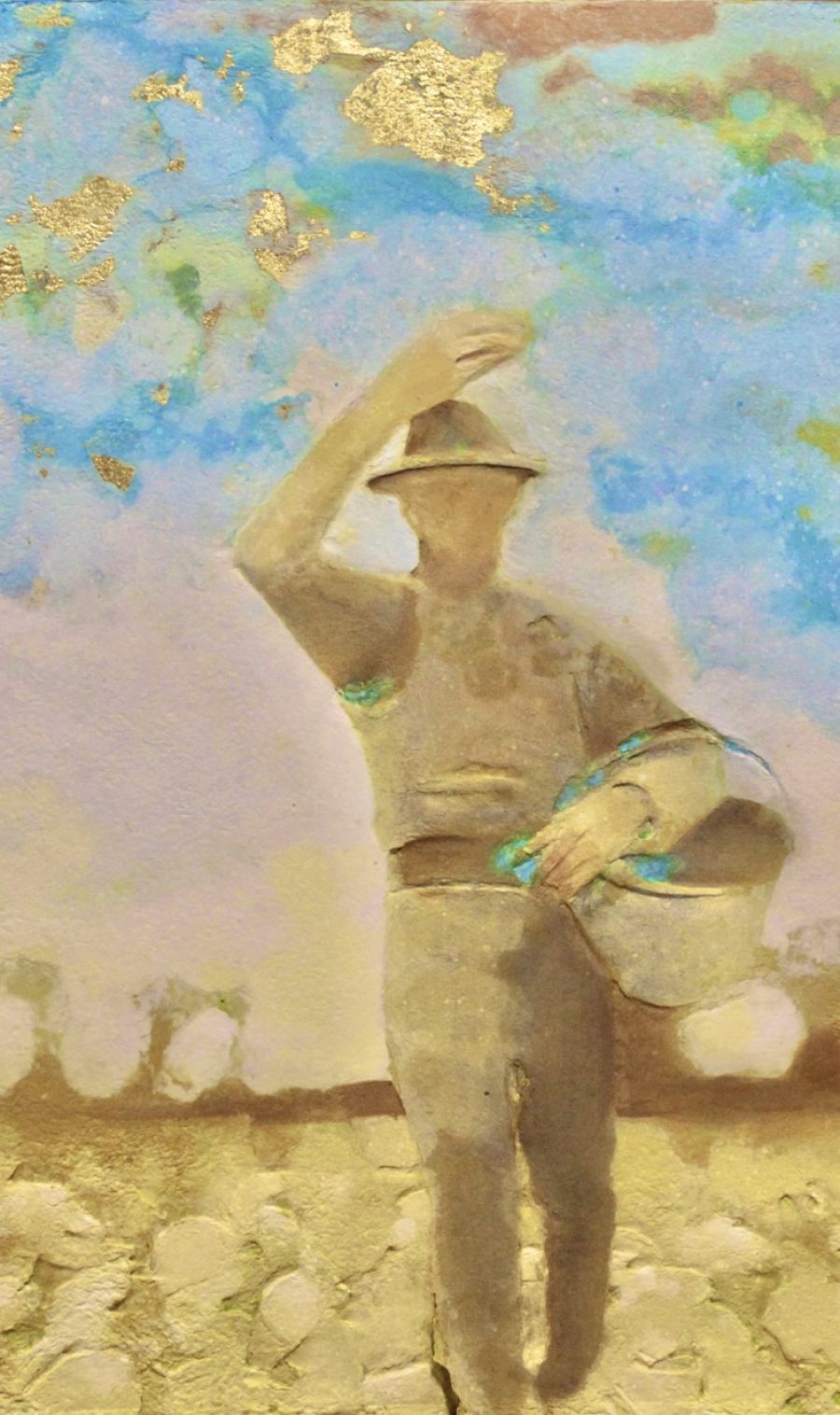
Despite the enormous difficulties, every year the peasant threw grains with a wide hand, generously - and ploughed, animated by confidence in the inner life force of the seed and in the bounty of nature.

Ploughing was after sowing, to avoid that the soils turned over dried immediately under the powerful heat, and did not allow the grains to take root thanks to a minimum of moisture.

So the sower did not select the different types of ground prematurely.


The Seed already works: the new ‘Kingdom that Comes’ is not glorious, but here and there it takes root and produces - even where you do not expect.

According to the ancient religious mentality it seems a madness, but the divine Farmer does not choose the type of "land", nor discriminates on the basis of the percentage of production - although it would seem easy to predict.

The Sower even accepts that his ‘grain’ fallen on the «beautiful» [v.8 Greek text] ground, fruits differently: one hundred, sixty, thirty for one.

The term «beautiful» (in the Eastern sense) means the full and fruitful land [the soul and work of the most intimate, even anonymous ones].


The Lord means that a wise commitment to evangelization cannot be measured with fussiness.

His Word remains as a Beginning thrown into the human heart by the One who is neither stingy nor exclusive - but magnanimous.

In this way, the Church, his new People, is a small alternative world to both the Empire and selective religions.

The new Rabbi did not intend to carve out better disciples than others - isolated from the reality of the human family.

He was proposing a new lifestyle, cohabiting.

In short, God does not force the growth of the ‘seed’ in each of us, in an abstract way; He waits patiently.

Even accepts that it is born badly or that it does not arise at all. He knows where to go.


Since overflowingly spreads on all kinds of hearts (even on asphalt), He foresees already that will be accused of being unwise.

But He does not worry about the quantity, nor about the immediate outward fruits of His ‘grain’.

He does not care that the work is "effective right from the start"!

Such is the amiable, humanizing and divine (parental) Tolerance that saves. Loveableness that does not kidnap us every moment, to plan.

Rather, all this is to make us understand that He is not a calculating and miserly God, external, tight and biased; but a munificent and conciliatory Father.

Lord of the Kingdom who does not wait first for our little ‘perfections’.


The metaphor that follows the initial parable is intended to emphasize that any lack of result is not to be attributed to the lack of vitality of the Seed, nor to the divine Work, but to man’s freedom; to his condition of limit or incoherence.


Unfortunately, from the earliest generations of believers, the positive Call of Jesus has been reinterpreted somewhat backwards: with moralistic and individualistic overtones (vv.10-23) that have undermined its genuineness.

In this way, the initial proposal of personal Faith became contaminated with the customary purist and fall-back [guilt-ridden] outlook typical of the surrounding philosophies and religions, as well as common thought.

Certain configurations of ecclesial order subsequently normalized the same exceptional power of the Message; so unprecedented. In particular, the new sense of adequacy, confidence and self-esteem that the Son of God intended to communicate to His friends, and to the world of the least.


[15th Sunday in O.T. (year A)  July 12, 2026]

358 Last modified on Sunday, 12 July 2026 12:46
don Giuseppe Nespeca

Giuseppe Nespeca è architetto e sacerdote. Cultore della Sacra scrittura è autore della raccolta "Due Fuochi due Vie - Religione e Fede, Vangeli e Tao"; coautore del libro "Dialogo e Solstizio".

Consequently, just as for Christ carrying the cross was not an option but a mission to be embraced for love, so it is for Christians too. In our world today, where the forces that divide and destroy seem to dominate, Christ does not cease to offer to all his clear invitation [Pope Benedict]
Come per Cristo, così pure per i cristiani portare la croce non è dunque facoltativo, ma è una missione da abbracciare per amore. Nel nostro mondo attuale, dove sembrano dominare le forze che dividono e distruggono, il Cristo non cessa di proporre a tutti il suo chiaro invito [Papa Benedetto]
We see this great figure, this force in the Passion, in resistance to the powerful. We wonder: what gave birth to this life, to this interiority so strong, so upright, so consistent, spent so totally for God in preparing the way for Jesus? The answer is simple: it was born from the relationship with God (Pope Benedict)
Noi vediamo questa grande figura, questa forza nella passione, nella resistenza contro i potenti. Domandiamo: da dove nasce questa vita, questa interiorità così forte, così retta, così coerente, spesa in modo così totale per Dio e preparare la strada a Gesù? La risposta è semplice: dal rapporto con Dio (Papa Benedetto)
The lamp is a symbol of the faith that illuminates our life, while the oil is a symbol of the charity that nourishes the light of faith, making it fruitful and credible (Pope Francis)
La lampada è il simbolo della fede che illumina la nostra vita, mentre l’olio è il simbolo della carità che alimenta, rende feconda e credibile la luce della fede (Papa Francesco)
Jesus wants our existence to be laborious, that we never lower our guard, so as to welcome with gratitude and wonder each new day given to us by God. Every morning is a blank page on which a Christian begins to write with good works (Pope Francis)
Gesù vuole che la nostra esistenza sia laboriosa, che non abbassiamo mai la guardia, per accogliere con gratitudine e stupore ogni nuovo giorno donatoci da Dio. Ogni mattina è una pagina bianca che il cristiano comincia a scrivere con le opere di bene (Papa Francesco)
And this is the problem: when the People put down roots in the land and are the depository of the Law, they are tempted to place their security and joy in something that is no longer the Word of God (Pope Benedict)
Ed ecco il problema: quando il popolo si stabilisce nella terra, ed è depositario della Legge, è tentato di riporre la sua sicurezza e la sua gioia in qualcosa che non è più la Parola del Signore (Papa Benedetto)
Despite the scarcity of information about him, St Bartholomew stands before us to tell us that attachment to Jesus can also be lived and witnessed to without performing sensational deeds. Jesus himself, to whom each one of us is called to dedicate his or her own life and death, is and remains extraordinary (Pope Benedict)
La figura di san Bartolomeo, pur nella scarsità delle informazioni che lo riguardano, resta comunque davanti a noi per dirci che l'adesione a Gesù può essere vissuta e testimoniata anche senza il compimento di opere sensazionali. Straordinario è e resta Gesù stesso, a cui ciascuno di noi è chiamato a consacrare la propria vita e la propria morte (Papa Benedetto)
And it is not enough that you belong to the Son of God, but you must be in him, as the members are in their head. All that is in you must be incorporated into him and from him receive life and guidance (Jean Eudes)
E non basta che tu appartenga al Figlio di Dio, ma devi essere in lui, come le membra sono nel loro capo. Tutto ciò che è in te deve essere incorporato in lui e da lui ricevere vita e guida (Giovanni Eudes)

Due Fuochi due Vie - Vol. 1 Due Fuochi due Vie - Vol. 2 Due Fuochi due Vie - Vol. 3 Due Fuochi due Vie - Vol. 4 Due Fuochi due Vie - Vol. 5 Dialogo e Solstizio I fiammiferi di Maria

duevie.art

don Giuseppe Nespeca

Tel. 333-1329741


Disclaimer

Questo blog non rappresenta una testata giornalistica in quanto viene aggiornato senza alcuna periodicità. Non può pertanto considerarsi un prodotto editoriale ai sensi della legge N°62 del 07/03/2001.
Le immagini sono tratte da internet, ma se il loro uso violasse diritti d'autore, lo si comunichi all'autore del blog che provvederà alla loro pronta rimozione.
L'autore dichiara di non essere responsabile dei commenti lasciati nei post. Eventuali commenti dei lettori, lesivi dell'immagine o dell'onorabilità di persone terze, il cui contenuto fosse ritenuto non idoneo alla pubblicazione verranno insindacabilmente rimossi.







