Jn 15:1-8(.9-11)
The allegory of the vine and the branches describes the Presence of the Lord in the midst of His own. He is the source of intimate life and works.
The imperative to believe in Him (c.14) becomes a requirement to ‘abide’ in Him [cf. Jn 6:56: Eucharistic theme of the ‘one body’].
Jesus uses the image of the vine and the branches to convey a teaching on familiarity with Him and fraternity among disciples, illustrating the profound bond.
Intimate union, common nourishment, solidarity, continuity of the friendship, require careful and constant work, including «cutting and cleaning» because not all shoots and sprouts bear fruitfulness.
But beware: divine Love is an impulse that demands that we “allow ourselves to be carried”. It drags; it takes us and becomes nourishing Sap. It invests us, purifying us.
It is not a dimension to be understood as an “effort” (basically ours) but as a... being grasped and becoming involved in the motion of the life of Grace.
Jesus invites us to take care of the codes of interiority: to take from them the resolute impulse to which we entrust our choices, and which has already guided us to grow.
In the Gospel passage the Creator-peasant «cuts and purifies», to rekindle this personal ‘understanding’.
Jesus speaks of «the Vine the real one» (v.1): He alone is the authentic Bud of the People planted by the Father.
It means that deviant teachings were inculcated around, and false “vines” were planted or displayed [like the fabulous one filled with golden pampins, on the door of the inner Sanctuary of the Jerusalem’s Temple].
The lifeblood does not flow from riches, nor from doctrines and disciplines - not even from the great, impressive magnificence of the old cult.
And the farmer’s interest is that the Vine brings more and more «Fruit»: Love, nothing else.
Christ's «abiding» in the disciples, His ‘union’ with each one, is essential to live the same divine life on earth.
Faith-love ‘incorporates’ and is contagious.
Where it meets with resistance, it is precisely this obstacle that will incite it to greater purity, hence to more vigour (v.2).
For this reason He first «Cuts off» what was lush in the past but would no longer give anything.
We realize this in the time of the crisis, which unmasks and overturns nagging and importunate positions that deaden development.
Then he «Purifies» (v.2: Greek text) i.e. He proceeds, as the good peasant does, to a second light pruning of the shoots of the vine; by detaching those that absorb sap but thicken too much and lack proper vitality [so as not to deprive the propulsive points of nourishment].
This passage has often been interpreted as an invitation par excellence to embrace a spirituality of 'pruning' [the term in the Gospels does not exist] that makes no sense from the perspective of Faith, that is, of Love.
In traditional religions it is the subject - the «branch» - that has to focus on himself, to identify the shortcomings, defects and vices, and “lopping”, "trimming” them.
Instead, only the Father-farmer knows how to recognize the harmful elements, those parasitic ones and without a future, that are not worth continuing to support.
Life in Christ does not settle us on an image of sterile external perfection, which God is not interested in.
A spontaneous Power, the mystery of vocational roots, the multi-layered work of a radical essence, innate, that accompanies us, are able to feed and correct any geometry at the desk.
It is the Father that takes care of the hindrances, not the individual branch or other branches.
In this way - by giving up external dirigisme - we will not produce irreparable damage.
To internalize and live the message:
Which Lymph satiates you, the external one? What mundane, normal geometry do you follow? What is your idea of improvement in the Faith?
Mysticism of Joy: being oneself, sudden Revelation
Resilience not teeth clenched, and Resemblance not possessive
(Jn 15:9-11)
Jesus has just used the image of the «vineyard» to configure the “character” of his new people and the ‘circulation of life’ that unites them.
«Life» of particular intensity and temperament.
The allegory of the Vine and the branches is now translated into existential terms.
The propagation of divine dynamism in us initiates a particular and accentuated ‘current of love’.
The fate of the «withered» branch [deprived of the Spirit's lymph] and cut off, is the sense of futility and distress (v.6).
But - to the Vine - even cutting, cleansing and purifying (v.2) do not prevent it from producing abundant and juicy clusters.
A new song, finally free of dissociation.
In fact, the discomfort brings to the bower an even more pronounced flow, an itinerary of character, and a dilation.
The farmer is the Father (v.1) who cuts and prunes in order to the greater vitality of the field.
Here we linger, surrendering our “predictions” to Grace - in the paradoxical protection of personal concentration.
Let us leave it to Him to bring down the infecund disguises.
In doing so, it will be the wise Farmer who will extinguish the dispersive patterns and turn on our ‘voice’ - the one that belongs to us.
The energy of the metamorphosis that will expand from critical situations will make us «be» instead of “look like” [outside].
From within, the ‘gaze in state of search’ will be shifted and made essential, making room for the virtue of one’s own ‘roots’.
Gradually, the play that required sterile forcing will be skilfully dismantled - so that we do not close ourselves off in preconceptions.
Apparent strength will have to give way to real strength.
Along the Journey, everyone will accept another self-image; without detaching themselves from living together.
Holding hard will leave room for flexibility, for vocational melody.
Thus, making space for the authentic way of being.
By learning to perceive well and rely on all that providentially peeks out, elastic responses will spring forth.
Personal Gaiety will pour into the soul - not the fatuous one of euphoria or exaltation, transient of many leaves.
Because, by not having to hide other preferences, a different identifying character, or our own frailties, we will become stronger.
Without having to control the situation all the time.
The intimate Merriment that will activate us will be the fruit of a new awareness, which finally contributes to the ‘catholic’ conviviality of differences.
Consciousness that combines the divine proposal of non-possessive Similarity with our ability to welcome ourselves - and not fighting unnaturally.
Even in vulnerabilities. Despite the different tastes around.
An ‘ad personam’ vital wave that becomes uncommon resilience, and different Happiness.
As we remain in the Father-Son circulation of love, we will be enveloped by an intoxication that intuits the meaning and uniqueness of our Seed.
This changes the way we see life, relationships, suffering, and Joy.
Laying down the efforts and brooding, encountering the enigmas and unknown sides, here is the Wisdom that dwells within us.
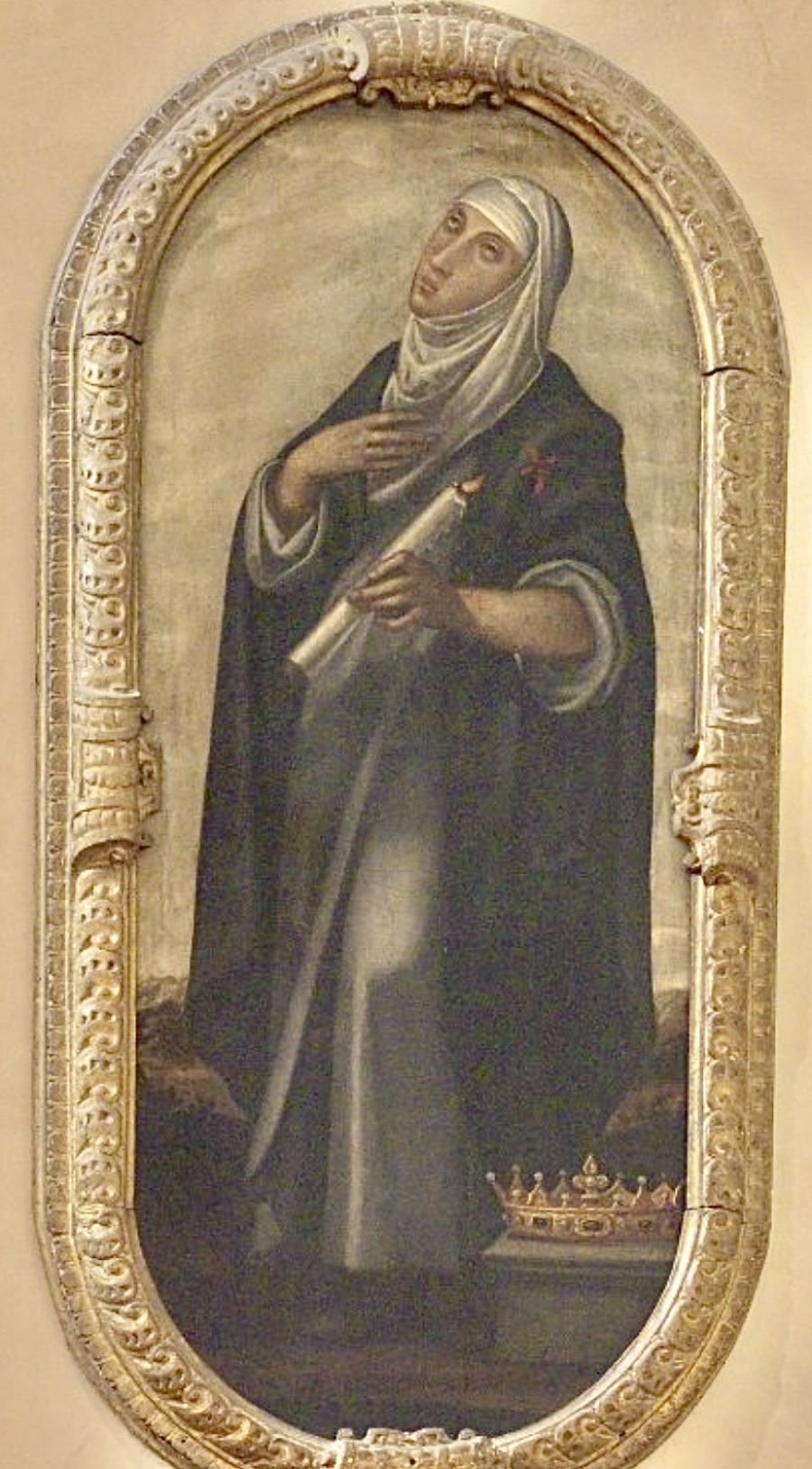
[st Bridget of Sweden, July 23]