Sep 10, 2026 Written by 

Women

Action of the Risen One

(Lk 8:1-3)


The rabbis did not accept women into their schools, because they were considered not up to the task.

But Jesus does not come to teach laws or philosophies, vice versa to gather around Him the despised and non-persons of all times.

In Christ each one opens himself to hope. Who was considered as worthless proclaims and bears witness to God’s love for the little ones and the least.

All with delicacy, and here are the female figures: fidelity takes over. 

In women, piety arises spontaneously [it is not conceived as for us males: immediately to the goal and source of gain].

With them also vanishes the anxiety of performance that accompanies men, who also on the ‘good’ must immediately appear setting up platforms and défilé; be all noticed, cultivate public and private relations that matter, and make career over it.


Jesus conquers the hearts of women because He understands their generosity, the depth of feelings, the capacity for dedication and personal relationship, the extreme gift of self; sensitivity, Faith-love, patience, meekness, generosity, capacity for fatigue and suffering.

Instead of "killing" time, women fill it thoroughly.

Jesus does not want a humanity aimed at being appreciated more than “hiding”, inclined to speak more than to ‘perceive’; willingly inclined to organize-plan more than to meditate - and to sense the depth of our Roots.


The prevalence or balance of the female aspect is an appropriate counterweight to a world prone to dirigisme and the exercise of the will, rather than to the cultivation of sons’ feelings.

Happy is that vocation accompanied by the intensity, depth, delicacy, ability to wait and at the same time consistency to the principles - and participation in destiny - typical aspects of female sensitivity and the world of consecrated women.

[Perhaps that of Mary, Joan, Susannah and many others of the early days was a role comparable to that of Martha in the family of Bethany, coordinator of the community of only sisters and brothers].


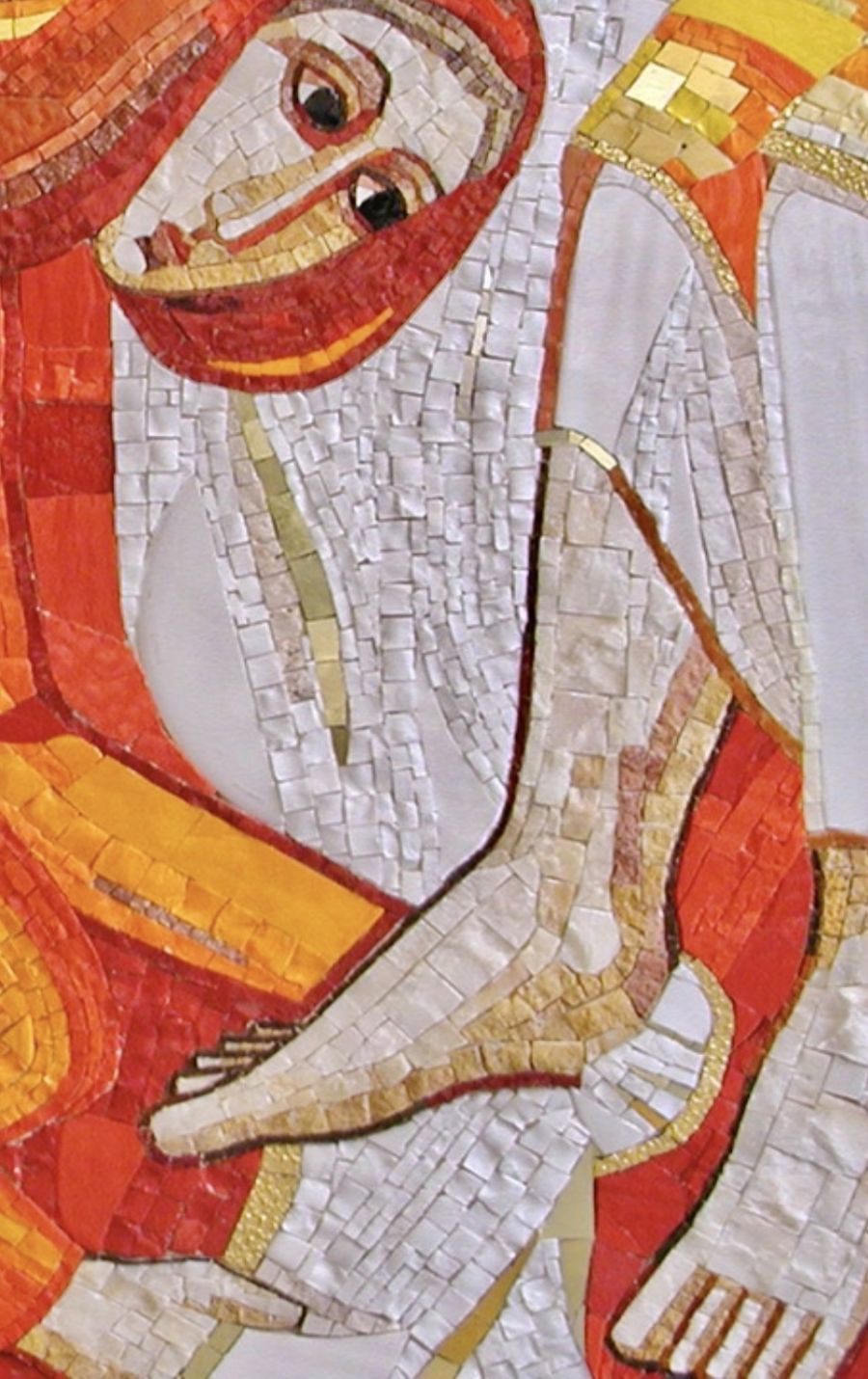
In Lk, the story of women expresses the action of the Risen One. He accepts them as followers and disciples.

In the female figures we read in filigree the story of humanity that in Christ rises and assumes dignity.

Nation that becomes fraternal in pain, prepares nourishment (instead of taking it away), persists, struggles and in this action becomes even an icon of prayer.

It is a model of dedication and self-giving [instead of calculation and cunning] - ready for life, and type of the Announcement; treasure that unleashes the Spirit.


Jesus on his way with the Twelve (v.1) still has a long journey to go today in the magic of the feminine - who knows how to welcome the person and listen to events, always being on the field.

Women learn from their essence, so they know how to attract, they know the indispensable things, they understand where and how to proceed, they are present in the present - and without dominating, they solve problems.

They are not afraid of losing “position”.


To internalize and live the message:


Do you feel called to a spiritual synthesis of personalities, with all the virtue and completeness that springs from a more complete character?


[Friday 24th wk. in O.T.  September 18, 2026]

327 Last modified on Friday, 18 September 2026 11:59
don Giuseppe Nespeca

Giuseppe Nespeca è architetto e sacerdote. Cultore della Sacra scrittura è autore della raccolta "Due Fuochi due Vie - Religione e Fede, Vangeli e Tao"; coautore del libro "Dialogo e Solstizio".

The more we do for others, the more we understand and can appropriate the words of Christ: “We are useless servants” (Lk 17:10). We recognize that we are not acting on the basis of any superiority or greater personal efficiency, but because the Lord has graciously enabled us to do so [Pope Benedict, Deus Caritas est n.35]
Quanto più uno s'adopera per gli altri, tanto più capirà e farà sua la parola di Cristo: « Siamo servi inutili » (Lc 17, 10). Egli riconosce infatti di agire non in base ad una superiorità o maggior efficienza personale, ma perché il Signore gliene fa dono [Papa Benedetto, Deus Caritas est n.35]
Each time we celebrate the dedication of a church, an essential truth is recalled: the physical temple made of brick and mortar is a sign of the living Church serving in history (Pope Francis)
Ogni volta che celebriamo la dedicazione di una chiesa, ci viene richiamata una verità essenziale: il tempio materiale fatto di mattoni è segno della Chiesa viva e operante nella storia (Papa Francesco)
It is a happy image with which, however, Jesus teaches a truth that calls us into question […] If we remove God, we remove Christ and the world falls back into emptiness and darkness (Pope Benedict)
E’ un’immagine felice, con cui però Gesù insegna una verità che ci mette in discussione […] Se togliamo Dio, se togliamo Cristo, il mondo ripiomba nel vuoto e nel buio (Papa Benedetto)
We would also like to set an example ourself, even if the smallness of our means might prevent anyone from appreciating the practical and quantitative significance of it. We want to see our own charitable institutions undergo a new development in the struggle against hunger and toward meeting the main needs of the world. This is the way and the only way to build peace (Pope Paul VI)
Vorremmo anche Noi dare l'esempio, sebbene l'esiguità dei Nostri mezzi ci impedisca di farne apprezzare la rilevanza pratica e quantitativa: Noi vogliamo dare alle Nostre istituzioni caritative un nuovo sviluppo in favore della fame e dei bisogni del mondo: è in questo modo, e non altrimenti, che si costruisce la pace (Papa Paolo VI)
As St. Ambrose put it: You are not making a gift of what is yours to the poor man, but you are giving him back what is his (Pope Paul VI, Populorum Progressio n.23)
Non è del tuo avere, afferma sant’Ambrogio, che tu fai dono al povero; tu non fai che rendergli ciò che gli appartiene (Papa Paolo VI, Populorum Progressio n.23)
Here is the entire Gospel! Here! The whole Gospel, all of Christianity, is here! But make sure that it is not sentiment, it is not being a “do-gooder”! (Pope Francis)
Qui c’è tutto il Vangelo! Qui! Qui c’è tutto il Vangelo, c’è tutto il Cristianesimo! Ma guardate che non è sentimento, non è “buonismo”! (Papa Francesco)
Christianity cannot be, cannot be exempt from the cross; the Christian life cannot even suppose itself without the strong and great weight of duty [Pope Paul VI]
Il Cristianesimo non può essere, non può essere esonerato dalla croce; la vita cristiana non può nemmeno supporsi senza il peso forte e grande del dovere [Papa Paolo VI]
The horizon of friendship to which Jesus introduces us is the whole of humanity [Pope Benedict]
L’orizzonte dell’amicizia in cui Gesù ci introduce è l’umanità intera [Papa Benedetto]
The Church invites believers to regard the mystery of death not as the "last word" of human destiny but rather as a passage to eternal life (Pope John Paul II)

Due Fuochi due Vie - Vol. 1 Due Fuochi due Vie - Vol. 2 Due Fuochi due Vie - Vol. 3 Due Fuochi due Vie - Vol. 4 Due Fuochi due Vie - Vol. 5 Dialogo e Solstizio I fiammiferi di Maria

duevie.art

don Giuseppe Nespeca

Tel. 333-1329741


Disclaimer

Questo blog non rappresenta una testata giornalistica in quanto viene aggiornato senza alcuna periodicità. Non può pertanto considerarsi un prodotto editoriale ai sensi della legge N°62 del 07/03/2001.
Le immagini sono tratte da internet, ma se il loro uso violasse diritti d'autore, lo si comunichi all'autore del blog che provvederà alla loro pronta rimozione.
L'autore dichiara di non essere responsabile dei commenti lasciati nei post. Eventuali commenti dei lettori, lesivi dell'immagine o dell'onorabilità di persone terze, il cui contenuto fosse ritenuto non idoneo alla pubblicazione verranno insindacabilmente rimossi.