Sep 13, 2026 Written by 

Conversion, forbidden things, the Doctor of Opposites

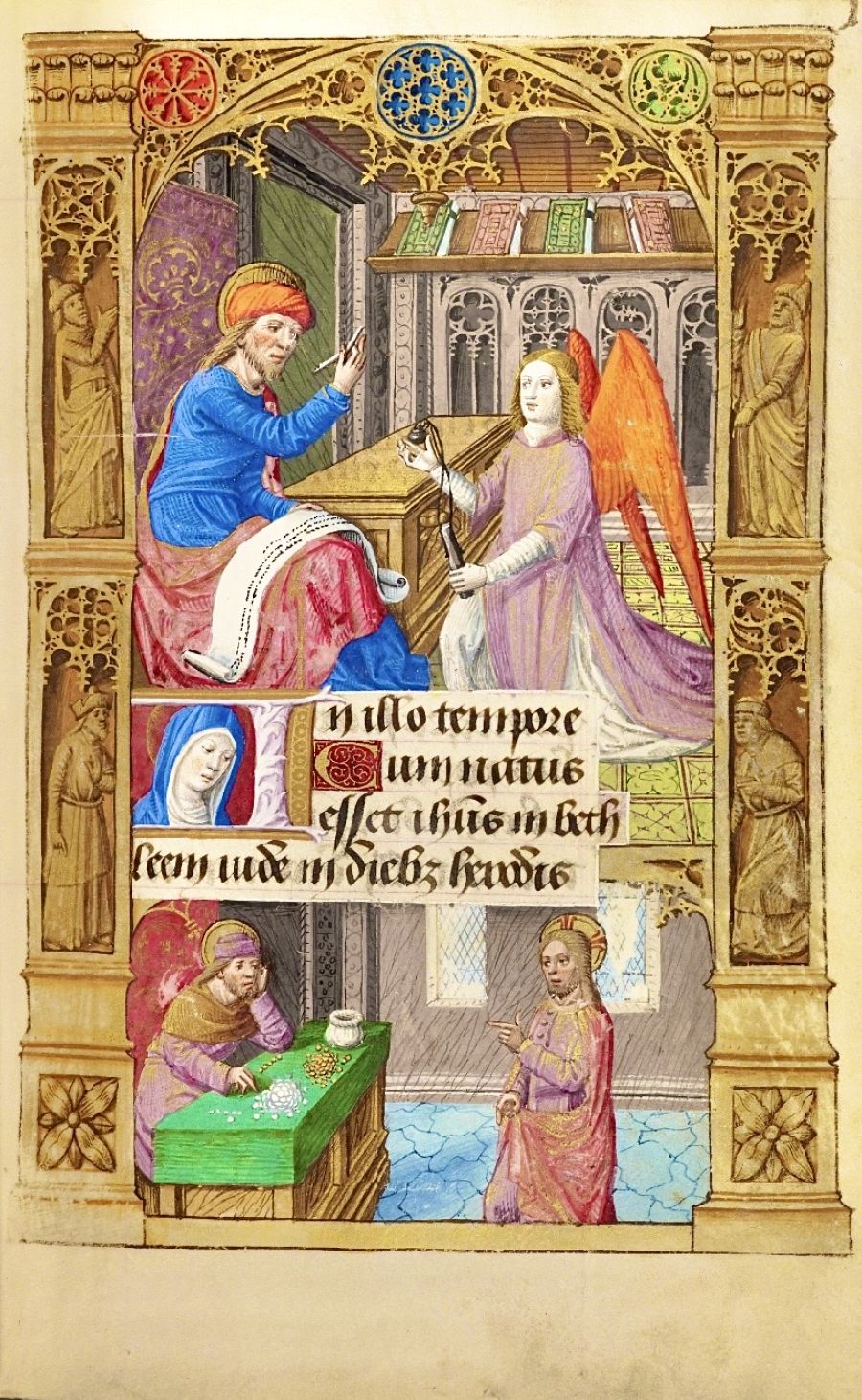
But can he participate in the ritual? Sitting and with his eye on the registers, only then rich - nay, 'sir'

(Mt 9:9-13)


Friction arose in some assemblies of believers, because some church members still considered profane to have contact or accept foreigners, not yet adapted to the mentality of customs.

Even the Judeo-Christians of Galilee and Syria to whom Mt addresses needed to learn to break the isolation of the norms of ancient purity. They did not have to stand aside.

The friction of opinions was particularly acute in the [typical third-generation] debate on the kind of eligible participation in meetings and at Breaking the Bread.

Prohibition must be replaced by friendship.

The Father is a friendly Presence. His life-saving initiative is for everyone, even for those who do not know how to do anything but look after their own gain.

The faithful in Christ share the holy Banquet with pagans and sinners, without first demanding a discipline of the arcane, nor practices that celebrate distances (such as ablutions that at the time were preceding the meal).

Matathiah means "man of God", "given by God"; precisely «Gift of God» [Matath-Yah].

In short, according to Jesus’ teaching, the only impurity is that of not giving space to those who ask because they have none.

The observant sects of Judaism treated tax collectors as unclean beings, to be kept at a distance.

The germ of alternative society of believers in Christ accepts them and seizes their resources, the good for the community.

The anxiety of contamination arose from a false, preconceived and exclusivist idea of what not only in Palestine but even in the Diaspora was identified (by total squint) with «the Will of Yahweh» - factor of separation among other peoples.

An illusion that had not stimulated an attitude of sympathy towards diverse reality, nor of friendliness towards others outside the circle consortia.

Lord wants to share with transgressors, not because of an ideological banality: it is the invitation to recognize oneself in another.

Not to submit ourselves to some form of humiliating paternalism, but because knowing oneself incomplete is a resource.

«And it happened that while He was lying at lunch in the House, behold, many tax collectors and sinners who had come to the feast with Jesus and his disciples» [v.10].

«Lying on the triclinia»: according to the way of celebrating solemn banquets, by free men - now all free ‘Sir’ ones. How wonderful, such a monstrance!

A living Body of Christ that smells of Sharing: authentic Worship!

This is, all empathic and regal, the beautiful awareness that opens wide and makes credible the content of the Announcement [vv.12-13].

Christ calls, welcomes and redeems also “the Matthew in us”, that is, the most worn-out side of our personality. He will even make it flourish: and it will become an indispensable and winning aspect of the future testimony.

Tao Tê Ching [XLV] says: «Great straightness is like sinuosity, great ability is like ineptitude, great eloquence is like stuttering».

Among the disciples, it is likely that there were quite a few members of the Palestinian resistance: guerrillas fighting against the Roman occupiers.

On the other hand, here Jesus calls a collaborator of the Romans who let himself be guided by the advantage.

As if to say: the new community of sons and brothers does not cultivate privileges, separations, oppressions, hatreds.

The Master always stood above the political clashes, ideological distinctions and external disputes of time.

In his Church there is a strong sign of discontinuity.

He does not invite the best or the worst to follow, but opposites - even of our own personality. He wants to dispose us «to conversion» (Lk 5:32): to make us change our point of view, mentality, principles, way of being.

In this adventure we are not called to forms of dissociation. We start from ourselves.

Thus Jesus inaugurates a new kind of relationships, even within us. A New Covenant, of fruitful differences.

It is not ‘perfection’ or narcissism that makes us love the Exodus.


To internalize and live the message:


What is your spiritual strength? How did it generate?


[St Matthew Ap. Ev.  September 21]

335 Last modified on Monday, 21 September 2026 12:01
don Giuseppe Nespeca

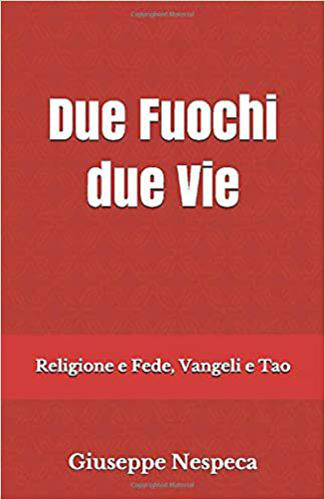
Giuseppe Nespeca è architetto e sacerdote. Cultore della Sacra scrittura è autore della raccolta "Due Fuochi due Vie - Religione e Fede, Vangeli e Tao"; coautore del libro "Dialogo e Solstizio".

The more we do for others, the more we understand and can appropriate the words of Christ: “We are useless servants” (Lk 17:10). We recognize that we are not acting on the basis of any superiority or greater personal efficiency, but because the Lord has graciously enabled us to do so [Pope Benedict, Deus Caritas est n.35]
Quanto più uno s'adopera per gli altri, tanto più capirà e farà sua la parola di Cristo: « Siamo servi inutili » (Lc 17, 10). Egli riconosce infatti di agire non in base ad una superiorità o maggior efficienza personale, ma perché il Signore gliene fa dono [Papa Benedetto, Deus Caritas est n.35]
Each time we celebrate the dedication of a church, an essential truth is recalled: the physical temple made of brick and mortar is a sign of the living Church serving in history (Pope Francis)
Ogni volta che celebriamo la dedicazione di una chiesa, ci viene richiamata una verità essenziale: il tempio materiale fatto di mattoni è segno della Chiesa viva e operante nella storia (Papa Francesco)
It is a happy image with which, however, Jesus teaches a truth that calls us into question […] If we remove God, we remove Christ and the world falls back into emptiness and darkness (Pope Benedict)
E’ un’immagine felice, con cui però Gesù insegna una verità che ci mette in discussione […] Se togliamo Dio, se togliamo Cristo, il mondo ripiomba nel vuoto e nel buio (Papa Benedetto)
We would also like to set an example ourself, even if the smallness of our means might prevent anyone from appreciating the practical and quantitative significance of it. We want to see our own charitable institutions undergo a new development in the struggle against hunger and toward meeting the main needs of the world. This is the way and the only way to build peace (Pope Paul VI)
Vorremmo anche Noi dare l'esempio, sebbene l'esiguità dei Nostri mezzi ci impedisca di farne apprezzare la rilevanza pratica e quantitativa: Noi vogliamo dare alle Nostre istituzioni caritative un nuovo sviluppo in favore della fame e dei bisogni del mondo: è in questo modo, e non altrimenti, che si costruisce la pace (Papa Paolo VI)
As St. Ambrose put it: You are not making a gift of what is yours to the poor man, but you are giving him back what is his (Pope Paul VI, Populorum Progressio n.23)
Non è del tuo avere, afferma sant’Ambrogio, che tu fai dono al povero; tu non fai che rendergli ciò che gli appartiene (Papa Paolo VI, Populorum Progressio n.23)
Here is the entire Gospel! Here! The whole Gospel, all of Christianity, is here! But make sure that it is not sentiment, it is not being a “do-gooder”! (Pope Francis)
Qui c’è tutto il Vangelo! Qui! Qui c’è tutto il Vangelo, c’è tutto il Cristianesimo! Ma guardate che non è sentimento, non è “buonismo”! (Papa Francesco)
Christianity cannot be, cannot be exempt from the cross; the Christian life cannot even suppose itself without the strong and great weight of duty [Pope Paul VI]
Il Cristianesimo non può essere, non può essere esonerato dalla croce; la vita cristiana non può nemmeno supporsi senza il peso forte e grande del dovere [Papa Paolo VI]
The horizon of friendship to which Jesus introduces us is the whole of humanity [Pope Benedict]
L’orizzonte dell’amicizia in cui Gesù ci introduce è l’umanità intera [Papa Benedetto]
The Church invites believers to regard the mystery of death not as the "last word" of human destiny but rather as a passage to eternal life (Pope John Paul II)

Due Fuochi due Vie - Vol. 1 Due Fuochi due Vie - Vol. 2 Due Fuochi due Vie - Vol. 3 Due Fuochi due Vie - Vol. 4 Due Fuochi due Vie - Vol. 5 Dialogo e Solstizio I fiammiferi di Maria

duevie.art

don Giuseppe Nespeca

Tel. 333-1329741


Disclaimer

Questo blog non rappresenta una testata giornalistica in quanto viene aggiornato senza alcuna periodicità. Non può pertanto considerarsi un prodotto editoriale ai sensi della legge N°62 del 07/03/2001.
Le immagini sono tratte da internet, ma se il loro uso violasse diritti d'autore, lo si comunichi all'autore del blog che provvederà alla loro pronta rimozione.
L'autore dichiara di non essere responsabile dei commenti lasciati nei post. Eventuali commenti dei lettori, lesivi dell'immagine o dell'onorabilità di persone terze, il cui contenuto fosse ritenuto non idoneo alla pubblicazione verranno insindacabilmente rimossi.