


don Giuseppe Nespeca
Giuseppe Nespeca è architetto e sacerdote. Cultore della Sacra scrittura è autore della raccolta "Due Fuochi due Vie - Religione e Fede, Vangeli e Tao"; coautore del libro "Dialogo e Solstizio".
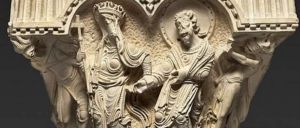
(Mt 11:25–30)
God’s broad wisdom is not based on ‘chance’ or ‘measure’
Jesus’s only prayer that is seldom taught
Scientists and the Little Ones: the abstract world and incarnation
(Mt 11:25–27)
‘The world gives credence to the “wise” and the “learned”, whilst God favours the “little ones”. The general teaching that follows is that there are two dimensions of reality: one deeper, true and eternal, the other marked by finitude, transience and appearance’ [Pope Benedict].
God’s broad Reason is not according to ‘fortune’ or ‘measure’
Commenting on the Tao Te Ching (iv), Master Ho-shang Kung writes:
‘Human desires are sharp and subtle; they strive to appropriate merit and glory. When they are blunted, man masters them, and in imitation of the Way, he does not fill himself.’
The leaders viewed religiosity with self-serving aims. The professors of theology were accustomed to scrutinising every detail based on their own knowledge—ridiculous yet presumptuous—and alien to real-world events.
Jesus found himself at odds even with his own family. Under the cloak and the blackmail of habitual social conventions, they too were subject to the preconceptions of the ‘great ones’ and of the evasive oral tradition, which offered no nourishment to the concrete fabric of human existence.
The Lord observes: even the Apostles are not free people; for this reason, they emancipate no one and indeed prevent any turning point (cf. Lk 9).
Their way of being is so deeply rooted in standard attitudes and obligatory behaviours that it translates into impenetrable mental armour.
Their predictability is too limiting: it offers no breathing space to the journey of those who, on the contrary, wish to re-energise themselves, to discover and appreciate the surprises hidden behind the secret facets of reality and personality.
That which remains bound to ancient customs [or abstractions] and the usual protagonists [or sophisticated pseudo-masters] does not inspire dreams; it is not an apparition or an astonishing witness to the Otherworld; it robs the Proclamation and life of expressive richness.
The Master rejoices in his own experience, which brings a joy that is not superficial and a teaching from the Spirit – to those who are well-disposed and capable of understanding the depths of the Kingdom in ordinary things.
[At a certain point on the spiritual journey, in Christ one realises one must detach oneself from the idolatry of deference: it suffocates and mocks life.
Faith proceeds along the path of the happiness of real men and women, who are instead turned into puppets by a false piety that is entirely exhibitionist or disembodied].
In short, after an initial moment of wild enthusiasm, the Master delves deeper into the themes and finds himself with everyone against him, except God and the least of these: those without weight, but with a great desire to start from scratch.
A glimmer of the Mystery that lifts history – without making it its own.
At the conclusion of the encyclical Fratelli Tutti, Pope Francis cites the figure and experience of Charles de Foucauld, who – by overturning everything – ‘only by identifying with the least did he come to be a brother to all’ (no. 287).
At first, even Jesus is taken aback by the rejection of those who considered themselves already satisfied with the official religious structure and expected nothing more that might dislodge the well-trodden path, stirring up habits (or fantasies) and self-interest.
Then he overcomes his initial surprise: he fully grasps, praises and blesses the Father’s plan, making it his own, drawing it close to himself.
He brings his Secret to full and proper awareness: that the Root of the transformation of being into God’s Unpredictability is concealment, ‘humility’ [(tapeínōsis, ‘lowliness’), from ταπεινός (tapeinós, ‘low’) [v.29; Lk 1:48].
Here the Son knows and understands the core of the Expectations and Promises of the Covenant, and its protagonists (by contrast): the trustworthy Person is born precisely from the lowest depths, not from the ranks of the elites.
In short, Christ intuits the all-encompassing authenticity proper to the weak – a profound impulse, motive, driving force, quintessence and sole energy of the history of salvation.
Transparency of the Eternal One, which stems from a different understanding.
Genesis itself, which upends the established religious relationship, which has at times become inert and ‘reassuring’ – never profound nor decisive for human destinies.
God is simple Relation: he demystifies the idol of greatness.
The Eternal One is no longer the master of creation [He who manifested Himself as strong and peremptory; in His action, even in the ancient Covenant illustrated through the uncontainable powers of nature].
Quite the opposite. In this way, by extension, and also on the spiritual path, the Father does not lead us to alienation, to the hysteria of coercion we do not want, to inner dissociations.
He is Friend and Refreshment who comforts, for He makes us feel whole and lovable; He seeks us by Name, He attends to the language of the heart.
He is Guardian of the world, even of the uneducated – of the ‘infants’ (v.25) spontaneously free from a haughty spirit, that is, of those who do not remain closed off within their self-sufficient sense of belonging.
Already as they are, ‘perfect’ in terms of their mission in the world. Not empty vessels, merely to be re-educated for institutional purposes.
No longer souls to be chiselled according to models.
If anything, hearts to be guided to total awareness; souls to be completed in the sense of the full discovery of themselves, in the opposites of their character and vocational essence.
In this way, the Father-Son relationship is communicated to God’s poor: those endowed with a family-like disposition (v.27).
Capable of living together, yet more autonomous than those who are identified and well-integrated… committed to imitating, in order to be recognised.
The poor remain genuine: what they are; not outward appearances.
Insignificant and invisible, lacking great gifts, yet strangely always filled with another ‘power’.
It is the ‘virtue’ of the frail, who surrender to the proposals of the provident life that is to come, like children in their parents’ arms.
With a spirit of pietas – which favours those who allow themselves to be filled with innate wisdom.
The only reality that corresponds to us and does not ‘present the bill’: it does not proceed along the paths of functional thought or calculating initiative.
Wisdom that conveys freshness in the willingness to receive, welcome and personally renew the Truth as a Gift – and the very spontaneous enthusiasm capable of realising it.
A simple prayer of blessing, for the simple – this one from Jesus (v.25) – which helps us grow in esteem, fits perfectly with our experience, and is in harmony with ourselves; starting from within.
But strangely, the learned ones in the area who do not live ‘the spirit of neighbourliness’ (FT no. 152) yet in the local community claim positions and always play cunning games, have never wanted to pass this on to us.
The newcomers, the nobodies, the voiceless and the invisible do not reason in terms of doctrine and laws – vv. 29–30: an unbearable ‘yoke’ that crushes people and concrete, particular vocations – but in terms of life and humanity.
Thus they enrich the fundamental and spontaneous experience of Faith-Love, fulfilling without affectation or inner strain that ultimately pulls us out of ourselves.
For the outward appearance of the hierarchical world, the mistrust of those who wish to ‘count’, the anxiety of a competitive and superficial society, impoverish our outlook and taint the vital current.
For God’s sake, it is better to ‘count’ for little.
In this way, one must live in Communion, even with the ‘smallness’ of oneself, or there is no authentic life.
To internalise and live the message:
How do you feel when you are told: ‘You don’t count’?
Does a humiliating contempt remain, or do you consider it a great Light received, as Jesus did?
The Yoke upon the Little Ones
Religion turned into an obsession (for the ‘restrained’)
(Mt 11:28-30)
The rabbis chose their disciples from among those with the greatest intellectual and ascetic abilities. Jesus, however, goes out to seek those outside the circle, the ‘little ones’ (v.25) who did not even have self-esteem.
Even for the rebirth that lies ahead today, Christ has no need of fake phenomena; on the contrary, it is He who frees us from external constraints; He unleashes inner strength (and heals the mind as well).
Those who know how to receive everything and let go enter into the intimacy of the Mystery of divine life – yet remain true to themselves.
God is not far away, but very near; He is not great, but small: the effective path to becoming intimate with the Father is not to make oneself subservient through effort, but to know how to be a relaxed member of the family.
Only here can we grasp Him at the heart of His revelation: a wise, helpful, united power; for us, just as we are.
The experts of official religion – brimming with self-love and a sense of being chosen – preached a God to be convinced through confident demeanours and artificial, sharp, imperious behaviour.
They allowed neither being nor becoming. Their intransigence was a sign that they did not know the Father.
The Eternal One, transformed into a Controller, had become a source of discrimination and obsession in the private lives of ordinary people, tormented by the insecurity of distinguishing, avoiding and observing, and by pangs of conscience.
Unwilling to live out (and as a class) the conversion they preached to others, the professors failed to realise that they needed to rid themselves of absurd presumptions and become – themselves – pupils of ordinary people.
In short, as children we are ceaselessly invited to build a multifaceted Family, where one is not always on alert.
We are not the subjects of a frowning, aloof – yet manipulative – Lord.
Rather, we are called to a paradoxical choice, both personal and class-based: without coercion, to recognise ourselves and stand alongside the humiliated and oppressed.
This whilst the false piety of the provinces continues to make people carry burdens – precisely those of the oppressed and weary, whose existence has been made more hesitant rather than free; obsessed and heavy, rather than light.
Why? To put it bluntly, the Encyclical Fratelli Tutti would reply:
‘The best way to dominate and advance without limits is to sow a lack of hope and stir up constant mistrust, albeit masked by the defence of certain values’ (no. 15).
In other words: when the authorities and the top of the class lack credibility, only the sowing of fear produces significant conditioning in the people, and keeps them on a leash.
In the wider Church, it is only in the last few decades that we have moved beyond the cliché of moralistic and terrorising sermons (e.g. even during Advent) divorced from a profound sense of humanisation.
The excluded, those crushed and worn down by meaningless obligations, have nevertheless continued to encounter the Saviour openly, finding rest for the soul, conviction, peace, balance and hope.
Instinctively, they have managed to carve out for themselves what no hierarchical religion had ever been able to offer or unfold.
Indeed, the newcomers, the nobodies, the voiceless, the inadequate and the invisible cannot be measured in terms of doctrine and laws, norms and codes – that ancient, unbearable ‘yoke’ (vv. 29–30) which crushes people and concrete vocations; or particular forms of autonomy or community.
In short, no ‘patriarch’ is authorised by God to package our souls, force our directions, and keep a maniacal, perfectionist and meticulous watch over us.
Exacerbating failures across the board.
Everyone has their own innate way of being in the world – even if it is habitual. This is an opportunity for inspiration and enrichment for all.
We ourselves do not wish to exacerbate events by regulating every detail, even ‘spiritual’ ones, based on irritating patterns of surveillance that do not belong to us.
We prefer to let personal ways of facing reality flow freely; thus tracing their essential and spontaneous energies.
We reason according to codes of life and humanisation: temperament, unique history, cultural influences, friendships of broad character. We do not live to prevent.
Only in this way can we enrich the fundamental experience: Love – which does not come from judgements, divisions and separations, but from the Father-Son relationship. The only one that does not irritate.
The root of the transformation of being in God’s Unpredictability is precisely concealment, ‘humility’ [(tapeínōsis, ‘lowliness’), from ταπεινός (tapeinós, ‘low’) [v.29 Greek text; Lk 1:48].
Only those who love strength begin with what is far removed from themselves.
To internalise and live out the message:
In community, do you find yourself more or less free and at peace?
Does your Calling find room to breathe, or do you feel the weight of others’ doubts, judgements, prohibitions and prescriptions?
Do you suffer from a sort of ‘controller’s complex’ imposed by some guide or by yourself?

Dear Brothers and Sisters,
In a little while we shall sing in the antiphon to the Magnificat: “The Lord has drawn us to his heart—Suscepit nos Dominus in sinum et cor suum”. God’s heart, as the expression of his will, is spoken of twenty-six times in the Old Testament. Before God’s heart men and women stand judged. His heartfelt pain at sins of mankind makes God decide on the flood, but then he is touched by the sight of human weakness and offers his forgiveness. Yet another passage of the Old Testament speaks of God’s heart with absolute clarity: it is in the eleventh chapter of the book of the Prophet Hosea, whose opening lines portray the Lord’s love for Israel at the dawn of its history: “When Israel was a child, I loved him, and out of Egypt I called my son” (Hos 11:1). Israel, however, responds to God’s constant offer of love with indifference and even outright ingratitude. “The more I called them”, the Lord is forced to admit, “the more they went from me” (v. 2). Even so, he never abandons Israel to the power of its enemies, because “my heart”—the the Creator of the universe observes—“recoils within me, my compassion grows warm and tender” (v. 8).
The heart of God burns with compassion! On today’s solemnity of the Sacred Heart of Jesus the Church presents us this mystery for our contemplation: the mystery of the heart of a God who feels compassion and who bestows all his love upon humanity. A mysterious love, which in the texts of the New Testament is revealed to us as God’s boundless and passionate love for mankind. God does not lose heart in the face of ingratitude or rejection by the people he has chosen; rather, with infinite mercy he sends his only-begotten Son into the world to take upon himself the fate of a shattered love, so that by defeating the power of evil and death he could restore to human beings enslaved by sin their dignity as sons and daughters. But this took place at great cost—the only-begotten Son of the Father was sacrificed on the Cross: “Having loved his own who were in the world, he loved them to the end” (cf. Jn 13:1). The symbol of this love which transcends death is his side, pierced by a spear. The Apostle John, an eyewitness, tells us: “one of the soldiers pierced his side with a spear, and at once there came out blood and water” (cf. Jn 19:34).
Dear brothers and sisters, thank you for responding to my invitation and coming in great numbers to this celebration with which we inaugurate the Year for Priests. I greet the Cardinals and Bishops, in particular the Cardinal Prefect and the Secretary of the Congregation for the Clergy, together with the officials of that Congregation and the Bishop of Ars. I greet the priests and seminarians from the various seminaries and colleges in Rome; the men and women religious and all the lay faithful present. In a special way I greet His Beatitude Ignace Youssef Younan, the Patriarch of Antioch of the Syrians, who has come to Rome to meet me and to recognize publicly the "ecclesiastica communio" which I have granted him.
Together let us pause to contemplate the pierced heart of the Crucified One. Just now we heard once again, in the brief reading from Saint Paul’s Letter to the Ephesians, that “God, who is rich in mercy, out of the great love with which he loved us, even when we were dead through our trespasses, made us alive together with Christ... raised us up with him, and made us sit with him in the heavenly places in Christ Jesus” (Eph 2:4-6). To be “in” Jesus Christ is already to be seated in heaven. The very core of Christianity is expressed in the heart of Jesus; in Christ the revolutionary “newness” of the Gospel is completely revealed and given to us: the Love that saves us and even now makes us live in the eternity of God. As the Evangelist John writes: “God so loved the world that he gave his only Son, that whoever believes in him should not perish but have eternal life” (3:16). God’s heart calls to our hearts, inviting us to come out of ourselves, to forsake our human certainties, to trust in him and, by following his example, to make ourselves a gift of unbounded love.
While it is true that Jesus’ invitation to “abide in my love” (cf. Jn 15:9) is addressed to all the baptized, on this feast of the Sacred Heart of Jesus, the day of prayer for the sanctification of priests, this invitation resounds all the more powerfully for us priests. It does so in a special way this evening, at the solemn inauguration of the Year for Priests which I have proclaimed to mark the 150th anniversary of the death of the saintly Curé of Ars. A lovely and touching saying of his, quoted in the Catechism of the Catholic Church, comes immediately to mind: “the priesthood is the love of the heart of Jesus” (n. 1589). How can we fail to be moved when we recall that the gift of our priestly ministry flows directly from this heart? How can we forget that we priests were consecrated to serve, humbly yet authoritatively, the common priesthood of the faithful? Ours is an mission which is indispensable for the Church and for the world, a mission which calls for complete fidelity to Christ and constant union with him. To abide in his love entails constantly striving for holiness, as did Saint John Mary Vianney.
In the Letter which I wrote to you for this special Jubilee Year, dear brother priests, I wished to highlight some essential aspects of our ministry by making reference to the example and teaching of the Curé of Ars, the model and protector of all priests, especially parish priests. I hope that my Letter will prove a help and encouragement to you in making this Year a graced opportunity to grow ever closer to Jesus, who counts on us, his ministers, to spread and build up his Kingdom, and to radiate his love and his truth. As I invited you at the conclusion of my Letter: “in the footsteps of the Curé of Ars, let yourselves be enthralled by Christ. In this way you too will be, for the world in our time, heralds of hope, reconciliation and peace!”.
To be completely enthralled by Christ! This was the goal of the entire life of Saint Paul, to whom we looked throughout the Pauline Year now ending; this was the goal of the entire ministry of the Curé of Ars, whom we shall invoke in particular during this Year for Priests; may it also be the primary goal for each and every one of us. Certainly, to be ministers at the service of the Gospel, study and careful, ongoing pastoral and theological formation are useful and necessary, but even more necessary is that “knowledge of love” which can only be learned in a “heart to heart” encounter with Christ. For it is he who calls us to break the bread of his love, to forgive sins and to guide the flock in his name. And for that reason we must never step back from the source of love which is his heart, pierced on the Cross.
Only in this way can we cooperate effectively in the mysterious “plan of the Father” which consists in “making Christ the heart of the world”! This plan is accomplished in history as Jesus gradually becomes the Heart of human hearts, beginning with those called to be closest to him: namely his priests. We are reminded of this constant commitment by the “priestly promises” that we made on the day of our ordination and which we renew yearly on Holy Thursday during the Chrism Mass. Even our shortcomings, our limitations and our weaknesses ought to bring us back to the heart of Jesus. If it is true that by contemplating Christ sinners learn from him the “sorrow for sins” needed to bring them back to the Father, this is even more the case for sacred ministers. How can we forget, in this regard, that nothing causes more suffering for the Church, the Body of Christ, than the sins of her pastors, especially the sins of those who become “thieves and robbers” of the sheep (cf. Jn 10:1 ff.), lead them astray by their own private teachings, or ensnare them in the toils of sin and death? Dear priests, the summons to conversion and to trust in God’s mercy also applies to us; we too must humbly, sincerely and unceasingly implore the heart of Jesus to preserve us from the terrifying risk of endangering the very people we are obliged to save […].
[Pope Benedict, homily at the opening of the Year for Priests, 19 June 2009]
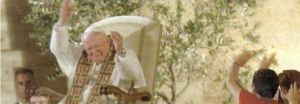
3. The coincidence of this centenary with the last year of preparation for the Great Jubilee of the Year 2000, which is "aimed at broadening the horizons of believers, so that they will see things in the perspective of Christ: in the perspective of the 'Father who is in heaven' (cf. Mt. 5:45)" (Apostolic Letter Tertio millennio adveniente, n. 49) offers a fitting opportunity to present the Heart of Jesus, "the burning furnace of love, ... the symbol and the expressive image of the eternal love with which 'God so loved the world, that he gave his only begotten Son' (Jn 3:16)" (Paul VI, Apostolic Epistle Investigabiles divitias). The Father is love (1 Jn 4:8, 16), and the only-begotten Son, Christ, manifests this mystery while fully revealing man to man.
Devotion to the Heart of Jesus has given form to the prophetic words recalled by St John: "They shall look on him whom they have pierced" (Jn 19:37; cf. Zec 12:10). It is a contemplative gaze,"which strives to enter deeply into the sentiments of Christ, true God and true man. In this devotion the believer confirms and deepens the acceptance of the mystery of the Incarnation, which has made the Word one with human beings and thus given witness to the Father's search for them. This seeking is born in the intimate depths of God, who loves man eternally in the Word, and wishes to raise him in Christ to the dignity of an adoptive son" (Tertio millennio adveniente, n. 7). At the same time devotion to the Heart of Jesus searches the mystery of the Redemption in order to discover the measure of love which prompted his sacrifice for our salvation.
The Heart of Christ is alive with the action of the Holy Spirit, to whom Jesus attributed the inspiration of his mission (Lk 4:18; cf. Is 61:1) and whose sending he had promised at the Last Supper. It is the Spirit who enables us to grasp the richness of the sign of Christ's pierced side, from which the Church has sprung (cf. Constitution Sacrosanctum Concilium, n. 5). "The Church, in fact", as Paul VI wrote, "was born from the pierced Heart of the Redeemer and from that Heart receives her nourishment, for Christ "gave himself up for her, that he might sanctify her, having cleansed her by the washing of water with the word" (Eph 5:25-26)" (Letter Diserti interpretes). Through the Holy Spirit, then, the love which permeates the Heart of Jesus is poured out in the hearts of men (cf. Rom 5:5), and moves them to adoration of his "unsearchable riches" (Eph 3:8) and to filial and trusting petition to the Father (cf. Rom 8:15-16) through the Risen One who "always lives to make intercession for us" (Heb 7:25).
4. Devotion to the Heart of Christ, "the universal seat of communion with God the Father; ... seat of the Holy Spirit" (8 June 1994; L'Osservatore Romano English edition 15 June 1994, p. 3), aims at strengthening our bond with the Holy Trinity. Thus, the celebration of the centenary of the consecration of the human race to the Sacred Heart prepares the faithful for the Great Jubilee, because it concerns its objective of "giving glory to the Trinity, from whom everything in the world and in history comes and to whom everything returns" (Tertio millennio adveniente, n. 55), and because of its orientation to the Eucharist (cf. ibid.), in which the life that Christ came to bring in abundance (cf. Jn 10:10) is communicated to those who feed on him in order to have life because of him (cf. Jn 6:57). The entire devotion to the Heart of Jesus in its every manifestation is profoundly Eucharistic: it is expressed in religious practices which stir the faithful to live in harmony with Christ, "meek and humble of heart" (Mt 11:29), and it is intensified in adoration. It is rooted and finds its summit in participation in Holy Mass, especially Sunday Mass, where the hearts of the faithful, fraternally assembled in joy, listen to the word of God and learn to offer with Christ themselves and the whole of their lives (Sacrosanctum Concilium, n. 48). There they are nourished at the paschal banquet of the Redeemer's Body and Blood and, sharing fully the love which beats in his Heart, they strive to be ever more effective evangelizers and witnesses of solidarity and hope.
We give thanks to God, our Father, who has revealed his love in the Heart of Christ and has consecrated us by the anointing of the Holy Spirit (cf. Dogmatic Constitution Lumen gentium, n. 10) so that, in union with Christ, we may adore him in every place and by our holy actions consecrate to him the world itself (ibid., n. 34) and the new millennium.
[Pope John Paul II, Warsaw 11 June 1999; centenary of the consecration of the human race to the Divine Heart of Jesus]
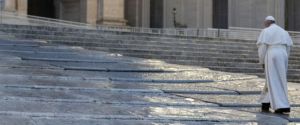
We have a God who is ‘in love with us’, who tenderly caresses us and sings us a lullaby, just as a father does with his child. Not only that: he seeks us out first, waits for us and teaches us to be ‘little’, because ‘love is more in giving than in receiving’ and is ‘more in deeds than in words’. This is what Pope Francis recalled during Mass celebrated on the morning of Friday 27 June — the feast day of the Sacred Heart of Jesus — in the chapel of Casa Santa Marta.
The Pope’s meditation drew inspiration from the opening prayer recited during the liturgy, in which, he said, “we gave thanks to the Lord because he gives us the grace, the joy of celebrating in the heart of his Son the great works of his love”.
And “love”, indeed, is the key word chosen by the Bishop of Rome to express the profound meaning of the Feast of the Sacred Heart. For, he noted, “today is the feast of God’s love, of Jesus Christ: it is God’s love for us and God’s love within us”. A feast, he added, that “we celebrate with joy”.
According to the Pontiff, there are two “aspects of love” in particular. The first is encapsulated in the statement that “love is more in giving than in receiving”; the second in that “love is more in deeds than in words”.
“When we say that it is more in giving than in receiving,” explained Pope Francis, “it is because love is always communicated, always communicates, and is received by the beloved.” And “when we say that it is more in deeds than in words,” he added, “it is because love always gives life, it makes things grow.”
The Pontiff then outlined the fundamental characteristics of God’s love for humanity. He thus highlighted certain passages from the day’s liturgical readings, which, he noted, “speak to us twice about the little ones.” Indeed, in the first reading, taken from the Book of Deuteronomy (7:6–11), “Moses explains why the people were chosen and says: because you are the smallest of all peoples”. Then, in the Gospel of Matthew (11:25–30), “Jesus praises the Father because he has hidden divine things from the learned and revealed them to the little ones”.
Therefore, the Pope affirmed, “to understand God’s love, this smallness of heart is necessary”. After all, Jesus says it clearly: unless you become like children, you will not enter the kingdom of heaven. Here, then, is the right path: “To become children, to become little”, because “only in that smallness, in that humbling of oneself, can one receive” God’s love.
It is no coincidence, observed the Bishop of Rome, that it is ‘the Lord himself’ who, ‘when explaining his relationship of love, tries to speak as if speaking to a child’. And indeed God ‘reminds the people: “Remember, I taught you to walk as a father does with his child”’. It is precisely ‘that father-to-child relationship’. But, the Pontiff warned, “if you are not small”, that relationship cannot be established.
And it is such a relationship that leads “the Lord, who is in love with us”, to use “even words that sound like a lullaby”. In Scripture, the Lord says in fact: “Fear not, O worm of Israel, fear not!” And he caresses us, in fact, saying: “I am with you, I take your hand.”
This “is the Lord’s tenderness in his love; this is what he communicates to us. And it gives strength to our own tenderness.” On the other hand, the Pope warned, “if we feel strong, we will never experience the Lord’s beautiful caresses.”
The “words of the Lord”, the Pontiff affirmed, “help us to understand that mysterious love he has for us”. It is Jesus himself who shows us how to do this: when he speaks of himself, he says he is “meek and humble of heart”. Therefore, “he too, the Son of God, humbles himself to receive the Father’s love”.
Another truth that the Feast of the Sacred Heart reminds us of, the Pope continued, can be drawn from the passage of the second reading taken from the First Letter of Saint John (4:7–16): “God loved us first; he is always ahead of us; he waits for us.” The prophet Isaiah “says of him that he is like the almond blossom, for it is the first to bloom in spring”. Therefore, the Pontiff reiterated, “when we arrive, he is there; when we seek him, he has sought us first: he is always ahead of us, waiting to welcome us into his heart, into his love”.
Summing up his meditation, Pope Francis reaffirmed that the two traits mentioned “can help us understand this mystery of God’s love for us: to express himself, he needs our smallness, our humbling ourselves. And he also needs our wonder when we seek him and find him there waiting for us.” And it is “so beautiful,” he observed, “to understand and feel God’s love in Jesus, in the heart of Jesus, in this way.”
The Pontiff concluded by inviting those present to pray to the Lord that He may grant every Christian the grace “to understand, to feel, to enter into this mysterious world, to be filled with wonder and to find peace in this love which communicates itself, gives us joy and leads us along the path of life like a child” held “by the hand”.
[Pope Francis, homily at Santa Marta, 27 June 2014; in L’Osservatore Romano, 28 June 2014]
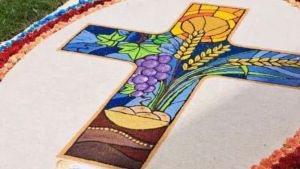
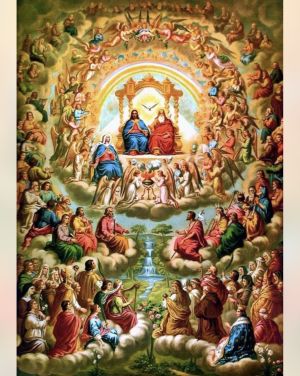
Solemnity of the Most Holy Trinity (year A) [31 May 2026]
First Reading from the Book of Exodus (34:4–6, 8–9)
The text presents one of the most precious moments of biblical revelation: God speaks of himself and proclaims his name before Moses, who prostrates himself in recognition of the greatness of what he hears. God defines himself as ‘the Lord (YHWH), a God who is compassionate and gracious, slow to anger, and abounding in love and faithfulness. This name, already revealed in the burning bush, is the foundation of Israel’s faith. Even then, God had shown his face: he sees the misery of his people in Egypt, hears their cry, knows their sufferings and comes down to set them free, inspiring Moses with the necessary strength. This means that man is never alone in his trials: God is present, accompanying and sustaining him. The Jewish Passover commemorates this liberating intervention every year. In today’s text, however, a further step is taken: God does not merely feel compassion, but loves deeply. His ‘passing’ before Moses recalls the passage during the Exodus: whenever God passes by, he sets free. This second revelation is even more important because it frees man from false images of God. It is not man who has invented a good God: it is God himself who has revealed himself in this way, unexpectedly. Moses fully understands the meaning of ‘slow to anger’ and asks forgiveness for the people, aware of their unfaithfulness. Israel is described as a “stiff-necked people”, an image drawn from the agricultural yoke: just as animals resist the yoke, so the people struggle to walk in step with God in the covenant. Despite this, Moses trusts that God will continue to forgive and keep the people as his inheritance. Finally, God’s faithfulness (“truth”) remains the foundation of hope: He does not abandon His people nor forget the covenant. For this reason, Israel remains the chosen people and, as the New Testament also reminds us, God remains ever faithful, even when man is unfaithful.
Responsorial Psalm: Song of Daniel (3:52–56)
To understand the Book of Daniel, we can use a modern comparison: in the 1980s, during Soviet rule in Czechoslovakia, a young actress staged a play about Joan of Arc. On the surface, it spoke of 15th-century France, but between the lines the message was clear: like Joan, the Czech people too could resist oppression. Similarly, the Book of Daniel, written in the 2nd century BC during the persecution by the Greek king Antiochus IV Epiphanes, is a text of resistance. It tells stories set in an earlier era, under the Babylonian king Nebuchadnezzar, but in reality it speaks of the author’s contemporary situation. Its aim is to encourage the faithful to remain steadfast, even unto martyrdom. A central episode is that of the three young men, Shadrach, Meshach and Abednego, condemned to be burned alive for refusing to worship a statue. Thrown into a blazing furnace, they are miraculously saved: the flames kill their executioners, whilst they walk unharmed through the fire, praising God. The greatest miracle, however, is their faith: they acknowledge the sins of the people and humbly entrust themselves to God’s mercy. In their song they proclaim: “Blessed are you, Lord, God of our fathers”. It is a reference to the covenant with Abraham, Isaac and Israel, to the divine promises and the history of salvation, but also to God’s continual forgiveness despite the people’s unfaithfulness. When speaking of God’s “Name”, God himself is referred to with respect. The reference to the “holy temple” reflects the historical context of persecution: even when worship is desecrated, it is affirmed that God alone is the true Lord. The images of the throne and the cherubim recall the Holy of Holies in the Temple, a sign of God’s presence among his people. This is a message of hope: even in the harshest trials, God is present and evil will not have the last word. The hymn thus becomes a song of trust and victory: despite violence and persecution, faith remains steadfast. This message of resilience and hope remains relevant even today.
Second Reading from the Second Letter of Saint Paul to the Corinthians (13:11–13)
The final sentence: “The grace of the Lord Jesus Christ, the love of God the Father and the fellowship of the Holy Spirit be with you all”, is the formula with which the Eucharistic celebration begins, and this is no coincidence: St Paul concludes his Second Letter to the Corinthians in this way, summarising God’s entire plan. This expression, spoken by the celebrant in the name of God, indicates that God invites humanity to enter into his intimacy, that is, into the communion of love of the Trinity. “Grace”, “love” and “communion” express the same reality: the Trinitarian life of the Father, the Son and the Holy Spirit. The subjunctive verb “may be with you” does not indicate any doubt about God, who is always the source of forgiveness, blessing and presence, but rather points to human freedom: God continually offers his love, but man is free to accept or reject it. This clear expression of the Trinity is rare in the Bible and marks the fulfilment of revelation in Jesus Christ. From this spring Paul’s exhortations, beginning with joy: “Brothers and sisters, rejoice.” In the Bible, joy is linked to the experience of liberation, such as at the end of a war or the return from exile, when the people experience God’s salvation. These liberations that occur in history foreshadow the definitive joy promised by God, that of a new creation. Jesus himself speaks of this full and definitive joy at the end of his discourse at the Last Supper: “Take heart, I have overcome the world”, and promises a joy that no one can take away, even through trials. Paul’s second exhortation concerns unity and peace: “Be of one mind… live in peace”. Unity among believers is essential, for it is God’s witness to the world and echoes Jesus’ prayer: “May they be one.” Paul insists on one faith, one Lord, one baptism, one God and Father of all. This communion is also expressed in the liturgical gesture of the kiss of peace, already present in the early Christian communities. Ancient testimonies, such as those of Saint Justin and Saint Hippolytus, show how this gesture was an integral part of the celebration, a concrete sign of unity and brotherhood.
From the Gospel of John (3:16–18)
‘God so loved the world that he gave his only Son’: this sentence expresses the great transition from the Old to the New Testament. That God loves humanity was already known, and was Israel’s great discovery; the novelty lies in the gift of the Son for the salvation of all. God so loved the world… that whoever believes in him may not perish, but have eternal life. According to the Gospel of John, it is enough to believe to be saved: whoever receives Christ becomes a child of God and already possesses eternal life. This “eternal life” is the life of the Spirit received at Baptism: it is true salvation, that is, living in peace with oneself and with others, as brothers and sisters amongst men and children of God. To be saved, one need only turn to Jesus, allow oneself to be transformed by him, and pass from a heart of stone to a heart of flesh. In biblical language: “to lift one’s gaze towards him”. It is extraordinary news, if taken seriously, for in the face of the Crucified One the true face of God is revealed. In the face of the crucified Christ, who freely gives his life, humanity discovers the true face of God: not a domineering or vengeful God, but a God who is love and mercy. “Whoever has seen me has seen the Father,” says Jesus. All that is required is faith: to believe in God who saves in order to be saved. In the Gospels, in fact, Jesus often repeats: “Your faith has saved you.” The evangelist John links this mystery to Zechariah’s prophecy: looking upon the one who has been pierced leads to conversion and purification. This vision also recurs in Revelation: all will see the one whom they have pierced. The expression ‘only Son’ indicates that Jesus is the fullness of grace and truth, the sole source of eternal life and the head of the new humanity. God’s plan is for all humanity to be united in Christ and to share in the life of the Trinity: this is salvation, true life, already present from this moment onwards. Eternal life is to know you, the one true God, and the one you have sent, Jesus Christ: to know God means to recognise him as mercy and to enter into a profound relationship with him, in accordance with the meaning that ‘to know’ holds in St John. ‘Avoiding judgement’ means avoiding separation from God: it is enough to believe in his forgiveness. As in human relationships, if one believes in forgiveness, one can return and be reconciled; if one does not believe, one remains trapped in one’s own error. So it is with God. God offers salvation, but does not impose it, and man remains always free. Those who believe are saved; those who reject faith exclude themselves. This is shown in an extraordinary way by the good thief when he turns to Jesus, who is crucified alongside him. Despite having lived a life of sin, at the very last moment before dying he entrusts himself to Jesus and receives a surprising promise: ‘Today you will be with me in Paradise.’
+Giovanni D’Ercole
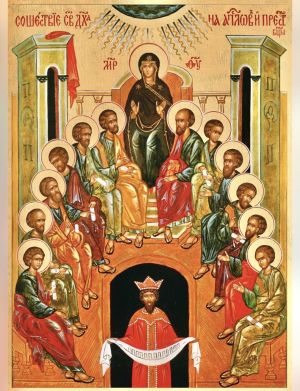
Pentecost Sunday (year A) [24 May 2026]
First Reading from the Acts of the Apostles (2:1–11)
Jerusalem is not only the city where Jesus instituted the Eucharist, but the city where he rose from the dead and where the Spirit was poured out upon humanity. In Christ’s time, the Jewish feast of Pentecost was of the utmost importance because it was the feast of the giving of the Law, one of the three annual feasts for which people made a pilgrimage to Jerusalem. The list of all the nationalities gathered in Jerusalem for the occasion is proof of this. Jerusalem was therefore teeming with people from all over, thousands of devout Jews, some of whom had travelled from far away. It was the year of Jesus’ death, but who among them knew this? I have deliberately said ‘the death’ of Jesus, without mentioning his resurrection, because for the time being his resurrection was still confidential news. These were people who had come from all over and who had perhaps never even heard of a certain Jesus of Nazareth.
They came to Jerusalem in the fervour, faith and enthusiasm of a pilgrimage to renew the Covenant with God. For the disciples, however, this feast of Pentecost, fifty days after his resurrection, is unlike any other, for to them nothing is as it was before; yet this does not mean they expect what is about to happen. To help us understand clearly what is happening, Luke recounts it by carefully evoking three passages from the Old Testament: first, the giving of the Law at Sinai; second, a word from the prophet Joel; third, the episode of the Tower of Babel. First, let us begin with Sinai: the tongues of fire at Pentecost, the sound ‘like a mighty wind’, bring to mind what had happened at Sinai, when God gave the tablets of the Law to Moses, as we read in the Book of Exodus (19:16–19). By drawing a parallel with the event at Sinai, Saint Luke wants us to understand that this Pentecost, that year, is much more than a traditional pilgrimage: it is a new Sinai. Just as God had given his Law to his people to teach them how to live within the Covenant, so now God gives his own Spirit to his people. Now God’s Law, which is the only means of living truly free and happy, is no longer written on tablets of stone but on tablets of flesh, in the heart of man, to borrow an image from Ezekiel. Secondly, Luke wished to evoke a word of the prophet Joel: “I will pour out my Spirit upon all flesh” (3:1–2), says God; “all flesh” meaning every human being. In Luke’s view, these Jews from every nation under heaven, as he calls them, symbolise the whole of humanity for whom Joel’s prophecy is finally fulfilled. This means that the famous, long-awaited “Day of the Lord” has arrived. Thirdly, we can summarise the story of Babel in two acts: Act 1, all people spoke the same language: they had the same speech and the same words, and they decided to undertake a great project that would mobilise all their energies: the construction of an immense tower. Act 2: God intervenes to put a stop to it: He scatters them across the face of the earth and confuses their languages. From then on, people will no longer understand one another. Unless one wishes to judge God’s intentions, it is impossible to imagine that he acted for any reason other than our happiness. Therefore, if God intervenes, it is to spare humanity a false path: the path of a single mindset, of a single project; something like ‘my children, you seek unity, and that is good; but do not go astray: unity does not lie in uniformity. True unity in love can only be found in diversity’. The account of Pentecost in Luke fits well within the narrative of Babel: at Babel, humanity learns diversity; at Pentecost, it learns unity in diversity: now all the nations under heaven hear the one message proclaimed in their various languages: the wonders of God.
Note: The first reading and the psalm are common to the feasts of Pentecost across the three liturgical years. However, the second reading and the Gospel vary each year.
Responsorial Psalm (103/104)
Read in its entirety, this psalm offers thirty-six verses of pure praise, of wonder at the works of God. It is not surprising that it is proposed to us for the feast of Pentecost, given that Luke, in the Acts of the Apostles, recounts that on the morning of Pentecost the Apostles, filled with the Holy Spirit, began to proclaim the wonders of God in every language. One might observe that to marvel at creation there is no need to have faith, and in every civilisation one finds magnificent poems on the beauties of nature. In Egypt, on the tomb of a Pharaoh, a poem written by the famous Pharaoh Akhenaten was discovered: a hymn to the Sun-God. Amenhotep IV lived around 1350 BC, at a time when the Jews were probably in Egypt and would have known this poem. There are similarities in style and vocabulary between the Pharaoh’s poem and Psalm 103/104. The language of wonder is the same across all latitudes, but what is interesting are the differences, which are the hallmark of the Revelation given to the people of the Covenant. The first difference, and it is essential to the faith of Israel, is that God alone is God; there is no other God but him; and therefore the sun is not a god. The Bible puts the sun and the moon in their place: they are not gods but merely luminaries, creatures themselves: one of the verses of the psalm states this clearly: “You, God, have made the moon to mark the seasons and the sun that knows the hour of its setting.” There are verses not chosen for the feast of Pentecost which clearly present God as the sole Lord of Creation, and a wholly regal vocabulary is used: God is presented as a magnificent, majestic and victorious King. A second distinctive feature of the Bible: creation is only good, and one hears an echo of the poem in Genesis which repeats tirelessly, like a refrain, “And God saw that it was good!”. Psalm 103/104 evokes all the elements of creation with the same wonder: I rejoice in the Lord, and the psalmist adds, in a verse we do not hear this Sunday: “I will sing to the Lord as long as I live, I will sing hymns to my God as long as I exist…” Yet evil is not ignored: the end of the psalm clearly evokes it and hopes for its disappearance; but the people of the Old Testament had understood that evil is not God’s doing, for the whole of creation is good. And we know that one day God will remove all evil from the earth: the King who triumphs over the elements will overcome everything that stands in the way of human happiness. A third distinctive feature of the faith of Israel: creation is an enduring relationship between the Creator and his creatures. When we say in the Creed, “I believe in God the Almighty, Creator of heaven and earth”, we are not merely affirming our faith in an initial act of God, but we acknowledge ourselves to be in a relationship of dependence on him, and the psalm expresses this very well: “All wait for you… Hide your face: they fail; take away their breath: they die and return to their dust. Send forth your Spirit, they are created, and you renew the face of the earth.” Another distinctive feature of the faith of Israel is that at the summit of creation stands man, created to be the king of creation, filled with the very breath of God. And this is what we celebrate at Pentecost: the Spirit of God within us vibrates in his presence, and the psalmist sings, “Let the Lord rejoice in his works… I will rejoice in the Lord.” Finally, and this is very important, in Israel every reflection on creation is set within the perspective of the Covenant: having experienced God’s work of liberation, they meditated on creation in the light of this experience, and in this psalm we find traces of this: first of all, the name of God used here is the famous four-letter name, YHWH, which we translate as Lord, the revelation of the God of the Covenant.
Furthermore, “Lord, my God, how great you are!” The expression “my God” with the possessive is always a reference to the Covenant, since God’s plan in this Covenant was precisely stated in the formula “You shall be my people and I shall be your God”. This promise is fulfilled in the gift of the Spirit “to every person”, as the prophet Joel says. Now, every person is invited to receive the gift of the Spirit to truly become a child of God.
Second Reading from the First Letter of Saint Paul to the Corinthians (12:3b-7, 12-13)
Paul defines the Church as the place where “to each is given a manifestation of the Spirit for the common good”, not therefore for our own vanity, but for the good of all. And it is a free gift for all, just as the members of the body are freely at the service of the whole body. The work of the Spirit in the world resembles an immense mosaic with different pieces held together and united by the invisible action of the Spirit. As communities multiply, the mosaic spreads like wildfire and becomes ever more harmonious. In these communities, Jews and Gentiles, slaves and free men, break down the barriers of prejudice and division, recognising one another as brothers and sisters, members of a single body thanks to the one Baptism that incorporates us all into Christ. Paul certainly had good reasons to insist on unity, for the Christians in Corinth were of such diverse origins—Jews or Gentiles with conflicting sensitivities and religious traditions—and at times the early believers found it difficult to accept the newcomers. To place Jews and pagans on the same religious footing, given the weight that the election of Israel must have carried in Paul’s eyes, was nonetheless very bold! These issues and difficulties, present and highlighted by Paul in the Corinthian community, have not been absent over the centuries and persist even today within the Church. The law that animates believers is always the word of Jesus, who urged the apostles: “You know that the rulers of the nations lord it over them, and the great ones exercise authority over them. It shall not be so among you.” (Mt 20:25–26). Paul sees the Church not as a pyramid, but as a crowd gathered around Jesus Christ, the one Master, and, furthermore, as a living body made up of all the baptised, where those in authority do not view it as superiority, but as a mission in the service of all. Diversity becomes a mutual gift for everyone: “There are different charisms,” observes the Apostle, “and to each is given a manifestation of the Spirit for the common good.” Our differences thus become riches, and it is precisely through them that unity is built—a unity that is never uniformity, or worse, standardisation. Herein lies one of the great messages of Pentecost, where all the different languages come together to sing the same song, “the wonders of God”. Since then, the Church has sought to overcome differences in sensibility by learning to live through the labour of reconciliation, sustained by the Spirit given to us at Pentecost, the Spirit of love, forgiveness and reconciliation. The capacity for reconciliation and mutual respect is a true sign of the Spirit’s action and a witness that the world awaits: “By this everyone will know that you are my disciples: if you have love for one another,” said Jesus at the Last Supper (Jn 13:35). Unity in diversity is a beautiful challenge that we can overcome only because the Spirit has been given to us: the same Spirit, the Spirit of Love that unites the Father and the Son. From the lesson of Babel we understand that unity does not lie in uniformity, and from Pentecost we understand that true unity in love can only be found in diversity and is always a gift of the Spirit and an image on earth of the Trinitarian communion, the perichoresis between the Father, the Son and the Holy Spirit.
From the Gospel according to John (20:19–23)
To impart the Holy Spirit to his disciples, Jesus breathes on them; this brings to mind the famous phrase from the Book of Genesis, chapter 2: ‘The Lord God breathed into the man’s nostrils the breath of life, and the man became a living being’. And Psalm 103/104, which we also hear on this feast of Pentecost, comments on the text of Creation by singing: Send forth your Spirit, and all things shall be created. Now, it is the evening of Easter and Jesus takes up this gesture of the Creator. We can understand why Saint John notes: “It was the evening of that day, the first of the week”, a way of saying that it is the first day of the new creation. The Jews often recalled the creation that God had accomplished in seven days, as we read in the first chapter of Genesis, and awaited the eighth day, that of the Messiah. In his own way, John tells us: the eighth day has come and it is a true re-creation of humanity. Let us take up three phrases from the account of Pentecost that John offers us here. The first: “As the Father has sent me, so I send you”; the second: “He breathed on them and said: Receive the Holy Spirit”; and the third: “Whose sins you forgive are forgiven them”. The first and third phrases express a mission; the second speaks of the gift, namely the Holy Spirit given to fulfil the mission received. And this mission consists in “forgiving sins”. “As the Father has sent me, so I send you”. Jesus is the one sent by the Father, and we, who are sent by Jesus, have the same mission as him. This speaks to our responsibility, the trust placed in us, and concerns all the baptised, since the Church has always deemed it appropriate to confirm all the baptised. Jesus’ mission, to limit ourselves to the Gospel of John, is to take away the sin of the world, indeed to “eradicate” the sin of the world, being the Lamb of God, the one who takes away the sin of the world, as John the Baptist had prophesied. The Lamb, meek and humble of heart in the face of his executioners according to the prophecy of Isaiah 52–53, is the Paschal Lamb, who seals with his life the liberation of God’s people. Beyond the liberation of the chosen people from slavery in Egypt, the Gospel speaks to us of liberation from sin, hatred and violence. Jesus thus presents his mission: “God so loved the world that he gave his only Son, so that everyone who believes in him might not perish but might have eternal life.” We must keep these words of the Lord in mind to understand the phrase in today’s text that is not immediately clear: “Whose sins you forgive, they are forgiven; whose sins you do not forgive, they are not forgiven.” Or, according to another version, “Whose sins you remit, they are remitted; whose sins you do not remit, they are not remitted.” The first part of the sentence presents no difficulty, but the second may not be easily understood. It is impossible to think that God, who is Father, could fail to forgive us. The Old Testament had already highlighted that God’s forgiveness even precedes our repentance, for in God forgiveness is not a one-off act but defines his very being. God is gift and forgiveness. The hallmark of mercy is God’s bending down towards the wretched—that is, towards all of us. The power given to the disciples—indeed, the mission entrusted to them—is to communicate and pass on God’s forgiveness. Consequently, there is the terrible responsibility, expressed in the second part of the sentence, not merely to speak the word of God’s forgiveness, but to do everything possible so that the world does not ignore this forgiveness and thus fall prey to despair. God’s forgiveness, proclaimed through words and concrete actions, makes us ‘living forgiveness’, apostles of Divine Mercy. At Pentecost, God breathes the words of forgiveness, and the Holy Spirit continues to breathe words and gestures of forgiveness into our spirit, making us ‘lambs of God’ with the power to overcome the spiral of hatred and violence. “I am sending you out like lambs among wolves” to respond to violence and hatred with non-violence, meekness and forgiveness, thus hastening the arrival of the day when all humanity will live immersed in love and forgiveness: it will be the triumph of Divine Mercy!
+Giovanni D’Ercole
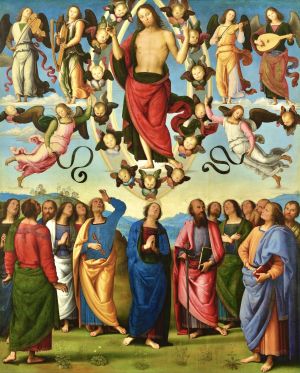
Ascension of the Lord (year A) and VII Easter Sunday [Thursday 14 May 2026]
First Reading from the Acts of the Apostles (1:1–11)
The opening verses serve as a bridge between the Acts of the Apostles and the Gospel of Luke, which is also dedicated to a certain Theophilus. One begins where the other ends, namely with the account of Jesus’ Ascension, even though the two accounts do not agree on everything. The Gospel recounts Jesus’ mission and preaching; the second is dedicated to the mission and preaching of the Apostles, hence the name “Acts of the Apostles”. The parallel can be taken further: the Gospel begins and ends in Jerusalem, the centre of the Jewish world and of the First Covenant; the Acts begin in Jerusalem, because the New Covenant is a continuation of the First, but they end in Rome, the crossroads of all the roads of the then-known world: the New Covenant now extends beyond the borders of Israel. For Luke, it is clear that this expansion is the work of the Holy Spirit. It is the very Spirit of Jesus and will be the inspiration of the Apostles from Pentecost onwards, so much so that the Acts are often called “the Gospel of the Spirit”. Just as Jesus had prepared for his mission with forty days in the desert after his Baptism, so too does he prepare the Church for forty days: “For forty days he appeared to them and spoke about the kingdom of God”. During a final meal, he gives his instructions: a command, a promise, a sending forth on mission. The command is almost surprising: to wait and not to move. “He instructed them not to leave Jerusalem, but to wait for the fulfilment of the Father’s promise.” That the Father’s promises would be fulfilled in Jerusalem certainly did not surprise the Eleven, all of whom were Jews, for the entire preaching of the prophets assigned Jerusalem a decisive role in the fulfilment of God’s plan. Luke specifies the content of the promise: “John baptised with water, but you will be baptised in the Holy Spirit in a few days’ time.” The apostles had in mind the prophecies of Joel: “I will pour out my Spirit upon all people” (Joel 3:1–2), and of Zechariah: “On that day there shall be a fountain opened for the house of David and for the inhabitants of Jerusalem, to cleanse them from sin and impurity” (Zech 13:1) and Ezekiel: “I will sprinkle clean water upon you, and you shall be cleansed… I will give you a new heart, and I will put a new spirit within you… I will put my Spirit within you” (Ezek 36:25–27).
The apostles’ question “Lord, is this the time when you will restore the kingdom to Israel?” shows that they had clearly understood that the famous Day of the Lord had dawned. Jesus’ reply should not surprise us: God calls upon human cooperation to bring about his plan, and the salvation of God, which has come through Jesus Christ, calls upon people to enter into it. For this to happen, people must know of it, and from this arises the mission and responsibility of the Apostles. The Spirit is given to them for this purpose: “You will receive power when the Holy Spirit comes upon you, and you will be my witnesses.” This means that between the gift of the Spirit and the definitive coming of the Kingdom there is an interval which is the time of witness: an interval that is all the longer the more the message is to be brought to all humanity. “You will be my witnesses in Jerusalem, throughout Judea and Samaria, and to the ends of the earth.” The Book of Acts follows this plan exactly. Just as on Easter morning “two men in dazzling robes” had torn the women away from their contemplation, saying, “Why do you seek the living among the dead? He is not here; he has risen”, so on the day of the Ascension two men in white robes do the same with the Apostles: “Men of Galilee, why do you stand gazing into the sky? This Jesus, who has been taken up from you into heaven, will come in the same way as you saw him go into heaven”. He will return, we are certain of it, and that is why we say at every Eucharist: “As we await the fulfilment of our blessed hope and the coming of our Saviour Jesus Christ”. In the Bible, the cloud is the visible sign of God’s presence, as at the crossing of the Red Sea or at the Transfiguration. The cloud that hides Jesus from human sight is the sign that he has now entered God’s realm: his physical and visible presence thus ceases to inaugurate his spiritual presence. It is impossible to reconstruct exactly what happened between Jesus’ Resurrection, on Easter night, and the day he definitively left his apostles to return to the Father. In Luke’s accounts, in both the Gospel and the Acts of the Apostles, the two narratives are very similar: Jesus’ departure takes place near Jerusalem, for the Gospel speaks of Bethany and the Acts of the Mount of Olives; in both, Luke specifies that Jesus instructs the disciples not to leave Jerusalem before they have received the Holy Spirit. The only difference concerns the timing: in the Gospel, it seems that the departure takes place on Easter evening itself; after appearing to the disciples on the road to Emmaus, they return to Jerusalem to tell the Eleven everything; and it is whilst they are talking together that Jesus appears, stays with them, and explains the Scriptures; then he leads them to Bethany and there disappears from their sight for good. In Acts, however, Luke specifies that forty days elapsed between Easter and the Ascension; and this is why we celebrate the the Ascension forty days after Easter. In the other Gospels there is almost nothing on this: in Matthew there is no account of the Ascension, but only an appearance of Jesus to two women who had gone to the tomb and then to the disciples in Galilee, during which he utters the phrase with which his Gospel concludes: “ Go therefore and make disciples of all nations, baptising them in the name of the Father and of the Son and of the Holy Spirit’ John gives a more detailed account of several appearances of the Risen One, one to Mary Magdalene and three to the disciples, the last by the Sea of Tiberias; but he does not recount the Ascension. As for Mark, he recounts the appearance to Mary Magdalene, then to two disciples who were going out into the countryside, and finally to the Eleven. Jesus sends them to preach the Gospel to the whole world, and Mark concludes by saying: “The Lord Jesus, after speaking to them, was taken up into heaven and sat at the right hand of God” . These differences between the Gospels prove that their details do not aim at historical or geographical reality: Matthew has his reasons for speaking of Galilee. Luke, on the other hand, has his own reasons for emphasising Jerusalem, because it was there that Jesus told them to wait for the gift of the Spirit, and Luke’s Gospel ends with Jesus’ final instruction: “And behold, I am sending upon you the one whom my Father has promised; but you must remain in the city until you are clothed with power from on high” (Lk 24:49).
Responsorial Psalm (46/47)
Here Israel sings and acclaims God as its king, and this is not surprising; but what is even more astonishing is that it says God is the king of the whole earth. Now, this was not always the view in Israel. Before the Babylonian Exile, none of the kings of Israel imagined that God was the Lord of the entire universe. This means that the psalm was composed late in the history of the chosen people. I shall focus on the first statement: God is the king of Israel. For a long period of biblical history, Israel had kings, like its neighbouring peoples, but its conception of kingship was unique, and this distinctiveness persisted throughout its history. In Israel, the king could never claim to be the highest authority in the land and did not hold absolute power, for God remained the sovereign. In other words, the true king in Israel was none other than God Himself. The king, for example, could not interpret the laws as he pleased and had, like everyone else, to submit to the Law of God given to Moses on Mount Sinai. According to the Book of Deuteronomy, he was required to read the entire Law every day of his life. Even whilst sitting on the throne, he was, in principle, merely an executor of God’s commands conveyed by the prophets. In the Books of Kings, in fact, we often see one king or another seeking the consent of the prophet of the day before going into battle or even, in David’s case, before undertaking the construction of the Temple. And on several occasions we see the prophets intervening freely in the lives of the kings and sometimes violently criticising their behaviour. The affirmation of God’s sovereignty was even a hindrance to the establishment of the monarchy. One recalls the very violent reaction of the prophet Samuel, in the time of the Judges, when the leaders of the tribes of Israel came to tell him that they wanted a king ‘to be like the other nations’. To desire to be ‘like the other nations’ when one had the honour of being the people chosen by God for the covenant was, in his eyes, a true blasphemy. He eventually yielded to the insistence of the tribal leaders, but not without warning them that they were bringing ruin upon themselves. And when he anointed the first king, Saul, he took care to specify that he was becoming the head of God’s inheritance. The people remained God’s people and not the king’s, and the king was but a servant of God. And throughout the monarchy in Israel, the prophets took it upon themselves to remind the kings of this fundamental truth. To the extent that the Books of Kings, when recounting the successive reigns, have but one criterion of judgement: the faithfulness of each king to God’s will. One phrase recurs constantly: ‘Such-and-such a king did what was right in the eyes of the Lord’, or conversely, ‘Such-and-such a king did what was evil in the eyes of the Lord’. It is therefore in honour of God himself that our psalm deploys here the entire vocabulary otherwise reserved for the kings of the earth. The very word ‘awesome’ is a compliment; it is a common term in courtly language and is reassuring: the enemies are warned, our king will be invincible. In every line of this psalm, it is clear that we are speaking of the God of Sinai, the Lord, who is acclaimed as God and King of the entire universe. This universal dimension is very much present in the psalm, to the point of stating that “God reigns over the pagan nations”. Now, the discovery of monotheism dates only to the Babylonian Exile: until then, the people of Israel were not yet monotheists. To be monotheists means to affirm that there is only one God, the same for the entire cosmos and humanity. Before the Exile, this was not the case: it is said that Israel was ‘monolatristic’; that is, it recognised for itself a single God, the God of the Sinai Covenant. But it believed that other peoples had their own gods. This psalm was therefore probably composed after the return from the Exile, and it was not in the throne room that these acclamations resounded, but in the rebuilt Temple of Jerusalem. Even now, the Jews already imagine the Day when God will finally be recognised for what He is, the Father of all goodness. We Christians, in turn, take up this psalm. And the phrase “God ascends amidst the acclamations” is most fitting for the celebration of the Ascension of Jesus Christ. Even though Christ’s kingship has not yet been fully realised and the evangelists do not recount any coronation ceremony for Christ. All the more reason to pay Jesus this magnificent tribute now, which merely anticipates the last day when all the children of God, finally gathered together, will sing: “All you peoples, clap your hands! Acclaim God with shouts of joy”
Second Reading from the Letter of Saint Paul the Apostle to the Ephesians (1:17–23)
The Letter to the Ephesians is divided into two parts: in chapters 1–3 there is a lengthy contemplation of God’s plan, and in chapters 4–6 an exhortation to the baptised to conform their lives to this mystery. For the feast of the the Ascension, the liturgy offers a passage from the first part in Year A and from the second part in Year B. The first part begins with a lengthy blessing formula in the Jewish style, which in our Christian liturgy we might call a ‘preface’, and it concerns God’s ‘merciful plan’ (Eph 1:3–6). The baptised already share in this mysterious plan of God which, one day, will be extended to all humanity. And Paul speaks of the privilege of us Christians who, having heard the word of truth, that is, the Gospel, have received the seal of the Holy Spirit, a pledge of our inheritance, whilst we await full redemption. We find all these terms in today’s reading, but in the form of a prayer, generally known as the ‘prayer for enlightenment’, since it takes the light of God to penetrate even a little into this mystery: “May he enlighten the eyes of your heart so that you may understand to what hope he has called you, what treasure of glory his inheritance among the saints holds…” And we know full well that the understanding of which he speaks is not a matter of reason but of the heart, a profound openness to being taught and enlightened. And Paul, as a Jew, knows full well that God’s wisdom is inaccessible to man unless God himself reveals himself to him: “May the God of our Lord Jesus Christ, the Father of glory, give you a spirit of wisdom and revelation for a deeper knowledge of him.” And what lies at the end of this knowledge towards which we are journeying? An inheritance of inestimable value, says Paul. The word “inheritance” in verse 18, and indeed in verse 14, recurs frequently in the Bible: in the Old Testament it refers to the land promised by God to the faithful. The same term is taken up in the New Testament, particularly in Paul’s letters, to denote the Kingdom and eternal life. For example: “The Spirit himself testifies with our spirit that we are children of God. And if we are children, we are also heirs: heirs of God, joint-heirs with Christ’ (Rom 8:16–17). ‘Giving thanks with joy to the Father who has qualified you to share in the inheritance of the saints in the light’ (Col 1:12). ‘ All nations are called, in Christ Jesus, to share in the same inheritance, to form the same body and to be partakers of the same promise through the Gospel” (Eph 3:8). James also develops this theme: “Has not God chosen those who are poor in the eyes of the world, who are rich in faith and heirs of the Kingdom, promised to those who love him?” (Jas 2:5) . And the Letter to the Hebrews, for its part, often takes up the theme: “God, who in times past spoke to our ancestors many times and in various ways through the prophets, has in these last days spoken to us through his Son, whom he appointed heir of all things and through whom he also made the world” (Heb 1:1–2); and a little further on: “That those who have been called may receive the eternal inheritance that was promised” (Heb 9:15) For, and this is the profound reason for Paul’s wonder, the Lord’s disciples are already associated with the triumph of their risen Master. Nothing in this world need frighten them any longer, for death has been conquered and the gates to eternal life are open. The work that God accomplishes in the hearts of believers is a true inner resurrection.
From the Gospel according to Matthew 28:16–20
Here is Jesus’ farewell discourse, after the Resurrection, in Galilee, commonly called the ‘crossroads of the Gentiles’, the ‘Galilee of the nations’, for the Apostles’ mission now concerns ‘all nations’ . The Gospel of Matthew seems to end abruptly: but in reality, the adventure is just beginning. It is like a film in which the word “THE END” appears on a road stretching out towards infinity. For it is precisely towards infinity that Jesus sends them: the immensity of the world and the infinity of the ages. “Go… Make disciples of all nations… Until the end of the world.” But were the disciples ready for such a mission? If Jesus were a business leader, he could not risk entrusting the future of his enterprise to collaborators like these, who seem not to have fully absorbed all the training he had provided over months. They are mistaken about the objective, the timing, and the nature of the enterprise. They even go so far as to doubt the reality they are experiencing, for Matthew clearly states, “some, however, doubted” (Mt 28:17). The mission entrusted to them, fraught with risks, is to promote a message that still surprises them. Folly, the wise would say; the wisdom of God, Saint Paul would reply. This is certainly no trivial undertaking: it surpasses everything the human spirit can imagine or conceive. It is a matter of communication between God and humankind. He who kindled the spark entrusts to his disciples the task of spreading the fire: “Go! Make disciples of all nations: baptise them in the name of the Father and of the Son and of the Holy Spirit”. “In the name of the Father and of the Son and of the Holy Spirit”: we do not often have the opportunity to dwell on this extraordinary formula of our faith. It is, in fact, the first formulation of the mystery of the Trinity: the expression “in the name of”, common in the Bible, signifies that there is indeed one God; at the same time, the three Persons are named and clearly distinguished: “ In the name of the Father, and of the Son, and of the Holy Spirit”. If we recall that, in the Bible, the Name is the person, and that to baptise etymologically means “to immerse”, this means that Baptism literally immerses us in the Trinity. We understand Jesus’s peremptory command to his disciples: “Go”; there is urgency. How can we not be eager to see all humanity take advantage of this offer? At the same time, it must be said that this formula, so familiar to us, was a true revolution for the generation of Christ! Proof of this is that when the apostles Peter and John healed the lame man at the Beautiful Gate, the authorities immediately asked: “By what power or in whose name have you done this?” (Acts 4:7), because it was not permitted to invoke any name other than that of God. Jesus speaks precisely of God, but his statement mentions three persons, whereas God was one; the prophets had made this clear enough. The Jews’ misunderstanding of Christ’s followers is recorded here; persecution was inevitable. Jesus knows this, and he had warned them on the last evening: “ They will expel you from the synagogues; indeed, the hour is coming when whoever kills you will think they are offering worship to God, that is, they will think they are defending God’s honour (Jn 16:2)… And Jesus added: ‘They will do this because they have not known either the Father or me’ (Jn 16:3). The mission entrusted to the apostles truly seems like madness; but they are not alone, and this must never be forgotten. Insofar as our commitment is not our own but His, we have no reason to worry about the results: “All authority in heaven and on earth has been given to me. Go!” (Mt 28:18–19). In other words, it is we who go, but it is he who has all power. It is said that a few days after his election, John XXIII received a visit from a friend: “Most Holy Father,” he said, “how heavy the task must be!” John XXIII replied: “It’s true, in the evening, when I lie down, I think: ‘Angelo, you are the Pope,’ and I struggle to fall asleep; but after a few minutes I say to myself: ‘Angelo, how stupid you are, you are not the one in charge of the Church, it is the Holy Spirit.’ Then I turn over and fall asleep!” For us too, evangelisation must be our passion, not our anguish. Jesus made it quite clear: “All authority in heaven and on earth has been given to me.” This sentence alone sums up the life of Christ: this takes place on a mountain, we do not know which one, but it evokes both the Mount of Temptation and the Mount of Transfiguration. On the Mount of Temptation, Jesus refused to receive power over creation from anyone other than the Father: “The devil took him up to a very high mountain and showed him all the kingdoms of the world and their splendour, and said to him: “All these things I will give you if you will fall down and worship me.” Then Jesus answered him, ‘Be gone, Satan! For it is written: “You shall worship the Lord your God, and him alone shall you serve”’ (cf. Mt 4:8–10). This power, which Jesus did not claim nor purchase, is given to him by the Father. And now this power is in our hands! “All authority in heaven and on earth has been given to me. Go! And Jesus adds, ‘I am with you always, even to the end of the age.’ The God of Presence revealed to Moses in the burning bush, the Emmanuel – which means ‘God with us’ – promised by Isaiah, are one in the Spirit of love that unites them. Ours is the mission to reveal to the world this loving presence of the Triune God.
Seventh Sunday in Easter (year A) [17 May 2026]
First Reading from the Acts of the Apostles (1:12–14)
The first sentence of the text sums up in a few words a crucial stage in the lives of the early Christians. For us it is the Ascension and we have made it a feast day, but, originally, was it not rather a day of mourning, a day of great departure? After the horror of Jesus’ Passion and death, after the splendour of the Resurrection, here they were, orphaned forever. But precisely for this reason they are closer to us, and their attitude can guide our own. Let us therefore look closely at their actions. Jesus had given them instructions: not to leave Jerusalem and to wait there for the gift of the Holy Spirit. Here is the account from the Acts: ‘While he was at table with them, he ordered them not to leave Jerusalem, but to wait for the fulfilment of the Father’s promise. “‘What,’ he said, ‘you have heard from me: John baptised with water, but you will be baptised in the Holy Spirit in a few days’” . And on the very day of his departure, on the Mount of Olives, he repeated: “You will receive power when the Holy Spirit comes upon you, and you will be my witnesses in Jerusalem, throughout Judea and Samaria, and to the ends of the earth.” I dwell on this expression “the power of the Spirit”, which should reassure us in every circumstance. And Luke recounts: “Having said this, whilst they were looking on, he was lifted up, and a cloud took him from their sight.” Obviously, they obeyed the Master’s command. It is therefore no surprise to find them in Jerusalem shortly afterwards; Luke notes that the Mount of Olives is very close to the city: the distance does not exceed what is known as the ‘Sabbath journey’, that is, the maximum distance one may travel without violating the Sabbath rest; it was just under a kilometre, two thousand cubits, and a cubit, as the name suggests, is the length of the forearm, about fifty centimetres. But why does Luke give this precise measurement? Are we to infer that it was the Sabbath? Or, by emphasising the proximity of the Mount of Olives, does Luke wish to suggest that everything is fulfilled in Jerusalem? It is there that God’s plan is fulfilled: there the Son was glorified, there the Covenant between God and humanity was renewed, there the Spirit will be given. It is in the holy city, therefore, that the life of the nascent Church begins; and Luke lists those who make up the group: the Eleven, some women, including Mary, the mother of Jesus, and some brothers, that is, probably disciples. Here too, the details are not merely anecdotal; we already knew the names of the apostles from Luke’s Gospel; if he gives us the list again, it is not to instruct us! Luke wishes to highlight the continuity within the community of the apostles: they are the very same who accompanied Jesus throughout his earthly life, and now they are committed to the mission. And they will be able to bear witness to the Resurrection only because they have been witnesses to the life, Passion and death of Jesus. We thus find again the group of people so different from one another whom Jesus had chosen: Peter, James, John and Andrew, fishermen on the Sea of Tiberias; Simon the Zealot—at the time of Jesus’ earthly life, this was not yet a political commitment, but it was already a sign of religious fanaticism. One wonders how he could stand alongside Matthew the tax collector, a tax collector in the pay of the occupying power and, for this reason, barred from worship! Not only did Jesus manage to bring them together around him, but they will now share the responsibility of continuing their Master’s mission. Christian tradition has identified Bartholomew with Nathanael, mentioned by Saint John, who was a specialist in the Law; if this were the case, it would have been a further point of diversity within the group of the Twelve. It is upon this community of men, so different from one another, that the proclamation of the Gospel now rests. A few brief observations: first of all, their group is not closed in on itself, but is already open to others, men and women; secondly, they begin this life of the Church in prayer, ‘devoted and of one accord’, as Luke emphasises. Perhaps the first miracle of the apostles is this praying together as one heart at the moment when the Master leaves them, and they find themselves seemingly left to their own devices and to their differences, which could have turned into divisions. In truth, they are only apparently left to their own devices: Jesus, though now invisible, is not absent. Matthew, in his Gospel, has preserved one of Jesus’ final words: “All authority in heaven and on earth has been given to me. Go therefore and make disciples of all nations, baptising them in the name of the Father and of the Son and of the Holy Spirit, teaching them to observe all that I have commanded you. And behold, I am with you always, to the end of the age.’ The apostles, therefore, do not pray for Jesus to draw near: his presence is assured; they pray to immerse themselves once more in his presence. This account from the Acts of the Apostles becomes for us a powerful lesson in hope: Jesus is with us always, his presence is assured, and the power of the Holy Spirit accompanies us!
Responsorial Psalm (26/27)
This psalm is for those going through difficult times. Believers are not exempt from life’s trials, and faith is no magic wand. Sometimes they suffer precisely because of their faith, as in religious wars or persecutions, or due to the hostility of atheists and the struggle to defend Christian values in a world that does not share them. We shall find an example of this in the Letter of Saint Peter, this Sunday’s second reading. But in their trials, believers know they are not alone, abandoned to their sad fate, for they have someone to turn to: “It is to God that my eyes weep,” said Job (Job 16:20). And they go to seek strength where it is found, that is, in God. “The Lord is my light and my salvation: whom shall I fear?” We do not know to which specific trials this psalm alludes; incidentally, it is much longer than the few verses read here, but the missing verses provide no historical details. Here and there one senses an allusion to external attacks: “The Lord is the bulwark of my life: before whom should I tremble?”. Ever since the great adventure of the Exodus, Israel has been threatened in its very existence on numerous occasions. The first verse, “The Lord is my light and my salvation”, is probably also an allusion to the Exodus under Moses’s leadership: in the Sinai desert, the pillar of cloud lit the way and signified God’s presence. Salvation, then, meant escaping from Pharaoh; in every age, salvation takes different forms, and Israel has experienced all manner of them, evoked through allusions in the psalm. To say “The Lord is the bulwark of my life” brings to mind the long period of wars, and the best bulwark is the strength that God gives us. “If you do not believe, you will not stand firm,” Isaiah said to King Ahaz (Is 7:9). Faith is the only strength that enables us to face everything: “Whom shall I fear?”. This means that God protects us from all fear and that we do not even fear Him. In all trials and sufferings, the believer knows that they can cry out to God: indeed, it is even recommended in the Bible, for groaning, weeping and praying is not cowardly, but simply human, and it is to God that we must groan, weep and pray. “Hear, O Lord, I call upon you,” says the psalm, and of one thing the chosen people are certain: that God hears our cry. Let us think of the great revelation of the Burning Bush: “The cry of the children of Israel has come to me,” God said to Moses (Ex. 3:7–9). And from that day Israel has known that God hears the cry of those who suffer. We read in the psalm: “One thing I have asked of the Lord, this alone I seek: to dwell in the house of the Lord all the days of my life”: like the Levite, admitted into the inner sanctum of the temple in Jerusalem, Israel asks for the grace to dwell in the presence of God. “Have mercy, answer me,” is a beggar’s cry and also a plea for forgiveness, for the expression that follows, “Seek my face,” is a call to conversion; for ever since settling in the Promised Land, the people have faced a new danger: that of unfaithfulness, that is, idolatry. However, when we read “Seek my face”, it is not God who thirsts for our homage and asks something of us for his own sake. God loves us, and all the commandments are for our happiness. St Augustine states: “Everything that man does for God benefits man and not God”. For God, the centre of the world is humanity, and He has no other purpose than our happiness—a happiness we find only when God is at the centre of our lives, for as St Augustine said: “You have made us for Yourself, Lord, and our hearts are restless until they rest in You.” It is interesting to compare Psalm 26/27 with the Canticle of Zechariah, which we sing every morning in the Liturgy of the Hours.
Second Reading from the First Letter of Saint Peter the Apostle (4:13–16)
In the early days of the Church, as we know from the Acts of the Apostles, the first disciples of Christ did not yet bear this name; they were called ‘Nazarenes’, because of Nazareth, and this name, used by the Jews who refused to recognise Jesus of Nazareth as the Messiah awaited by Israel, was a derogatory term. Later, when Barnabas and Paul were carrying out their mission in Antioch of Syria, it was probably pagans who had not yet converted to the Christian Church who gave Jesus’ disciples the name ‘Christians’, which means ‘of Christ, belonging to Christ’. This new title of ‘Christian’ was not an honour either. The unconverted pagans viewed with suspicion the radical change of life taking place within the community of the baptised. Shortly before, in his letter, Peter writes: ‘They find it strange that you no longer rush with them towards the same torrent of perdition, and they revile you’; ‘They slander you, treating you as evildoers’. Here, Saint Peter speaks of the sufferings—that is, the misunderstanding, the isolation, the slander—of which Jesus was a victim because he continued to proclaim his message without letting anyone stop him, with that fidelity that cost him his life. In turn, the early Christians face the same hostility, and Peter seeks to give them the courage to hold firm whilst awaiting the day when the glory of Christ will be revealed—that is, the day when Jesus will come to inaugurate his kingdom among men. Peter goes even further: not only must one not be ashamed, but on the contrary, the title of ‘Christian’ is, in his eyes, the highest dignity: “Rejoice,” he tells them, because of the name ‘Christian’, which means ‘belonging to Christ’. Furthermore, when he says: “To the extent that you share in the sufferings of Christ, rejoice…” he is speaking of the Beatitudes proclaimed by Jesus: “Blessed are you when they revile you, persecute you and, lying, say all sorts of evil against you on my account. Rejoice and be glad, for your reward in heaven is great!” . And Jesus, in saying this, was describing himself. Now Peter applies this description to those who, in turn, bear the name of Christ. He even says that “you share in the sufferings of Christ”, which means: “rejoice because you are intimately united with Christ in these sufferings you endure to remain faithful to his name and his mission. And since you are united to his sufferings, you will likewise be united to his glory on the day when the truth will burst forth.” It is clear, however, that suffering is not an end in itself, but the goal is to be united to Christ and to God in the Spirit of love, whatever the circumstances—happy or unhappy—may be in our lives. And Peter points to a way of facing persecution for the sake of Christ’s name: “To the extent that you share in the sufferings of Christ, rejoice…”. Here is a proclamation and an encouragement, for the day will come when Christ will be recognised by all, and you along with him; and on that day it will be recognised that you were not mistaken because Christ had deceived you. We therefore need the courage to persevere, for you have chosen the right path. The Book of Acts recounts that after being flogged, Peter and John “left the Sanhedrin, rejoicing that they had been counted worthy to suffer dishonour for the name of Jesus”. Peter was only able to do this after Pentecost: one must be filled with the Spirit of Jesus to have the courage to face persecution in his name and to know that mysterious joy of being in communion with him, even in suffering, that joy which no one can take from us! The Church offers us this text from Peter as we await Pentecost, a special time for rediscovering the role of the Holy Spirit in the life of our communities.
From the Gospel according to John (17:1b-11a)
These final words of Jesus: “I am coming to you” mysteriously draw us into Jesus’ prayer at the very moment he is about to reach the Father: “I am coming to you”. It is the Hour of the great passage: “Father, the hour has come”, that Hour of which he spoke many times during his earthly life, that Hour which he seemed both to desire and to fear. It is the decisive Hour, central to all human history, the Hour which all creation awaits as a birth: for it is the Hour of the fulfilment of God’s plan. From now on, nothing will ever be the same again. In this decisive Hour, the mystery of the Father will finally be revealed to the world: this is why Jesus repeatedly uses the words “glory” and “glorify”. A person’s glory, in the biblical sense, is not their fame or the recognition of others; it is their true worth. The glory of God is therefore God Himself, who reveals Himself to mankind in all the splendour of His holiness. The verb ‘to glorify’ can be replaced with ‘to reveal’. In this decisive Hour, God will be glorified, revealed in the Son, and believers will finally ‘know’ the Father; they will enter into that intimacy which unites the Son to the Father, and which the Son communicates to mankind. Those who accept this revelation and believe in Jesus will enter into this intimacy with the Father: they will enter into true life: “Eternal life is that they may know you, the one true God, and the one whom you have sent, Jesus Christ”. Here, from the very mouth of Jesus, is a definition of eternal life: Jesus speaks in the present tense and describes eternal life as the state of those who know God and Christ. We already live this life from the moment of our Baptism. Speaking of his disciples, Jesus says: “They have truly known that I came from you, and they have believed that you sent me.” At that moment, only a portion of humanity received this revelation and entered into the communion of love offered by the Father, accepting to take the path opened by the Son; and it is for these few alone that Jesus prays: “I pray for them; I do not pray for the world, but for those whom you have given me…” It is the mystery of God’s choices that is repeated: just as the Father had chosen Abraham to reveal his great plan to him, he chose certain members of Abraham’s lineage to bring the revelation of his mystery to fulfilment: “I have made your name known to the people you have given me from the world. They were yours, and you gave them to me, and they have kept your word. Now they know that everything you have given me comes from you…” . For this small chosen people, the hour has come to continue the work of revelation: “I am no longer in the world; they, however, are in the world, and I am coming to you.” Jesus passes the baton to us in a way: he has given us everything; now it is up to us to give it to others. We must let Jesus’ insistence on the word “give” resound within us: the Father has given authority to the Son… the Son will give eternal life to mankind… the Father has given mankind to the Son… the Father has given his words to the Son… and the Son has given these words to his brothers. Jesus’ emphasis on the verb ‘to give’ permeates the entire biblical meditation: our relationship with God is not a matter of calculation. It is enough for us to allow ourselves to be loved and continually filled with his grace. The word ‘grace’ means a free gift. The logic of the gift, of gratuitousness, is that of the Son who lives eternally in a dialogue of love with the Father. In the prologue to his Gospel, John says that the Son is eternally ‘turned towards the Father’ (Jn 1:18) (“No one has ever seen God; the only Son, who is in the Father’s bosom, he has made him known.” The expression “in the Father’s bosom” (from the Greek eis ton kolpon tou Patros) is interpreted as: “turned towards the Father”, “in intimate communion with the Father”, “in the Father’s intimacy”. Thus the idea that the Son is eternally “turned towards the Father” arises from this verse, even though the expression “turned towards the Father” is a theological paraphrase, not a literal quotation. And since there is no shadow between them, he reflects the Father’s glory: “Whoever has seen me has seen the Father”. Between them, everything is love, dialogue, sharing: “All that is mine is yours, and all that is yours is mine”. The Prologue of John’s Gospel is illuminated by the reading of this prayer of Jesus; it is, as it were, its transposition (Jn 1:1–18).
+Giovanni D’Ercole
For Jesus we are not a "mass", a "multitude"! We are individual "persons" with an eternal value, both as creatures and as re-deemed persons! He knows us! He knows me, and loves me and gave himself for me! (Gal 2:20) [John Paul II]
Non siamo “massa”, “moltitudine”, per Gesù! Siamo “persone” singole con un valore eterno, sia come creature sia come persone redente! lui ci conosce! lui mi conosce, e mi ama e ha dato se stesso per me! (Gal 2,20) [Giovanni Paolo II]
The grain of wheat that "falls to the ground and dies" becomes the promise of bread (Pope John Paul II)
Il chicco di grano che “cade in terra e muore” diventa la promessa del pane (Papa Giovanni Paolo II)
The power of faith can move mountains (cf. Mt 17:20): the Lord can illuminate even the deepest darkness [Pope Benedict]
La forza della fede può spostare le montagne (cfr Mt 17,20): il Signore può illuminare anche la tenebra più profonda [Papa Benedetto]
By willingly accepting death, Jesus carries the cross of all human beings and becomes a source of salvation for the whole of humanity. St Cyril of Jerusalem commented: “The glory of the Cross led those who were blind through ignorance into light, loosed all who were held fast by sin and brought redemption to the whole world of mankind” (Catechesis Illuminandorum XIII, 1: de Christo crucifixo et sepulto: PG 33, 772 B) [Pope Benedict]
Accettando volontariamente la morte, Gesù porta la croce di tutti gli uomini e diventa fonte di salvezza per tutta l’umanità. San Cirillo di Gerusalemme commenta: «La croce vittoriosa ha illuminato chi era accecato dall’ignoranza, ha liberato chi era prigioniero del peccato, ha portato la redenzione all’intera umanità» (Catechesis Illuminandorum XIII,1: de Christo crucifixo et sepulto: PG 33, 772 B) [Papa Benedetto]
In the New Testament, it is Christ who constitutes the full manifestation of God's light [Pope Benedict]
Nel Nuovo Testamento è Cristo a costituire la piena manifestazione della luce di Dio [Papa Benedetto]
Faith opens us to knowing and welcoming the real identity of Jesus, his newness and oneness, his word, as a source of life, in order to live a personal relationship with him. Knowledge of the faith grows, it grows with the desire to find the way and in the end it is a gift of God who does not reveal himself to us as an abstract thing without a face or a name, because faith responds to a Person who wants to enter into a relationship of deep love with us and to involve our whole life (Pope Benedict)
La fede ci apre a conoscere e ad accogliere la reale identità di Gesù, la sua novità e unicità, la sua Parola, come fonte di vita, per vivere una relazione personale con Lui. Il conoscere della fede cresce, cresce con il desiderio di trovare la strada, ed è finalmente un dono di Dio, che si rivela a noi non come una cosa astratta senza volto e senza nome, ma la fede risponde a una Persona, che vuole entrare in un rapporto di amore profondo con noi e coinvolgere tutta la nostra vita (Papa Benedetto)
Jesus Christ clearly indicates that even acts of devotion and penance (such as fasting, almsgiving, prayer), which by their religious purpose are primarily 'interior', can succumb to current 'externalism', and can therefore be falsified [John Paul II]
Gesù Cristo indica chiaramente che anche gli atti di devozione e di penitenza (come digiuno, elemosina, preghiera) che per la loro finalità religiosa sono principalmente “interiori”, possono cedere all’“esteriorismo” corrente, e quindi possono essere falsificati [Giovanni Paolo II]








duevie.art
don Giuseppe Nespeca
Tel. 333-1329741
Disclaimer
Questo blog non rappresenta una testata giornalistica in quanto viene aggiornato senza alcuna periodicità. Non può pertanto considerarsi un prodotto editoriale ai sensi della legge N°62 del 07/03/2001.
Le immagini sono tratte da internet, ma se il loro uso violasse diritti d'autore, lo si comunichi all'autore del blog che provvederà alla loro pronta rimozione.
L'autore dichiara di non essere responsabile dei commenti lasciati nei post. Eventuali commenti dei lettori, lesivi dell'immagine o dell'onorabilità di persone terze, il cui contenuto fosse ritenuto non idoneo alla pubblicazione verranno insindacabilmente rimossi.