


5th Sunday in Ordinary Time (year A) [8 February 2026]
May God bless us and may the Virgin protect us! We are approaching Lent. Let us begin to prepare ourselves spiritually. After the sixth Sunday, on 15 February, we will enter Lent.
*First Reading from the Book of the Prophet Isaiah (58:7-10)
At first glance, this text might seem like a nice moral lesson, which would already be something. In reality, however, it says much more. The context is that of the end of the 6th century BC: the return from exile has taken place, but deep wounds remain, 'the devastation of the past' and ruins to be rebuilt. In Jerusalem, religious practice has been re-established and, in good faith, people are trying to please God. However, the prophet has a delicate message to convey: the worship that pleases God is not what the people imagine. The fasts are spectacular, but daily life is marked by quarrels, violence and greed. For this reason, Isaiah denounces a worship that claims to obtain God's favour without conversion of heart: 'You fast for strife and self-defeating arguments... Is this the fast that I choose?' (Isaiah 58:4-5).
We are faced with one of the strongest texts in the Old Testament, which shakes our ideas about God and religion and answers with great clarity a fundamental question: what does God expect of us? These few biblical verses are the fruit of a long maturation in the faith of Israel. From Abraham onwards, people sought what pleased God: first human sacrifices, then animal sacrifices, then fasting, offerings and prayers. But throughout this history, the prophets never ceased to remind the people that true worship cannot be separated from the daily life of the Covenant. This is why Isaiah proclaims: the fast that God desires is to loose the chains of injustice, to free the oppressed, to break every yoke. In God's eyes, every gesture that frees a brother or sister is worth more than the most austere fast. This is followed by a list of concrete actions: feeding the hungry, giving drink to the thirsty, welcoming the homeless poor, clothing the naked, and helping all human misery. It is here that the truth of faith is measured. Three observations conclude the message: First, these actions are an imitation of God's own work, which Israel has always experienced as liberating and merciful. Human beings are truly called to be the image of God, and the way they treat others reveals their relationship with Him. Second: when Isaiah promises 'the glory of the Lord' (v. 8) to those who care for the poor, he is not speaking of an external reward, but of a reality: those who act like God reflect His presence, becoming light in the darkness, because 'where there is love, there is God'. Thirdly, every gesture of justice, liberation and sharing is a step towards the Kingdom of God, that Kingdom of justice and love that the Old Testament awaits and that the Gospel of the Beatitudes presents as being built day by day by the meek, the peaceful and those who hunger for justice.
*Responsorial Psalm (111/112)
Every year, during the Feast of Tabernacles, a feast that still lasts a week in autumn, the whole people made what we might call their "profession of faith": they renewed their Covenant with God and recommitted themselves to respecting the Law. Psalm 111/112 was certainly sung on this occasion. The entire psalm is in itself a short treatise on life in the Covenant: to understand it better, you have to read it from the beginning. I will read you the first verse: 'Hallelujah! Blessed is the man who fears the Lord, who loves his will with all his heart!'. First of all, the psalm begins with the word Hallelujah, literally "Praise God," which is the key word of believers: when the man of the Bible invites us to praise God, it is precisely because of the gift of the Covenant. Then, this psalm is an alphabetical psalm: that is, it contains twenty-two verses, as many as there are letters in the Hebrew alphabet; the first word of each verse begins with a letter of the alphabet in alphabetical order. It is a way of affirming that the Covenant with God concerns the whole of man's life and that God's Law is the only path to happiness for the whole of existence, from A to Z. Finally, the first verse begins with the word 'blessed', addressed to the man who knows how to remain on the path of the Covenant. This immediately brings to mind the Gospel of the Beatitudes, which echoes the same term 'blessed': Jesus uses a word here that is very common in the Bible, but which unfortunately our English translation does not fully convey. In his commentary on the Psalms, André Chouraqui observed that the Hebrew root of this word (blessed is the man Ashrê hā'îsh) has as its fundamental meaning the path, the man's steps on the unobstructed road that leads to the Lord. It is therefore 'less about happiness than about the path that leads to it'. For this reason, Chouraqui himself translated 'Blessed' as 'On the way', implying: you are on the right path, continue. Generally, in the Bible, the word 'blessed' does not stand alone: it is contrasted with its opposite 'unhappy' (blessed is barùk and cursed is 'arūr). The general idea is that in life there are false paths to avoid; some choices or behaviours lead to good, others, on the contrary, lead only to unhappiness. And if we read the entire psalm, we realise that it is constructed in this way. Even the better-known Psalm 1 is structured in the same way: first it describes the good paths, the path to happiness, and only briefly the bad ones, because they are not worth dwelling on. Here, the good choice is already indicated in the first verse: 'Blessed is the man who fears the Lord!'. We find this expression frequently in the Old Testament: the 'fear of God'. Unfortunately, in the liturgical reading, the second part of the verse is missing; I will read it to you in its entirety: 'Blessed is the man who fears the Lord, who loves his will with all his heart.' Here, then, is a definition of 'fear of God': it is love of his will, because one acts in trust. The fear of the Lord is not fear in a negative sense: in fact, a little further on, another verse makes this clear: "The righteous man... trusts in the Lord. His heart is secure" (vv. 7-8). The "fear of God" in the biblical sense is both an awareness of God's holiness, a recognition of all that He does for man and, since He is our Creator, a concern to obey Him: only He knows what is good for us. It is a filial attitude of respect and trusting obedience. Israel thus discovers two truths: God is the All-Other, but He also makes Himself All-Near. He is infinitely powerful, but this power is that of love. We have nothing to fear, because He can and wants our happiness! In Psalm 102/103 we read: "As a father's compassion is toward his children, so the Lord's compassion is toward those who fear Him." To fear the Lord means to have a respectful and trusting attitude toward Him. It also means "to lean on Him." This is the right attitude towards God, the one that puts man on the right path: "Blessed is the man who fears the Lord!" And this is also the right attitude towards others: "The righteous man, merciful, compassionate and just... he gives generously to the poor" (vv. 4, 8). The previous psalm (110/111), very similar to this one, uses the same words "justice, tenderness and mercy" for God and for man. Daily observance of the Law, in everyday life, from A to Z, as symbolised by the alphabet of the psalm, shapes us in God's likeness. I say likeness, because the psalmist reminds us that the Lord remains the All-Other: the formulas are not identical. For God, it is said that He is justice, tenderness and mercy, while for man, the psalmist says "he is a man of justice, tenderness and mercy", that is, these are virtues that he practises, not his intrinsic being. These virtues come from God, and man reflects them in some way. And because his actions are in the image of God, the righteous man becomes a light for others: 'he springs up in the darkness, a light for the upright' (v. 4). Here we hear an echo of the first reading from the prophet Isaiah: 'Share your bread with the hungry, bring the homeless poor into your house, clothe the naked... then your light will rise like the dawn' (58:7). When we give and share, we are more in the image of God, who is pure gift. To the extent that we are able, we reflect his light.
*Second Reading from the First Letter of Saint Paul the Apostle to the Corinthians (2:1-5)
Saint Paul, as he often does, proceeds by contrasts: the first contrast is that the mystery of God is completely different from the wisdom of men; the second contrast concerns the language of the apostle who proclaims the mystery, which is very different from beautiful human speech and eloquence. Let us take up these two contrasts: the mystery of God / human wisdom; Christian language / eloquence or oratory. First contrast: the mystery of God or human wisdom. Paul says that he came 'to proclaim the mystery of God'; by mystery we mean God's 'merciful plan', which will be developed later in the Letter to the Ephesians (Eph 1:3-14): this plan is to make humanity a perfect communion of love around Jesus Christ, founded on the values of love, mutual service, gift and forgiveness. Jesus already puts this into practice throughout his earthly life. We are therefore very far from the idea of a powerful God in the military sense, as some sometimes imagine. This mystery of God is realised through a 'crucified Messiah', which is completely contrary to human logic, almost a paradox. Paul affirms that Jesus of Nazareth is the Messiah, but not as expected: he was not expected to be crucified; according to our logic, the crucifixion seemed to prove the opposite, because everyone remembered a famous phrase from Deuteronomy: whoever was condemned to death by the law was considered cursed by God (Dt 21:22-23). Yet, this plan of the almighty God is nothing less than Jesus Christ, as Paul says. In witnessing to his faith, Paul has nothing to proclaim but Jesus Christ: He is the centre of human history, of God's plan and of his faith. He wants to know nothing else: "For I decided to know nothing among you except Jesus Christ." Behind this phrase we can glimpse the difficulties of resisting the pressures, insults and persecutions already present. This crucified Messiah shows us true wisdom, the wisdom of God: gift and forgiveness, rejection of violence... the whole message of the Gospel of the Beatitudes. In the face of this divine wisdom, human wisdom is reasoning, persuasion, strength and power; this wisdom cannot understand the message of the Gospel. In fact, Paul experienced failure in Athens, the centre of philosophy (Acts 17:16-34). Second opposition: the language of the preacher or the art of oratory. Paul makes no claim to eloquence: this already reassures us, if we are not skilled orators. But he goes further: for him, eloquence, oratory, and the ability to persuade are actually obstacles, incompatible with the message of the Gospel. Proclaiming the Gospel does not mean showing off knowledge or imposing arguments. It is interesting to note that the word 'convince' contains the word 'win': perhaps we are in the wrong place if we think we are proclaiming the religion of Love. Faith, like love, cannot be persuaded... Try to convince someone to love you: love cannot be demonstrated, it cannot be reasoned. The same is true of the mystery of God: it can only be penetrated gradually. The mystery of a poor Messiah, a Messiah-Servant, a crucified Messiah, cannot be proclaimed by means of power: that would be the opposite of the mystery itself! It is in poverty that the Gospel is proclaimed: this should give us courage! The poor Messiah can only be proclaimed by poor means; the Messiah-Servant only by servants. Do not worry if you are not a great speaker: our poverty of language is the only one compatible with the Gospel. Paul goes further and even says that our poverty is a necessary condition for preaching: it leaves room for God's action. It is not Paul who convinces the Corinthians, but the Spirit of God, who gives preaching the power of truth, enabling Christ to be discovered. It follows that it is not the power of our reasoning that convinces: faith is not based on human wisdom, but on the power of the Spirit of God. We can only lend him our voice. Obviously, as with Paul, this requires an enormous act of faith: It was in my weakness, trembling and fearful, that I came to you. My language, my preaching had nothing to do with convincing wisdom; but the Spirit and his power were manifested, so that your faith might not be based on human wisdom, but on the power of God. When it seems that the circle of believers is shrinking, when we dream of powerful media, electronic or financial tools, it is good for us to feel that the proclamation of the Gospel is best suited to poor means. But to accept this, we must admit that the Holy Spirit is the best preacher, and that the witness of our poverty is the best preaching.
*From the Gospel according to Matthew (5:13-16)
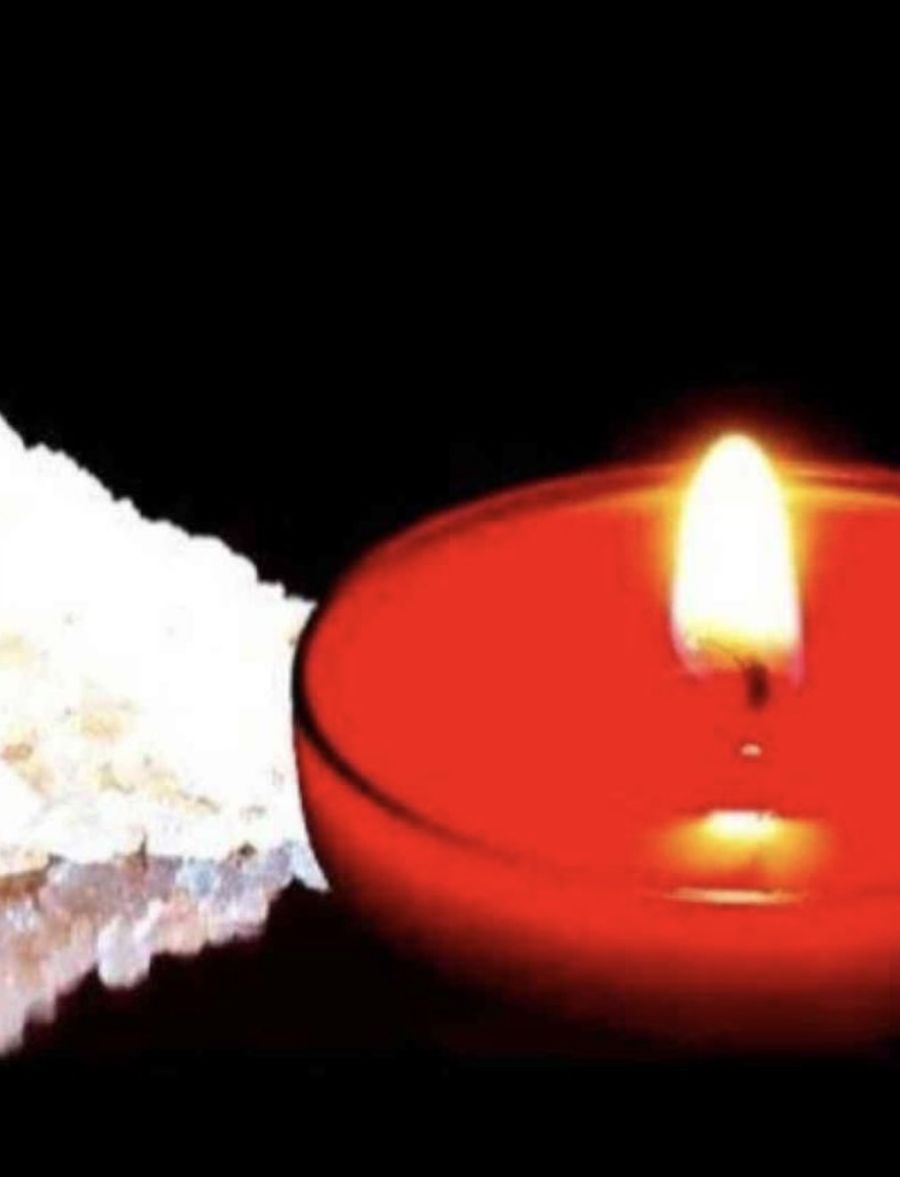
If a lamp is beautiful, that is better, but it is not the most important thing! What is required first and foremost is that it gives light, because if it does not give good light, nothing can be seen. As for salt, its vocation is to disappear while performing its task: if it is missing, the dish will be less tasty. On closer inspection, salt and light do not exist for their own sake. Jesus says to his disciples: 'You are the salt of the earth... You are the light of the world': what matters is the earth, the world; salt and light matter only in relation to the earth and the world! By telling his disciples that they are salt and light, Jesus puts them in a missionary situation: you who receive my words become, for this very reason, salt and light for the world: your presence is indispensable. In other words, the Church exists only to evangelise the world. This puts us in our place! The Bible already reminded the people of Israel that they were the chosen people, but at the service of the world; this lesson also applies to us. Returning to salt and light: one may ask what the two elements to which Jesus compares his disciples have in common. We can answer that both are revelatory: salt enhances the flavour of food, light reveals the beauty of people and the world. Food exists before it receives salt; the world and beings exist before they are illuminated. This tells us a lot about the mission that Jesus entrusts to his disciples, to us: no one needs us in order to exist, but we have a specific role to play. Salt of the earth: we are here to reveal to people the flavour of their lives. People do not wait for us to perform acts of love and sharing, which are sometimes wonderful. Evangelising means saying that the Kingdom is among you, in every gesture, in every word of love, and "where there is love, there is God." Light of the world: we are here to enhance the beauty of this world. It is the gaze of love that reveals the true face of people and things. The Holy Spirit has been given to us precisely to be in tune with every gesture or word that comes from Him. But this can only happen with discretion and humility. Too much salt ruins the taste of food; too strong a light crushes what it wants to illuminate. To be salt and light, one must love deeply, truly love. Today's readings repeat this to us in different but consistent ways. Evangelisation is not a conquest; the New Evangelisation is not a reconquest. The proclamation of the Gospel takes place only in the presence of love. Let us remember Paul's warning to the Corinthians in the second reading: only the poor and the humble can preach the Kingdom. This presence of love can be very demanding, as the first reading shows: the connection between Isaiah and the Gospel is very significant. To be the light of the world means to be at the service of our brothers and sisters; Isaiah is concrete: sharing bread or clothing, breaking down all obstacles that impede human freedom. This Sunday's Psalm also says the same thing: 'the righteous man', that is, the one who generously shares his riches, is a light for others. Through his words and gestures of love, others will discover the source of all love: as Jesus says. Seeing the good that the disciples do, people will give glory to the Father in heaven, that is, they will discover that God's plan for humanity is a plan of peace and justice. On the contrary, how can people believe in God's plan of love if we, his ambassadors, do not multiply the gestures of solidarity and justice that society requires? Salt is always in danger of losing its flavour: it is easy to forget the powerful words of the prophet Isaiah, heard in the first reading; and it is no coincidence that the liturgy offers them to us just before the beginning of Lent, a time when we will reflect on what kind of fasting God prefers. One last observation: today's Gospel (salt and light) immediately follows the proclamation of the Beatitudes in Matthew last Sunday. There is therefore a link between the two passages, which can illuminate each other. Perhaps the best way to be salt and light is to live according to the spirit of the Beatitudes, that is, in opposition to the spirit of the world: to accept humility, gentleness, purity, justice; to be peacemakers in all circumstances; and, above all, to accept poverty and lack, with a single goal: 'so that they may see your good works and give glory to your Father who is in heaven'. Additions: According to the Second Vatican Council document on the Church, Lumen Gentium, we are not the true light of the world; Jesus Christ is. By telling his disciples that they are light, Jesus reveals that it is God himself who shines through them, because in Scripture, as in the Council, it is always made clear that all light comes from God.
+Giovanni D'Ercole








