Jan 15, 2026 Written by 

Vocation attracting other disciples

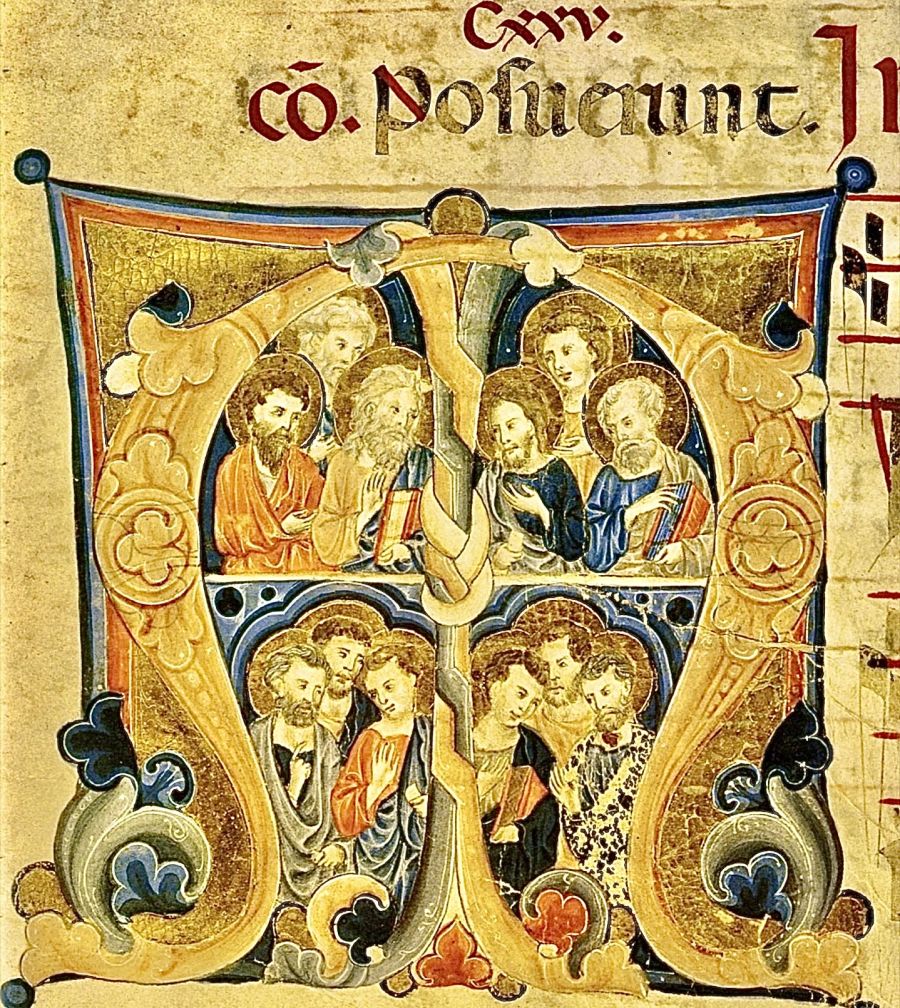
Mk depicts Jesus ascending the mountain and in solitude-prayer calling the Twelve to follow him.

Francis' vocation to follow Christ was a call and attraction of other sequels. His assiduous prayer encouraged many souls to share the evangelical ideal.

Francis desired to have brothers who would «stay with him and to send them out to preach» (Mk 3:14).

In the Sources there are numerous episodes that portray the call of many future brothers and souls willing to follow Clare of Assisi.

We read:

"Some began to feel called to penance by his example and to join him, in habit and life, leaving everything behind.

The first of them was the "venerable Bernard", who, having been made a partaker of the divine vocation, deserved to be the firstborn of the blessed father, first in time and holiness.

Bernard, having ascertained by himself the holiness of Christ's servant, decided to follow his example, abandoning the world completely.

Therefore he turned to him, to know how to realise this intention" (FF 1053).

And to his brothers, he often repeated:

«This is our vocation: to heal wounds, to bind up fractures, to call the lost back.

Many, who seem to us to be members of the devil, may one day become disciples of Christ» (FF1470).

In the legend of St Clare:

"Placing her nest, like a silver dove, in the hollows of this cliff, she generated a host of virgins of Christ, founded a holy monastery and started the Order of the Poor Ladies" (FF3176).

"The fame of the sanctity of the virgin Clare soon spread through the neighbouring districts, and women flocked from all sides after the fragrance of her perfume.

The virgins, following her example, hasten to keep themselves as such for Christ; the married ones study to live more chastely [...].

Countless virgins, spurred on by the fame of Clare, having some impediment to embrace the cloistered life in a monastery, study to live in their father's house, though without a rule, according to the spirit of the rule.

Such were the seeds of salvation born by the example of the virgin Clare, that it seemed to be fulfilled in her the saying of the prophet: more numerous are the sons of the abandoned than of the one who has a husband" (FF 3177).


«And he went up on the mountain and called those whom he wanted, and they came to him» (Mk 3:13)


Friday, 2nd wk. in O.T.  (Mk 3,13-19)

133 Last modified on Thursday, 15 January 2026 02:36
Teresa Girolami

Teresa Girolami è laureata in Materie letterarie e Teologia. Ha pubblicato vari testi, fra cui: "Pellegrinaggio del cuore" (Ed. Piemme); "I Fiammiferi di Maria - La Madre di Dio in prosa e poesia"; "Tenerezza Scalza - Natura di donna"; co-autrice di "Dialogo e Solstizio".

Email This email address is being protected from spambots. You need JavaScript enabled to view it.
Anyone who welcomes the Lord into his life and loves him with all his heart is capable of a new beginning. He succeeds in doing God’s will: to bring about a new form of existence enlivened by love and destined for eternity (Pope Benedict)
Chi accoglie il Signore nella propria vita e lo ama con tutto il cuore è capace di un nuovo inizio. Riesce a compiere la volontà di Dio: realizzare una nuova forma di esistenza animata dall’amore e destinata all’eternità (Papa Benedetto)
You ought not, however, to be satisfied merely with knocking and seeking: to understand the things of God, what is absolutely necessary is oratio. For this reason, the Saviour told us not only: ‘Seek and you will find’, and ‘Knock and it shall be opened to you’, but also added, ‘Ask and you shall receive’ [Verbum Domini n.86; cit. Origen, Letter to Gregory]
Non ti devi però accontentare di bussare e di cercare: per comprendere le cose di Dio ti è assolutamente necessaria l’oratio. Proprio per esortarci ad essa il Salvatore ci ha detto non soltanto: “Cercate e troverete”, e “Bussate e vi sarà aperto”, ma ha aggiunto: “Chiedete e riceverete” [Verbum Domini n.86; cit. Origene, Lettera a Gregorio]
In the crucified Jesus, a kind of transformation and concentration of the signs occurs: he himself is the “sign of God” (John Paul II)
In Gesù crocifisso avviene come una trasformazione e concentrazione dei segni: è Lui stesso il "segno di Dio" (Giovanni Paolo II)
Only through Christ can we converse with God the Father as children, otherwise it is not possible, but in communion with the Son we can also say, as he did, “Abba”. In communion with Christ we can know God as our true Father. For this reason Christian prayer consists in looking constantly at Christ and in an ever new way, speaking to him, being with him in silence, listening to him, acting and suffering with him (Pope Benedict)
Solo in Cristo possiamo dialogare con Dio Padre come figli, altrimenti non è possibile, ma in comunione col Figlio possiamo anche dire noi come ha detto Lui: «Abbà». In comunione con Cristo possiamo conoscere Dio come Padre vero. Per questo la preghiera cristiana consiste nel guardare costantemente e in maniera sempre nuova a Cristo, parlare con Lui, stare in silenzio con Lui, ascoltarlo, agire e soffrire con Lui (Papa Benedetto)
In today’s Gospel passage, Jesus identifies himself not only with the king-shepherd, but also with the lost sheep, we can speak of a “double identity”: the king-shepherd, Jesus identifies also with the sheep: that is, with the least and most needy of his brothers and sisters […] And let us return home only with this phrase: “I was present there. Thank you!”. Or: “You forgot about me” (Pope Francis)
Nella pagina evangelica di oggi, Gesù si identifica non solo col re-pastore, ma anche con le pecore perdute. Potremmo parlare come di una “doppia identità”: il re-pastore, Gesù, si identifica anche con le pecore, cioè con i fratelli più piccoli e bisognosi […] E torniamo a casa soltanto con questa frase: “Io ero presente lì. Grazie!” oppure: “Ti sei scordato di me” (Papa Francesco)
Thus, in the figure of Matthew, the Gospels present to us a true and proper paradox: those who seem to be the farthest from holiness can even become a model of the acceptance of God's mercy and offer a glimpse of its marvellous effects in their own lives (Pope Benedict))
Nella figura di Matteo, dunque, i Vangeli ci propongono un vero e proprio paradosso: chi è apparentemente più lontano dalla santità può diventare persino un modello (Papa Benedetto)

Due Fuochi due Vie - Vol. 1 Due Fuochi due Vie - Vol. 2 Due Fuochi due Vie - Vol. 3 Due Fuochi due Vie - Vol. 4 Due Fuochi due Vie - Vol. 5 Dialogo e Solstizio I fiammiferi di Maria

duevie.art

don Giuseppe Nespeca

Tel. 333-1329741


Disclaimer

Questo blog non rappresenta una testata giornalistica in quanto viene aggiornato senza alcuna periodicità. Non può pertanto considerarsi un prodotto editoriale ai sensi della legge N°62 del 07/03/2001.
Le immagini sono tratte da internet, ma se il loro uso violasse diritti d'autore, lo si comunichi all'autore del blog che provvederà alla loro pronta rimozione.
L'autore dichiara di non essere responsabile dei commenti lasciati nei post. Eventuali commenti dei lettori, lesivi dell'immagine o dell'onorabilità di persone terze, il cui contenuto fosse ritenuto non idoneo alla pubblicazione verranno insindacabilmente rimossi.







