Jan 27, 2026 Written by 

Another vision, in mockery

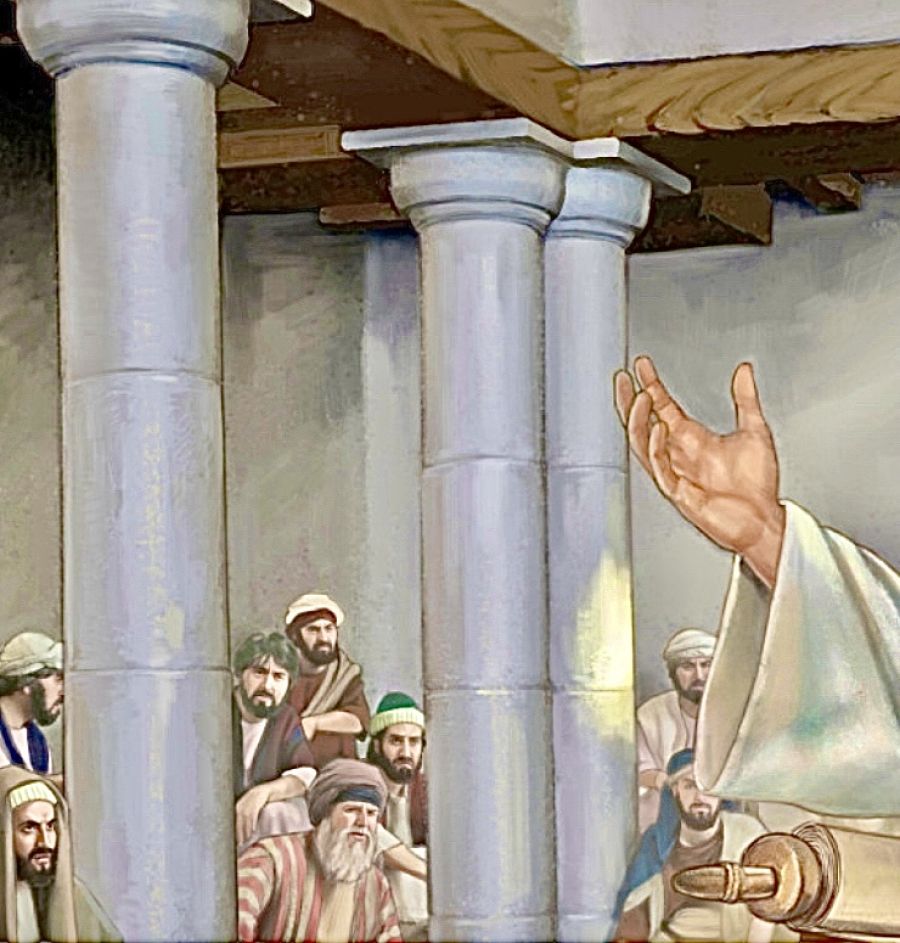
Chapter 6 of Mark's Gospel highlights the rejection of Jesus by the inhabitants of Nazareth.

The Lord is amazed at the unbelief found in his homeland and the contempt reserved for him, so much so that he could not perform any miracles there.

Like Jesus, so is his disciple. Following in Christ's footsteps, Francis of Assisi also wished that the people of his time had been builders and choristers of other dreams. But in his life he met (and with him his friars) men in whom the inability to recognise the figure of the divine in the human often dwells.

A hardness that goes hand in hand with that contempt for the prophetic and that tends to nullify what is revolutionary in the spirit of the Poor Man: the happy intuition of the valorisation of the person.

We find in the authoritative Sources:

"If Guido [a benefactor] treated them with such regard, others instead covered them with contempt. People of high and lowly status mocked and maligned them, even to the point of stripping them of their miserable garments.

The servants of God remained naked because, according to the evangelical ideal, they wore nothing but that one piece of clothing, and moreover they did not demand the return of what was taken from them [...].

Some threw mud on them; others put dice in their hands, inviting them to play; still others, grabbing them from behind by the hood, dragged them on their backs.

These and other such wickednesses were inflicted on them, because they were thought to be such mean beings, that they could be scrambled at will.

Together with hunger and thirst, with cold and nakedness, they endured tribulations and sufferings of all kinds.

But they bore everything with imperturbable patience, according to the admonition of Francis" (FF 1444).


«No prophet is despised except in his own country and among his own kin and household» (Mk 6:4)


Wednesday 4th wk. in O.T.  (Mk 6,1-6)

134 Last modified on Tuesday, 27 January 2026 05:14
Teresa Girolami

Teresa Girolami è laureata in Materie letterarie e Teologia. Ha pubblicato vari testi, fra cui: "Pellegrinaggio del cuore" (Ed. Piemme); "I Fiammiferi di Maria - La Madre di Dio in prosa e poesia"; "Tenerezza Scalza - Natura di donna"; co-autrice di "Dialogo e Solstizio".

Email This email address is being protected from spambots. You need JavaScript enabled to view it.
Anyone who welcomes the Lord into his life and loves him with all his heart is capable of a new beginning. He succeeds in doing God’s will: to bring about a new form of existence enlivened by love and destined for eternity (Pope Benedict)
Chi accoglie il Signore nella propria vita e lo ama con tutto il cuore è capace di un nuovo inizio. Riesce a compiere la volontà di Dio: realizzare una nuova forma di esistenza animata dall’amore e destinata all’eternità (Papa Benedetto)
You ought not, however, to be satisfied merely with knocking and seeking: to understand the things of God, what is absolutely necessary is oratio. For this reason, the Saviour told us not only: ‘Seek and you will find’, and ‘Knock and it shall be opened to you’, but also added, ‘Ask and you shall receive’ [Verbum Domini n.86; cit. Origen, Letter to Gregory]
Non ti devi però accontentare di bussare e di cercare: per comprendere le cose di Dio ti è assolutamente necessaria l’oratio. Proprio per esortarci ad essa il Salvatore ci ha detto non soltanto: “Cercate e troverete”, e “Bussate e vi sarà aperto”, ma ha aggiunto: “Chiedete e riceverete” [Verbum Domini n.86; cit. Origene, Lettera a Gregorio]
In the crucified Jesus, a kind of transformation and concentration of the signs occurs: he himself is the “sign of God” (John Paul II)
In Gesù crocifisso avviene come una trasformazione e concentrazione dei segni: è Lui stesso il "segno di Dio" (Giovanni Paolo II)
Only through Christ can we converse with God the Father as children, otherwise it is not possible, but in communion with the Son we can also say, as he did, “Abba”. In communion with Christ we can know God as our true Father. For this reason Christian prayer consists in looking constantly at Christ and in an ever new way, speaking to him, being with him in silence, listening to him, acting and suffering with him (Pope Benedict)
Solo in Cristo possiamo dialogare con Dio Padre come figli, altrimenti non è possibile, ma in comunione col Figlio possiamo anche dire noi come ha detto Lui: «Abbà». In comunione con Cristo possiamo conoscere Dio come Padre vero. Per questo la preghiera cristiana consiste nel guardare costantemente e in maniera sempre nuova a Cristo, parlare con Lui, stare in silenzio con Lui, ascoltarlo, agire e soffrire con Lui (Papa Benedetto)
In today’s Gospel passage, Jesus identifies himself not only with the king-shepherd, but also with the lost sheep, we can speak of a “double identity”: the king-shepherd, Jesus identifies also with the sheep: that is, with the least and most needy of his brothers and sisters […] And let us return home only with this phrase: “I was present there. Thank you!”. Or: “You forgot about me” (Pope Francis)
Nella pagina evangelica di oggi, Gesù si identifica non solo col re-pastore, ma anche con le pecore perdute. Potremmo parlare come di una “doppia identità”: il re-pastore, Gesù, si identifica anche con le pecore, cioè con i fratelli più piccoli e bisognosi […] E torniamo a casa soltanto con questa frase: “Io ero presente lì. Grazie!” oppure: “Ti sei scordato di me” (Papa Francesco)
Thus, in the figure of Matthew, the Gospels present to us a true and proper paradox: those who seem to be the farthest from holiness can even become a model of the acceptance of God's mercy and offer a glimpse of its marvellous effects in their own lives (Pope Benedict))
Nella figura di Matteo, dunque, i Vangeli ci propongono un vero e proprio paradosso: chi è apparentemente più lontano dalla santità può diventare persino un modello (Papa Benedetto)

Due Fuochi due Vie - Vol. 1 Due Fuochi due Vie - Vol. 2 Due Fuochi due Vie - Vol. 3 Due Fuochi due Vie - Vol. 4 Due Fuochi due Vie - Vol. 5 Dialogo e Solstizio I fiammiferi di Maria

duevie.art

don Giuseppe Nespeca

Tel. 333-1329741


Disclaimer

Questo blog non rappresenta una testata giornalistica in quanto viene aggiornato senza alcuna periodicità. Non può pertanto considerarsi un prodotto editoriale ai sensi della legge N°62 del 07/03/2001.
Le immagini sono tratte da internet, ma se il loro uso violasse diritti d'autore, lo si comunichi all'autore del blog che provvederà alla loro pronta rimozione.
L'autore dichiara di non essere responsabile dei commenti lasciati nei post. Eventuali commenti dei lettori, lesivi dell'immagine o dell'onorabilità di persone terze, il cui contenuto fosse ritenuto non idoneo alla pubblicazione verranno insindacabilmente rimossi.







