Mar 6, 2026 Written by 

Like the seed in the earth. Mother humility overcomes all contempt

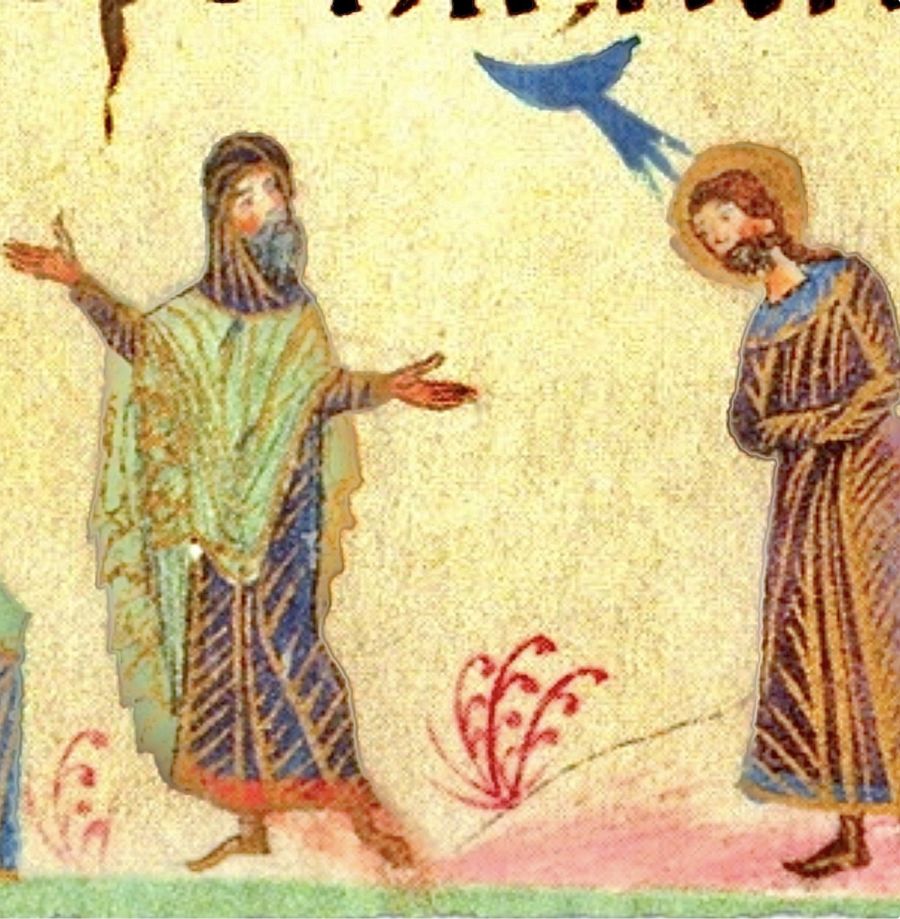
In the parable of the Pharisee and publican, Jesus evangelises those who presumed to be righteous, despising others.

Francis always felt himself to be nothing before God, sinking into his humility like the seed in the earth.

He feared pride like the plague and detested it deeply.

To appear, to show off, to surpass, were verbs with which he never wanted to have any connection: he abhorred them.

We read in Celano's Vita prima:

"One day, full of admiration for the Lord's mercy in all the benefits bestowed on him, he wished to know [...] what would become of his life and that of his brothers.

To this end he withdrew, as he often did, to a suitable place for prayer.

There he remained for a long time, invoking with fear and trembling the Ruler of all the earth, thinking back with bitterness on the years that had passed badly and repeating:

«O God, be merciful to me a sinner!» (FF 363).

He feared all forms of boasting and ostentation of works; he abhorred feeling good and all kinds of pride.

In the Regola bollata (1223) to his brothers he said:

"I admonish, then, and exhort in the Lord Jesus Christ, that the brothers beware of all pride, vainglory, envy, avarice, cares and cares of this world, of detraction and murmuring" (FF 103).

In the Rule of Clare, in paragraph 2809 of the Sources, we find the same statement - as if to highlight the same concern: to keep a distance from all forms of vainglory.

Francis (and Clare too) perceived himself to be a great sinner, like the publican in the Gospel, who dared not even look up to heaven.

His humility and awareness of his own penury led him to assume a very low profile, without glorying in anything, neither before God nor before men.

Indeed, in his Admonitions, we read:

"Blessed is that servant who does not glory in the good that the Lord says and works through him, more in the good that he says and works through another. Blessed is the man who wants to receive from his neighbour more than he wants to give of himself to the Lord God" (FF 166).

And again:

"By this sign one can recognise the servant of God, if he has the Spirit of the Lord: if, when the Lord accomplishes something good through him, his 'flesh' does not take pride in it - since 'flesh' is always contrary to all good - but rather still considers himself vile in his own eyes and esteems himself smaller than all other men" (FF 161).


«O God, be gracious to me a sinner [...] for whoever lifts himself up will be brought low, but whoever lowers himself will be lifted up» (Lk 18:13-14)


Saturday 3rd wk. in Lent  (Lk 18:9-14)

664 Last modified on Friday, 06 March 2026 02:59
Teresa Girolami

Teresa Girolami è laureata in Materie letterarie e Teologia. Ha pubblicato vari testi, fra cui: "Pellegrinaggio del cuore" (Ed. Piemme); "I Fiammiferi di Maria - La Madre di Dio in prosa e poesia"; "Tenerezza Scalza - Natura di donna"; co-autrice di "Dialogo e Solstizio".

Email This email address is being protected from spambots. You need JavaScript enabled to view it.
Wherever people want to set themselves up as God they cannot but set themselves against each other. Instead, wherever they place themselves in the Lord’s truth they are open to the action of his Spirit who sustains and unites them (Pope Benedict
Dove gli uomini vogliono farsi Dio, possono solo mettersi l’uno contro l’altro. Dove invece si pongono nella verità del Signore, si aprono all’azione del suo Spirito che li sostiene e li unisce (Papa Benedetto)
But our understanding is limited: thus, the Spirit's mission is to introduce the Church, in an ever new way from generation to generation, into the greatness of Christ's mystery. The Spirit places nothing different or new beside Christ; no pneumatic revelation comes with the revelation of Christ - as some say -, no second level of Revelation (Pope Benedict)
Ma la nostra capacità di comprendere è limitata; perciò la missione dello Spirito è di introdurre la Chiesa in modo sempre nuovo, di generazione in generazione, nella grandezza del mistero di Cristo. Lo Spirito non pone nulla di diverso e di nuovo accanto a Cristo; non c’è nessuna rivelazione pneumatica accanto a quella di Cristo - come alcuni credono - nessun secondo livello di Rivelazione (Papa Benedetto)
Who touched Lydia's heart? The answer is: «the Holy Spirit». It’s He who made this woman feel that Jesus was Lord; He made this woman feel that salvation was in Paul's words; He made this woman feel a testimony (Pope Francis)
Chi ha toccato il cuore di Lidia? La risposta è: «lo Spirito Santo». È lui che ha fatto sentire a questa donna che Gesù era il Signore; ha fatto sentire a questa donna che la salvezza era nelle parole di Paolo; ha fatto sentire a questa donna una testimonianza (Papa Francesco)
But what does it mean to love Christ?  It means trusting him even in times of trial, following him faithfully even on the Via Crucis, in the hope that soon the morning of the Resurrection will come.  Entrusting ourselves to Christ, we lose nothing, we gain everything.  In his hands our life acquires its true meaning.  Love for Christ expresses itself in the will to harmonize our own life with the thoughts and sentiments of his Heart.  This is achieved through interior union [Pope Benedict]
Ma che vuol dire amare Cristo? Vuol dire fidarsi di Lui anche nell'ora della prova, seguirLo fedelmente anche sulla Via Crucis, nella speranza che presto verrà il mattino della risurrezione. Affidandoci a Cristo non perdiamo niente, ma acquistiamo tutto. Nelle sue mani la nostra vita acquista il suo vero senso. L'amore per Cristo si esprime nella volontà di sintonizzare la propria vita con i pensieri e i sentimenti del suo Cuore. Questo si realizza mediante l'unione interiore [Papa Benedetto]
St Thomas Aquinas says this very succinctly when he writes: "The New Law is the grace of the Holy Spirit" (Summa Theologiae, I-IIae, q.106 a. 1). The New Law is not another commandment more difficult than the others: the New Law is a gift, the New Law is the presence of the Holy Spirit [Pope Benedict]
San Tommaso d’Aquino lo dice in modo molto preciso quando scrive: “La nuova legge è la grazia dello Spirito Santo” (Summa theologiae, I-IIae, q. 106, a. 1). La nuova legge non è un altro comando più difficile degli altri: la nuova legge è un dono, la nuova legge è la presenza dello Spirito Santo [Papa Benedetto]
Even after seeing his people's repeated unfaithfulness to the covenant, this God is still willing to offer his love, creating in man a new heart (John Paul II)
Anche dopo aver registrato nel suo popolo una ripetuta infedeltà all’alleanza, questo Dio è disposto ancora ad offrire il proprio amore, creando nell’uomo un cuore nuovo (Giovanni Paolo II)

Due Fuochi due Vie - Vol. 1 Due Fuochi due Vie - Vol. 2 Due Fuochi due Vie - Vol. 3 Due Fuochi due Vie - Vol. 4 Due Fuochi due Vie - Vol. 5 Dialogo e Solstizio I fiammiferi di Maria

duevie.art

don Giuseppe Nespeca

Tel. 333-1329741


Disclaimer

Questo blog non rappresenta una testata giornalistica in quanto viene aggiornato senza alcuna periodicità. Non può pertanto considerarsi un prodotto editoriale ai sensi della legge N°62 del 07/03/2001.
Le immagini sono tratte da internet, ma se il loro uso violasse diritti d'autore, lo si comunichi all'autore del blog che provvederà alla loro pronta rimozione.
L'autore dichiara di non essere responsabile dei commenti lasciati nei post. Eventuali commenti dei lettori, lesivi dell'immagine o dell'onorabilità di persone terze, il cui contenuto fosse ritenuto non idoneo alla pubblicazione verranno insindacabilmente rimossi.







