May 31, 2026 Written by 

Give back: with merciful eyes

With the Beatitudes, Mt begins with the theme of poverty in spirit and concludes with the beatitude of the persecuted, that is, of those who want to live the Gospel and love to the full.

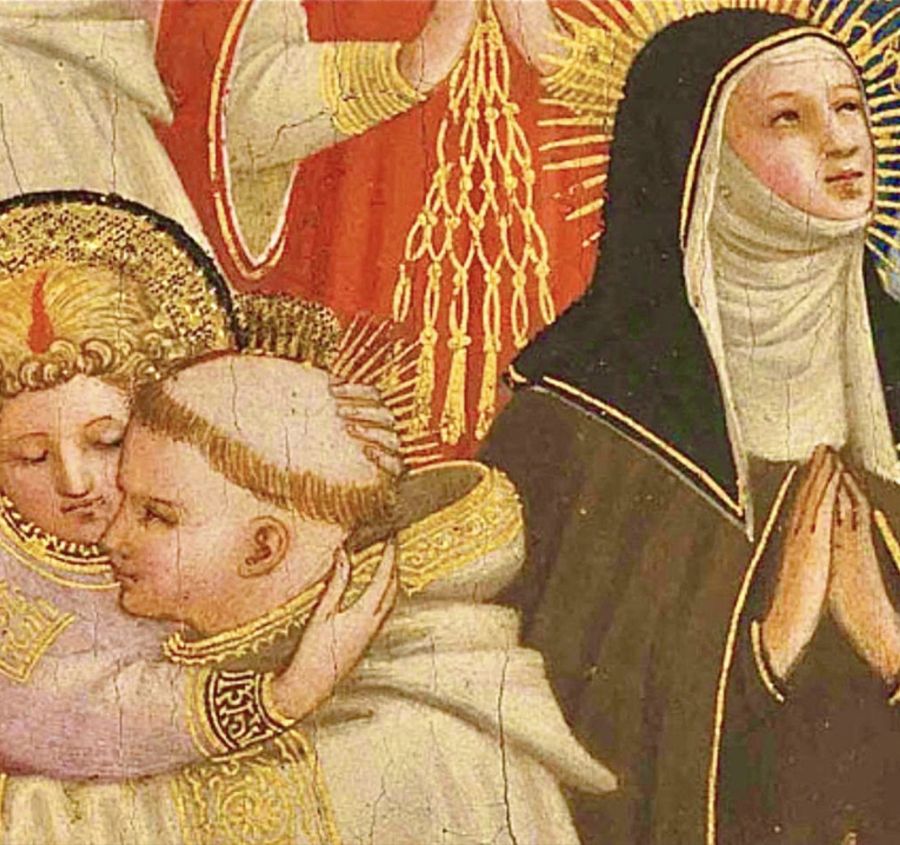
For Francis and Clare of Assisi, humility of heart, inner and outer poverty, was the keystone of all the other Beatitudes; the identikit of Jesus and of every disciple who wants to walk in his footsteps.

Enchanting is a passage from the «Sacrum Commercium» (an allegorical operetta by an unknown author) contained in the Sources and which we quote here, concerning poverty.

«Thus, enamoured of your beauty, the Son of the Most High Father was closely united to you alone in the world and knew you to be faithful in all things.

Even before He came to earth from the splendour of His homeland, You prepared for Him a worthy dwelling, a throne on which to sit and a thalamus in which to rest, that is, the poorest Virgin, from whom He was born to shine upon this world.

To him as soon as he was born with solicitude you ran to him, so that he might find in you, and not in softness, a place that was pleasing to him.

He was laid, the evangelist says, in a manger, because there was no room for him in the inn.

In the same way, without ever parting from him, you always accompanied him, so that throughout his life, when he appeared on earth and lived among men, while the foxes had their dens and the birds of the air their nests, he had nowhere to lay his head.

And later when he, who had once opened the mouth of the prophets, opened his mouth to teach, he first wanted to praise you, he first exalted you with the words: Blessed are the poor in spirit, for theirs is the kingdom of heaven» (FF 1977).

Francis then, in his Admonitions, among other things extols the pure heart, precisely the poor, when he says:

«Blessed are the pure in heart, for they shall see God. Truly pure in heart are those who disdain earthly things and seek heavenly things, and never cease to adore and see the Lord God, living and true, with a pure heart and soul» (FF 165).

Clare echoes him in her Testament:

«If we live according to the aforementioned form of life, we will leave a noble example to others and, through labour of the shortest duration, we will earn the prize of eternal beatitude» (FF 2830).


The theme of wealth to be shared, of "not holding back" and of "giving back" to God and to one's brothers and sisters, is very much felt in Francis of Assisi.

In the Sources:

"Once, while returning from Siena, he met a poor man. It happened that Francis, due to illness, was wearing a cloak over his habit.

Looking with merciful eyes at the man's misery, he said to his companion:

«We must return the cloak to this poor man: for it is his. 'In fact we received him on loan, until we happened to find someone poorer than ourselves».

"The companion, however, considering the state in which the pitiful father was, opposed a clear refusal: he had no right to forget himself, in order to provide for the other.

But the Saint:

«I believe that the Great Elector will accuse me of theft, if I do not give what I wear to those most in need».


«Blessed are the poor [...] for theirs is the kingdom of heaven» (Mt 5:3).


Monday, 10th wk. in O.T. (Mt 5:1-12a)
84 Last modified on Sunday, 31 May 2026 03:41
Teresa Girolami

Teresa Girolami è laureata in Materie letterarie e Teologia. Ha pubblicato vari testi, fra cui: "Pellegrinaggio del cuore" (Ed. Piemme); "I Fiammiferi di Maria - La Madre di Dio in prosa e poesia"; "Tenerezza Scalza - Natura di donna"; co-autrice di "Dialogo e Solstizio".

Email This email address is being protected from spambots. You need JavaScript enabled to view it.
An ancient hermit says: “The Beatitudes are gifts of God and we must say a great ‘thank you’ to him for them and for the rewards that derive from them, namely the Kingdom of God in the century to come and consolation here; the fullness of every good and mercy on God’s part … once we have become images of Christ on earth” (Peter of Damascus) [Pope Benedict]
Afferma un antico eremita: «Le Beatitudini sono doni di Dio, e dobbiamo rendergli grandi grazie per esse e per le ricompense che ne derivano, cioè il Regno dei Cieli nel secolo futuro, la consolazione qui, la pienezza di ogni bene e misericordia da parte di Dio … una volta che si sia divenuti immagine del Cristo sulla terra» (Pietro di Damasco) [Papa Benedetto]
"How will we be able to live without him?". In these words of St Ignatius we hear echoing the affirmation of the martyrs of Abitene: "Sine dominico non possumus" [Pope Benedict]
"Come potremmo vivere senza di Lui?". Sentiamo echeggiare in queste parole di Sant’Ignazio l’affermazione dei martiri di Abitene: "Sine dominico non possumus" [Papa Benedetto]
The kingdom of Christ is manifested, as the Council teaches, in the 'kingship' of man [John Paul II]
Il regno di Cristo si manifesta, come insegna il Concilio, nella “regalità” dell’uomo [Giovanni Paolo II]
In the middle of the dense forest of rules and regulations — to the legalisms of past and present — Jesus makes an opening through which one can catch a glimpse of two faces: the face of the Father and the face of the brother. He does not give us two formulas or two precepts: there are no precepts nor formulas. He gives us two faces [Pope Francis]
In mezzo alla fitta selva di precetti e prescrizioni – ai legalismi di ieri e di oggi – Gesù opera uno squarcio che permette di scorgere due volti: il volto del Padre e quello del fratello. Non ci consegna due formule o due precetti: non sono precetti e formule; ci consegna due volti [Papa Francesco]
Whoever is inscribed in God's name participates in God's life, and lives. Therefore to believe is to be inscribed in the name of God. Thus we are alive. Whoever has a share in God's name is not dead but rather belongs to the living God. In this sense we should be able to understand the dynamism of faith, which entails enrolling our names in the name of God and in this way entering into life [Pope Benedict]
Chi è scritto nel nome di Dio partecipa alla vita di Dio, vive. E così credere è essere iscritti nel nome di Dio. E così siamo vivi. Chi appartiene al nome di Dio non è un morto, appartiene al Dio vivente. In questo senso dovremmo capire il dinamismo della fede, che è un iscrivere il nostro nome nel nome di Dio e così un entrare nella vita [Papa Benedetto]
As sometimes happens in the Gospel, faced with the trap set for him by his enemies, Jesus, with his response, rises above the contingent controversy and goes far beyond the particular and mutually divergent positions (John Paul II)
Come talora accade nel Vangelo, di fronte al tranello mossogli dai suoi nemici, Gesù, con la sua risposta, s’innalza al di sopra della polemica contingente e va ben oltre le posizioni particolari e tra loro divergenti (Giovanni Paolo II)
This Name clearly expresses that the God of the Bible is not some kind of monad closed in on itself and satisfied with his own self-sufficiency but he is life that wants to communicate itself, openness, relationship [Pope Benedict]

Due Fuochi due Vie - Vol. 1 Due Fuochi due Vie - Vol. 2 Due Fuochi due Vie - Vol. 3 Due Fuochi due Vie - Vol. 4 Due Fuochi due Vie - Vol. 5 Dialogo e Solstizio I fiammiferi di Maria

duevie.art

don Giuseppe Nespeca

Tel. 333-1329741


Disclaimer

Questo blog non rappresenta una testata giornalistica in quanto viene aggiornato senza alcuna periodicità. Non può pertanto considerarsi un prodotto editoriale ai sensi della legge N°62 del 07/03/2001.
Le immagini sono tratte da internet, ma se il loro uso violasse diritti d'autore, lo si comunichi all'autore del blog che provvederà alla loro pronta rimozione.
L'autore dichiara di non essere responsabile dei commenti lasciati nei post. Eventuali commenti dei lettori, lesivi dell'immagine o dell'onorabilità di persone terze, il cui contenuto fosse ritenuto non idoneo alla pubblicazione verranno insindacabilmente rimossi.







