Mar 31, 2026 Written by 

Key and Testament

Especially in this Octave of Easter the liturgy invites us to meet the Risen One personally and to recognize his life-giving action in the events of history and in our daily lives. This Wednesday, for example, the moving episode of the two disciples of Emmaus is presented to us once again (cf. Lk 24: 13-35). After Jesus' crucifixion, immersed in sadness and disappointment, they were going home dejected. On their way, they discussed the events that had occurred in those days in Jerusalem; it was then that Jesus approached and began to talk to them and teach them: "O foolish men, and slow of heart to believe all that the prophets have spoken! Was it not necessary that the Christ should suffer these things and enter into his glory?" (Lk 24: 25-26). Then starting with Moses and all the prophets, he explained to them what referred to him in all the Scriptures. Christ's teaching - the explanation of the prophecies - was like an unexpected revelation to the disciples of Emmaus, enlightening and comforting. Jesus gave them a new key for interpreting the Bible and everything then appeared clear, oriented to that very moment. Won over by the words of the unknown wayfarer, they invited him to stop and have supper with them. And he accepted and sat down to table with them. The Evangelist Luke says: "When he was at table with them, he took the bread and blessed and broke it, and gave it to them" (Lk 24: 30). And it was at that very moment that the eyes of the two disciples were opened and they recognized him, but "he vanished out of their sight" (Lk 24: 31). And full of wonder and joy they commented: "Did not our hearts burn within us while he talked to us on the road, while he opened to us the Scriptures?" (Lk 24: 32).

Throughout the liturgical year, particularly in Holy Week and Easter Week, the Lord walks beside us and explains the Scriptures to us, makes us understand this mystery: everything speaks of him. And this should also make our hearts burn within us, so that our eyes too may be opened. The Lord is with us, he shows us the true path. Just as the two disciples recognized Jesus in the breaking of the bread, so today, in the breaking of the bread, let us too recognize his presence. The disciples of Emmaus recognized him and remembered the times when Jesus had broken the bread. And this breaking of the bread reminds us of the first Eucharist celebrated in the context of the Last Supper, when Jesus broke the bread and thus anticipated his death and Resurrection by giving himself to the disciples. Jesus also breaks bread with us and for us, he makes himself present with us in the Holy Eucharist, he gives us himself and opens our hearts. In the Holy Eucharist, in the encounter with his Word, we too can meet and know Jesus at this two-fold Table of the Word and of the consecrated Bread and Wine. Every Sunday the community thus relives the Lord's Passover and receives from the Saviour his testament of love and brotherly service. Dear brothers and sisters, may the joy of these days strengthen our faithful attachment to the Crucified and Risen Christ. Above all, may we let ourselves be won over by the fascination of his Resurrection. May Mary help us to be messengers of the light and joy of Easter for all our brethren. Once again, I wish you all a Happy Easter.

[Pope Benedict, General Audience 26 March 2008]

92 Last modified on Tuesday, 31 March 2026 05:29
don Giuseppe Nespeca

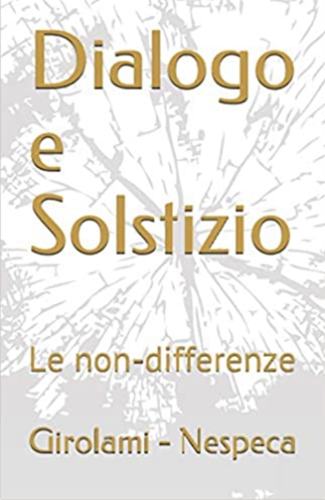
Giuseppe Nespeca è architetto e sacerdote. Cultore della Sacra scrittura è autore della raccolta "Due Fuochi due Vie - Religione e Fede, Vangeli e Tao"; coautore del libro "Dialogo e Solstizio".

Email This email address is being protected from spambots. You need JavaScript enabled to view it.
Unity is not made with glue [...] The great prayer of Jesus is to «resemble» the Father (Pope Francis)
L’Unità non si fa con la colla […] La grande preghiera di Gesù» è quella di «assomigliare» al Padre (Papa Francesco)
Divisions among Christians, while they wound the Church, wound Christ; and divided, we cause a wound to Christ: the Church is indeed the body of which Christ is the Head (Pope Francis)
Le divisioni tra i cristiani, mentre feriscono la Chiesa, feriscono Cristo, e noi divisi provochiamo una ferita a Cristo: la Chiesa infatti è il corpo di cui Cristo è capo (Papa Francesco)
The glorification that Jesus asks for himself as High Priest, is the entry into full obedience to the Father, an obedience that leads to his fullest filial condition [Pope Benedict]
La glorificazione che Gesù chiede per se stesso, quale Sommo Sacerdote, è l'ingresso nella piena obbedienza al Padre, un'obbedienza che lo conduce alla sua più piena condizione filiale [Papa Benedetto]
All this helps us not to let our guard down before the depths of iniquity, before the mockery of the wicked. In these situations of weariness, the Lord says to us: “Have courage! I have overcome the world!” (Jn 16:33). The word of God gives us strength [Pope Francis]
Tutto questo aiuta a non farsi cadere le braccia davanti allo spessore dell’iniquità, davanti allo scherno dei malvagi. La parola del Signore per queste situazioni di stanchezza è: «Abbiate coraggio, io ho vinto il mondo!» (Gv 16,33). E questa parola ci darà forza [Papa Francesco]
It does not mean that the Lord has departed to some place far from people and from the world. Christ's Ascension is not a journey into space toward the most remote stars […] Christ's Ascension means that he no longer belongs to the world of corruption and death that conditions our life. It means that he belongs entirely to God (Pope Benedict)
Non vuol dirci che il Signore se ne è andato in qualche luogo lontano dagli uomini e dal mondo. L’Ascensione di Cristo non è un viaggio nello spazio verso gli astri più remoti […] L’Ascensione di Cristo significa che Egli non appartiene più al mondo della corruzione e della morte che condiziona la nostra vita. Significa che Egli appartiene completamente a Dio (Papa Benedetto)
«When the servant of God is troubled, as it happens, by something, he must get up immediately to pray, and persevere before the Supreme Father until he restores to him the joy of his salvation. Because if it remains in sadness, that Babylonian evil will grow and, in the end, will generate in the heart an indelible rust, if it is not removed with tears» (St Francis of Assisi, FS 709)
«Il servo di Dio quando è turbato, come capita, da qualcosa, deve alzarsi subito per pregare, e perseverare davanti al Padre Sommo sino a che gli restituisca la gioia della sua salvezza. Perché se permane nella tristezza, crescerà quel male babilonese e, alla fine, genererà nel cuore una ruggine indelebile, se non verrà tolta con le lacrime» (san Francesco d’Assisi, FF 709)
Wherever people want to set themselves up as God they cannot but set themselves against each other. Instead, wherever they place themselves in the Lord’s truth they are open to the action of his Spirit who sustains and unites them (Pope Benedict
Dove gli uomini vogliono farsi Dio, possono solo mettersi l’uno contro l’altro. Dove invece si pongono nella verità del Signore, si aprono all’azione del suo Spirito che li sostiene e li unisce (Papa Benedetto)

Due Fuochi due Vie - Vol. 1 Due Fuochi due Vie - Vol. 2 Due Fuochi due Vie - Vol. 3 Due Fuochi due Vie - Vol. 4 Due Fuochi due Vie - Vol. 5 Dialogo e Solstizio I fiammiferi di Maria

duevie.art

don Giuseppe Nespeca

Tel. 333-1329741


Disclaimer

Questo blog non rappresenta una testata giornalistica in quanto viene aggiornato senza alcuna periodicità. Non può pertanto considerarsi un prodotto editoriale ai sensi della legge N°62 del 07/03/2001.
Le immagini sono tratte da internet, ma se il loro uso violasse diritti d'autore, lo si comunichi all'autore del blog che provvederà alla loro pronta rimozione.
L'autore dichiara di non essere responsabile dei commenti lasciati nei post. Eventuali commenti dei lettori, lesivi dell'immagine o dell'onorabilità di persone terze, il cui contenuto fosse ritenuto non idoneo alla pubblicazione verranno insindacabilmente rimossi.