Mar 17, 2026 Written by 

Similar to Mary

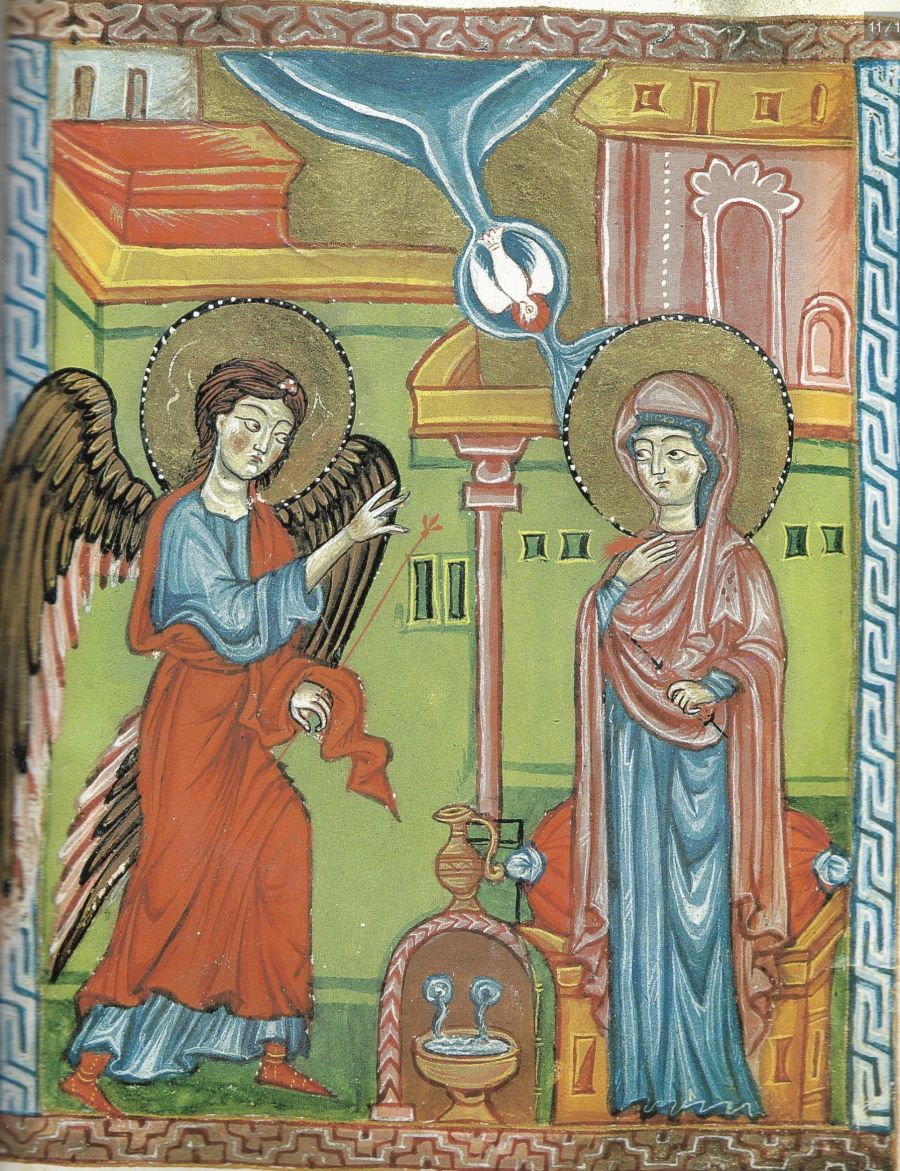
The Annunciation illustrates the art of listening in Mary, visited by the Angel Gabriel. She accepts the Mystery but asks questions of meaning, using her intelligence, in humility and dignity.

After their conversion, Francis and Clare always sought God's will by looking to Mary, the handmaid of the Lord, the one who had found favour with the Almighty by becoming the Mother of Jesus.


From the very beginning of his vocation-mission, Francis paid special and devoted attention to the Virgin.

The Sources make us aware of the extraordinary love for Her, expressed in a hieratic antiphon of the Poverello:

«Holy Virgin Mary, there is none like thee, born in the world among women, daughter and handmaid of the most high King the heavenly Father, mother of our most holy Lord Jesus Christ, spouse of the Holy Spirit; pray for us with Saint Michael the Archangel and with all the powers of heaven and with all the saints, to thy most holy beloved Son, Lord and Master» (FF 281).

Francis "surrounded the Mother of Jesus with an unspeakable love, because she had made the Lord of majesty our brother" (FF 786).

But Clare herself, who was considered «altera Maria», when she arrived at the Portiuncula, where Francis and the brothers were waiting for her because of her total dedication to God:

"After she had taken the insignia of holy penance before the altar of St. Mary and, almost before the nuptial thalamus of the Virgin, the humble handmaid was married to Christ, immediately St. Francis led her to the church of St. Paul*, with the intention that she should remain there until the Will of the Most High disposed otherwise" (FF 3172).

Like Mary, Clare pronounced her 'Fiat' to the will of the Father:

«Behold the handmaid of the Lord: let it be to me according to thy word» (Lk 1:38).

Oh how they both loved God's will!

Forgetful of themselves they adhered to the divine plan for them, each in her own time, each in her own groove.

In the Sources again we find:

«In the same way, then, that the glorious Virgin of virgins bore Christ materially in her womb, you too, following his vestiges, especially his humility and poverty, can always, without any doubt, bear him spiritually in your chaste and virginal body. And thou shalt contain in thee Him by whom thou and all creatures are contained, and shalt possess that which is most lasting and final good even in comparison with all the other transient possessions of this world» (FF 2893 - Letter Three to Blessed Agnes of Prague).

Francis and Clare, following the example of the humble Mary of Nazareth, loved God's will for them in a sunny and lasting way.

In fact, in a concluding prayer of Francis, we contemplate his constant yearning to seek her and follow her with abandonment.

«Almighty, everlasting, just and merciful God, grant us wretches to do, by the power of your love, what we know that you want, and to always want what pleases you, so that, inwardly purified, inwardly enlightened and kindled by the fire of the Holy Spirit may we follow in the footsteps of your beloved Son, our Lord Jesus Christ, and, with the help of your grace alone, come to you, O Most High, who in perfect Trinity and simple Unity live and reign glorious, Almighty God for ever and ever. Amen» (FF 234 - Letter to the whole Order).


*The church and Benedictine monastery of San Paolo delle Abbadesse, where Clare was led after her consecration in the Portiuncula, stood near Bastìa Umbra, 4 km from Assisi.


Annunciation of the Lord  (Lk 1:26-38)

130 Last modified on Tuesday, 17 March 2026 03:27
Teresa Girolami

Teresa Girolami è laureata in Materie letterarie e Teologia. Ha pubblicato vari testi, fra cui: "Pellegrinaggio del cuore" (Ed. Piemme); "I Fiammiferi di Maria - La Madre di Dio in prosa e poesia"; "Tenerezza Scalza - Natura di donna"; co-autrice di "Dialogo e Solstizio".

Email This email address is being protected from spambots. You need JavaScript enabled to view it.
If, in his prophecy about the shepherd, Ezekiel was aiming to restore unity among the dispersed tribes of Israel (cf. Ez 34: 22-24), here it is a question not only of the unification of a dispersed Israel but of the unification of all the children of God, of humanity - of the Church of Jews and of pagans [Pope Benedict]
Se Ezechiele nella sua profezia sul pastore aveva di mira il ripristino dell'unità tra le tribù disperse d'Israele (cfr Ez 34, 22-24), si tratta ora non solo più dell'unificazione dell'Israele disperso, ma dell'unificazione di tutti i figli di Dio, dell'umanità - della Chiesa di giudei e di pagani [Papa Benedetto]
St Teresa of Avila wrote: «the last thing we should do is to withdraw from our greatest good and blessing, which is the most sacred humanity of Our Lord Jesus Christ» (cf. The Interior Castle, 6, ch. 7). Therefore, only by believing in Christ, by remaining united to him, may the disciples, among whom we too are, continue their permanent action in history [Pope Benedict]
Santa Teresa d’Avila scrive che «non dobbiamo allontanarci da ciò che costituisce tutto il nostro bene e il nostro rimedio, cioè dalla santissima umanità di nostro Signore Gesù Cristo» (Castello interiore, 7, 6). Quindi solo credendo in Cristo, rimanendo uniti a Lui, i discepoli, tra i quali siamo anche noi, possono continuare la sua azione permanente nella storia [Papa Benedetto]
Just as he did during his earthly existence, so today the risen Jesus walks along the streets of our life and sees us immersed in our activities, with all our desires and our needs. In the midst of our everyday circumstances he continues to speak to us; he calls us to live our life with him, for only he is capable of satisfying our thirst for hope (Pope Benedict)
Come avvenne nel corso della sua esistenza terrena, anche oggi Gesù, il Risorto, passa lungo le strade della nostra vita, e ci vede immersi nelle nostre attività, con i nostri desideri e i nostri bisogni. Proprio nel quotidiano continua a rivolgerci la sua parola; ci chiama a realizzare la nostra vita con Lui, il solo capace di appagare la nostra sete di speranza (Papa Benedetto)
"Beloved" of God (cf. Lk 1: 28). Origen observes that no such title had ever been given to a human being, and that it is unparalleled in all of Sacred Scripture (cf. In Lucam 6: 7). It is a title expressed in passive form, but this "passivity" of Mary, who has always been and is for ever "loved" by the Lord, implies her free consent, her personal and original response:  in being loved, in receiving the gift of God, Mary is fully active, because she accepts with personal generosity the wave of God's love poured out upon her [Pope Benedict]
"Amata" da Dio (cfr Lc 1,28). Origene osserva che mai un simile titolo fu rivolto ad essere umano, e che esso non trova riscontro in tutta la Sacra Scrittura (cfr In Lucam 6,7). E’ un titolo espresso in forma passiva, ma questa "passività" di Maria, che da sempre e per sempre è l’"amata" dal Signore, implica il suo libero consenso, la sua personale e originale risposta: nell’essere amata, nel ricevere il dono di Dio, Maria è pienamente attiva, perché accoglie con personale disponibilità l’onda dell’amore di Dio che si riversa in lei [Papa Benedetto]
Jesus seems to say to the accusers: Is not this woman, for all her sin, above all a confirmation of your own transgressions, of your "male" injustice, your misdeeds? (John Paul II, Mulieris Dignitatem n.14)
Gesù sembra dire agli accusatori: questa donna con tutto il suo peccato non è forse anche, e prima di tutto, una conferma delle vostre trasgressioni, della vostra ingiustizia «maschile», dei vostri abusi? (Giovanni Paolo II, Mulieris Dignitatem n.14)

Due Fuochi due Vie - Vol. 1 Due Fuochi due Vie - Vol. 2 Due Fuochi due Vie - Vol. 3 Due Fuochi due Vie - Vol. 4 Due Fuochi due Vie - Vol. 5 Dialogo e Solstizio I fiammiferi di Maria

duevie.art

don Giuseppe Nespeca

Tel. 333-1329741


Disclaimer

Questo blog non rappresenta una testata giornalistica in quanto viene aggiornato senza alcuna periodicità. Non può pertanto considerarsi un prodotto editoriale ai sensi della legge N°62 del 07/03/2001.
Le immagini sono tratte da internet, ma se il loro uso violasse diritti d'autore, lo si comunichi all'autore del blog che provvederà alla loro pronta rimozione.
L'autore dichiara di non essere responsabile dei commenti lasciati nei post. Eventuali commenti dei lettori, lesivi dell'immagine o dell'onorabilità di persone terze, il cui contenuto fosse ritenuto non idoneo alla pubblicazione verranno insindacabilmente rimossi.







