Jul 7, 2026 Written by 

Freely, simply

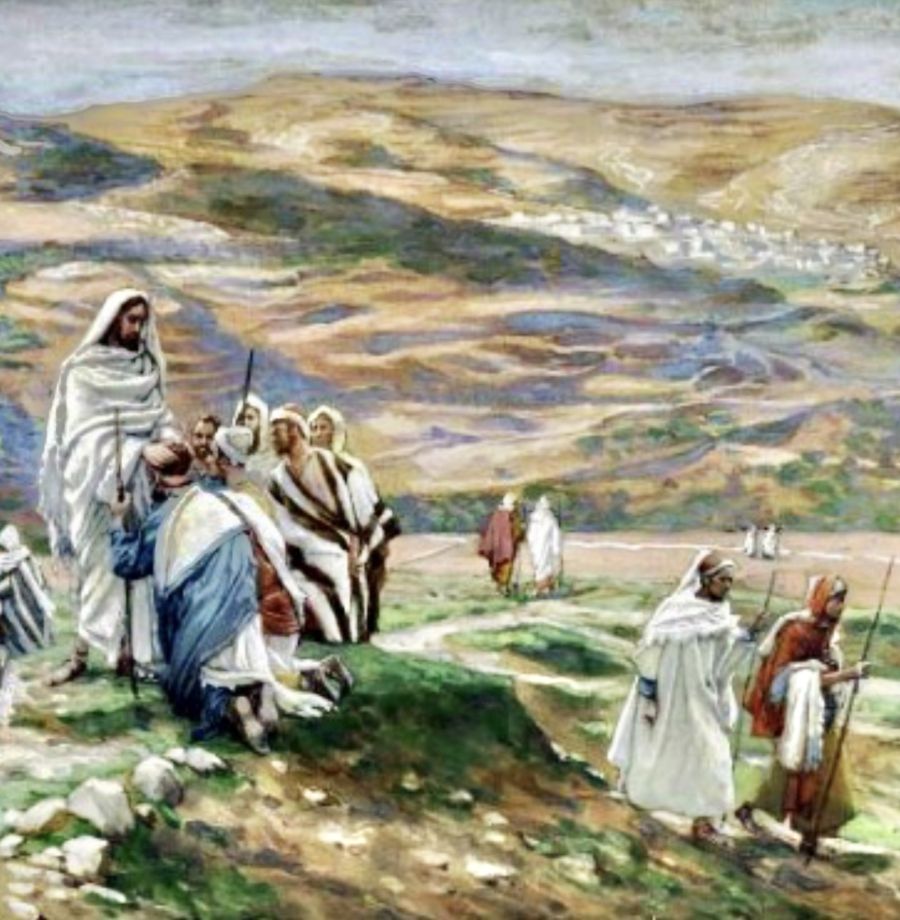
Chapter 10 of Matthew continues to present us with a Jesus who asks his disciples, sent to preach the nearness of the Kingdom of Heaven, to give freely as they have received, trusting in Providence.

The Poor Man of Assisi followed Jesus' instructions to his disciples to the letter, committing himself to proclaiming the Gospel without taking anything with him.

Francis described himself as "simplex et idiota" (simple and stupid). For him, the transparency and simplicity of little ones was the key to the Kingdom of Heaven.

As Jesus says in the Gospel, he was convinced that only those who become like children in their mentality can understand the dynamics of the Kingdom, which requires the acceptance of the pure of heart, of those who live the Word without prejudice of any kind and with trust in God.

In the Franciscan Sources, the dimension of smallness and simplicity is transversal and marked, as many passages attest.

"The Saint practised holy simplicity with particular care and loved it in others, for it is the daughter of Grace, the true sister of wisdom and the mother of justice.

Not that he approved of every kind of simplicity, but only that which, content with its God, despises all else.

And that which places its glory in the fear of the Lord, and which knows neither how to say nor do evil.

Simplicity that examines itself and condemns no one in its judgement, that desires no office for itself, but considers it due and attributes it to the best [...]

It is simplicity that leaves the tortuousness of words, embellishments and frills in all divine laws, as well as ostentation and curiosity to those who want to lose themselves, and seeks not the bark but the marrow, not the shell but the kernel, not many things but the many, the highest and most stable Good" (FF 775).

This simplicity, sister of true wisdom, is characteristic of the little ones, the least, the children who welcome the Kingdom of God knocking at the door of their hearts.

The smallness of Francis, the framework of his evangelical life, is moving.

"Francis, a man of God, stripped of worldly things [...] committed himself to serving God in every way possible [...]

With ardent enthusiasm he will make this and similar appeals full of ingenuity, for this chosen one of God had a candid and childlike soul, did not resort to the learned language of human wisdom, but was simple and immediate in everything" (FF 1420).

"And in fact, everything that the heavenly Father has created for the benefit of men, he continues to give us freely even after sin, to the worthy as well as to the unworthy, because of the love he has for his beloved Son" (FF 1610).

"He was not ashamed to ask small things of those smaller than himself; he, the true minor, who had learned great things from the supreme Master.

He used to seek with singular zeal the way and means of serving God more perfectly, as He pleased Him best.

This was his supreme philosophy, this his supreme desire, as long as he lived: to ask the wise and the simple, the perfect and the imperfect, the young and the old, how he might most virtuously attain the summit of perfection" (FF 1205 - Leggenda maggiore).

Francis loved with the heart of a child and taught this to his friars and to the poor ladies of St Damian, virtuous sisters on the path of faith, among whom Clare shone for her humility and transparency.

This young woman gave witness to the light; she was a morning star in becoming a child at the service of God, following in the footsteps of Christ, following the example of her blessed father Francis, a true lover and imitator of Him.


«Freely you have received, freely give» (Mt 10:8)


Thursday of the 14th wk. in Ordinary Time (Mt 10:7-15)
129 Last modified on Tuesday, 07 July 2026 03:37
Teresa Girolami

Teresa Girolami è laureata in Materie letterarie e Teologia. Ha pubblicato vari testi, fra cui: "Pellegrinaggio del cuore" (Ed. Piemme); "I Fiammiferi di Maria - La Madre di Dio in prosa e poesia"; "Tenerezza Scalza - Natura di donna"; co-autrice di "Dialogo e Solstizio".

Email This email address is being protected from spambots. You need JavaScript enabled to view it.
For Christians, volunteer work is not merely an expression of good will. It is based on a personal experience of Christ (Pope Benedict)
Per i cristiani, il volontariato non è soltanto espressione di buona volontà. È basato sull’esperienza personale di Cristo (Papa Benedetto)
Christ reveals his identity of Messiah, Israel's bridegroom, who came for the betrothal with his people. Those who recognize and welcome him are celebrating. However, he will have to be rejected and killed precisely by his own; at that moment, during his Passion and death, the hour of mourning and fasting will come (Pope Benedict)
Cristo rivela la sua identità di Messia, Sposo d'Israele, venuto per le nozze con il suo popolo. Quelli che lo riconoscono e lo accolgono con fede sono in festa. Egli però dovrà essere rifiutato e ucciso proprio dai suoi: in quel momento, durante la sua passione e la sua morte, verrà l'ora del lutto e del digiuno (Papa Benedetto)
For the prodigious and instantaneous healing of the paralytic, the apostle St. Matthew is more sober than the other synoptics, St. Mark and St. Luke. These add broader details, including that of the opening of the roof in the environment where Jesus was, to lower the sick man with his lettuce, given the huge crowd that crowded at the entrance. Evident is the hope of the pitiful companions: they almost want to force Jesus to take care of the unexpected guest and to begin a dialogue with him (Pope Paul VI)
Per la prodigiosa ed istantanea guarigione del paralitico, l’apostolo San Matteo è più sobrio degli altri sinottici, San Marco e San Luca. Questi aggiungono più ampi particolari, tra cui quello dell’avvenuta apertura del tetto nell’ambiente ove si trovava Gesù, per calarvi l’infermo col suo lettuccio, data l’enorme folla che faceva ressa all’entrata. Evidente è la speranza dei pietosi accompagnatori: essi vogliono quasi obbligare Gesù ad occuparsi dell’inatteso ospite e ad iniziare un dialogo con lui (Papa Paolo VI)
A life without love and without truth would not be life. The Kingdom of God is precisely the presence of truth and love and thus is healing in the depths of our being. One therefore understands why his preaching and the cures he works always go together: in fact, they form one message of hope and salvation (Pope Benedict)
Una vita senza amore e senza verità non sarebbe vita. Il Regno di Dio è proprio la presenza della verità e dell’amore e così è guarigione nella profondità del nostro essere. Si comprende, pertanto, perché la sua predicazione e le guarigioni che opera siano sempre unite: formano infatti un unico messaggio di speranza e di salvezza (Papa Benedetto)
His slumber causes us to wake up. Because to be disciples of Jesus, it is not enough to believe God is there, that he exists, but we must put ourselves out there with him; we must also raise our voice with him. Hear this: we must cry out to him. Prayer is often a cry: “Lord, save me!” (Pope Francis)
Il suo sonno provoca noi a svegliarci. Perché, per essere discepoli di Gesù, non basta credere che Dio c’è, che esiste, ma bisogna mettersi in gioco con Lui, bisogna anche alzare la voce con Lui. Sentite questo: bisogna gridare a Lui. La preghiera, tante volte, è un grido: “Signore, salvami!” (Papa Francesco)
"May the peace of your kingdom come to us", Dante exclaimed in his paraphrase of the Our Father (Purgatorio, XI, 7). A petition which turns our gaze to Christ's return and nourishes the desire for the final coming of God's kingdom. This desire however does not distract the Church from her mission in this world, but commits her to it more strongly [John Paul II]

Due Fuochi due Vie - Vol. 1 Due Fuochi due Vie - Vol. 2 Due Fuochi due Vie - Vol. 3 Due Fuochi due Vie - Vol. 4 Due Fuochi due Vie - Vol. 5 Dialogo e Solstizio I fiammiferi di Maria

duevie.art

don Giuseppe Nespeca

Tel. 333-1329741


Disclaimer

Questo blog non rappresenta una testata giornalistica in quanto viene aggiornato senza alcuna periodicità. Non può pertanto considerarsi un prodotto editoriale ai sensi della legge N°62 del 07/03/2001.
Le immagini sono tratte da internet, ma se il loro uso violasse diritti d'autore, lo si comunichi all'autore del blog che provvederà alla loro pronta rimozione.
L'autore dichiara di non essere responsabile dei commenti lasciati nei post. Eventuali commenti dei lettori, lesivi dell'immagine o dell'onorabilità di persone terze, il cui contenuto fosse ritenuto non idoneo alla pubblicazione verranno insindacabilmente rimossi.







