Jul 15, 2026 Written by 

Necessity has no law

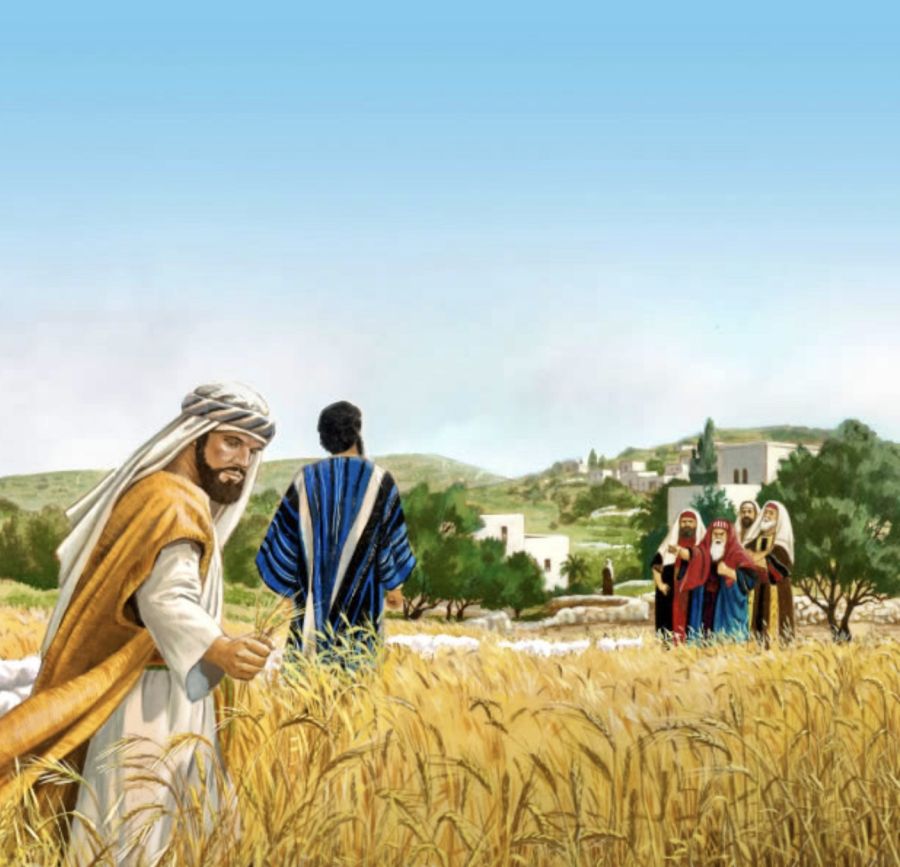
Pharisees ask Jesus why his disciples do what is not permitted by the Law on the Sabbath [eating, out of hunger, the ears of corn in the fields].

Jesus, who came to give full fulfilment to the Law, emphasises its foundation: do not demolish or transgress the Word, but observe it by loving.

Love is the true fulfilment of the Law of the Lord, which is perfect and refreshes the soul.

Francis understood this well by living and teaching his fraternity to do the same.

The Sources provide, through various pieces, precious examples of life. In the Letter to the Rulers of Peoples:

«I beseech you [...] with all the reverence of which I am capable, not to forget the Lord, absorbed as you are by the cares and cares of this world, and not to deviate from his commandments, for all who forget the Lord and deviate from his commandments are cursed and will be forgotten by him» (FF 211).

At the same time, the Poverello, with that balance and elasticity that distinguished him, emphasised:

«And whenever necessity arises, let all the brothers, wherever they may be, be allowed to take all the food that men can eat, just as the Lord says of David, who ate the loaves of the offering that were not allowed to be eaten except by priests [...] Similarly, in times of manifest necessity, let all the brothers provide for their necessities as the Lord will give them grace, since necessity has no law» (FF 33).

In support of what has been said, we quote a passage taken from the Perugina Legend.

Francis, faced with a friar of profound spirituality, perished and infirm, does something unusual for the mentality of the time.

"Francis said to himself:

«If this brother would eat some ripe grapes early in the morning, I think he would benefit from it».

One day he got up at dawn and secretly called that friar, led him to the vineyard near that church and, having chosen a vine full of beautiful, inviting grapes, sat down under it with his brother and began to eat the grapes, so that the sick man would not be ashamed to pick them himself.

While he was snacking, the friar praised the Lord God.

And as long as he lived, he often reminded his brothers, with devotion and weeping with tenderness, of the Holy Father's affectionate gesture towards him" (FF 1549)


Clare herself, in the Rule, addressed to the sisters, warns them:

«Let them always be solicitous to preserve reciprocally the unity of mutual charity, which is the bond of perfection» (FF 2810).

Love was the Rule of the brothers and the Poor Ladies of San Damiano: «[...] and so, carrying the yoke of mutual charity, with ease we shall fulfil the law of Christ. Amen». (FF 2918 - Letter to Ermentrude of Bruges).


«But if you had known what it means: 'Mercy I want, and not sacrifice' [Hos 6:6], you would not have condemned [people] without fault» (Mt 12:7)


Friday of the 15th wk. in O.T.  (Mt 12,1-8)

116 Last modified on Wednesday, 15 July 2026 03:32
Teresa Girolami

Teresa Girolami è laureata in Materie letterarie e Teologia. Ha pubblicato vari testi, fra cui: "Pellegrinaggio del cuore" (Ed. Piemme); "I Fiammiferi di Maria - La Madre di Dio in prosa e poesia"; "Tenerezza Scalza - Natura di donna"; co-autrice di "Dialogo e Solstizio".

Email This email address is being protected from spambots. You need JavaScript enabled to view it.
It is as though you were given a parcel with a gift inside and, rather than going to open the gift, you look only at the paper it is wrapped in: only appearances, the form, and not the core of the grace, of the gift that is given! (Pope Francis)
È come se a te regalassero un pacchetto con dentro un dono e tu, invece di andare a cercare il dono, guardi soltanto la carta nel quale è incartato: soltanto le apparenze, la forma, e non il nocciolo della grazia, del dono che viene dato! (Papa Francesco)
The Lord has our good at heart, that is, that every person should have life, and that especially the "least" of his children may have access to the banquet he has prepared for all (Pope Benedict)
Al Signore sta a cuore il nostro bene, cioè che ogni uomo abbia la vita, e che specialmente i suoi figli più "piccoli" possano accedere al banchetto che lui ha preparato per tutti (Papa Benedetto)
This Parable of the Sower is somewhat the ‘mother’ of all parables […] Such is the heart of God! Each one of us is ground on which the seed of the Word falls; no one is excluded! [Pope Francis]
Questa del seminatore è un po’ la “madre” di tutte le parabole […] Così è il cuore di Dio! Ognuno di noi è un terreno su cui cade il seme della Parola, nessuno è escluso [Papa Francesco]
Are we not perhaps all afraid in some way? If we let Christ enter fully into our lives, if we open ourselves totally to him, are we not afraid that He might take something away from us? Are we not perhaps afraid to give up something significant, something unique, something that makes life so beautiful? Do we not then risk ending up diminished and deprived of our freedom? (Pope Benedict)
Non abbiamo forse tutti in qualche modo paura - se lasciamo entrare Cristo totalmente dentro di noi, se ci apriamo totalmente a lui – paura che Egli possa portar via qualcosa della nostra vita? Non abbiamo forse paura di rinunciare a qualcosa di grande, di unico, che rende la vita così bella? Non rischiamo di trovarci poi nell’angustia e privati della libertà? (Papa Benedetto)
«Is there an attitude for those who want to follow Jesus» so that «they do not end badly, that they do not end up eaten alive - as my mother used to say: "Eat raw" - by others»? (Pope Francis)
«Esiste un atteggiamento per quelli che vogliono seguire Gesù» in modo che «non finiscano male, che non finiscano mangiati vivi — come diceva mia mamma: “Mangiati crudi” — dagli altri»? (Papa Francesco)
For Christians, volunteer work is not merely an expression of good will. It is based on a personal experience of Christ (Pope Benedict)
Per i cristiani, il volontariato non è soltanto espressione di buona volontà. È basato sull’esperienza personale di Cristo (Papa Benedetto)
Christ reveals his identity of Messiah, Israel's bridegroom, who came for the betrothal with his people. Those who recognize and welcome him are celebrating. However, he will have to be rejected and killed precisely by his own; at that moment, during his Passion and death, the hour of mourning and fasting will come (Pope Benedict)
Cristo rivela la sua identità di Messia, Sposo d'Israele, venuto per le nozze con il suo popolo. Quelli che lo riconoscono e lo accolgono con fede sono in festa. Egli però dovrà essere rifiutato e ucciso proprio dai suoi: in quel momento, durante la sua passione e la sua morte, verrà l'ora del lutto e del digiuno (Papa Benedetto)

Due Fuochi due Vie - Vol. 1 Due Fuochi due Vie - Vol. 2 Due Fuochi due Vie - Vol. 3 Due Fuochi due Vie - Vol. 4 Due Fuochi due Vie - Vol. 5 Dialogo e Solstizio I fiammiferi di Maria

duevie.art

don Giuseppe Nespeca

Tel. 333-1329741


Disclaimer

Questo blog non rappresenta una testata giornalistica in quanto viene aggiornato senza alcuna periodicità. Non può pertanto considerarsi un prodotto editoriale ai sensi della legge N°62 del 07/03/2001.
Le immagini sono tratte da internet, ma se il loro uso violasse diritti d'autore, lo si comunichi all'autore del blog che provvederà alla loro pronta rimozione.
L'autore dichiara di non essere responsabile dei commenti lasciati nei post. Eventuali commenti dei lettori, lesivi dell'immagine o dell'onorabilità di persone terze, il cui contenuto fosse ritenuto non idoneo alla pubblicazione verranno insindacabilmente rimossi.







