Nov 6, 2025 Written by 

Fire and brimstone: How does God purify history?

Psalm 11[10]
A prayer of trust to the Lord
who is not indifferent to right and wrong

1. We continue our reflection on the Psalms, which comprise the essential element of the Liturgy of Vespers. We have just made ring out in our hearts Psalm 11[10], a brief prayer of trust that, in the original Hebrew, is studded with the holy name 'Adonaj, the Lord. This name echoes at the beginning (cf. v. 1), is found three times at the heart of the Psalm (cf. vv. 4-5), and returns at the end (cf. v. 7). 

The spiritual key of the entire psalm is well-expressed in the concluding verse:  "For the Lord is just, he loves just deeds". This is the root of all trust and the source of all hope on the day of darkness and trial. God is not indifferent to right and wrong:  he is a good God and not a dark, incomprehensible, mysterious destiny. 

2. The psalm unfolds substantially in two scenes: in the first (cf. vv. 1-3), the wicked man is described in his apparent victory. He is portrayed in the guise of a warrior or hunter:  the evildoer bends his long or hunter's bow to violently strike his victim, that is, the just one (cf. v. 2). The latter, therefore, is tempted by the thought of escape to free himself from such a merciless fate. He would rather flee "to the mountain like a bird" (v. 1), far from the vortex of evil, from the onslaught of the wicked, from the slanderous darts launched by treacherous sinners. 

There is a kind of discouragement in the faithful one who feels alone and powerless before the irruption of evil. The pillars of a just social order seem shaken, and the very foundations of human society undermined (cf. v. 3). 

3. Now, the turning point comes in sight, outlined in the second scene (cf. vv. 4-7). The Lord, seated on the heavenly throne, takes in the entire human horizon with his penetrating gaze. From that transcendent vantage point, sign of the divine omniscience and omnipotence, God is able to search out and examine every person, distinguishing the righteous from the wicked and forcefully condemning injustice (cf. vv. 4-5). 

The image of the divine eye whose pupil is fixed and attentive to our actions is very evocative and consoling. The Lord is not a distant king, closed in his gilded world, but rather is a watchful Presence who sides with goodness and justice. He sees and provides, intervening by word and action. 

The righteous person foresees that, as happened in Sodom (cf. Gn 19: 24), the Lord makes "rain upon the wicked fiery coals and brimstone" (Ps 11[10]: 6), symbols of God's justice that purifies history, condemning evil. The wicked man, struck by this burning rain - a prefiguration of his final destiny - finally experiences that "there is a God who is judge on earth!" (Ps 58[57]: 12). 

4. The Psalm, however, does not end with this tragic image of punishment and condemnation. The final verse opens onto a horizon of light and peace intended for the righteous one who contemplates his Lord, a just Judge, but especially a merciful liberator:  "the upright shall see his face" (Ps 11[10]: 7). This is an experience of joyful communion and of serene trust in God who frees from evil. 

Down through history, countless righteous people have had a similar experience. Many stories tell of the trust of Christian martyrs during torment and their steadfastness that kept them firm in trial. 

In the Atti de Euplo, the deacon martyr from Sicily who died around 304 A.D. under the rule of Diocletian spontaneously exclaims in this sequence of prayers:  "Thank you, O Christ:  shield me as I suffer for you.... I adore the Father and the Son and the Holy Spirit. I adore the Holy Trinity.... Thank you, O Christ. Come to my aid, O Christ! For you I suffer, Christ.... Great is your glory, O Lord, in the servants whom you count worthy to call to yourself!... I thank you, Lord Jesus Christ, because your strength has comforted me; you have not permitted my soul to be lost with the evildoers and you have given me the grace of your name. Now confirm what you have done in me, so that the shameless enemy is put to confusion" (cf. A. Hamman, Preghiere dei Primi Cristiani, Milan, 1955, pp. 72-73).

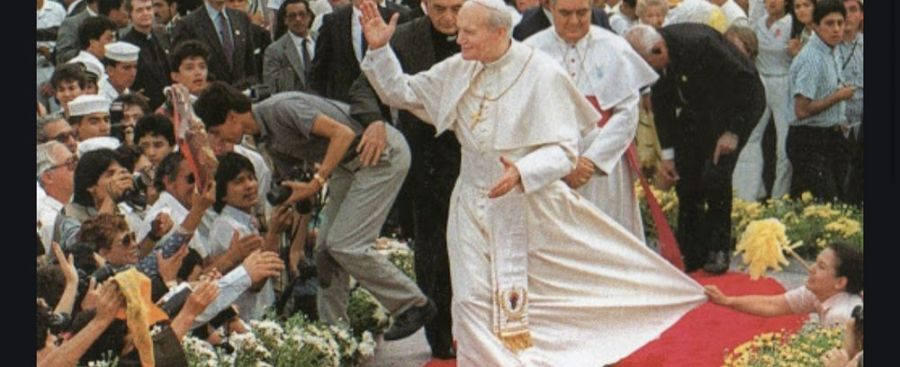
[Pope John Paul II, General Audience 28 January 2004]

72 Last modified on Thursday, 06 November 2025 04:06
don Giuseppe Nespeca

Giuseppe Nespeca è architetto e sacerdote. Cultore della Sacra scrittura è autore della raccolta "Due Fuochi due Vie - Religione e Fede, Vangeli e Tao"; coautore del libro "Dialogo e Solstizio".

Email This email address is being protected from spambots. You need JavaScript enabled to view it.
In these words we find the core of biblical truth about St. Joseph; they refer to that moment in his life to which the Fathers of the Church make special reference (Redemtoris Custos n.2)
In queste parole è racchiuso il nucleo centrale della verità biblica su san Giuseppe, il momento della sua esistenza a cui in particolare si riferiscono i padri della Chiesa (Redemtoris Custos n.2)
The ancient priest stagnates, and evaluates based on categories of possibilities; reluctant to the Spirit who moves situations
Il sacerdote antico ristagna, e valuta basando su categorie di possibilità; riluttante allo Spirito che smuove le situazioni
«Even through Joseph’s fears, God’s will, his history and his plan were at work. Joseph, then, teaches us that faith in God includes believing that he can work even through our fears, our frailties and our weaknesses. He also teaches us that amid the tempests of life, we must never be afraid to let the Lord steer our course. At times, we want to be in complete control, yet God always sees the bigger picture» (Patris Corde, n.2)
«Anche attraverso l’angustia di Giuseppe passa la volontà di Dio, la sua storia, il suo progetto. Giuseppe ci insegna così che avere fede in Dio comprende pure il credere che Egli può operare anche attraverso le nostre paure, le nostre fragilità, la nostra debolezza. E ci insegna che, in mezzo alle tempeste della vita, non dobbiamo temere di lasciare a Dio il timone della nostra barca. A volte noi vorremmo controllare tutto, ma Lui ha sempre uno sguardo più grande» (Patris Corde, n.2)
Man is the surname of God: the Lord in fact takes his name from each of us - whether we are saints or sinners - to make him our surname (Pope Francis). God's fidelity to the Promise is realized not only through men, but with them (Pope Benedict).
L’uomo è il cognome di Dio: il Signore infatti prende il nome da ognuno di noi — sia che siamo santi, sia che siamo peccatori — per farlo diventare il proprio cognome (Papa Francesco). La fedeltà di Dio alla Promessa si attua non soltanto mediante gli uomini, ma con loro (Papa Benedetto)
In the communities of Galilee and Syria the pagans quickly became a majority - elevated to the rank of sons. They did not submit to nerve-wracking processes, but spontaneously were recognizing the Lord
Nelle comunità di Galilea e Siria i pagani diventavano rapidamente maggioranza - elevati al rango di figli. Essi non si sottoponevano a trafile snervanti, ma spontaneamente riconoscevano il Signore
And thus we must see Christ again and ask Christ: “Is it you?” The Lord, in his own silent way, answers: “You see what I did, I did not start a bloody revolution, I did not change the world with force; but lit many I, which in the meantime form a pathway of light through the millenniums” (Pope Benedict)
E così dobbiamo di nuovo vedere Cristo e chiedere a Cristo: “Sei tu?”. Il Signore, nel modo silenzioso che gli è proprio, risponde: “Vedete cosa ho fatto io. Non ho fatto una rivoluzione cruenta, non ho cambiato con forza il mondo, ma ho acceso tante luci che formano, nel frattempo, una grande strada di luce nei millenni” (Papa Benedetto)
Experts in the Holy Scriptures believed that Elijah's return should anticipate and prepare for the advent of the Kingdom of God. Since the Lord was present, the first disciples wondered what the value of that teaching was. Among the people coming from Judaism the question arose about the value of ancient doctrines…

Due Fuochi due Vie - Vol. 1 Due Fuochi due Vie - Vol. 2 Due Fuochi due Vie - Vol. 3 Due Fuochi due Vie - Vol. 4 Due Fuochi due Vie - Vol. 5 Dialogo e Solstizio I fiammiferi di Maria

duevie.art

don Giuseppe Nespeca

Tel. 333-1329741


Disclaimer

Questo blog non rappresenta una testata giornalistica in quanto viene aggiornato senza alcuna periodicità. Non può pertanto considerarsi un prodotto editoriale ai sensi della legge N°62 del 07/03/2001.
Le immagini sono tratte da internet, ma se il loro uso violasse diritti d'autore, lo si comunichi all'autore del blog che provvederà alla loro pronta rimozione.
L'autore dichiara di non essere responsabile dei commenti lasciati nei post. Eventuali commenti dei lettori, lesivi dell'immagine o dell'onorabilità di persone terze, il cui contenuto fosse ritenuto non idoneo alla pubblicazione verranno insindacabilmente rimossi.







