May 28, 2026 Written by 

Between Kingship and self-denial

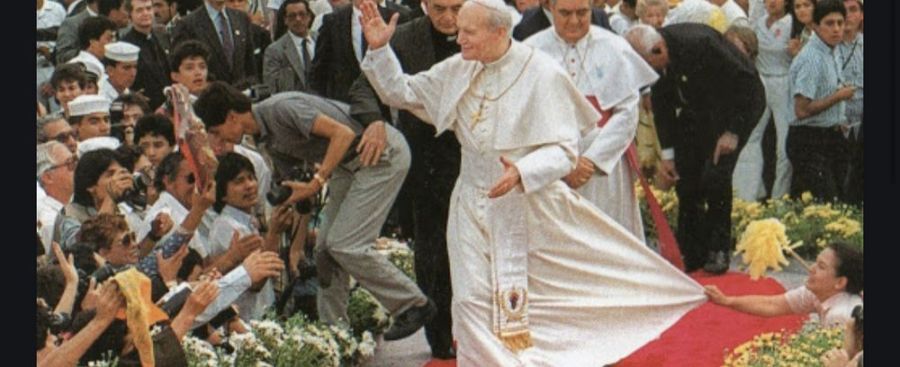
Christ ascended the cross as a unique King: as the eternal witness to the truth. “For this I was born, and for this I came into the world: to bear witness to the truth” (Jn 18:37). This witness is the measure of our deeds. The measure of life. The truth for which Christ gave his life – which he confirmed through the Resurrection – is the fundamental source of human dignity. Christ’s kingdom is manifested, as the Council teaches, in the “kingship” of man. We must know, in this light, how to participate in every sphere of contemporary life and to shape it. Indeed, in our times, there is no shortage of proposals addressed to man, nor of programmes invoked for his good. May we know how to re-examine them in the light of the full truth about man, the truth confirmed by the words and the cross of Christ!

May we know how to discern them well! Is what they declare expressed in accordance with the measure of man’s true dignity? Does the freedom they proclaim serve the kingly dignity of the being created in God’s image, or, on the contrary, does it pave the way for its deprivation or constraint? For example: do marital infidelity—even if sanctioned by divorce—or the lack of responsibility for conceived life—even if modern technology teaches how to dispose of it—serve man’s true freedom or express his dignity? Certainly, all moral permissiveness is not based on human dignity and does not educate man in it.

[Pope John Paul II, 25 November 1979]

17 Last modified on Thursday, 28 May 2026 14:46
don Giuseppe Nespeca

Giuseppe Nespeca è architetto e sacerdote. Cultore della Sacra scrittura è autore della raccolta "Due Fuochi due Vie - Religione e Fede, Vangeli e Tao"; coautore del libro "Dialogo e Solstizio".

Email This email address is being protected from spambots. You need JavaScript enabled to view it.
The kingdom of Christ is manifested, as the Council teaches, in the 'kingship' of man [John Paul II]
Il regno di Cristo si manifesta, come insegna il Concilio, nella “regalità” dell’uomo [Giovanni Paolo II]
In the middle of the dense forest of rules and regulations — to the legalisms of past and present — Jesus makes an opening through which one can catch a glimpse of two faces: the face of the Father and the face of the brother. He does not give us two formulas or two precepts: there are no precepts nor formulas. He gives us two faces [Pope Francis]
In mezzo alla fitta selva di precetti e prescrizioni – ai legalismi di ieri e di oggi – Gesù opera uno squarcio che permette di scorgere due volti: il volto del Padre e quello del fratello. Non ci consegna due formule o due precetti: non sono precetti e formule; ci consegna due volti [Papa Francesco]
Whoever is inscribed in God's name participates in God's life, and lives. Therefore to believe is to be inscribed in the name of God. Thus we are alive. Whoever has a share in God's name is not dead but rather belongs to the living God. In this sense we should be able to understand the dynamism of faith, which entails enrolling our names in the name of God and in this way entering into life [Pope Benedict]
Chi è scritto nel nome di Dio partecipa alla vita di Dio, vive. E così credere è essere iscritti nel nome di Dio. E così siamo vivi. Chi appartiene al nome di Dio non è un morto, appartiene al Dio vivente. In questo senso dovremmo capire il dinamismo della fede, che è un iscrivere il nostro nome nel nome di Dio e così un entrare nella vita [Papa Benedetto]
As sometimes happens in the Gospel, faced with the trap set for him by his enemies, Jesus, with his response, rises above the contingent controversy and goes far beyond the particular and mutually divergent positions (John Paul II)
Come talora accade nel Vangelo, di fronte al tranello mossogli dai suoi nemici, Gesù, con la sua risposta, s’innalza al di sopra della polemica contingente e va ben oltre le posizioni particolari e tra loro divergenti (Giovanni Paolo II)
This Name clearly expresses that the God of the Bible is not some kind of monad closed in on itself and satisfied with his own self-sufficiency but he is life that wants to communicate itself, openness, relationship [Pope Benedict]
Questo nome esprime dunque chiaramente che il Dio della Bibbia non è una sorta di monade chiusa in se stessa e soddisfatta della propria autosufficienza, ma è vita che vuole comunicarsi, è apertura, relazione [Papa Benedetto]
There, however, in the place that should have been taken up by the encounter between God and man, he found livestock merchants and money-changers who occupied this place of prayer with their commerce […] In the temple's purification, however, it was a matter of more than fighting abuses. A new time in history was foretold (Pope Benedict)
Ma là dove doveva esservi lo spazio dell’incontro tra Dio e l’uomo, Egli trova commercianti di bestiame e cambiavalute che occupano con i loro affari il luogo di preghiera […] Nella purificazione del tempio, però, si tratta di più che della lotta agli abusi. È preconizzata una nuova ora della storia (Papa Benedetto)
«Ask Jesus for the grace to follow him closely», so as not to leave him alone, thus overcoming the temptations of looking at ourselves to «share the cake» of personal interests [Pope Francis]

Due Fuochi due Vie - Vol. 1 Due Fuochi due Vie - Vol. 2 Due Fuochi due Vie - Vol. 3 Due Fuochi due Vie - Vol. 4 Due Fuochi due Vie - Vol. 5 Dialogo e Solstizio I fiammiferi di Maria

duevie.art

don Giuseppe Nespeca

Tel. 333-1329741


Disclaimer

Questo blog non rappresenta una testata giornalistica in quanto viene aggiornato senza alcuna periodicità. Non può pertanto considerarsi un prodotto editoriale ai sensi della legge N°62 del 07/03/2001.
Le immagini sono tratte da internet, ma se il loro uso violasse diritti d'autore, lo si comunichi all'autore del blog che provvederà alla loro pronta rimozione.
L'autore dichiara di non essere responsabile dei commenti lasciati nei post. Eventuali commenti dei lettori, lesivi dell'immagine o dell'onorabilità di persone terze, il cui contenuto fosse ritenuto non idoneo alla pubblicazione verranno insindacabilmente rimossi.







