Jun 8, 2026 Written by 

Do not give in to the mechanisms

1. "Behold, we are going up to Jerusalem" (Mk 10:33). With these words, the Lord invites the disciples to journey with him on the path that leads from Galilee to the place where he will complete his redemptive mission. This journey to Jerusalem, which the Evangelists present as the crowning moment of the earthly journey of Jesus, is the model for the Christian who is committed to following the Master on the way of the Cross. Christ also invites the men and women of today to "go up to Jerusalem". He does so with special force in Lent, which is a favourable time to convert and restore full communion with him by sharing intimately in the mystery of his Death and Resurrection.

For believers, therefore, Lent is the appropriate time for a profound re-examination of life. In today’s world, there is much generous witness to the Gospel, but there are also baptized people who, when faced with the demanding call to "go up to Jerusalem", remain deaf and resistant, even at times openly rebellious. There are situations where people’s experience of prayer is rather superficial, so that the word of God does not enter deeply into their lives. Even the Sacrament of Penance is thought by many to be unimportant and the Sunday celebration of the Eucharist is seen as a mere duty to be performed.

How should we respond to the invitation to conversion that Jesus addresses to us in this time of Lent? How can there be a serious change in our life? First of all, we must open our hearts to the penetrating call that comes to us from the Liturgy. The time of preparation for Easter is a providential gift from the Lord and a precious opportunity to draw closer to him, turning inward to listen to his promptings deep within. 

2. There are Christians who think they can dispense with this unceasing spiritual effort, because they do not see the urgency of standing before the truth of the Gospel. Lest their way of life be upset, they seek to take words like "Love your enemies, do good to those who hate you" (Lk 6:27) and render them empty and innocuous. For these people, it is extremely difficult to accept such words and to translate them into consistent patterns of behaviour. They are in fact words which, if taken seriously, demand a radical conversion. On the other hand, when we are offended or hurt, we are tempted to succumb to the psychological impulses of self-pity and revenge, ignoring Jesus’ call to love our enemy. Yet the daily experiences of human life show very clearly how much forgiveness and reconciliation are indispensable if there is to be genuine renewal, both personal and social. This applies not only to interpersonal relationships, but also to relationships between communities and nations.

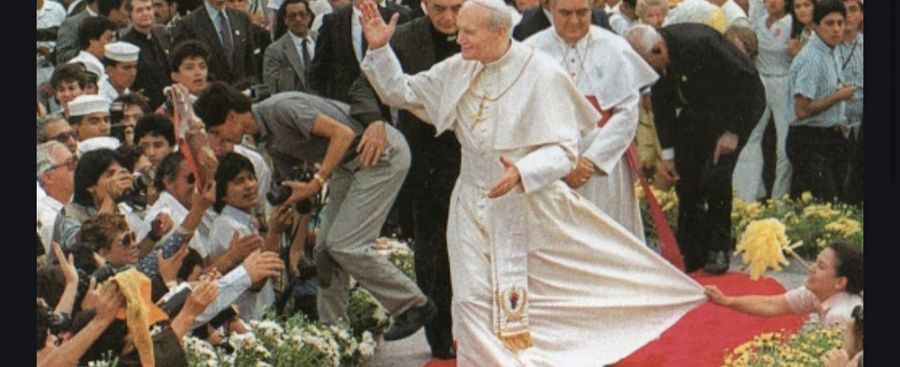
[Pope John Paul II, Message for Lent 2001]

20 Last modified on Monday, 08 June 2026 03:30
don Giuseppe Nespeca

Giuseppe Nespeca è architetto e sacerdote. Cultore della Sacra scrittura è autore della raccolta "Due Fuochi due Vie - Religione e Fede, Vangeli e Tao"; coautore del libro "Dialogo e Solstizio".

Email This email address is being protected from spambots. You need JavaScript enabled to view it.
“Love is an excellent thing”, we read in the book the Imitation of Christ. “It makes every difficulty easy, and bears all wrongs with equanimity…. Love tends upward; it will not be held down by anything low… love is born of God and cannot rest except in God” (III, V, 3) [Pope Benedict]
«Grande cosa è l’amore – leggiamo nel libro dell’Imitazione di Cristo –, un bene che rende leggera ogni cosa pesante e sopporta tranquillamente ogni cosa difficile. L’amore aspira a salire in alto, senza essere trattenuto da alcunché di terreno. Nasce da Dio e soltanto in Dio può trovare riposo» (III, V, 3) [Papa Benedetto]
For Christians, non-violence is not merely tactical behaviour but a person's way of being (Pope Benedict)
La nonviolenza per i cristiani non è un mero comportamento tattico, bensì un modo di essere (Papa Benedetto)
The Angel does not enter our room visibly, but the Lord has a plan for each of us, he calls each one of us by name (Pope Benedict)
Nella nostra camera l’Angelo non entra in modo visibile, ma con ciascuno di noi il Signore ha un suo progetto, ciascuno viene da Lui chiamato per nome (Papa Benedetto)
A mysterious love, which in the texts of the New Testament is revealed to us as God’s boundless and passionate love for mankind. God does not lose heart in the face of ingratitude (Pope Benedict)
Un amore misterioso, che nei testi del Nuovo Testamento ci viene rivelato come incommensurabile passione di Dio per l'uomo. Egli non si arrende dinanzi all'ingratitudine (Papa Benedetto)
Jesus showed us with a new clarity the unifying centre of the divine laws revealed on Sinai […]  Indeed, in his life and in his Paschal Mystery Jesus brought the entire law to completion.  Uniting himself with us through the gift of the Holy Spirit, he carries with us and in us the “yoke” of the law, which thereby becomes a “light burden” (Pope Benedict)
Gesù ci ha mostrato con una nuova chiarezza il centro unificante delle leggi divine rivelate sul Sinai […] Anzi, Gesù nella sua vita e nel suo mistero pasquale ha portato a compimento tutta la legge. Unendosi con noi mediante il dono dello Spirito Santo, porta con noi e in noi il "giogo" della legge, che così diventa un "carico leggero" (Papa Benedetto)
An ancient hermit says: “The Beatitudes are gifts of God and we must say a great ‘thank you’ to him for them and for the rewards that derive from them, namely the Kingdom of God in the century to come and consolation here; the fullness of every good and mercy on God’s part … once we have become images of Christ on earth” (Peter of Damascus) [Pope Benedict]
Afferma un antico eremita: «Le Beatitudini sono doni di Dio, e dobbiamo rendergli grandi grazie per esse e per le ricompense che ne derivano, cioè il Regno dei Cieli nel secolo futuro, la consolazione qui, la pienezza di ogni bene e misericordia da parte di Dio … una volta che si sia divenuti immagine del Cristo sulla terra» (Pietro di Damasco) [Papa Benedetto]
"How will we be able to live without him?". In these words of St Ignatius we hear echoing the affirmation of the martyrs of Abitene: "Sine dominico non possumus" [Pope Benedict]
"Come potremmo vivere senza di Lui?". Sentiamo echeggiare in queste parole di Sant’Ignazio l’affermazione dei martiri di Abitene: "Sine dominico non possumus" [Papa Benedetto]
The kingdom of Christ is manifested, as the Council teaches, in the 'kingship' of man [John Paul II]
Il regno di Cristo si manifesta, come insegna il Concilio, nella “regalità” dell’uomo [Giovanni Paolo II]

Due Fuochi due Vie - Vol. 1 Due Fuochi due Vie - Vol. 2 Due Fuochi due Vie - Vol. 3 Due Fuochi due Vie - Vol. 4 Due Fuochi due Vie - Vol. 5 Dialogo e Solstizio I fiammiferi di Maria

duevie.art

don Giuseppe Nespeca

Tel. 333-1329741


Disclaimer

Questo blog non rappresenta una testata giornalistica in quanto viene aggiornato senza alcuna periodicità. Non può pertanto considerarsi un prodotto editoriale ai sensi della legge N°62 del 07/03/2001.
Le immagini sono tratte da internet, ma se il loro uso violasse diritti d'autore, lo si comunichi all'autore del blog che provvederà alla loro pronta rimozione.
L'autore dichiara di non essere responsabile dei commenti lasciati nei post. Eventuali commenti dei lettori, lesivi dell'immagine o dell'onorabilità di persone terze, il cui contenuto fosse ritenuto non idoneo alla pubblicazione verranno insindacabilmente rimossi.







