Jul 13, 2026 Written by 

“My" Father

So for Jesus, God is not only "the Father of Israel, the Father of men", but "my Father"! "My": that is precisely why the Jews wanted to kill Jesus, because "he called God his Father" (Jn 5:18). "His" in the most literal sense: He whom only the Son knows as Father, and by whom alone he is mutually known. We are now on the same ground from which the prologue of John's Gospel will later arise.

2. My Father' is the Father of Jesus Christ, he who is the origin of his being, of his messianic mission, of his teaching. The evangelist John has abundantly reported the messianic teaching that allows us to fathom in depth the mystery of God the Father and Jesus Christ, his only Son.

Jesus says: "Whoever believes in me does not believe in me, but in him who sent me" (John 12: 44). "I did not speak from me, but the Father who sent me, he himself commanded me what I should say and proclaim" (Jn 12:49). "Verily, verily, I say unto you, the Son of himself can do nothing except what he sees the Father do; what he does, the Son also does" (Jn 5:19). "For as the Father has life in himself, so he has granted the Son to have life in himself" (Jn 5:26). And finally: ". . the Father, who has life, has sent me, and I live for the Father" (Jn 6:57).

The Son lives for the Father first of all because he was begotten by him. There is a very close correlation between fatherhood and sonship precisely because of generation: "You are my Son; today I have begotten you" (Heb 1:5). When at Caesarea Philippi Simon Peter confesses: "You are the Christ, the Son of the living God", Jesus answers him: "Blessed are you . . . for neither flesh nor blood has revealed it to you, but my Father . . ." (Mt 16:16-17), for only "the Father knows the Son" just as only the "Son knows the Father" (Mt 11:27). Only the Son makes the Father known: the visible Son makes the invisible Father seen. "He who has seen me has seen the Father" (Jn 14:9).

3. A careful reading of the Gospels shows that Jesus lives and works in constant and fundamental reference to the Father. He often addresses him with the word full of filial love: "Abba"; even during the prayer in Gethsemane this same word returns to his lips (cf. Mk 14:36). When the disciples ask him to teach them to pray, he teaches them the "Our Father" (cf. Mt 6:9-13). After the resurrection, at the moment of leaving the earth, he seems to refer once again to this prayer, when he says: "I ascend to my Father and your Father, my God and your God" (Jn 20, 17).

Thus through the Son (cf. Heb 1:2), God revealed Himself in the fullness of the mystery of His fatherhood. Only the Son could reveal this fullness of the mystery, for only "the Son knows the Father" (Mt 11:27). "God no one has ever seen him: it is the only Son, who is in the bosom of the Father, who has revealed him" (Jn 1:18).

4. Who is the Father? In the light of the definitive witness we have received through the Son, Jesus Christ, we have the full knowledge of faith that the Fatherhood of God belongs first of all to the fundamental mystery of God's intimate life, to the Trinitarian mystery. The Father is the one who eternally begets the Word, the Son consubstantial with him. In union with the Son, the Father eternally "breathes forth" the Holy Spirit, who is the love in which the Father and the Son mutually remain united (cf. Jn 14:10).

Thus the Father is in the Trinitarian mystery the "beginning-without-beginning". "The Father by none is made, nor created, nor begotten" (Quicumque symbol). He alone is the beginning of life, which God has in Himself. This life - that is, the very divinity - the Father possesses in absolute communion with the Son and the Holy Spirit, who are consubstantial with him.

Paul, an apostle of the mystery of Christ, falls in adoration and prayer "before the Father from whom all fatherhood in heaven and on earth takes its name" (Eph 3:15), the beginning and model.

For there is "one God the Father of all, who is above all, who acts through all and is present in all" (Eph 4:6).

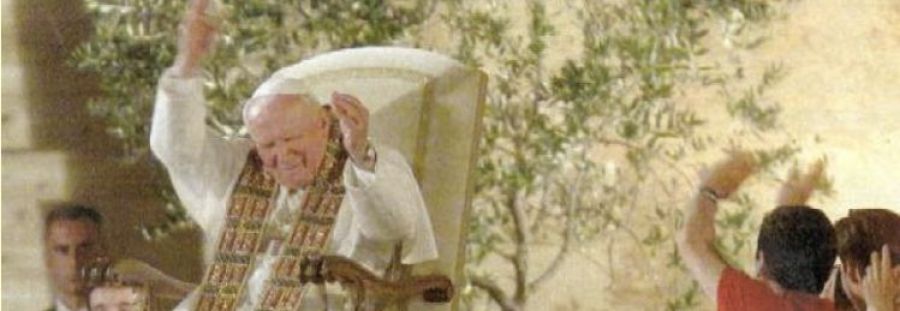
[Pope John Paul II, General Audience 23 October 1985]

33 Last modified on Monday, 13 July 2026 04:34
don Giuseppe Nespeca

Giuseppe Nespeca è architetto e sacerdote. Cultore della Sacra scrittura è autore della raccolta "Due Fuochi due Vie - Religione e Fede, Vangeli e Tao"; coautore del libro "Dialogo e Solstizio".

Email This email address is being protected from spambots. You need JavaScript enabled to view it.
The Lord has our good at heart, that is, that every person should have life, and that especially the "least" of his children may have access to the banquet he has prepared for all (Pope Benedict)
Al Signore sta a cuore il nostro bene, cioè che ogni uomo abbia la vita, e che specialmente i suoi figli più "piccoli" possano accedere al banchetto che lui ha preparato per tutti (Papa Benedetto)
This Parable of the Sower is somewhat the ‘mother’ of all parables […] Such is the heart of God! Each one of us is ground on which the seed of the Word falls; no one is excluded! [Pope Francis]
Questa del seminatore è un po’ la “madre” di tutte le parabole […] Così è il cuore di Dio! Ognuno di noi è un terreno su cui cade il seme della Parola, nessuno è escluso [Papa Francesco]
Are we not perhaps all afraid in some way? If we let Christ enter fully into our lives, if we open ourselves totally to him, are we not afraid that He might take something away from us? Are we not perhaps afraid to give up something significant, something unique, something that makes life so beautiful? Do we not then risk ending up diminished and deprived of our freedom? (Pope Benedict)
Non abbiamo forse tutti in qualche modo paura - se lasciamo entrare Cristo totalmente dentro di noi, se ci apriamo totalmente a lui – paura che Egli possa portar via qualcosa della nostra vita? Non abbiamo forse paura di rinunciare a qualcosa di grande, di unico, che rende la vita così bella? Non rischiamo di trovarci poi nell’angustia e privati della libertà? (Papa Benedetto)
«Is there an attitude for those who want to follow Jesus» so that «they do not end badly, that they do not end up eaten alive - as my mother used to say: "Eat raw" - by others»? (Pope Francis)
«Esiste un atteggiamento per quelli che vogliono seguire Gesù» in modo che «non finiscano male, che non finiscano mangiati vivi — come diceva mia mamma: “Mangiati crudi” — dagli altri»? (Papa Francesco)
For Christians, volunteer work is not merely an expression of good will. It is based on a personal experience of Christ (Pope Benedict)
Per i cristiani, il volontariato non è soltanto espressione di buona volontà. È basato sull’esperienza personale di Cristo (Papa Benedetto)
Christ reveals his identity of Messiah, Israel's bridegroom, who came for the betrothal with his people. Those who recognize and welcome him are celebrating. However, he will have to be rejected and killed precisely by his own; at that moment, during his Passion and death, the hour of mourning and fasting will come (Pope Benedict)
Cristo rivela la sua identità di Messia, Sposo d'Israele, venuto per le nozze con il suo popolo. Quelli che lo riconoscono e lo accolgono con fede sono in festa. Egli però dovrà essere rifiutato e ucciso proprio dai suoi: in quel momento, durante la sua passione e la sua morte, verrà l'ora del lutto e del digiuno (Papa Benedetto)
For the prodigious and instantaneous healing of the paralytic, the apostle St. Matthew is more sober than the other synoptics, St. Mark and St. Luke. These add broader details, including that of the opening of the roof in the environment where Jesus was, to lower the sick man with his lettuce, given the huge crowd that crowded at the entrance. Evident is the hope of the pitiful companions: they almost want to force Jesus to take care of the unexpected guest and to begin a dialogue with him (Pope Paul VI)

Due Fuochi due Vie - Vol. 1 Due Fuochi due Vie - Vol. 2 Due Fuochi due Vie - Vol. 3 Due Fuochi due Vie - Vol. 4 Due Fuochi due Vie - Vol. 5 Dialogo e Solstizio I fiammiferi di Maria

duevie.art

don Giuseppe Nespeca

Tel. 333-1329741


Disclaimer

Questo blog non rappresenta una testata giornalistica in quanto viene aggiornato senza alcuna periodicità. Non può pertanto considerarsi un prodotto editoriale ai sensi della legge N°62 del 07/03/2001.
Le immagini sono tratte da internet, ma se il loro uso violasse diritti d'autore, lo si comunichi all'autore del blog che provvederà alla loro pronta rimozione.
L'autore dichiara di non essere responsabile dei commenti lasciati nei post. Eventuali commenti dei lettori, lesivi dell'immagine o dell'onorabilità di persone terze, il cui contenuto fosse ritenuto non idoneo alla pubblicazione verranno insindacabilmente rimossi.







